

The Problem of Territoriality in Tourism in Romania
1Ferenc Szilágyi✉, 2Alpár Horváth
1Associate professor, Faculty of Economics and Social Sciences, Department of Economics, Partium Christian University, Oradea, Romania; ferenc.szilagyi@partium.ro, ORCID: 0000-0001-8034-6674
2Assistant professor, Faculty of Geography, Department of Geography of the Extensions, Gheorgheni Branch, Babeș-Bolyai University, Romania; alpar.horvath@ubbcluj.ro, ORCID: 0000-0001-9305-8575
Abstract
The role of historical regions in the regionalisation of Romania is a matter of constant debate. Administrative reforms and the designation of NUTS regions have, in general, ignored identity-based territorial units. The expansion of domestic and international tourism from 1940 onwards, and with renewed vigour after the change of regime, has brought the issue of tourism spatial division – whether in terms of regulation, destination management or marketing – back onto the agenda. The absence of a consensus, state-agreed system of tourism regions, cultural and historical specificities have led to attempts by the tourism profession and academia to develop alternative spatial divisions.
The absence of a coherent administrative and conceptual framework, coupled with significant territorial fragmentation, presents substantial challenges to effective tourism management. Using comparative content analysis of legislative texts, strategic policy documents, this paper identifies persistent inconsistencies and fragmentation in tourism regionalisation practices. The findings highlight the necessity of integrating historical identity regions into formal administrative structures that could improve the coherence of tourism planning, governance and marketing initiatives across Romania.
Keywords: historical regions, identity-based territories, regional development, tourism regionalization
Received: 17 April 2025
Accepted: 10 June 2025
Published: 27 June 2025
A TERÜLETISÉG PROBLEMATIKÁJA ROMÁNIA TURIZMUSÁBAN
1Szilágyi Ferenc✉, 2Horváth Alpár
1Egyetemi docens, Gazdaság- és Társadalomtudományi Kar, Gazdaságtudományi Tanszék, Partiumi Keresztény Egyetem, Nagyvárad, Románia; ferenc.szilagyi@partium.ro, ORCID: 0000-0001-8034-6674
2Egyetemi adjunktus, Földrajzi Kar, Kihelyezett Földrajz Tanszék, Gyergyószentmiklósi Tagozat, Babeș-Bolyai Tudományegyetem, Románia; alpar.horvath@ubbcluj.ro, ORCID: 0000-0001-9305-8575
Abstract
A történeti régiók szerepe Románia regionalizációjában folyamatos vita tárgyát képezi. Az adminisztratív reformok és a NUTS régiók kijelölése során általában figyelmen kívül hagyták az identitásalapú területi egységeket. A belföldi és nemzetközi turizmus 1940-től kezdődő, majd a rendszerváltást követően megújult lendületű növekedése újra napirendre helyezte a turizmus térbeli felosztásának kérdését, legyen szó akár szabályozásról, desztinációmenedzsmentről vagy marketingről. A konszenzuson alapuló, állami szinten elfogadott turisztikai régiórendszer hiánya, valamint a kulturális és történelmi sajátosságok elégtelen figyelembevétele miatt a turisztikai szakma és az akadémiai szféra alternatív térfelosztási kísérleteket tett.
Az egységes adminisztratív és fogalmi keretrendszer hiánya, valamint a jelentős területi széttagoltság komoly kihívást jelent a hatékony turizmusmenedzsment számára. A jogszabályok és stratégiai dokumentumok összehasonlító tartalomelemzésével a tanulmány feltárja a turisztikai regionalizáció gyakorlatában fennálló következetlenségeket és töredezettséget. Az eredmények rávilágítanak a történeti identitással rendelkező régiók hivatalos adminisztratív struktúrákba való integrációjának szükségességére, amely hozzájárulhatna a romániai turizmus-tervezés, irányítás és marketingkezdeményezések koherenciájának javításához.
Kulcsszavak: történeti régiók, identitásalapú területek, regionális fejlesztés, turisztikai regionalizáció
Benyújtva: 2025. április 17.
Befogadva: 2025. június 10.
Publikálva: 2025. június 27.
1. Introduction
In the aftermath of the regime changes that occurred in 1989–90, territorial and administrative reform in the countries of Central and Eastern Europe has once again become a matter of considerable importance, primarily as a result of the integration of these countries into the European Union and the implementation of the EU’s regional framework (NUTS). These candidate countries exhibited a range of historical and socio-economic characteristics and generally wanted to adapt the EU statistical territorial levels to their own administrative realities. However, there have also been cases where candidate countries have introduced new regional administrative systems, such as Croatia (Zastupnički Dom Sabora Republike Hrvatske, 1992), Slovakia (Národnej Rady Slovenskej Republiky, 1996) and Poland (Sejm, 1998), while in other cases they have adapted the existing system to EU requirements.
In recent years, tourism has become a critical economic sector in Central and Eastern Europe (CEE), significantly contributing to regional GDP and employment growth. In this broader context, Romania’s tourism industry exhibits a moderate performance compared to neighbouring CEE countries. Ciocoiu et al. (2025) highlight that among the twelve assessed countries in the region, Estonia, Croatia, Poland, and Slovenia emerge as leaders in terms of efficiency and competitiveness, while Romania occupies a middle-tier position, indicating significant potential for improvement. In 2023, Romania’s tourism industry made a notable contribution to the country’s economic output; however, its relative efficiency remains constrained by moderate labour productivity and limited government investment in tourism infrastructure (Ciocoiu et al., 2025). Enhancing competitiveness will thus require targeted improvements in resource allocation, with a particular focus on service quality, infrastructure development, and sustainable tourism practices.
In Romania, however, there is no single, state-agreed classification of tourist regions. The medium level of development policy was based on the counties established in the administrative reform of 1968 and partly on the development regions organised from 1998 onwards and strengthened in 2004 by a new regional development law (LEGE, 1968, 1998). However, the designation of these regions did not take into account landscape, cultural, and historical specificities, thus giving rise to the question of the suitability of NUTS2 units for tourism planning and management. Recent legislative amendments have introduced the possibility of establishing a regional Tourism Destination Management (TDM) organisation at the level of the historic provinces (OUG, 2022). However, there has been little concrete action taken to implement this.
In the tourism sector, the inadequacy of the prevailing official spatial divisions has given rise to the development of an increasing number of professionally significant alternative divisions since the 1940s. These alternative divisions were primarily based on natural features, areas of attraction, ethnic traditions, regional identities, or historical landscapes. The resulting divergent regionalisation practices highlight the lack of consensus on the applicability of administrative and developmental spatial divisions to tourism (Szilágyi, 2016). In this way, various delineations, at times contradictory, persist in being employed in the professional documents of the Romanian tourism sector, engendering substantial uncertainty in sectoral planning and marketing.
The study aims to explore the role of historical regions in Romania’s tourism regionalisation and examine the discrepancies between identity-based regions and formal administrative structures as it critically evaluates how existing spatial divisions impact tourism planning, governance, and marketing. Specifically, the paper addresses the following questions: How do historical regions feature in Romanian tourism policy and strategy documents? What inconsistencies emerge between historical and administrative regionalisation approaches, and how could these be effectively reconciled.
2. Literature review: Levels of territoriality, the diversity of the concept of region
In their 2002 paper, Agg & Nemes-Nagy compare the different meanings of regionalisation, regionality, and regionalism among the processes leading to the emergence of a ‘real region’, placing the concept of the region in the context of EU spatial development (Agg & Nemes-Nagy, 2002). The question is posed as to whether the tourism market manifestation of a regional entity is perceptible, in either destination marketing activities or development policy resource allocation. For a comprehensive theoretical foundation, it is essential to refer to Benedek’s classification of regionalisation modes and the perceptions of regions they engender (Benedek, 2000). The process of normative-formal regionalisation gives rise to the establishment of planning-statistical and development regions, such as the NUTS regions stipulated by EUROSTAT for EU Member States. These regions are institutionalised by legislation and endowed with powers. The Romanian Regional Development Law of 1998 (renewed in 2004 by Lege, 2004) delineated the NUTS2 regions in the pre-accession period, predicated on the establishment of regional development councils and regional development agencies (LEGE, 1998, 2004). The former function as decision-making bodies at the regional level (but not at the administrative level, exclusively in terms of development policy), while the latter act as bodies responsible for decision-preparation and implementation. Concurrently, the historical provinces or identity regions, which have emerged through historical-cultural processes and are also mentioned in public discourse, can be seen as the products of symbolic-informal regionalisation, as described by Benedek. ‘Positive-scientific’ regions are not normative, but rather descriptive territorial units and are somewhat more tangible than the symbolic interpretation, which can be defined in terms of the phenomenon being studied scientifically. Examples of such regions include large landscapes defined on the basis of natural geography, such as the Eastern Carpathians or Transylvanian mountains; hydrographical units, such as the Danube basin; climatic and/or biogeographical regions, such as temperate steppe or deciduous forest zones; and high mountain regions. In addition to these, the concepts of economic or labour market attractiveness, agricultural, and industrial regions are also functional regional concepts. In some cases, the concept of region can be used synonymously with certain types of areas or landscapes, such as ‘industrial region’ being interchangeable with ‘industrial landscape’ or ‘industrial area’ (Juha, 2023).
In recent decades, social constructionist approaches have become increasingly prominent in regional geography, emphasising that regions should not be seen merely as objective geographical or administrative units, but rather as social constructions continuously shaped and reshaped through the practices, discourses, and interactions of various actors (Paasi, 2010; Jones & Paasi, 2013). According to Paasi, regional identities and boundaries are fluid and subject to constant change, shaped by both local and global interactions. At the same time, certain actors actively mobilise discourses of regional identity, for example, as part of planning and development strategies (Paasi, 2010). This perspective significantly complements previous, more static and reductionist approaches, which have typically treated regions merely as administrative or planning units within EU governance frameworks.
The issue of tourism regionalisation is a long-standing one in the field of Romanian tourism geography and regional studies. The legislative framework leading to tourism regionalisation, coupled with the relatively frequent changes in government and reorganisations, has contributed to an environment of uncertainty surrounding organisational–governance reform initiatives. Vofkori (2006) provides a comprehensive overview of tourism regionalisations published throughout the 20th century in Romania. According to his summary, the earliest professional tourism–landscape classifications emerged in the 1940s, coinciding with the establishment of tourism geography as a scholarly field in Romania. The initial classifications were presented by Puşcariu (1943) and N. Al. Rădulescu (1945, identifying 25 regions). These early works were subsequently adapted and expanded until 1970 to reflect developments in tourism infrastructure and the broader sector, through contributions by Giurcăneanu (1956), Iancu (1969, identifying 23 regions), Posea (1969), and Borza (1970).
A relatively recent Hungarian textbook is that of Csapó (2020), which focuses on the tourism policy, theory and practice of tourism governance in European Union countries. In this work, Csapó presents the situation of the tourism governance organisation in Romania at the time of data collection, partly based on the OECD study (Operationalisation, 2020) and partly on the sources of the Tourism Master Plan (Master Planul, 2007). Csapó’s depiction of the regional tourism associations in the Romanian tourism governance organisational chart has thus far remained at the level of policy wishful thinking, akin to the TDM-like organisation Romania Tourism at the national level, which is predicated on public-private partnerships. Csapó references the legislative development in 2017, which defines the concept of destination and destination management organisation in the new provisions included in the Romanian Tourism Framework Law (OG, 1998). However, the implementation of this concept was only partial and much later due to the frequent changes of government. The TDM reform has only advanced through further legislative steps in the Tourism and Culture chapter of the National Recovery and Resilience Building Plan (Romania’s Recovery and Resilience Plan, 2021), which was intended to counter the socio-economic effects of the COVID19 pandemic and the epidemic measures.
On 25 September 2024, the government of Romania adopted Government Decision 1193, approving the National Strategy for the Development of Tourism for the period 2025–2035. This decision was published in the Official Gazette of Romania on 9 November 2024 (Hotărâre, 2024). Concomitantly, a change of government occurred. However, the website of the Ministry of Tourism of the Ciolacu coalition government, which had been in power since 23 December 2024, has not been updated with the information that the NTS is no longer in the form of a draft government decision, but (in principle) has entered into force, as of the beginning of April 2025. The aforementioned source of information on the adoption of sectoral strategies for ecotourism and health tourism includes a link to the legislative portal. In the context of the tourism legislation, following the Romanian Parliament’s rejection of the draft Tourism Law in 2018 (Bărbulescu, 2023), the extant framework legislation is Government Decree 58, which was adopted in 1998 and underwent 15 amendments until December 2024. This decree encompasses provisions pertaining to the establishment of regional TDM organisations, which do not invariably translate into the formation of tourism regions in the conventional sense.
3. Research methods
The research was grounded in secondary statistical sources and literature. The legal background was provided by the laws on the Romanian administrative and development system, as well as by the tourism strategy documents issued at different times (such as the Master Plan for National Tourism in Romania and the Ministry reports). In addition, databases published by the Romanian National Institute of Statistics (Institutul Național de Statistică, INS) and the Ministry of Tourism were processed, with particular attention paid to statistics reflecting the evolution of resort ratings and accommodation capacity. A review of the peer-reviewed academic works on alternative spatial divisions based on history, culture, or geography (Posea, 1982; Cocean, 1996; Nicoară & Pușcaș, 2002; Vofkori, 2006) has provided an overview of the ‘alternative’ tourism regionalisations in Romania.
In the course of the study, a content analysis was conducted to facilitate a comparison of the tourism planning concepts as set out in legislation, development programmes, and policy documents. Conversely, an examination was undertaken of the various tourism spatial divisions (e.g., natural landscape unit, historical region, county or development region) in relation to each other, with a view to identifying overlaps and differences in a literal and comprehensive manner. The aggregation and ranking of statistical data (number of accommodation establishments, territorial distribution of resorts, and number of nights spent) was then used to identify the territorial units with the greatest tourism potential and to ascertain how the officially designated NUTS2 regions correspond to the real tourist attractions. The objective of the analysis is to compare the different official (NUTS2 and county) and alternative (historical, cultural, natural, attraction) divisions and to examine how these are reflected in tourism regulatory, destination management, and marketing practices.
4. Results
4.1. Evolution of tourism spatial structure in Romania
During the period of socialism, certain spatial divisions in the tourism sector were already being developed in relation to spatial planning and were also being disseminated to the wider scientific and professional community. These publications were primarily made available by leading planning agencies and prominent national monographs that held a monopoly on scientific information, including the Geographical Encyclopaedia of Romania (Posea, 1982). These publications, which, by virtue of their size and thematic focus, can be regarded as the national atlas of the era, exerted a substantial influence on the compartmentalisation of the tourist space, which, at that time, remained predominantly oriented towards domestic tourists. In the following discussion, we present some of the spatial proposals characteristic of each period, highlighting their methodological basis and their impact on subsequent tourism development and planning.
Researchers have also developed a more complex classification of tourism regions based on hierarchical territorial levels. For instance, in 1977, the Romanian Institute for Tourism Research had already delineated the 28 tourist zones on a solid scientific basis: Maramureș, Suceava-Dorna, Bistrița-Bârgău, Vrancea, Buzău, Făgăraș-Argeș, Sibiu, Porțile de Fier, Mureș, Covasna-Tușnad, Prahova-Buceci, Câmpulung-Bran, Brasov, Semenic-Țarcu, Bihor-Vlădeasa, Romanian coast, Târgu Neamț-Bicaz, Trotus-Ojtuz, Vâlcea, Târgu-Jiu – Petroșani, Deva, Târnavele, Bucharest, and Danube Valley (Vofkori, 2006), which demonstrated a high degree of compatibility with the territorial logic of the re-unified Romania created in 1968, and which recognised counties as the most significant planning units.
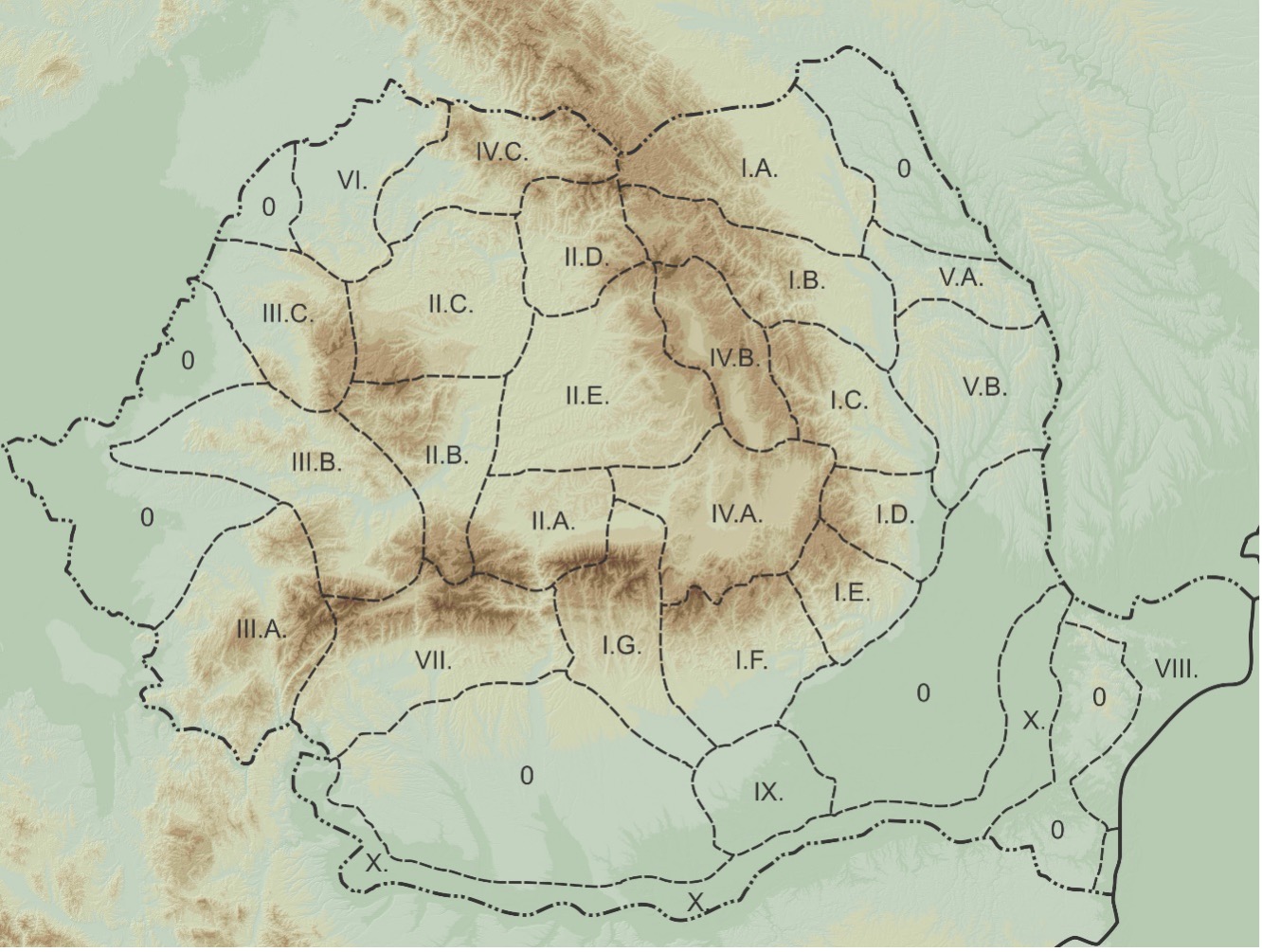
Figure 1. Tourist regions reconstructed on the basis of the Enciclopedia Geografică a României (Posea, 1982)
Source: own editing.
In the Geographical Encyclopaedia of Romania (1982), the author defined 25 geographical-tourist zones (Posea, 1982), grouping them into regions (Figure 1). The author defined the zones as a synthesis of natural heritage elements, cultural and historical values, tourism uses and transport infrastructure components, noting that the resulting territorial units would also require the creation of an economic–organisational and coordinating centre. As in previous iterations, the 25 zones did not encompass the entire territory of the country but delineated a zone of significant tourism value encompassing approximately two-thirds of the country, at 152.680 km2. The excluded areas were typically lowland (Western Plain, Romanian Plain) or low hill/plateau (South Dobruja, Moldavian Plain) border areas, which were partly populated by minorities. The delineation of these zones was undertaken through the application of a multifaceted framework encompassing historical and archaeological, topographical, and hydrological criteria. The following zone groups are defined:
- On the eastern Carpathian ridge and the outer side of the Carpathian bend (including the Argeș region in a broader sense) there are seven zones: Suceava, Târgu Neamț-Bistrița, Trotuș, Vrancea, Buzău, Prahova, and Argeș.
- Five zones on the inland side of the Carpathians and in Transylvania: Sibiu, Alba, Cluj, Năsăud, and Mureș (including the Târnave region and the Sovata-Odorheiu Secuiesc area).
- Three zones in the basin and mountain areas of the Western Carpathians: Semenic – Porțile de Fier, Deva-Arad, and Bihor.
- Three zones in the basin and mountainous area of the Eastern Carpathians: Brașov, Gheorgheni-Ciuc, and Maramureș.
- Two zones in the Moldavian plateau: Iași and Bârlad.
The following zones are to be considered as separate entities, not forming a region: 6. Sălaj, 7. North Oltenia, 8. Coastline – Danube Delta (divided into four sectors: southern coast, Razelm Lagoon System, Danube Delta, Măcin-Tulcea-Babadag area), 9. București, and 10. Danube Valley.
Following the publication of the Geographical Encyclopaedia of Romania, a geographical monograph of Romania was published in five volumes between 1983 and 2005 (Tratat. Geografia Românie I-V.). The second volume (Cucu et al., 1984) also addressed the issue of tourism regionalisation, treating the territorial aspects of tourism as a hierarchical system and defining five tourism regions, as well as tourism zones, urban and peri-urban resort zones, and tourism centres and tourist objects. Each of the designated tourist areas (zones) is located within the five tourist regions, while the urban and peri-urban tourist resorts and tourist centres and sites may be located outside those. It is noteworthy that the five regions encompass approximately one-third of the country’s total area, with all regions situated within the Carpathian Mountains and along the Romanian coastline. Region I encompasses the Black Sea coast and the Danube Delta, featuring a multitude of tourist centres and sites. Region II encompasses the Eastern Carpathians, comprising several tourist complexes, including Brașov Basin, Ciuc and Giurgeu, Vrancea, Târgu Mureș and its surroundings, Suceava and the Obcinas, Bistrița and Vatra Dornei, Maramureș Basin, Baia Mare zone and Oaș. The Southern Carpathians, encompassing the Bran Pass, the Turnu Roșu Pass, the Râmnicu Vâlcea agglomeration, the Hateg Basin and the Retezat Mountains, constitute a distinct complex. Region IV is constituted by the historic Caraș-Severin, otherwise known as the Banat Mountains, and Region V is the Apuseni Mountains. The study identifies the following tourist areas: Cluj-Napoca, Brașov, Oradea-Băile Felix, Arad, Timișoara, Sibiu, the Danube and the Cazan Strait, Craiova, the capital and its surroundings, Ploiești, Iași, the Brăila-Galați conurbation and the Danube Delta (Cucu et al., 1984).
In subsequent years, a more precise theoretical hierarchical definition of the territorial components of tourism was developed, distinguishing the following levels: tourist point, tourist object, tourist complex, tourist area, tourist zone and tourist region (Cocean, 1996). Following the 2000s, the territorial variations published by Nicoară and Puşcaş (2002) and Vofkori (2006) merit particular attention.
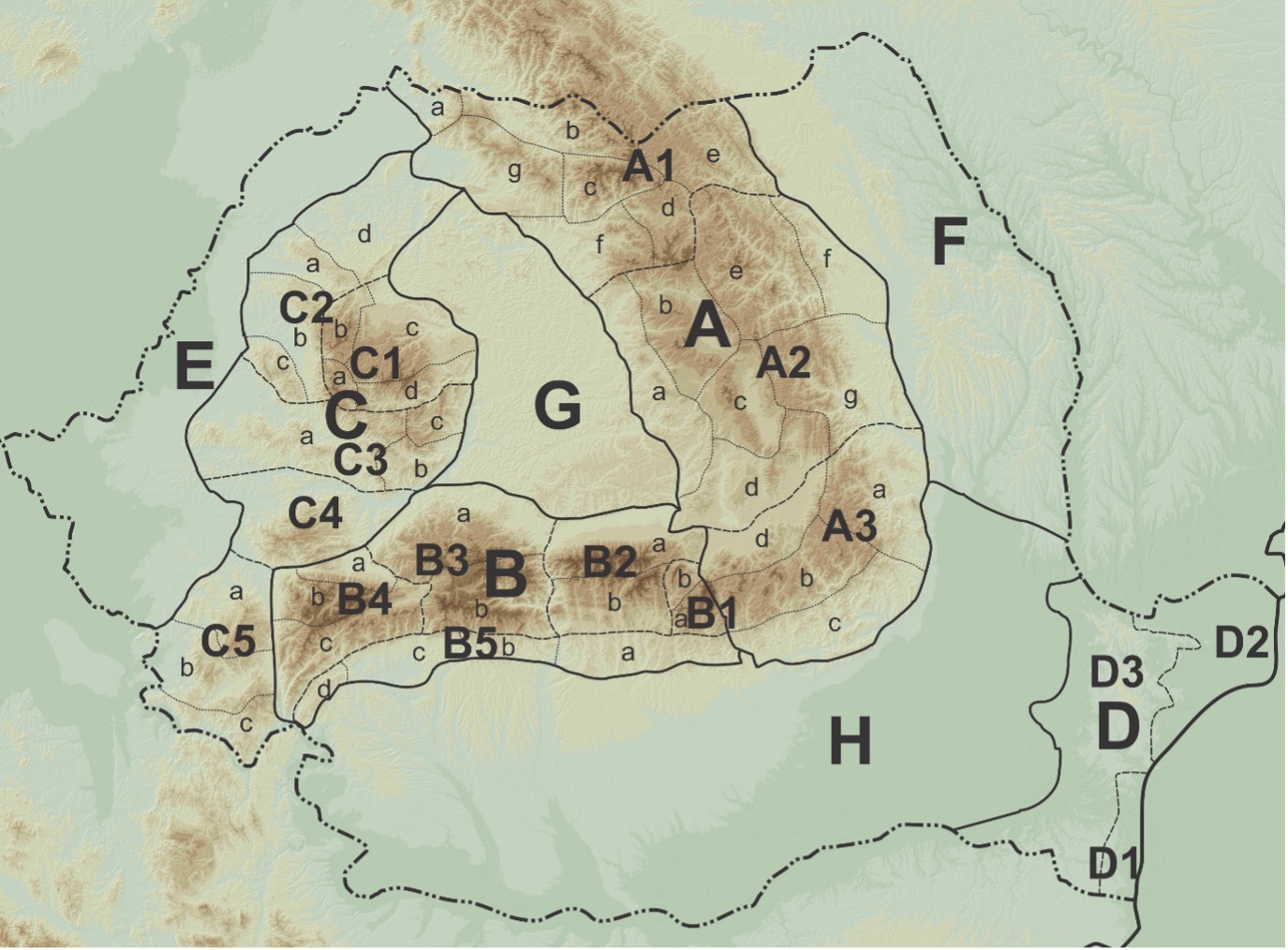
In 2002, Nicoară and Puşcaş proposed a complex tourism classification system organised hierarchically, combining natural geographic sub-units and traditional ethnographic landscape units (Nicoară & Pușcaș, 2002). The structure they defined, encompassing tourism regions, zones, and lower-level districts, is illustrated in Figure 2, with the detailed hierarchical classification provided in the Appendix.
Figure 2. The tourism regions published by Nicoară and Puşcaş (2002)
Source: own editing.
The territorial coverage of the authors does not extend to the entire country. The last three regions have partial or island coverage. In accordance with the authors’ theoretical framework, the geographical area can be expanded to encompass the entire landscape, with the caveat that, in their particular paradigm, the areas designated for tourism are insular, and the intensity and potential of use exhibit significant variations across the regions. The authors also make mention of the emergence of districts (for example, Brăila – Lacul Sărat, Slobozia – Amara) and large cities and spa resorts that are tourist centres in their own right. Examples of such cities include Cluj-Napoca, Târgu Mures, Craiova, and Iași.
The division published by Vofkori (2006) combines the concept of large natural geographic units and the city as a potential tourist destination. The study distinguishes six major tourism regions, four of which are linked to the country’s natural geographic units of outstanding importance (Carpathians, Black Sea, Danube, Danube Delta), two to urban municipalities, with a special mention of the capital Bucharest, and a separate category for ‘Tourism, attractiveness map and tourist value register of the cities of Romania’. In terms of its territorial scope, the concept resembles the Nicoară – Pușcas division of 2002, albeit with notable distinctions. These include the incorporation of the Southern Carpathians region, characterised by the curvature of the Carpathians area, and the introduction of the Brasov (-Poiana) and Vatra Dornei Tourist Complexes.
In general, Romanian literature on regional and tourism geography is robust in the field of tourism geography zoning adapted to topographic territorial units. However, an analysis of the spatial processes of the tourism market from a transdisciplinary perspective suggests that the localisation and accessibility of key tourist attractions, the familiarity of geographical names and places, and the question of identity should perhaps be the starting point for synthesising concepts of tourism regions. The recent amendment of the Romanian tourism framework law, which aligned the action area of the planned regional tourism destination management organisations with the framework of historical provinces (OUG, 2022; Ordinul, 2022), appears to be a valid argumentation and policy decision, as evidenced by the naming character of historical and ethnographic landscapes (Horváth, 2013).
4.2. Spatial development documents, sectoral strategies until 2020
The development policy in Romania has been established through the Law on Spatial Planning and Urbanism (LEGE, 2001), promulgated in 2002 and subsequently amended on numerous occasions (more than 30 times). This legislation has resulted in the formulation of development plans at the sectoral level, including the tourism development plan in 2008 (OUG, 2008), with an updated version in 2018. The document is concerned with the governance of tourism development in Romania, with the classification of municipalities according to their respective resources and infrastructure. It further calls for the delineation of tourism zones, primarily with the objective of optimising the spatial allocation of public investments. It identifies areas with high and very high tourism potential, prioritises development and calls for the enhancement of infrastructure. The strategy is further characterised by an emphasis on sustainability, with provisions for regular reviews to ensure adaptability to evolving tourism conditions. Although the document does not include a regional level, it does have annexes listing the basic territorial and administrative units by county. These annexes include tables and thematic maps reflecting the concentration of resources and the state of infrastructure, with the maps used to illustrate spatial differences.
The rethinking and systematisation of the directions of tourism development took place at the threshold of Romania’s accession to the European Union, when the Tourism Department of the Ministry of Small and Medium Enterprises, Trade, Tourism and Free Occupations created the Master Plan for National Tourism in Romania 2007-2026 (Master Planul, 2007). While the document employs spatiality as a means to present tourism product types, elucidated by several map appendices illustrating the spatial distribution of resources, it does not propose a comprehensive spatial approach applicable to the entire sector. The tourism areas earmarked for development include a select number of priority areas that can be defined on historical grounds (Transylvania, Maramureș, Bukovina), which are complemented by Bucharest, the Black Sea coast and the Danube Delta. To reach these zones, in addition to Bucharest, the text identifies Cluj-Napoca, Sibiu, Târgu Mures, Constanța and Suceava as access poles, noting that these cities have complex transport modes and airports.
Since 2013, the National Authority for Tourism (Autoritatea Naţională pentru Turism) has been responsible for the coordination of tourism activities in Romania. This includes the implementation of the objectives of the Tourism Master Plan, the strategic development of tourism products and destinations, and accreditation activities. The body has also been responsible for the central management of tourism marketing in Romania and for the country’s official tourism portal, which continues to provide access to official promotional material in Romanian and four world languages (Spanish, German, French, English) (Ministry of Tourism, 2018). In contrast to the previous promotional materials, which were structured thematically (Autoriatatea, 2013), the most significant novelty of the currently available documentation is that it deviates from all previous divisions and presents the country’s attractions grouped by historical regions. The document also demonstrates that in 2017, the Romanian Ministry of Tourism operated promotion offices in eight countries (Austria, France, Germany, Italy, Great Britain, Poland, Russia, and the United States), indicating that no immediate neighbouring country was prioritised for the promotion of the country’s tourism assets. In addition to the affluent and influential states, the prominent status of Russia, Poland, and even Austria is somewhat surprising.
The issue of territorialisation is addressed by the country’s official tourism website on the basis of historical regions, and the same logic can be observed in the promotional brochures published in several languages. These brochures, available in multiple languages, offer a variety of destination suggestions, accompanied by visual aids such as photographs and cartographic representations. A consistent theme is the utilisation of the concept of historical regions in national tourism marketing. While the Carpathian Mountain range is highlighted in the presentation of the main destinations and itineraries, the structure of the historical regions is predominant: the proposed cruises are also drawn in these regions (Figure 3). The brochures emphasise eight priority itineraries: Maramures, Transylvania, Oltenia, Muntania, Bukovina-Moldova, Dobrogea, Banat-Partium (Crișana), and the Danube waterway. Additionally, the brochures present a system that is adapted to the historical regions, showcasing sites for nature reserves, rural tourism, wine tourism, spa and wellness tourism, and active tourism.
Figure 3. RomaniaTravel’s tourism promotion map
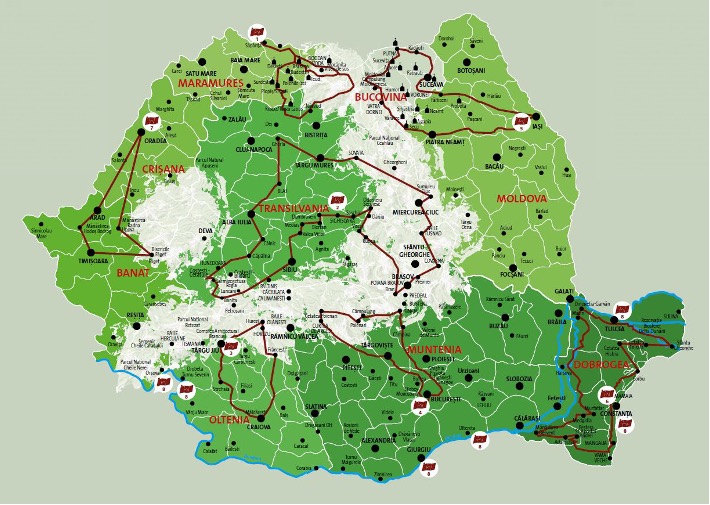
Source: Autoritatea, 2013.
Following the changes in government post-2017, the National Tourism Authority was incorporated into the Ministry of Tourism, which underwent a name and composition change. More recently (since 23 December 2024), the Ministry of Economy, Digitalisation, Entrepreneurship and Tourism was established, with three directorates being separated within the Directorate General of Tourism: the Directorate for Licensing and Monitoring, the Directorate for Control, and the Directorate for Marketing and Development. Of particular interest is the absence of any reference to regional destination marketing activities or their organisational background at the regional level within the remit of the Directorate for Marketing and Development. Within the remit of the Directorate’s competences, reference is made to the concept of TDM, with a link to the dedicated section of the Ministry’s website. The government introduced the concept of destination management organisation in the tourism framework legislation in 2017; however, it only delineated this concept by territorial levels in the measures implemented in 2022 to mitigate the effects of the COVID-19 pandemic.
4.3. Re-planning after COVID19
As was highlighted in two recent studies (Horváth 2023, 2024), Romania’s visitor arrivals, which had been on an upward trend until 2019, fell dramatically in 2020. Compared to 2019, the decrease in 2020 was 45% for domestic overnight stays and 81% for overnight stays by foreigners. The latter, with 5.3 million nights, was comparatively low about the nearly 25 million nights spent by domestic visitors. The formulation of policy was initiated prior to the advent of the pandemic to develop a National Tourism Development Strategy. A document was prepared, but it did not reach the legislative stage, just as the draft law on tourism was stalled in the lower house of Romania’s parliament, the Chamber of Deputies. However, in 2018, the government did adopt a draft law promising a new tourism law. The initial objective of this legislation was to establish a comprehensive regulatory framework that clarifies the legal status and financial underpinnings of destination management organisations. The legislation aimed to enhance the transparency of the tourism market and required the provision of guest data and the registration of accommodation rentals on online platforms, such as Airbnb. However, specific professional organisations voiced concerns. Consequently, the law was repealed in 2023 (Bărbulescu, 2023), resulting in the emergence of another legal loophole in the sector. Instead of a comprehensive law, the Government Decree, adopted in 1998 and amended 15 times up to the beginning of April 2025, continues to serve as the overarching framework legislation for the sector (OG, 1998).
In the interim, an update to the National Tourism Development Strategy (Ion, 2024) has been prepared, which addresses the role of development regions and cultural and historical heritage but lacks a nuanced approach to territoriality, particularly in its presentation. This shift in approach is a response to the economic and social challenges posed by the pandemic, which has emphasised the need for rapid re-launch and sustainability. Government Resolution 1193 (Hotărâre, 2024), formally adopted on September 25, 2024, signifies the official endorsement of this strategy, outlining developmental objectives for the 2025–2035 period, aimed at fostering collaboration between ministries and local authorities. Despite the emphasis on enhancing the quality of tourism products, the document falls short in providing the sector with a coherent spatial framework. Consequently, the efficacy of resolving spatial dilemmas remains uncertain. However, if the government were to implement an organisational reform of tourism governance, it might be possible to achieve the interconnection of territorial levels with local, county, regional, and national TDM organisations. Beyond brick‑and‑mortar investments, the competitiveness of destinations ultimately hinges on human capital. Although the strategy provides an in-depth treatment of infrastructure, it neglects the systemic development of the workforce’s innovation competencies, even though international scholarship (Hatz, 2024) identifies this dimension as a prerequisite for the effectiveness of destination management organisations.
The revision of the National Tourism Strategy, developed in 2018, was also necessitated by the impact of the pandemic and the epidemic measures. This revision was conducted in 2022 in collaboration with the Ministry of Tourism, the Secretariat General of the Government, and experts from the World Bank. Concurrently, a reform of the tourism governance process was initiated, drawing substantially from the technical underpinnings of the OECD study entitled Operationalising TDM Organisations in Romania (2020). The study’s recommendations were integrated by the team of experts from the Ministry of European Investment and Projects into the Tourism and Culture chapter of the country’s National Recovery and Resilience Plan (Romania’s Recovery and Resilience Plan, 2021).
Romania’s National Recovery and Resilience Plan (NRRP), developed in response to the COVID-19 pandemic, allocated significant resources to regional development and territorial cohesion. Tourism is highlighted in Component 11, which includes specific initiatives designed to strengthen regional destination management organisations (DMOs). These DMOs are envisaged to enhance tourism governance and marketing at local, county, and regional levels, explicitly aligning with historical provinces to leverage cultural identities and boost regional tourism competitiveness. Such alignment underscores the potential of historical regions to serve not only as cultural brands but also as effective administrative units for targeted tourism recovery and sustainable growth.
In the tourism and culture chapter, in addition to five investment measures, a reform is foreseen, entitled “Operationalisation of Tourist Destination Management Organisations.” The milestones associated with this reform are consistent with the overall milestone and target numbering of the National Recovery and Resilience Plan:
- Milestone 326: Mapping of all optimal target areas for destination management organisations in Romania;
- Milestone 327: Adoption of an action plan for the exploitation of cultural heritage to increase the competitiveness of the Romanian tourism sector;
- Milestone 328: Entry into force of the legislative framework by means of an emergency government decree;
- Objective 329: Establishment of TDM organisations;
- Objective 330: Increase in the share of foreign tourists in the number of tourists visiting the counties that are part of regional TDMs.
The Tourism and Culture chapter of the National Recovery and Resilience Plan outlines additional milestones and targets for specific measures. These initiatives include the development of 12 cultural tourism routes and eight major museum projects, the creation of a network of approximately 3,000 km of cycle paths to facilitate connections to the EUROVELO network, and support for cultural infrastructure and the film industry. The potential for a dedicated study on these initiatives warrants further exploration. With regard to the issue of territoriality, and focusing here on the TDM reform, the Mapping of Optimal Destinations (Milestone 326) document should be referred to, which was adopted by Ministerial Decree of the Minister of Enterprise and Tourism in March 2022 (Ordinul, 2022). This decree comprises a list of optimal destinations (to be interpreted at the regional level) and an explanatory report on the mapping of optimal destinations. The criteria for the designation of destinations are as follows: (1) their capacity to attract international and domestic tourists, (2) tourism development potential, (3) the promotion of sustainable / ecological socio-economic transformation in rural and disadvantaged areas, and (4) the potential for job creation.
4.4. Historical provinces vs. administrative counties in TDM reform
The final chapter of the Mapping of Optimal Destinations document presents a comprehensive ranking of the counties based on the 20 indicators of the four criteria. This is followed by a detailed comparison by development region and by historical province. The ensuing section provides a comparison of the regional level at the level of development region and the regional level by historical province. The document presents a comprehensive set of arguments and counter-arguments, which were carefully considered before the political decision was taken to outline the regional tourism destination management by historical province and to establish the territorial framework for eight regional TDM organisations. The argument in favour of a regional TDM framework adapted to the development regions is that these regions have development strategies and funding programmes (eight separate Regional Operational Programmes between 2021 and 2027). However, the disadvantage is that there are cultural differences, and some regions have been created in an imposed way. For instance, the document cites the South-East region, encompassing two Moldovan, two Muntenian, and two Dobrogean counties. It is further noted that in certain instances, a destination may be delineated within the boundaries of a development region, with Bucharest and the surrounding Ilfov county cited as illustrative examples. The argument in favour of a regional TDM organisational scope aligned to the historical provinces is the possibility of developing strong brands, some of which are already internationally known, such as Transylvania, Maramures, and Bukovina. The provinces exhibit greater cultural homogeneity, which is more accurately described as identity cohesion. This characteristic renders them well-suited for developing joint tourism programmes across the provinces. The document acknowledges the challenge of administrative boundaries that do not align with provincial boundaries, highlighting this as a potential impediment. Many counties are partially situated within one historical province and partially within another, while historical provinces also encompass several development regions, such as Muntenia and historical Transylvania. Concerns have been raised, but regarding the disparity in the sizes of the historical provinces, with Bukovina, a province consisting of a single county, being contrasted with Muntenia, which encompasses 11 counties, including Bucharest.
Regarding the delineation of historical provinces, the document notes that counties belonging to two or more historical provinces are assigned to the province in which the larger part of the county is located. While the document does not specify which counties are affected, the map annex provides evidence that the eastern part of the county of Sălaj is part of historical Transylvania but was eventually assigned to the province of Crișana. The southwestern part of Satu Mare is part of the Crișana province but was assigned to the Maramureș province. The southeastern part of Maramureș County is part of Transylvania, but it forms, together with Satu Mare County, the two-county Maramureș tourist region. The northern part of Hunedoara County is part of the Partium region but belongs to Transylvania. The western part of Mehedinți County is part of Banat, but it is still considered part of Oltenia. The eastern part of Vâlcea and Olt “overlap” with Muntenia but remain part of Oltenia. The southern part of Suceava County was not part of Bukovina, but the county alone forms the Bukovina tourist region. The southern part of Vrancea County is located within Muntenia. The majority of the county is situated in Moldova, thereby classifying it as part of the Moldavian region.
According to the recommendations outlined in the 2020 OECD study, the establishment of eight regional TDM organisations was proposed. Following this proposal, the Banat-Crisana region was selected for merging, resulting in the amalgamation of five counties. It is essential to emphasise that the interests of Hungarians of Partium, the second-largest ethnic Hungarian group in Romania, are adversely affected by the decision not to group Bihor and Satu Mare counties. The reasons for excluding the concepts of Partium and Szeklerland as historical-cultural regions from the map of historical provinces are a matter of reflection and debate. Partium overlaps partially with the Crișana region, and Szeklerland is part of Eastern Transylvania, both of which appear to possess sufficient ethno-regional characteristics for the cultural and political actors in the majority nation-building process, which only tolerates Romanian regionalism, to disregard such claims. In addition to this, it is also foreseeable that there will be a professional rivalry between Timișoara in the Banat region and Oradea in the Oradea province for the management of the future regional TDM organisation.
The TDM reform attempt in the Tourism chapter of the National Recovery and Resilience Plan has thus far resulted in the inclusion of a €10 million funding commitment and the amendment of the tourism framework legislation, Government Decree 58 of 1998, by an emergency government decree (OUG, 2022), designating which counties are to be covered by which regional TDM organisations. In addition, as part of the related legislative process, detailed guidelines on the criteria and procedures for the certification of local, county, and regional TDM organisations have been adopted. On this basis, as of April 2025 (i.e., beyond the milestone deadline of Q4 2023), the certification process of the competent Ministry has been completed for only one regional TDM organisation (Bukovina), three county TDM organisations (Constanta, Maramures and Calarasi/Danube Region) and 20 local TDM organisations. Among the new organisations certified, some were already in existence, but the majority are new. Concurrently, TDM-like community development associations with exclusively municipal membership, and in select instances, genuine municipal-company partnership-based organisations, are already operational without ministerial certification (Chasovschi, 2019; Jugănaru, 2022; Gonda & Horváth, 2024).
4.5. Implementation and viability of regional TDM organisations
As stipulated in Emergency Government Decree 86, the regional destination management organisation to be established will be responsible for developing and implementing regional tourism development and marketing policies (OUG, 2022). The establishment of this organisation necessitates the amalgamation of one or more county TDM organisations, although if a county is not equipped with a county TDM organisation, the county municipality may also be associated. Furthermore, the association may comprise organisations that are not affiliated with a county or local TDM organisation, provided they pay a membership fee by the association’s statutes. The minimum requirement for establishing a regional TDM organisation is that there must be at least 10,000 accommodation units in the area concerned, certified by the Ministry. The organisational structure of the association must include the establishment of a destination manager’s post and the formulation of a tourism development and marketing strategy, which the organisation’s decision-making body must approve. This strategy must be registered as an association or be prepared and approved within one year of certification. Furthermore, at the time of applying for certification, the organisation must have a budget of EUR 250,000. The legislation stipulates that local TDM organisations must transfer 20% of the tourist tax revenue collected from tourists by the municipalities to the county TDM organisation and 20% of the tax revenue collected from tourists by the county organisations to the regional TDM organisation. A salient issue pertains to the tourism tax’s designation as an optional local levy, which municipalities are under no obligation to impose. However, should a local council opt to implement this levy through a resolution, the onus falls upon the accommodation providers to collect it, meticulously managing it in a segregated account and subsequently remitting the sum to the relevant municipality. Depending on the stipulations within the council resolution, the municipality may transfer the entirety of the levy revenue or a proportion of it, amounting to 70%, to the TDM organisation to which it is a founding member. The municipality’s decision-making power at the local level is significant, with its influence over the transfer of the full levy amounting to up to 50% and its power over the transfer of 70% of the levy being even more pronounced at up to 30%. At the higher levels, members have one vote each in decision-making, regardless of their contribution.
The success of the top-down TDM reform experiment and the viability of the organisations created in the NRRP conjuncture are difficult to judge. It can only be assumed that further legislative, strategic planning, and, above all, resource allocation steps will be needed to ensure that the regional TDM organisations can truly cover the most valuable areas of the country from a tourism point of view and effectively promote the sustainable and competitive development of Romania’s regions in cooperation with the national tourism governance umbrella institution.
5. Conclusions
In this study, we have explored how the absence of a unified, state-approved system of tourism regions in Romania continues to pose significant obstacles to effective tourism development planning and marketing efforts. Although territoriality has repeatedly been emphasized in Romania’s tourism strategies and legislation, the simultaneous existence of administrative structures and identity-based regional frameworks perpetuates institutional uncertainty and uneven regional development. To practically address these challenges, we recommend that policymakers explicitly integrate historical regions into Romania’s administrative structures, providing clearer competencies, robust financial frameworks, and tangible incentives for municipalities to actively engage in regional TDM organisations.
A central conclusion of our research is that explicit governmental involvement is essential for newly established TDM organisations to operate effectively at local, county, and regional scales. Despite recent legislative advancements, stronger legal and financial mechanisms are required to grant these organisations meaningful decision-making authority. Policymakers should commit to clear medium- and long-term planning, allocate sufficient funding, and uphold established quality standards. Ensuring genuine regional collaboration through active stakeholder participation, rather than top-down imposition, is crucial for the sustainable success of TDM initiatives.
We identified ongoing tension between the administratively defined NUTS2 regions and the historically or culturally significant provinces such as Transylvania, Maramureș, and Bukovina. Historical provinces carry substantial strengths in terms of tourism branding and local identity formation, whereas administrative regions hold practical benefits, particularly regarding access to EU cohesion funding. Effective tourism strategies in Romania should capitalise on the branding potential of these historical provinces. International examples from countries such as Italy and Spain demonstrate the effective use of historical provinces as tourism brands. Additionally, smaller cultural regions, such as Szeklerland and Partium, could significantly enhance their appeal through niche tourism products like wine or cultural heritage, thus promoting regional cohesion and reducing fragmentation. Product‑driven regional branding is likewise not without precedent in Central Europe (Gászné Bősz, 2020), implying that, in Romania, the tourism legitimation of the historical provinces could be strengthened by an integrated “wine‑and‑culture” product portfolio.
Another critical aspect identified is the need for targeted improvements in sustainability, infrastructure, and overall quality across Romania’s tourism sector. Investments should be strategically directed toward less-developed areas, particularly those on the periphery of the Carpathian region, promoting eco-tourism and rural tourism to balance spatial and seasonal tourism flows. Comprehensive sustainability goals must be integrated into regional and local tourism strategies, emphasising environmental protection, responsible visitor management, and low-impact tourism practices. Furthermore, addressing persistent informal employment among seasonal workers and small family-owned establishments through specialised training and certification programmes will significantly enhance service quality, professionalism, and customer satisfaction.
Cross-border cooperation emerges as a valuable opportunity for Romania. Historical and cultural regions frequently extend beyond national boundaries, creating potential for collaborative tourism initiatives, including cultural heritage routes, gastronomic experiences, eco-tourism, and cycling trails. Such initiatives encourage regional cohesion and cooperation, enhancing shared identities and broadening market appeal, rather than promoting competition between neighbouring countries.
Reliable and consistent data collection systems are also essential for effective regional governance and planning. Establishing a unified digital platform that accurately tracks tourism metrics – such as guest arrivals, overnight stays, spending, and tourist tax revenue – across local, county, regional, and national levels will facilitate transparent, informed decision-making. This will enable policymakers to assess the impacts of investments and marketing campaigns on visitor patterns and regional tourism dynamics.
Moreover, the political and social acceptance of regional tourism governance structures is crucial. Romania’s counties (județe) embody strong local identities, occasionally conflicting with broader administrative or historical regional frameworks. Stakeholder engagement—including municipalities, businesses, cultural organisations, and local communities—in the creation and management of TDM organisations will strengthen their legitimacy and effectiveness. A genuinely participatory approach will mitigate perceptions of top-down imposition, fostering trust and cooperation.
Future research initiatives planned by the authors include detailed empirical analyses of newly formed local, county, and regional TDM organisations, examining governance effectiveness, financial sustainability, and measurable impacts on tourism development. Comparative studies between Romanian and similar European regions will offer concrete insights into best practices and effective strategies. Additionally, post-COVID resilience in the tourism sector will be analysed through aggregated corporate performance data of accommodation providers at both regional and county levels, yielding insights into sectoral performance and territorial impact.
The dangers associated with top-down policy approaches to tourism and environmental systems are illustrated by the recent disaster at the salt mine in Praid, Harghita County, in May 2025. Here, the national salt-mining enterprise, SALROM, proved negligent by failing to implement a known river diversion investment, which ultimately led to catastrophic flooding when the Corund stream overflowed, inundating both production and tourist areas of the mine. This disaster poses immediate risks to the local community due to potential mine collapse and long-term economic damage through the cessation of tourism. Moreover, the wider region faces threats of drinking water contamination. Critically, local stakeholders had minimal input into decision-making processes and insufficient access to essential information about the unfolding risks. This incident underscores the importance of inclusive, participatory governance in regional tourism and environmental planning.
Romania’s tourism regionalisation is at a critical juncture. Effective utilisation of legislative momentum and European funding opportunities requires stakeholder-driven, place-sensitive strategies. By prioritising historical identities in regional branding, sustainability initiatives, workforce professionalisation, cross-border cooperation, and robust data management systems, Romania can transform its cultural and geographical diversity into enduring competitive advantages. Success hinges on achieving broad consensus, balancing administrative efficiency with authentic local identities and aspirations.
References
Agg, Z. & Nemes-Nagy, J. (2002). A politika térségi és helyi szintjei. In: Agg, Z., Zentai, L. & Bernek, Á. (Eds.) A globális világ politikai földrajza. Budapest: Nemzeti Tankönyvkiadó, pp. 385–430.
Benedek, J. (2000). A társadalom térbelisége és térszervezése. Cluj-Napoca: Risoprint.
Borza, A. (1971). Zona turistică „Porțile de Fier”. Terra, 3 (2): 47–50.
Chasovschi, C. (2019). The evolution of destination management organisations (DMOs) in Romania. USV Annals of Economics and Public Administration, 19 (2): 15–24. http://annals.seap.usv.ro/index.php/annals/article/view/1209/973/
Ciocoiu, C. N., Cioc, M., Marinescu, C., Baciu, S. G. & Sadkowska, J. (2025). Performance analysis in tourism: Romania’s competitiveness among Central and Eastern European countries. Sustainability, 17 (4): 1697. DOI: 10.3390/su17041697
Cocean, P. (1996). Geografia turismului. Bucureşti: Editura Carro.
Cucu, V., Iordan, I. & Alexandru, D. (1984). Geografia României. Geografia umană şi economică. Vol. 2. Bucureşti: Editura Academiei.
Csapó, J. (2020). A turizmuspolitika és turizmusirányítás elmélete és gyakorlata az Európai Unióban. Budapest: Akadémiai Kiadó. DOI: 10.1556/9789634544838
Gászné Bősz, B. (2020). Dél-Dunántúl, a kulturális turisztikai régió? Turisztikai és Vidékfejlesztési Tanulmányok, 5 (3): 74–90. DOI: 10.15170/TVT.2020.05.03.05
Gonda, T. & Horváth, A. (2024). A civil szervezetek szerepe a határon átnyúló tudástranszferben a turizmus szervezeti megújítása érdekében. Polgári Szemle, 20 (1–3): 130–146. DOI: 10.24307/psz.2024.0812
Hatz, N. (2024). Mapping the innovation process and relevant skills for innovation in tourism in least developed post-conflict countries. Turisztikai és Vidékfejlesztési Tanulmányok, 9 (2): 77–98. DOI: 10.15170/TVT.2024.09.02.05
Horváth, A. (2024). Üdülőhelyek és gyógyhelyek a székelyföldi megyék turizmusában. Székelyföld Kulturális Folyóirat, 28 (5): 147–174. https://epa.oszk.hu/03400/03420/00089/pdf/EPA03420_szekelyfold_2024_05_147-174.pdf/
Horváth, A. (2023). A gyógyhelyek szerepe a kelet-erdélyi turizmusban. In: Csákvári, T. & Varga, Z. (Eds.) VI. Zalaegerszegi Nemzetközi Egészségturizmus Konferencia tanulmánykötet. Pécs: PTE ETK, pp. 62–75. https://www.etk.pte.hu/public/upload/files/Egturizmus/VI_EgeszsegturizmusKonferencia-Tanulmanykotet.pdf/
Horváth, A. (2013). Turizmusfejlesztés Székelyföldön (Hargita megyei szemszögből). Kolozsvár: Nemzeti Kisebbségkutató Intézet.
Jones, M. & Paasi, A. (2013). Regional world(s): Advancing the geography of regions. Regional Studies, 47 (1): 1–5. DOI: 10.1080/00343404.2013.746437
Jugănaru, I. D. (2022). Destination management organizations in Romania: Important steps taken recently for their operationalization. Ovidius University Annals, Economic Sciences Series, 22 (1): 298–308.
https://annals.seap.usv.ro/index.php/annals/article/viewArticle/1209/
Juha, M. (2023). Transformation of the Ruhr region: Industrial heritage and society. Turisztikai és Vidékfejlesztési Tanulmányok, 8 (4): 91–100. DOI: 10.15170/TVT.2023.08.04.06
Nicoară, L. & Pușcaș, A. (2002). Regionare turistică mondială. Cluj-Napoca: Presa Universitară Clujeană.
Paasi, A. (2010). Re-visiting the region and regional identity: Theoretical reflections with empirical illustrations. In: Barndon, R., Engevik, A. & Øye, I. (Eds.) The archaeology of regional technologies: Case studies from the Palaeolithic to the Age of the Vikings. Lewiston–Queenston–Lampeter: The Edwin Mellen Press, pp. 15–34.
Posea, G. (1982). Zonarea geografico-turistică. In: Enciclopedia Geografică a României. Bucureşti: Editura Ştiinţifică şi Enciclopedică, pp. 81–84.
Posea, G., Popescu, N. & Ielenicz, M. (1969). Zonarea județelor din România după potențialul turistic. In: Lucrările Colocviului Național de Geografia Turismului. București: Institutul de Geologie și Geografie, pp. 73–82.
Puşcariu, V. (1943). Turismul în România. In: Enciclopedia României (Vol. IV). Imprimeria Națională.
Rădulescu, N. A. (1946). Asupra geografiei turismului. Revista Geografică, 2 (1–4).
Szilágyi, F. (2016). A turisztikai régiók definiálása Romániában. In: Rajnai, Z., Fregán, B. & Marosné Kuna, Zs. (Eds.), 7. Báthory-Brassai Konferencia. Tanulmánykötet I. Budapest: Óbudai Egyetem, pp. 373–381.
Vofkori, L. (2006). Románia turizmusföldrajza. Csíkszereda: Pro-Print.
Online sources
Autoritatea (2013). România – Descoperă locul în care simți că renaști. Autoriatatea Națională pentru Turism. Accessed: 10 March 2025. https://www.romania.travel/uploads/downloads/Brosura_Ro.pdf/
Bărbulescu, O. (2023). Turism – Redactată în 2015, publicată în 2017 și aprobată de Guvern în 2019, legea turismului – Respinsă în 2023. Profit.ro. Accessed: 10 March 2025. https://www.profit.ro/perspective/schimbari-legislative-pentru-firme/redactata-in-2015-publicata-in-2017-si-aprobata-de-guvern-in-2019-legea-turismului-cu-inspectori-ca-turisti-inregistrare-la-minister-pentru-airbnb-si-taxa-la-cazare-este-respinsa-in-2023-21212410/
European Commission (2021). The EU’s 2021-2027 long-term budget and Next Generation EU: Facts and figures. Directorate General for the Budget. Publications Office. Accessed: 10 March 2025. https://data.europa.eu/doi/10.2761/808559/
Hotărâre (2024). Hotărâre 1193 25/09/2024. Portal Legislativ (2024 October 9). Accessed: 17 March 2025. https://legislatie.just.ro/Public/DetaliiDocument/289236/
Ion, M. (2024). Strategia națională pentru Dezvoltarea Turismului 2023-2035, pusă în dezbatere. Accessed: 10 March 2025. https://www.dcbusiness.ro/strategia-nationala-pentru-dezvoltarea-turismului-2023-2035-pusa-in-dezbatere_664088.html/
LEGE (1968). LEGE 2 16/02/1968 – Portal Legislativ. (1968, February 16). Accessed: 17 March 2025. https://legislatie.just.ro/Public/DetaliiDocument/262653/
LEGE (1998). LEGE 151 15/07/1998 – Portal Legislativ. (1998, July 15). Accessed: 17 March 2025. https://legislatie.just.ro/Public/DetaliiDocument/15220
LEGE (2004). LEGE 315 28/06/2004 – Portal Legislativ. Accessed: 17 March 2025. https://legislatie.just.ro/Public/DetaliiDocument/53040/
LEGE (2001). LEGE 350 06/07/2001 – Portal Legislativ. Accessed: 17 March 2025. https://legislatie.just.ro/Public/DetaliiDocument/29453/
Master Planul (2007). Master Planul pentru turismul național al României 2007-2026. Departamentul de Turism, Ministerul pentru Întreprinderi Mici si Mijlocii, Comerț, Turism și Profesii Libere. Accessed: 10 March 2025. https://turism.gov.ro/web/wp-content/uploads/2017/05/masterplan_partea1.pdf/
Ministry of Tourism (2018). Romania—Explore the Carpathian garden. Ministry of Tourism. Accessed: 10 March 2025. https://www.romania.travel/uploads/downloads/Brosura_MT_engleza_comp.pdf/
Národnej Rady Slovenskej Republiky (1996). 221/1996 Z.z. – Zákon Národnej rady Slovenskej republiky o územnom a správnom usporiadaní Slovenskej republiky. Accessed: 10 March 2025. https://www.slov-lex.sk/ezbierky/pravne-predpisy/SK/ZZ/1996/221/
OG (1998). OG 58 21/08/1998 – Portal Legislativ. Accessed: 17 March 2025. https://legislatie.just.ro/Public/DetaliiDocument/15492/
Operationalisation (2020). Operationalisation of destination management organisations in Romania. OECD Tourism Papers. Accessed: 17 March 2025. https://doi.org/10.1787/9074fc18-en/
Ordinul (2022). Ordinul ministrului antreprenoriatului și turismului nr. 696/2022 pentru aprobarea Raportului explicativ privind cartografierea tuturor destinațiilor optime și a listei destinațiilor optime. Accessed: 17 March 2025. https://turism.gov.ro/web/wp-content/uploads/2023/03/ordin-si-Anexa.pdf/
OUG (2008). OUG 142 28/10/2008 – Portal Legislativ. Accessed: 10 March 2025. https://legislatie.just.ro/Public/DetaliiDocumentAfis/99417/
OUG (2022). Ord. De urgenta 86 23/06/2022 – Portal Legislativ. (2022, June 24). Accessed: 17 March 2025. https://legislatie.just.ro/Public/DetaliiDocumentAfis/256709/
Romania’s recovery and resilience plan (2021). Romania’s recovery and resilience plan. European Commission. Accessed: 17 March 2025. https://commission.europa.eu/business-economy-euro/economic-recovery/recovery-and-resilience-facility/country-pages/romanias-recovery-and-resilience-plan_en/
Sejm (1998). Ustawa z dnia 24 lipca 1998 r. O wprowadzeniu zasadniczego trójstopniowego podziału terytorialnego państwa. Accessed: 10 March 2025. https://isap.sejm.gov.pl/isap.nsf/DocDetails.xsp?id=WDU19980960603/
Zastupnički Dom Sabora Republike Hrvatske (1992). Zakon o područjima županija, gradova i općina u Republici Hrvatskoj. Accessed: 10 March 2025. https://narodne-novine.nn.hr/clanci/sluzbeni/1992_12_90_2333.html/