


OPPORTUNITIES FOR THE TOURISTIC UTILIZATION OF HERITAGE VALUES IN BARANYA COUNTY ALONG THE CROATIAN-HUNGARIAN BORDER
1Patrícia Spiegler – 2Dávid Nagy – 3Ildikó Egyed
1executive president, Info-Partner Social Cooperative; patricia@info-partner.hu
2research fellow, Centre for Economic and Regional Studies, Institute For Regional Studies; nagy.david@krtk.hu
3research fellow, Centre for Economic and Regional Studies, Institute for Regional Studies; egyed.ildiko@krtk.hu
DOI: 10.15170/TVT.2023.08.03.07
A tanulmány letöltése pdf-ben/download PDF
Abstract
The study region is the territory of the historical Baranya County, the northern part of which currently belongs to Hungary, while the southern part to Croatia. Through proper exploitation, the region’s rich cultural heritage assets could become a major rural touristic attraction. The political changes of recent decades, and in particular, European integration and the security and stability of the region, have fostered the development of social and economic cooperation in border regions. Likewise, EU cross-border development programs have provided a favorable context for building and strengthening relationships. The present research traces the development of a collaboration targeting the cross-border touristic utilization of cultural heritage. Besides the frameworks of the cooperation, it will present the results and opportunities for the future.
Keywords: cultural heritage, cross-border cooperation, rural tourism
Received: 4 August 2023
Accepted: 28 September 2023
Published: 30 September 2023
AZ ÖRÖKSÉGI ÉRTÉKEK TURISZTIKAI HASZNOSÍTÁSÁNAK LEHETŐSÉGEI BARANYÁBAN A HORVÁT-MAGYAR HATÁR MENTÉN
Absztrakt
A vizsgált térség, a történelmi Baranya vármegye északi része ma Magyarországhoz, déli része pedig Horvátországhoz tartozik. Ez a térség bővelkedik kulturális örökségi értékekben, amelyek a vidéki turizmus egyik fő vonzerejét jelenthetik megfelelő hasznosítás esetén. Az elmúlt évtizedek politikai változásai, elsősorban az európai integráció és a térség biztonsága, stabilitása lehetővé tették a társadalmi és gazdasági együttműködések kialakítását a határmenti területeken. A kapcsolatok kialakulását és megerősödését az Európai Unió határon átnyúló fejlesztési programjai is segítik. Jelen kutatás egy olyan együttműködés kialakítását kíséri nyomon, amely a kulturális örökség határon átnyúló turisztikai hasznosítását tűzte ki célul. Az együttműködés keretein túl bemutatjuk az elért eredményeket és ezek további hasznosításának lehetőségeit.
Kulcsszavak: kulturális örökség, határon átnyúló együttműködés, vidéki turizmus
Benyújtás ideje: 2023. augusztus 4.
Elfogadás ideje: 2023. szeptember 28.
Közlés ideje: 2023. szeptember 30.
1. Introduction
The territory of the historical Baranya County is a resource-poor region (LEMPEK – TÉSITS 2021), and as such, it is one of the least developed areas of both Croatia and Hungary. Nevertheless, its existing resources could serve as the basis for the development and gradual amelioration of its tourism sector, allowing it to play a greater economic role in the region rather than targeting mass tourism. The region has substantial unexploited touristic potential in its spatially less concentrated touristic endowments connected to rural areas: a clean natural environment, a diversity of traditions preserved to our day, and the attraction of rural life. The rural cultural heritage of historic Baranya County is very diverse, comprising a mixture of gastrocultural heritage, various folk architectural assets, and sacral monuments. These provide an excellent basis for both tourist developments and complex rural development. Regional development has already highlighted the role of indigenous regional resources. Cultural values, authentic elements of tourism offer, local identity, local traditional techniques, and locally manufactured products can all qualify as local resources for tourism development (MIKHÁZI et al. 2018).
In the area of historical Baranya County, cultural tourism is one of the most important types of tourism products. More specifically, rural heritage assets may play a significant role in tourism development. The ethnic diversity of the region is enriched by the survival of Hungarian, Swabian and Croatian traditions. The main challenge is to preserve and promote the heritage of the past. In the current period of globalization, products are commercialized in order to meet the demand of mass tourism in several areas. Rural heritage tourism, on the other hand, may promote interest in authentic landscapes with a unique identity, and contribute to preserving local values and the survival of traditional crafts. In order to preserve the knowledge of the heritage, it is necessary to be authentically connected to the destination, to ensure the practical preservation of specific knowledge in the short term and the transfer of knowledge to newer generations (GARCÍA-ALMEDIA – GARTNER 2021). A crucial task in the development process is to identify and valorize heritage assets that contribute to the preservation of rural cultural heritage and traditions and to support investments and activities aimed at their exploitation.
2. Literature review
Heritage tourism is a tourism product centred around the notion of heritage, which is the major attraction for tourists and visitors. It is therefore worth clarifying the exact meaning of the term heritage. Based on the definition offered by Gonda, it “is a cultural concept that is highly subjective and reflects the norms and values of a given culture. For any object, building, custom, tradition, etc. from the past to become heritage it must first be regarded as such by certain individuals” (GONDA 2016:57). The concept of heritage is therefore subjective, moreover, its touristic utilization is an essential economic interest. Some cases involve the reconstruction of heritage, in other cases, heritage is constructed to make up for the absence of collective memory, which, with time, will become incorporated into the collective identity of the community. The focus is on the living practice that adapts to the present and actualizes the values of the past. Contemporary rural heritage provides several examples of the integration of tradition with the current way of life. “Heritage is thus not a mere object or phenomenon that is removed from the current of time, nor is custom a re-enacted performance, but rather a reality that can be experienced by individuals living in the present time, a possible way of life” (MINORICS 2013, 2019).
The heritage attraction itself, both in its material and immaterial forms representing a so-called “intangible heritage asset”, is at the heart of the heritage tourism offer. Heritage tourists aim to visit sites that are authentic, radiating certain values. In addition, “heritage tourism is an indispensable piece in the puzzle of historical conservation. It helps preserve the natural and cultural treasures of nations besides raising awareness, creating new jobs, generating new business opportunities, and strengthening local economies. Each time one visits a historic site, they not only contribute to their preservation but also to enhancing the quality of life for local residents and visitors.” National Trust for Historic Preservation, USA (GONDA 2016). Heritage tourism, in addition to promoting the rediscovery, preservation and experience of heritage assets, significantly shapes everyday life by strengthening local communities and their identity. When utilizing cultural values, it is reasonable to apply an interdisciplinary approach, taking into account both economic and non-economic values (MATEČIĆ 2016). Tourism plays an important role in reasserting rural values. KÖSTLIN (1996) argues that tourism has constructed the countryside as a cultural phenomenon through the aestheticization of the way of life of the local population. The findings of a previous study conducted in two tourist destinations in the Hungarian county of Baranya, Western-Mecsek and Villány reveal that in addition to making the area attractive to tourists, tourism-induced processes also reinforced the identity and sense of values of its inhabitants (SPIEGLER 2008, 2012).
Today, we are witnessing a growing role for local cultural values. Globalization is countered by the emergence of conscious consumer behavior and a return to local heritage assets. In addition, the principles of sustainable development are increasingly being adopted in changing tourism consumption patterns. These positive trends contribute to the exploitation of the heritage assets of the countryside. Current trends in tourism show a growing interest of tourists in clean and beautiful natural environments, and an appreciation of tourism products that offer unique experiences and are based on the preservation of tradition (SZABÓ et al. 2017). In recent years, the importance of uncongested, clean-air and healthy rural areas for tourism has increased further as an impact of the Covid-19 epidemic (CSÓKA et al. 2021).
At the same time, rural areas in various European countries are facing an increasingly difficult economic situation, with their population-retention capacity steadily decreasing over recent decades (RÁCZ 2019). Not even the massive funding of the agricultural economy can halt the population flow to the cities. However, underdeveloped rural areas are characterized by a relatively well-preserved natural environment, which, together with their surviving traditions, can be developed into touristic attractions. Rural tourism provides an excellent opportunity to boost the local economy; however, it is important to assess the ecological, economic and social resources and their sustainability (KANTAR – SVRŽNJAK 2017). As an “economic engine”, tourism has a significant multiplier effect that can boost the development of other sectors and activities and stimulate the economy and society of rural regions, thus advancing their development path. The development of rural tourism has been added to the toolkit of spatial development experts due to its demonstrable positive effects on spatial development (SZABÓ – CSAPÓ 2016).
Rural tourism has a two-fold positive impact on the economy, being a source of revenues and profits for the local community, and as such, considered one of the most important tools for local economic development. Local sales include the commercialization of high-value-added goods and services, whose positive economic impact can be significant at national and international level. Moreover, it is worth stressing the heritage conservation function of rural tourism as it helps to preserve folk traditions and plays an important role in the protection of built heritage.
One of the successful methods for the touristic utilization of rural heritage assets is the implementation of thematic tourist routes. Although there are many possibilities for the preservation and utilization of rural heritage (festivals, expansion of local tourist offer, destination management), in order to be able to present the values of settlements with similar characteristics on both sides of the border, we consider it important to examine the thematic routes in detail. The purpose of thematic tourist routes is to create a chain of experiences by linking existing and spatially disconnected assets (PENTZ – BOZÓKY 2021). It is a sustainable and responsible method for the development of tourism products.
“The Cultural Routes are grass-roots networks promoting the principles which underlie all the work and values of the Council of Europe” (Council of Europe – coe.int). These thematic routes cover larger geographic scales and are less complex and united as a local, specific routes (e.g., Viking Route, Via Regia, Saint Martin of Tours Route). The 1990s witnessed a peak of thematic route development in Europe. The decade saw the creation of a large number of thematic routes that are still popular today, with visitor numbers steadily increasing. The most successful, “best practice” thematic routes are all situated in Germany (GÁSZNÉ BŐSZ – PENTZ 2020). In recent years, gastronomic routes have become increasingly popular. Besides wine routes, noteworthy examples are routes focusing on traditional local products (asparagus route, plum route, cheese route, or a route traversing the Transylvanian wine springs). The development of thematic routes can also highlight ethnographic aspects, such as routes presenting specific ethnic groups (e.g., the Palóc route introduced in 2005). Cultural and heritage thematic routes include those that highlight various events in the lives of famous people (Ferenc Liszt thematic route) and routes presenting traditional crafts. The creation of thematic routes, besides providing an innovative and creative method for developing tourism products, can also contribute to safeguarding local values and strengthening the identity of the local population. Thematic routes can also be developed along rivers, connecting cultural values to waterways and cycle paths built on dams (NAGY 2018).
Thematic route development is a useful method from the perspective of complex spatial development. Connecting existing points of attractions that in themselves are not sufficiently attractive can enhance their combined appeal and the new thematic approach can facilitate new ways for their promotion. This helps to identify and attract new target groups for tourism to the area. Enhancing competition between touristic destinations requires long-term thinking. The integration of competitive entities can be the result of a bottom-up initiative as it requires operators to recognize the potential personal and economic benefits and the market imperative to exploit synergies to boost competitiveness (GONDA – SPIEGLER 2012). Spatially isolated and rival tourism businesses and service providers cannot compete as successfully in domestic and international markets as networks of cooperating organizations with a coordinated tourism offer, a unique identity and reliance on common marketing and information systems.
The specific situation of border regions is heavily influenced by the nature of borders that divide them. The permeability of political and state borders is shaped to a large extent by the relations between neighbouring countries. The permeability of borders and its natural and artificial obstacles are factors to reckon with. Another important aspect is to assess the temporal characteristics of borders, whether they are temporary or permanent, long-established, new or evolving (MARTINEZ 1994).
Drawing on the model proposed by Martinez (HARDI 2008, MARTINEZ 1994) we can distinguish various types of cooperation between border regions:
- estranged border regions
- co-existing border regions
- mutually cooperating border regions
- integrated border regions.
The degree of cooperation reaches a higher level with each new type, culminating in the integrated border region where barriers are eliminated and economic and social cohesion is achieved between the adjacent regions.
The concept of a “mutually cooperating border region” is significant for our analysis. Its major prerequisites are strong and permanent stability, permeability of borders, absence of major obstacles to economic and social cooperation, and mutually beneficial cooperation between the regions.
The border between Hungary and Croatia – previously functioning as an internal administrative border – was established by the Treaty of Trianon terminating World War I. Post-World War II, Hungary’s relations with Yugoslavia became estranged, reducing permeability and the intensity of cross-border relations to a minimal level (BALI 2010).
Tensions somewhat eased in the 1980s; however, the war period of the 1990s undermined opportunities for cross-border cooperation yet again (HAJDÚ et al. 2013). The evolution of relations was boosted by the absence of major conflicts between the two countries. In the late 1990s relations began to ameliorate and cooperation was emerging. The EU and Euro-Atlantic integration aspirations of the two countries created favourable conditions for this. The underdevelopment of the border region and the negative economic and demographic trends are of particular significance for cross-border cooperation (RÁCZ 2017). Border regions have great potentials for tourism development, positively influence their economic performance and provide good opportunities for cross-border cooperation (TÓTH et al. 2020).
Hungary and Poland were the first countries to obtain access to EU funds under the PHARE program, and in 2002 the External Border Initiative was launched in the Hungarian–Croatian border region, contributing to the realization of various projects in Hungary with the involvement of Croatian partners. The Hungary–Croatia Pilot Project Fund provided funding for NGOs through an open application system, where the active involvement of a Croatian partner was already a basic requirement. Following Hungary’s EU accession, the INTERREG IIIA Slovenia–Hungary–Croatia program was implemented in 2004-2006, which enabled the provision of direct funding to beneficiaries in each of the three countries. The Hungary–Croatia IPA Cross-border Cooperation Programme 2007–2013 extended to three Hungarian and eight Croatian counties and provided an unprecedented opportunity for financing cross-border development (PÁMER 2019).
As a continuation of this program, the Interreg V-A Hungary–Croatia Co-operation Program 2014–2020 was financed by the European Regional Development Fund (ERDF) during the whole programming period in both Member States. The aim of the program was to foster economic cooperation, address problems of accessibility and the economic environment, preserve natural and environmental assets, and strengthen local and regional institutional and organizational networks (ČELAN 2021).
Tourism is a significant area of cross-border cooperation that can efficiently promote the development of economic, social and cultural ties between border regions. Tourism, and more specifically, cultural and ecotourism, and the touristic development of rural areas exert a significant multiplier effect on underdeveloped regions, promoting their catching-up. The Interreg V-A Hungary–Croatia Cooperation Programme 2014-2020 facilitated the construction of cycle paths for tourism purposes, tourist attractions and thematic routes (MARTON et al. 2021). According to a study examining the intensity of cooperation, the highest level was observed in the case of the development of cycle infrastructure, while the indicator showed a slightly lower but still positive value for thematic routes, with low values detected for other types of tourist attraction developments (PÁMER 2021). In Hungary, South Transdanubia has significant cultural and natural potential for rural tourism development (GÁSZNÉ BŐSZ 2020), and several cross-border projects have involved rural areas. The successful presentation of these values in alternative tourism necessitates grass-roots cooperation and an environmentally friendly and sustainable development of thematic routes (CSAPÓ et al. 2015). The European Groupings of Territorial Cooperation (EGTC) can contribute to strengthening socio-economic cohesion by improving accessibility at the micro level and creating favorable conditions for ecotourism development (BALI 2021).
3. Objectives and methodology
The objective of our research is to investigate the development opportunities of rural tourism grounded in heritage values in the historical Baranya County, the northern part of which currently forms part of Hungary while its southern area belongs to Croatia. Through proper exploitation, the region’s rich cultural heritage assets could become a major rural touristic attraction.
Our research mostly drew on secondary sources. First, we reviewed the relevant literature. Special attention was placed on examining the linkages between heritage tourism, rural tourism and spatial development and defining the role of thematic routes in this context. Another specificity of our research is the investigation of the potential of heritage tourism in a cross-border area. This necessitated a review of the evolution of Croatian–Hungarian cross-border cooperation, with an emphasis on tourism programs.
Our case study presents a successfully implemented project, as an emblematic example of Croatian–Hungarian cross-border tourism cooperation, while also drawing attention to the potential of its practical application after the conclusion of the project. The project “Routes to Roots” was realized in the Interreg V-A Hungary–Croatia Cooperation Programme 2014–2020. The presentation of the results of the project drew on our research carried out in the course of the project, targeting the identification of the area’s heritage assets and developing the concept of a thematic tourist route on their basis. To gain a better understanding of the results of the project, we conducted an in-depth interview with the project manager. These resources enabled us to outline the opportunities for the further touristic utilization of the identified cultural heritage assets that may contribute to spatial development.
4. Results
4.1. Tourism characteristics of the study area
4.1.1. Characteristics of tourism in Osijek – Baranja county, Croatia
Osijek-Baranja County is situated in the northeastern part of Croatia, flanked by the Sava, Drava and Danube rivers (Figure 1). It has common borders with Hungary and Serbia. Settlements of tourist interest in the region are Osijek, Đakovo, Našice, Beli Manastir, Donji Miholjac, Valpovo, Belišće, Bilje, Kneževi Vinogradi, Draž, Erdut, Bizovac.
Figure 1: The area of Osijek-Baranja County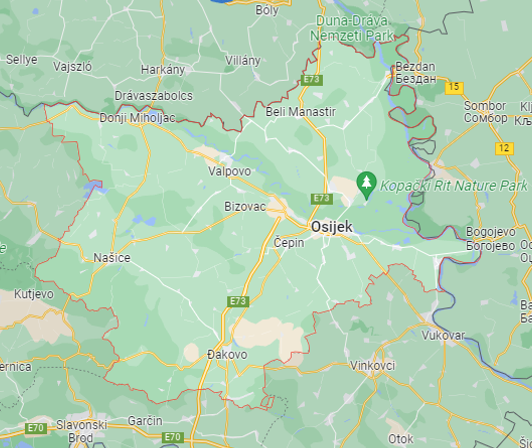
Source: google.com
Osijek-Baranja County has a relatively modest accommodation capacity (in terms of area and population) relative to Croatia and implies predominantly hotel accommodation. In 2022, Osijek-Baranja County had 4,186 free bed capacities, of which 1,928 were in Osijek, 430 in Bilje. Between 2015 and 2022, total accommodation capacity increased by 1,992 beds (90.8%). This can be explained by the growing number of smaller accommodation establishments in the city of Osijek (1,188 beds) and the rising number of rural accommodation establishments. Private accommodation is gaining an increasingly important role in the structure of accommodation (HORWATH I HORWATH CONSULTING ZAGREB 2017). In 2022, the number of overnight stays was 218,462 and the number of guests was 107,945 (Figure 2). The largest guest numbers (65,122) were recorded by the Tourist Board of the City of Osijek (Croatian Bureau of Statistics 2023).
Figure 2: Number of guests and nights spent in commercial accommodation establishments in Osijek-Baranja County, 1995–2022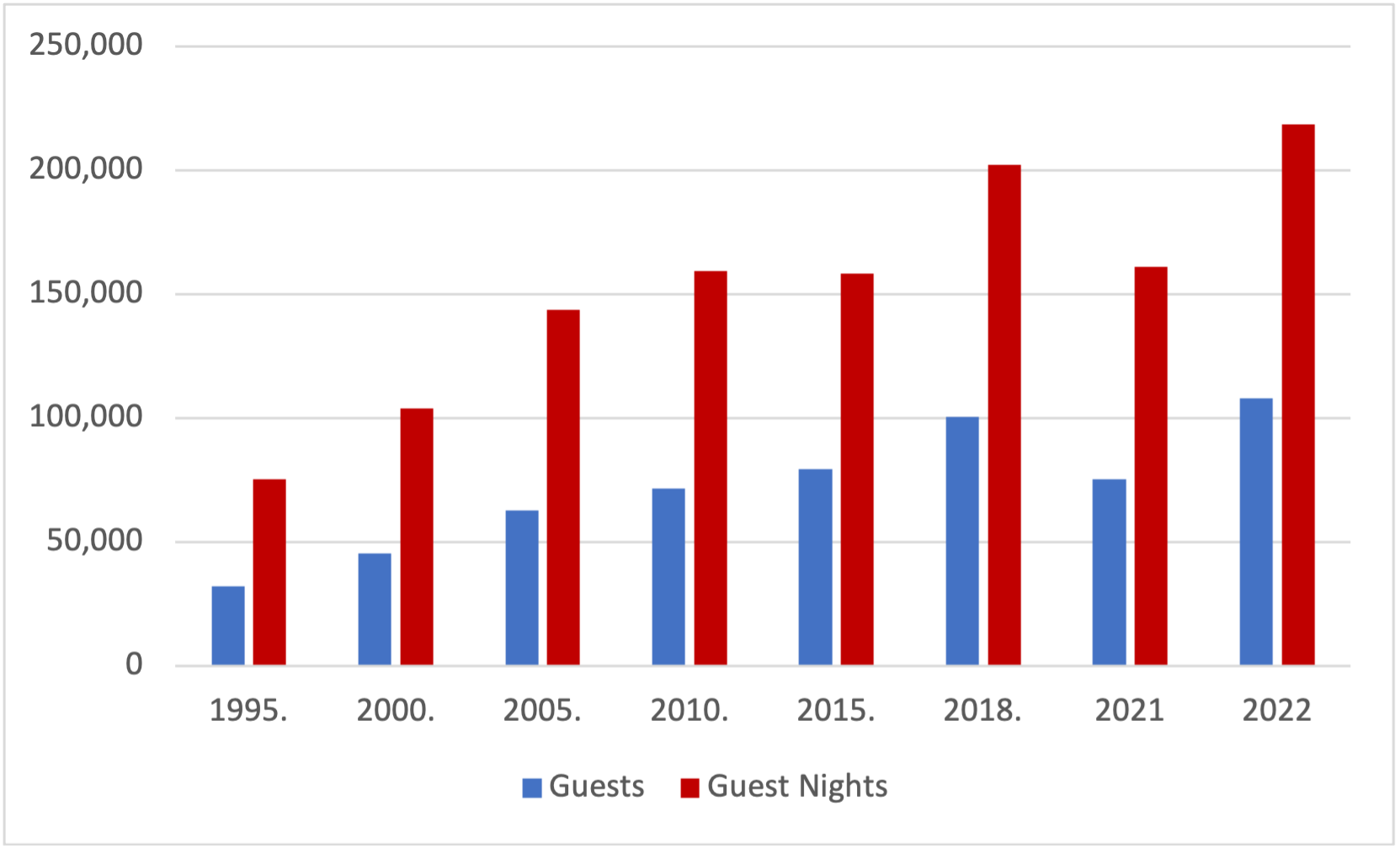 Source: Based on data from the Croatian Bureau of Statistics
In the area of rural tourism, and more specifically, agrotourism, 27 family farms were registered in Osijek-Baranja County, offering accommodation and meals, presenting the traditions and Slavonic cuisine (fish stew, carp in forks, the gömböc, sausages, home-made cheese, home-made cakes). Other complementary activities are offered on these farms, such as getting acquainted with farm animals, distilling brandy, participating in farm work, fruit/vegetable harvesting, horse riding, and fishing (NAGLAV et al. 2019).
Tourist services are operated by the offices of tourism associations in the county. Thanks to the natural, cultural and ecological preservation of its resources, Osijek-Baranja County has outstanding potential for the development of rural tourism. One of the most significant natural treasures of the county is the Kopača meadow. The Kopački Rit Nature Park is home to one of the best-preserved floodplains in Europe. The area is known for its vineyards and excellent wines and its wine trails provide an attractive offer. Slavonian villages are also known for their meat specialities such as the “kulen” and “kulenova seka.” Three international cycling routes traverse the county. The area has numerous attractions, such as the Tvrđa (fortress) complex in Osijek, the Museum of Slavonia in Osijek, the Cathedral of Diakovar, the Tökösi Castle, the Našice Municipal Museum in the Pejacsevich Castle, and the Valpo Museum in the Prandau-Normann Castle (MRVICA MAĐARAC – GUBIĆ KUČAN 2020). Tourism planning documents also highlight that the development of alternative forms of tourism is a key strategic task in Osijek-Baranja County for the creation of high-quality tourism offer (HORWATH I HORWATH CONSULTING ZAGREB 2017). According to the Tourism Development Strategy of Osijek-Baranja County, rural tourism contributes to regional development, the creation of higher value-added agriculture and the preservation of local immaterial heritage assets (MRVICA MAĐARAC – GUBIĆ KUČAN 2020). The tourism offer is enriched by various events and activities organized by the local communities or tourism offices. In summary, the proper touristic utilization of rural heritage in the region is yet to be realized, and while rural tourism is in the development phase, planning documents and existing projects support such development (NAGLAV et al. 2019).
4.1.2. Characteristics of tourism in the Hungarian territory of Baranya County
Baranya County is located in southern Hungary, bordering Croatia (Figure 3). The region is situated in a landscape with diverse and interesting topographical features, a combination of mountainous, hilly, and flat terrains. The Mecsek Mountains, with their highest peak in South Transdanubia (Zengő, 612 m), are also situated here. The area of the county is surrounded by the Drava and Danube rivers from the south and the east. The Danube-Drava National Park hosts diverse protected natural assets. The natural assets of the county include the Orfű lakes, a major tourist attraction. The area is rich in curative and thermal waters (Harkány, Siklós) and cultural heritage assets (Pécs, Mohács, Szigetvár, Siklós).
Figure 3: The territory of Baranya County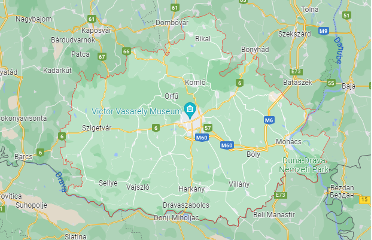 Source: google.com
Although Baranya county is less frequented by tourists than Budapest and Lake Balaton, we can state that Pécs, and the area of Harkány, Siklós and Villány are popular destinations for domestic and foreign tourists as well. A steady increase in the number of beds in business accommodation facilities and other private accommodation establishments is observed in the county relative to commercial accommodation. The accommodation supply included 22,000 beds in 2021 in the county. The market for private accommodation has responded better to the challenges of the past years (the effects of COVID-19), while commercial accommodation capacities have decreased (Figure 4).
Figure 4: Number of bed places in commercial and other accommodation establishments in Baranya County, 2014–2021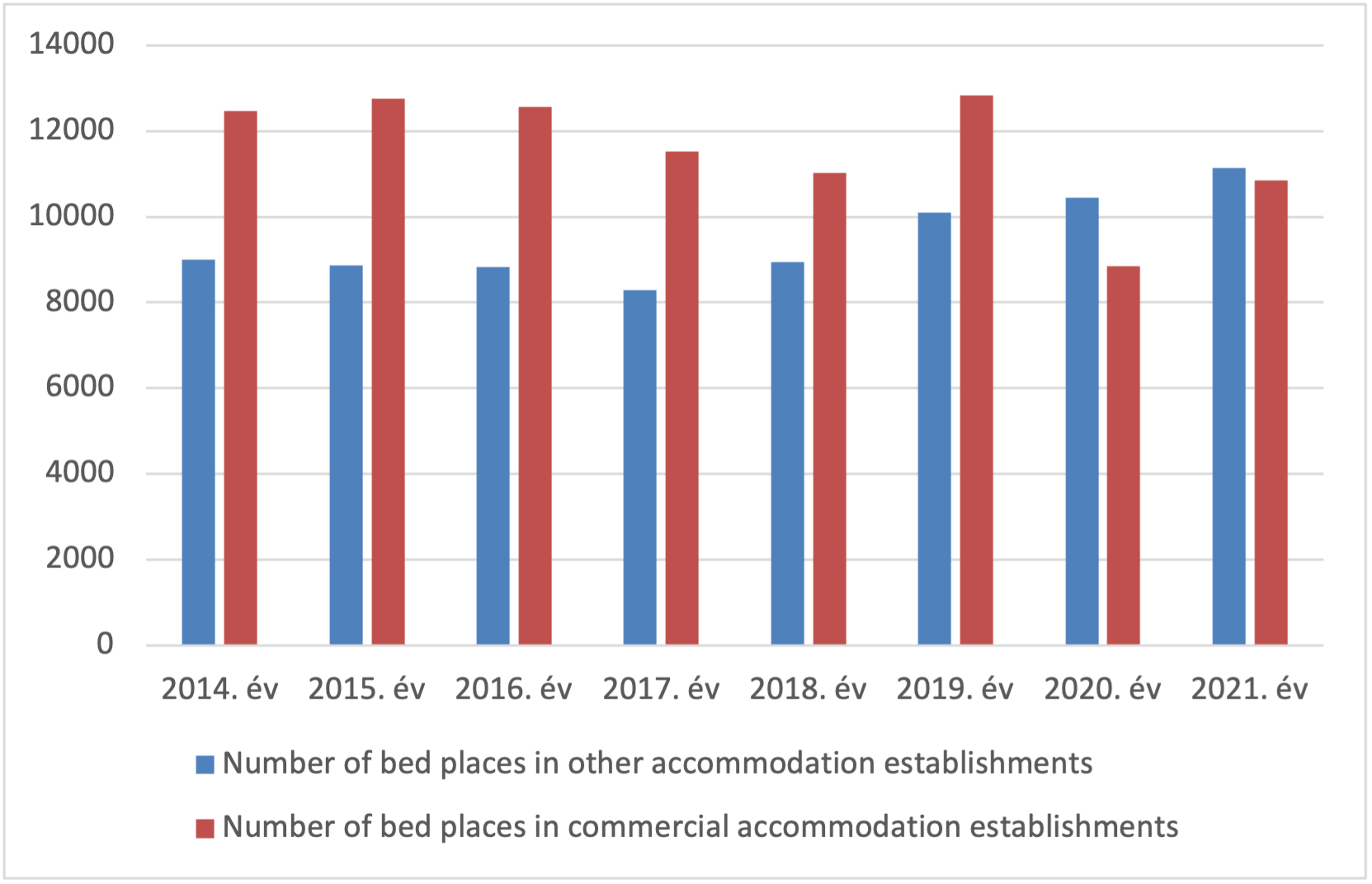 Source: Based on data from the Hungarian Central Statistical Office
Visitor numbers in the county show a gradual rise between 2014 and 2019. In 2019, a total of 1,109,750 overnight stays and 448,163 guests were registered. The highest number of overnight stays was recorded in Pécs (338,731) and Harkány (274,016), accounting for 55% of the total guest turnover of the county. Guest traffic was also concentrated in Orfű (7.7%), Bikal (7%) and Villány (5%). In recent years, the COVID-19 epidemic has led to declining visitor numbers in the county.
Figure 5: Number of guests and guest nights in Baranya County, 2010–2021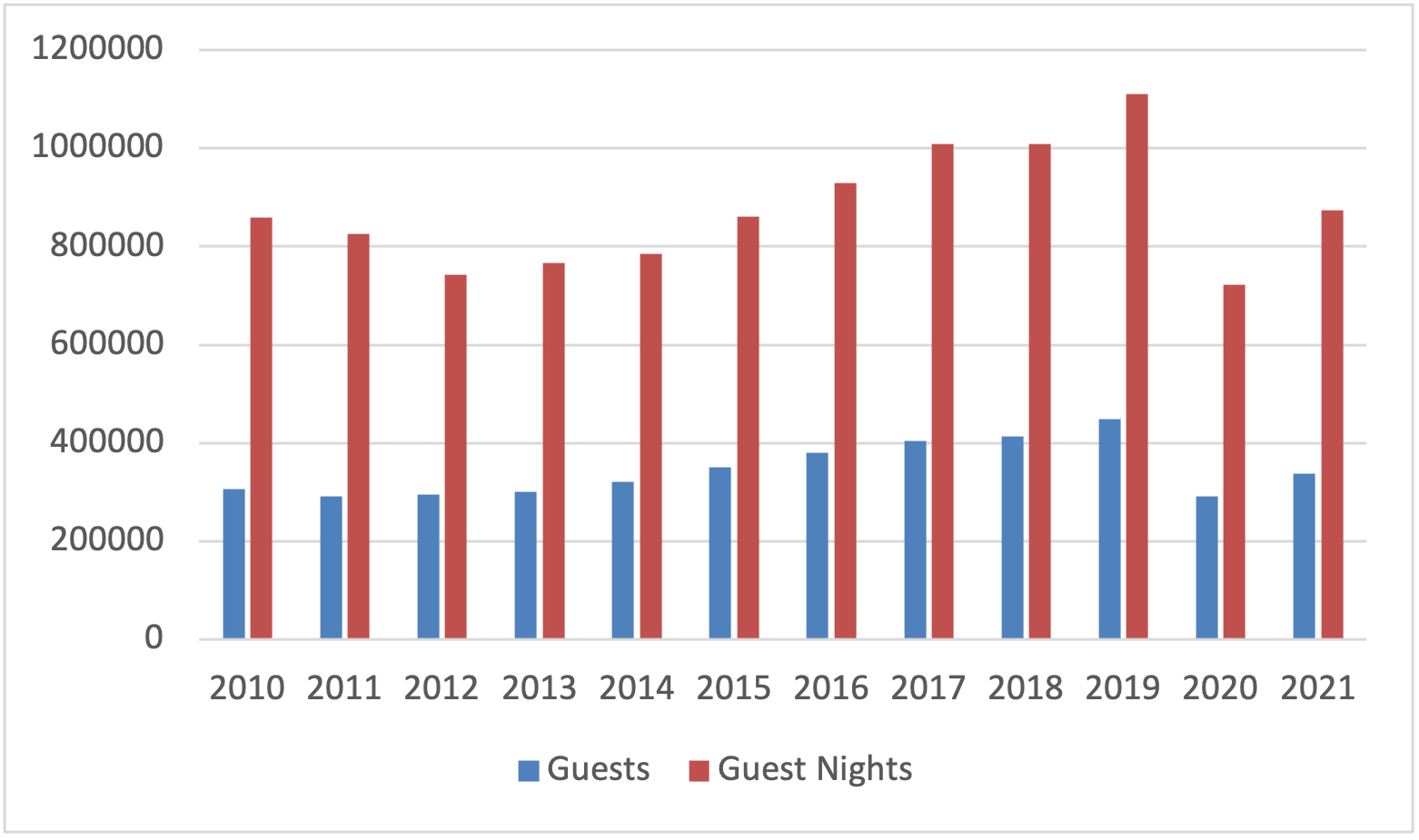 Source: Based on data from the Hungarian Central Statistical Office
Tourism services are operated by municipalities, local action groups and TDM organizations in the county. The Pécs-Villány Tourist Area, newly delimited by the legislation, can become the focal point of tourism development in the coming years. The natural and cultural assets of Baranya County and the available rural accommodation capacities provide an adequate basis for the further development of rural tourism. As early as the 1990s, a large number of rural tourism hosts were involved in the hospitality business, and the county is well positioned in this respect in the Hungarian context both in terms of guest numbers and capacities. It is also worth highlighting the important role of the county in the organization of thematic tours, as the Villány–Siklós Wine Route was the first in Hungary to be implemented in 1994, based on international best practices. This wine route has served as a role model for each subsequently established wine route in Hungary. The Mohács–Bóly White Wine Route was the second to be established in Baranya, followed in 2005 by the Pécs–Mecsek Wine Route. The activities of thematic routes have contributed to strengthening the link between wine production and tourism and the creation of an internationally competitive wine tourism offer. The wine route certification schemes have also enhanced the quality of services.
The planning of the development of rural tourism in the study region has to take into account the existence of settlements with developed, well-established touristic activities but also rural settlements with only potential and embryonic forms of tourism. The dynamically developing “hubs” extend to the area in the vicinity of Pécs (Cserkút, Orfű) and the area of the Villány-Siklós Wine Route (e.g., Siklós, Villány). Smaller settlements outside these touristic hubs, albeit each has some cultural heritage assets, are of minor significance and are therefore not treated as destinations with significant rural tourism attractiveness. As highlighted by the county’s integrated spatial development strategy, over the centuries, Baranya has preserved a vast array of built and intangible products related to its unique rural heritage, which, in addition to their documentation and conservation, should be integrated into the county’s tourism sector. According to the strategy, the future livelihood of the county’s inhabitants in the tourism business relies on strengthening the tourism potential, primarily through the development of natural, non-material, and built heritage assets and the related popular services, fostering the presentation, accessibility and flourishing of these values, the creation of tourist routes and program packages, and promoting marketing activities and cooperation (BARANYA COUNTY MUNICIPALITY 2020). Fortunately, a positive process has recently been witnessed with the growing popularization of local products, folk gastronomy and crafts. This process benefits from the conscious support of local action groups for rural development and regional tourism stakeholders (GONDA et al. 2022).
4.2. Case study: the “Routes to Roots” project
4.2.1. Presentation of the frames of the “Routes to Roots” project
The “Routes to Roots” project was implemented in the framework of the Interreg V-A Hungary–Croatia Cooperation Program 2014–2020. The project covers the historical Baranya County.
The project relied on the cooperation of two Hungarian and two Croatian partners. The partners involved in the project were, on the Croatian side, the Association of Hungarian Entrepreneurs in Croatia and the Željezničar Association – HKUD “Željezničar” and, on the Hungarian side, the Municipality of Orfű and the Orfű Tourism Association.
As mentioned earlier, Orfű is a popular touristic destination in Baranya County. The municipality involved in the project contributed to the preservation and promotion of the common cultural heritage, notably by organizing events. The Orfű Tourism Association federates the tourism operators in the region and formulates tourism development objectives in line with common interests. The association works in close cooperation with the municipality.
The Croatian Association of Hungarian Entrepreneurs helps Hungarian-speaking entrepreneurs to work and prosper in Croatia. Through its activities, the organization draws attention to the potential of culture and tradition to create jobs and a future for the local population. The Željezničar Association – HKUD “Željezničar” is a cultural association whose goal is to preserve the national heritage of Croatian folklore and has a rich repertoire.
The main goal of the program was the development and management of common cultural and rural heritage in order to preserve cultural values and traditions. The specific objective of the project was to develop a unique thematic rural route by exploring and connecting lesser-known attractions that share a common heritage with existing thematic routes, cycle and hiking trails, wine routes and other potentially relevant touristic destinations (routestoroots.eu). The research carried out in the framework of the project laid the groundwork for the development of a thematic tourist route, drawing on Croatian–Hungarian cross-border rural heritage assets, the identification of rural attractions and the elaboration of the concept of the thematic route. Several seminars, workshops, festivals, and an international conference were organized around the theme of common rural heritage assets. The results included the organization of 41 events, the renovation of a barn, the construction of a mobile ethnographic museum and a sculpture park.
The project implementation phase took place between 1 May 2020 to 31 December 2021. The implementation of the project was hampered during this period by the successive waves of the COVID-19 epidemic. The reintroduction of restriction measures in November 2020 and uncertainties concerning its duration represented further setbacks. A major interruption was caused by the measures restricting the permeability of borders between the two countries and the changing border policy in response to the health and security situation (HAJDÚ – RÁCZ 2020). The dates of the events included in the project were modified several times and a significant part of them was postponed to the end of 2021.
4.2.2. Presentation of the thematic route concept elaborated during the project
The first step of laying the theoretical groundwork for the thematic routes in the framework of the “Routes to Roots” project included the definition of the itinerary of thematic routes. Following a professional consultation, the Hungarian and Croatian partners agreed that one route would reach the Croatian border at Udvar and the other at Beremend. This was followed by an analysis of internet databases and a tour of the planned routes. The concrete itineraries were then finalized by the partners, as summarized in detail in Table 1.
Table 1: The itineraries of the routes in the “Routes to Roots” project.
| Routes | Number of settlements involved | Length of the route |
| Orfű – Abaliget – Borjád | 16 | 140 km |
| Orfű – Mohács | 18 | 127 km |
| Topolje – Bijelo Brdo | 10 | 70 km |
| Bijelo Brdo – Gorjani | 7 | 85 km |
Source: www.routestoroots.eu
Both the Hungarian and Croatian partners collected data on the heritage assets of the settlements directly and indirectly connected to the trail by analysing their websites. In Hungary, the registration of heritage assets is a statutory procedure. At the local level, counties are charged with the operation of the inventory, while the heritage assets are also assessed at the national level, with “Hungaricums” constituting the top of the pyramid (TŐZSÉR 2021). All heritage assets from the study area listed in the county inventory have been included in the project. The identification and inclusion of gastrocultural heritage and the utilization of the tourism potential of local products received great emphasis (GONDA et al. 2021). The collected information was tabulated and classified along categories such as ethnographic inventory, built heritage, gastrocultural heritage, crafts, folk architectural value, sacral monument, and other cultural heritage. A total of 67 rural heritage sites were designated along the Orfű–Mohács route and 56 along the Abaliget-Borjád route. The database drawing on secondary sources was supplemented by primary research: field visits, fieldwork to refine the data, with a research questionnaire sent to the mayor of each settlement. The Croatian partner organized a citizens’ forum involving the representatives of associations, tourism professionals, historians and linguists from the area. The finalized inventory of heritage assets was then subjected to qualitative expert analysis, to identify those elements which constituted a touristic attraction in themselves. These were prioritized in the planned heritage tourism programme packages and among the attractions of the thematic route.
Figure 6: Thematic routes defined in the „Routes to Roots” project
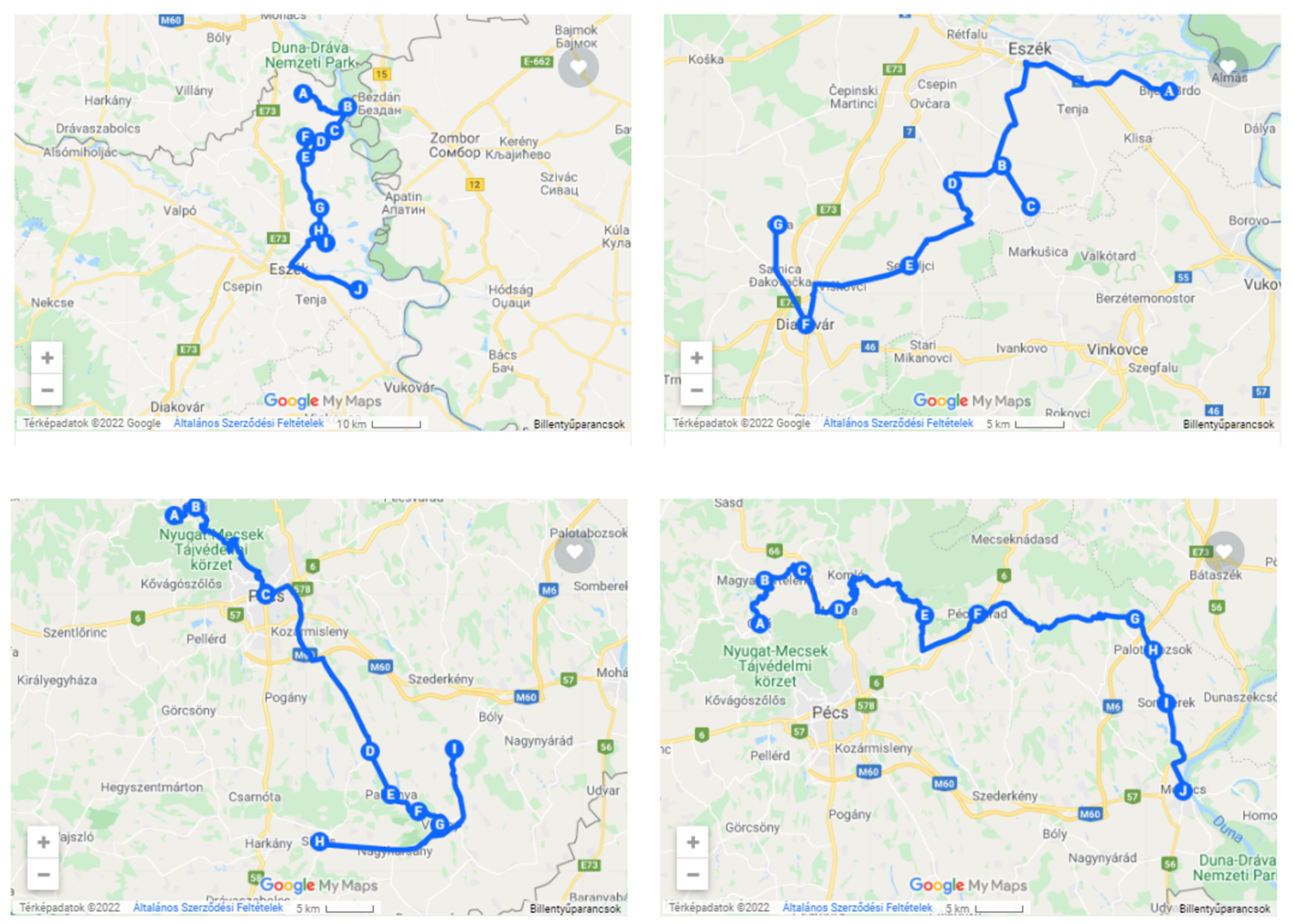
Source: www.routestoroots.eu
The concept of “Routes to Roots” includes not only the identification of assets, their systematization in a database, and the designation of the itinerary, but also the formulation of strategic requirements concerning their implementation and operation (PANNON RURAL DEVELOPMENT NONPROFIT LTD. 2020). Due to the absence of regulations on the development of thematic routes and the lack of certification criteria in Hungary, the German criteria system (Deutsche Ferienstraße) was taken into account, which includes the following (PENTZ – BOZÓKY 2021):
- Designating a lead theme connected to the landscape or local culture, which is also reflected in the name;
- Clear and uninterrupted itinerary design, without inserting motorways or roads. In addition, continuous use of road signs in accordance with national regulations;
- Appointing a clearly identifiable and accountable operator. A coordinating body is necessary to manage the thematic route with the care of a good owner;
- Establishing or designating one or several information centers to serve as a contact point for tourists, service providers, members and partners of the association;
- Strengthening the market presence of the thematic route through professional tourism marketing activities;
- Monitoring and improving the quality of services through continuous quality assurance.
On this basis, the examined concept can be summarized as follows. Heritage assets are the leitmotif of the routes planned under the “Routes to Roots” initiative. The designated routes can generally be developed on low-traffic asphalt roads, cycle paths and existing hiking trails. Clear signage of routes can be provided. The erection of uniform tourist and information signs is recommended along the route. The major challenge is to set up a coordinating organization for the management of the thematic route. This has not yet been created. This organization could ensure the operation of information centres, professional tourism marketing activities and continuous quality assurance.
4.2.3. Future potential of the touristic utilization of identified heritage assets
The results of the project include the exploration of regional heritage assets, the elaboration of a concept for the thematic route, the development of new attractions and the realization of a series of events. However, only proper management organization can ensure the exploitation of the social and economic benefits of the thematic route in the future. A regional-level destination management organization would be required for the concrete implementation of the thematic route.
In Hungary, the recent development of priority tourism areas, such as the Pécs–Villány tourism area, allows for the development of wider regional and inter-municipal cooperation and the coordinated marketing of tourism products. The compilation of common package programs involving several municipalities and the development of thematic tourist routes may provide an efficient method for tourism development. The positioning strategy of the Pécs–Villány tourism area targets high-quality cultural tourism and wine tourism, offering a premium wine experience (Pécs Villány Destination Brand Book 2022). As seen on the Croatian side, the development of rural tourism occupies a prominent place in the tourism development plans of Osijek-Baranja County. This is in line with the concept of heritage tourism development relying on rural heritage targeted in the “Routes to Roots” project.
The development of a cross-border tourism area could promote the efficient operation of a complex two-way information system relying on inter-municipal cooperation. In the future, an efficient destination management organization could promote integration into the national and international tourism system and be charged with the management of innovative marketing activities, a prerequisite for the commercialization of tourism products and services. Visuality must play an important role in destination marketing and image planning. Colours and the emotions they convey play an important role in heritage tourism (JELINČIĆ – ŠVEB 2021).
Successful development of rural heritage tourism requires, beyond the appointment of a coordinating management body, the development of heritage and culture-related businesses and civil initiatives as well. The development of rural accommodation and catering facilities based on local heritage and culture is also essential. In many areas, the upgrading of tourism infrastructure is also required, and opportunities for interactivity and complex experiences need to be created. This is particularly the case for museums, exhibition centres and country houses, which tend to reduce tourists to a state of complete passivity in our days. Furthermore, the role of the local population in heritage tourism must also be stressed, and there is a need for awareness-raising programs and training opportunities as well. The development of human resources is essential to ensure that local natural and cultural assets are presented by local people. In addition to basic tourism knowledge, host communities should also be familiarized with the nature, requirements, benefits and results of heritage tourism.
In our view, there is significant potential in the touristic utilization of rural heritage assets. The rural heritage-based tourism offer can provide a potent complement to the program offer available for tourists who come to historical Baranya County for recreational purposes, discovering the cities and towns, wine tasting, hiking, and cycling but also for business travellers, allowing them to widen their knowledge and acquire new experiences. Opportunities inherent in the border situation must also be highlighted, the possibility of getting acquainted with, discovering and experiencing the common heritage of the people living in the Hungarian and Croatian regions, which may enhance social cohesion among the inhabitants of the border region, while generating economic benefits through tourism-related revenues, thus contributing to regional development.
The routes created in the project were designated separately in each country. The development of cross-border routes is recommended in the future.
5. Conclusion
Our case study presented the “Routes to Roots” Interreg project, which undertook the elaboration of the concept of a thematic tourism route based on Croatian–Hungarian cross-border rural heritage assets in the service of rural tourism development. The target area of the project is a mutually cooperating border region with a longstanding tradition of economic, cultural and tourism cooperation.
In European countries with advanced tourism activities, rural tourism has a long tradition spanning several decades. In many countries, modern spatial development methods have reinforced the position of rural tourism. Projects supporting EU cross-border cooperation provide an outstanding opportunity for the development of rural border regions.
The heritage assets of the historical Baranya County – whose northern part currently belongs to Hungary and the southern part to Croatia – were identified and systematically organized in the framework of the “Routes to Roots” project. The development of tourism is a major dimension of the more efficient exploitation of the natural, historical, cultural, architectural, economic and agricultural heritage accumulated in this area, as well as of economic capacities represented by contemporary artistic and local products. This is also evident in the contemporary tendency to define tourism demand by the quest for a unique offer, value orientation and the acquisition of new knowledge. The preservation of landscape values, the continuous amelioration of tourism infrastructure offering unique services, and the integrated modernization of tourism infrastructure and offer are essential to attract and retain a value-oriented tourist clientele. This is how the thematic route outlined in this project can promote regional development; however, to ensure the management of the thematic route and the efficient exploitation of its social and economic benefits, a regional destination management body should be established in both the Hungarian and Croatian parts of the region.
Acknowledgement
The research has been implemented with the support provided from the National Research, Development and Innovation Fund of Hungary (Geopolitical Processes and Imaginaries in Central Europe: States, Borders, Integration and Regional Development, NKFI K 134903)
References
BALI L. (2010): A horvát-magyar határ menti együttműködés két mikro regionális esete, Barcs és a magyar-horvát-szlovén hármas határ példáján. Tér és Társadalom, 24(4): 237–248.
BALI L. (2021): Europäischer Verbund für territoriale Zusammenarbeit (EVTZ) als Instrument zur Intensivierung der grenzüberschreitenden Beziehungen nach dem Vorbild von Murregion. Podravina, 20(40): 141–147. Retrieved from: https://hrcak.srce.hr/278992
ČELAN, T. J. (2021): Tourism as a Disconnecting Element of the EU Funded Hungary–Croatia Cross-border Co-operation. Modern Geográfia, 16(1): 23–35. DOI: 10.15170/MG.2021.16.01.02
CSAPÓ J. – SZABÓ G. – SZABÓ K. (2015): From Eco Lodges to Baranya Greenway: Innovative Rural Tourism Product Brands in South Transdanubia. Acta Geographica Universitatis Comenianae, 59(2): 203–217.
CSÓKA L. – PAIC R. – PRISZTÓKA GY. – VARGÁNÉ SZALAI K. – VARGA T. – MARTON G. (2021): A hazai utazási szokások változásai a koronavírus-járvány hatására. Turisztikai és Vidékfejlesztési Tanulmányok, 6(4): 16-27. DOI: 10.15170/TVT.2021.06.04.02
GARCÍA-ALMEDIA, D. J. – GARTNER, W. C. (2021): Model konkurentnosti u turističkim destinacijama nematerijalne kulturne baštine sa stajališta temeljenog na znanju – A model of competitiveness in intangible cultural heritage tourism destinations from the knowledge-based view. Acta Turistica 33(1): 7–38. Retrieved from: https://www.jstor.org/stable/27030998
GÁSZNÉ BŐSZ B. (2020): Dél-Dunántúl, a kulturális turisztikai régió? Turisztikai és Vidékfejlesztési Tanulmányok 5(3): 74–90. DOI: 10.15170/TVT.2020.05.03.05
GÁSZNÉ BŐSZ B. – PENTZ M. (2020): Friss élmények történelmi környezetben: “élő várak” a németországi várak útján. Turisztikai és Vidékfejlesztési Tanulmányok, 5(4): 72–90. DOI: 10.15170/TVT.2020.05.04.05
GONDA T. (2012): A helyi termék reneszánsza. In: Aubert A. – Gyuricza L. – Huszti Zs. (eds.) A kultúra turizmusa, a turizmus kultúrája. ID Research Kft./Publikon Kiadó, Pécs, pp. 233– 245.
GONDA T. – ANGLER K. – CSÓKA L. (2022): A helyi termékek turizmusban betöltött szerepe. Marketing és Menedzsment 55(4): 39–49. DOI: 10.15170/MM.2021.55.04.04
GONDA T. – ANGLER K. – CSÓKA L. (2021): The role of local products in tourism. European Countryside 13(1): 91–107. DOI: 10.2478/euco-2021-0006
GONDA T. (2016): A turisztikai termékfejlesztés elméleti alapjai. PTE KPVK, Szekszárd.
GONDA T. – SPIEGLER P. (2012): A turisztikai klaszterek szerepe a regionális marketingben. Marketing és Menedzsment 16(1–2): 15–25.
HAJDÚ Z. – RÁCZ SZ. (2020): Államhatár-politikák az Európai Unióban és Magyarországon a globális koronavírus-válság kezdeti időszakában. Tér és Társadalom, 34(2): 202–210. DOI: 10.17649/TET.34.2.3260
HAJDÚ Z. – BALI L. – ZÁGOREC-CSUKA J. (2013): Államhatárok és határokon átnyúló kapcsolatok 1990 után In: Hajdú, Z. – Nagy, I. (szerk.): Dél-Pannónia. MTA KRTK Regionális Kutatások Intézete, Pécs, pp. 456–474.
HARDI T. (2008): A határtérség térszerkezeti jellemzői. Tér és Társadalom, 22(3): 3–25.
JELINČIĆ, D. A. – ŠVEB, M. (2021): Utjecaj vizualnih podražaja na emocije u kreiranju kulturno-turističkih doživljaja – Visual stimuli cues with impact on emotions in cultural tourism experience design. Acta Turistica, 33(1): 39–74. https://www.jstor.org/stable/27030999
KANTAR S. – SVRŽNJAK K. (2017): Development of Sustainable Rural Tourism. DETUROPE – The Central European Journal of Tourism and Regional Development, 9(1): 26–34. DOI: 10.32725/det.2017.003
KÖSTLIN K. (1996): Utazás, régiók, modernség. Café Bábel, 22: 117–125.
LEMPEK M. Z. – TÉSITS R. (2021): A vidéki térségek turizmusalapú fejlesztési lehetőségei a Siklósi járás példáján. Modern Geográfia, 16(2): 87–112. DOI: 10.15170/MG.2021.16.02.05
MATEČIĆ, I. (2016): Specifičnosti procesa vrednovanja materijalne kulturne baštine u turizmu / Specific characteristics of the tangible cultural heritage valuation process in tourism. Acta Turistica 28(1): 73–100. Retrieved from: http://www.jstor.org/stable/44413532
MARTINEZ, O. J. (1994): The dynamics of border interaction. New approaches to border analysis. Global Boundaries, World Boundaries 1. Routledge, London and New York, pp. 1–15.
MARTON G. – RAFFAY Z. – VARGA SZALAI K. – BARCZA A. – GONDA T. (2021): Specific problems of tourism development in the Hungarian Areas of the Dráva Regions, Podravina: Casopis za Multidisciplinarna Istrazivanja, 20(39): 179–191.
MIKHÁZI ZS. – SALLAY Á. – MÁTÉ K. – CSEMEZ A. (2018): A borturizmus múltja, jelene és jövője az Etyek-Budai Borvidéken. Turizmus Bulletin, 18(1): 4–16.
MINORICS T. (2013): Gasztrokulturális örökségünk. Gastrokulturna bastina. Our gastro-cultural heritage. In: Minorics, T. (ed.): Kulináris utazások Baranyában: Kulinary journeys in Baranya: Kulinarska putovanja u Baranji. Határokon Túli Magyarságért Alapítvány, Pécs, pp. 20–36.
MINORICS T. (2019): Local Communities and the Intangible Cultural Heritage in Hungary In: Németh, B. (ed.) Learning Cities and Culture Working Together. University of Pécs, House of Civic Communities, Pécs, pp. 43–51.
MRVICA MAĐARAC, S. – GUBIĆ KUČAN, L. (2020): Turističko tržište Osječko-Baranjske županije 10. Međunarodna Konferencija Razvoj Javne Uprave, pp. 206–215.
NAGLAV, K. – MARTINOVIĆ, N. – MRVICA MAĐARAC, S. (2019): Ruralni turizam u Osječko-Baranjskoj županiji – Stanje i perspektive/ Rural tourism in Osijek-Baranja county – present state and perspectives. Journal of Economic and Politics of Transition, Tuzla-Zagreb-Beograd-Bukurešt, 21(44): 1–9. Retrieved from: https://hrcak.srce.hr/file/342743
NAGY D. (2018): Turizmusfejlesztés a Duna-Sió desztinációban. Turisztikai és Vidékfejlesztési Tanulmányok 3(1): 34–46.
PÁMER Z. (2019): Magyarország és Horvátország határon átnyúló együttműködésének vizsgálata a két ország területi kormányzási rendszerének tükrében. Tér és Társadalom, 33(2): 149–166. DOI: 10.17649/TET.33.2.3148
PÁMER Z. (2021): Tackling the measurement of cross-border cooperation intensity: an empirical example on the Hungary-Croatia border. DETUROPE – The Central European Journal of Tourism and Regional Development, 13(2): 125–138. DOI: 10.32725/det.2021.016
PENTZ M. – BOZÓKY A. (2021): Vidéki örökségi értékekre épülő Baranya megyei tematikus út koncepciója. In: Gonda, T. (ed.) A vidéki örökségi értékek szerepe az identitás erősítésében a turizmus és vidékfejlesztésben. Orfűi Turisztikai Egyesület, Orfű, pp. 10–22.
RÁCZ SZ. (2017): Main characteristics of Hungarian-Croatian political relations and Cross-Border Co-operations. Geographica Pannonica, 21(1): 54–67.
RÁCZ SZ. (2019). Development Processes of Regional Centres in Central and Southeast Europe – From State Socialism to Dependent Market Economies. DETUROPE – The Central European Journal of Tourism and Regional Development, 11(2): 92–100. DOI: 10.32725/det.2019.017
SPIEGLER P. (2012): A turizmus révén felértékelődő vidék: Baranya. Comitatus Önkormányzati Szemle, 22(209): 107–119.
SPIEGLER P. (2008): Die wechselseitige Beziehung zwischen Regionalbewusstsein und touristischem Image. Das Beispiel der Region Südwestungarn. In: Lengyel K. ZS. (ed.) Ungarn-Jahrbuch. Zeitschrift für interdisziplinäre Hungarologie. Band 29. Ungarisches Institut München, München, pp. 411–424.
SZABÓ G. – CSAPÓ J. – MARTON G. (2017): Zöldutak a turizmusban – Innováció és jó gyakorlat a szelíd turizmusban. Földrajzi Közlemények, 141(2): 152–163.
SZABÓ G. – CSAPÓ J. (2016): Vidéki turizmus alternatívák a Dél-Dunántúlon. In: Veres, L. – Hartl, M. (eds.) Társadalmi-gazdasági Kohézió a Kárpát-medence Határmenti Térségeiben Nemzetközi Tudományos Konferencia. Szövetség a Közös Célokért, Komárno, p 13.
TÓTH B. – VIDA G. – LADOS G. – KOVÁCS Z. (2020): The potentials of crossborder tourism development in the Lower-Tisa Valley. GeoJournal of Tourism and Geosites, 28(1): 360–375. DOI: 10.30892/gtg.28128-475
TŐZSÉR A. (2021): A hungarikumok szerepe a települések fejlődésében. Turisztikai és Vidékfejlesztési Tanulmányok, 6(4): 51–66. DOI: 10.15170/TVT.2021.06.04.04
Other references
BARANYA COUNTY MUNICIPALITY (2020): Kincses Baranya. Baranya Megye Integrált Területi Programja. http://www.baranya.hu/dokumentum/808 (Accessed on: 17.10.2022.)
Croatian Bureau of Statistics: https://podaci.dzs.hr/en/statistics/tourism/tourist-arrivals-and-nights/ (Accessed on 17.09.2023)
Deutsche Ferienstraße: https://www.ferienstrassen.info (Accessed on: 17.10.2022)
HORWATH I HORWATH CONSULTING ZAGREB D.O.O (2017): Master plan turizma Osječko-baranjske županije. Osijek, 139 p.
PANNON RURAL DEVELOPMENT NONPROFIT LTD (2020): Kincses Baranya. Vidéki örökségi értékekre épülő tematikus út koncepciója. Routes to Roots. HUHR/1901/2.1.3/0062. 91 p.
PANNON RURAL DEVELOPMENT NONPROFIT LTD (2020): A vidéki turizmusban hasznosítható kulturális értékek feltárása Baranya megyében. Pécs, 99 p.
PÉCS VILLÁNY DESZTINÁCIÓ BRAND BOOK, https://pecs.hu/app/uploads/2022/06/pecs-villany-brandbook-teljes-small.pdf (Accessed on:17. 10. 2022)
Routes to Roots: https://www.routestoroots.eu/ (Accessed on: 17. 10. 2022)
Source of featured image: https://www.routestoroots.eu/slike-rute/sve/knezevi-vinogradi-vinski-podrum-belje.webp