

HERITAGE AND TOURISM PLANNING FOR CAPE TOWN’S INNER-CITY
BO-KAAP NEIGHBOURHOOD
1Sirhan Jessa, 2Jayne M. Rogerson*
1Researcher, University of Johannesburg, College of Business and Economics, School of Tourism & Hospitality, Bunting Road Campus, Johannesburg, South Africa; jessasirhan@gmail.com, ORCID: 0009-0008-7103-0043
2Visiting Professor, University of Johannesburg, College of Business and Economics, School of Tourism & Hospitality, Bunting Road Campus, Johannesburg, South Africa; jayner@uj.ac.za, ORCID: 000-0003-3394-1311
ABSTRACT
The workings and effects of the urban and tourism regulatory landscape on the residents of the heritage precinct of the Bo-Kaap neighbourhood in Cape Town, South Africa are scrutinised. Bearing historical legacies of successive land dispossession, the Bo-Kaap has become a focal point of urban and tourism development, leading to a profound transformation of the physical and social landscape. Findings are based upon the qualitative research undertaken with various stakeholders and interest groups, including 22 semi-structured interviews, supplemented by analysis of policy documents and participant observation. It is demonstrated that urban and tourism development is not being effectively leveraged for its transformative potential. Despite vehement opposition, seemingly progressive heritage policies, and democratic processes, incongruent development approvals continue. Unfettered, unmanaged tourism growth results in residents experiencing many of the hallmarks of overtourism. Tourism planning efforts have been criticised for being anaemic and divorced from broader community needs.
Keywords: Cape Town inner-city, tangible and intangible heritage, tourism planning, urban planning
Received: 4 July 2026
Accepted: 17 September 2026
Published: 12 October 2026
This open access article may be used under the international license terms of CC BY-NC-ND 4.0.
https://creativecommons.org/licenses/by-nc-nd/4.0
FOKVÁROS BELVÁROSA BO-KAAP NEGYEDÉNEK ÖRÖKSÉGVÉDELMI IDEGENFORGALMI TERVEZÉSE
1Sirhan Jessa, 2Jayne M. Rogerson*
1Kutató, Johannesburgi Egyetem, Közgazdaságtudományi Kar, Turizmus és Vendéglátás Intézet, Bunting Road Campus, Johannesburg, Dél-afrikai Köztársaság; jessasirhan@gmail.com, ORCID: 0009-0008-7103-0043
2Vendégprofesszor, Johannesburgi Egyetem, Közgazdaságtudományi Kar, Turizmus és Vendéglátás Intézet, Bunting Road Campus, Johannesburg, Dél-afrikai Köztársaság; jayner@uj.ac.za, ORCID: 000-0003-3394-1311
ABSZTRAKT
A tanulmány a városi és idegenforgalmi szabályozási keret működését és hatásait vizsgálja a dél-afrikai Fokváros Bo-Kaap negyedének örökségi területén élő lakosok szempontjából. A sorozatos földelkobzások történelmi örökségét hordozó Bo-Kaap a városi és idegenforgalmi fejlesztések középpontjává vált, ami a fizikai és társadalmi környezet mélyreható átalakulásához vezetett. Az eredmények különböző érdekelt felekkel és érdekcsoportokkal végzett kvalitatív kutatáson alapulnak, amely 22 félig strukturált interjút foglal magában, kiegészítve szakpolitikai dokumentumok elemzésével és résztvevői megfigyeléssel. A tanulmány kimutatja, hogy a városi és idegenforgalmi fejlesztés átalakító potenciálját nem használják ki hatékonyan. A heves ellenállás, a látszólag haladó örökségvédelmi politikák és a demokratikus folyamatok dacára továbbra is jellemzőek az összeegyeztethetetlen fejlesztési engedélyezések. A korlátlan, irányítatlan turisztikai növekedés következtében a lakosok a túlturizmus számos jellegzetes tünetét tapasztalják. A turisztikai tervezési erőfeszítéseket azért érte kritika, mert erőtlenek és elszakadnak a tágabb közösségi szükségletektől.
Kulcsszavak: Fokváros belvárosa, tárgyi és szellemi örökség, idegenforgalmi tervezés, várostervezés
Benyújtva: 2026. július 4.
Befogadva: 2026. szeptember 17.
Publikálva: 2026. október 12.
Ez a mű a Creative Commons CC BY-NC-ND 4.0 nemzetközi licence-feltételeinek megfelelően használható fel.
https://creativecommons.org/licenses/by-nc-nd/4.0/
1. Introduction
The Bo-Kaap, a historic inner-city precinct, is Cape Town’s foremost cultural asset, celebrated for its aesthetic appeal and vibrant socio-religious culture. It is often thought of as “the heart and soul of Cape Town” (Shem-Tov, 2020: 17). As the cradle of Islam in South Africa, it symbolizes the struggle for religious freedom (Davids, 1980). This oldest neighbourhood in the country consists mainly of small residential units and features the highest concentration of vernacular architecture which blend Cape Dutch and Georgian styles (Todeschini, 2017). The Bo-Kaap’s “colourful houses have become well known and are a major tourist attraction in Cape Town” (Salie, 2022: 22). According to Shem-Tov (2020: 17) the picturesque Bo-Kaap with “its narrow cobbled streets, multi-coloured buildings, omnipresent mosque towers and abundant street life, bears impressive material witness to the layers of history and stories that have shaped it as a lively residential neighbourhood, and a community formation with Islamic cultural roots, from its colonial beginnings in the mid-eighteenth century Cape settlement”. The area significantly influenced the development of the Afrikaans language as well as Cape Malay culinary and musical traditions, remaining a crucial site for memory recovery (Baderoon, 2014; Jethro & Lehloenya, 2023).
Under apartheid, whilst racial segregation policies forcibly displaced the majority of Black communities, in 1957 the Bo-Kaap was uniquely protected because of its designation as a ‘Malay Group Area’ or ethnic quarter. Since the democratic (post-1994) transition, the Bo-Kaap community “has been increasingly affected by an intruding Central Business District (CBD) and subject to land-seeking behaviour because of its proximity to the city centre” (Salie, 2022: 3). The march of gentrification in the suburb is part of similar processes of change and restructuring that occurred elsewhere in Cape Town as well as other South African cities (Garside, 1993; Massey, 2020; Salie, 2022; Campbell & Donaldson, 2025; Jessa & Rogerson, 2025a). The 2000s decade was marked by the advance of a range of inner-city development initiatives designed to foster and retain service-oriented transnational capital setting-off processes of socio-spatial restructuring in Cape Town (McDonald, 2012). Aligned to pro-growth policy frameworks, these shifts “resulted in significant urban change” and attracted a new urban middle class (Donaldson et al., 2013: 173). By the early 2010s as property prices escalated Kotze (2013) bemoaned the fate of Bo-Kaap as ‘a community in trouble’, noting that “the area has seen a large number of housing units renovated and upgraded” (Kotze, 2013: 124). Community leaders and established Muslim residents of Bo-Kaap now engaged “in a constant battle to preserve the neighbourhood’s cultural identity” (Kotze, 2013: 124).
Tourism emerged as a major additional threat at this time. Until democratic change in 1994 Cape Town’s appeal as a destination for foreign visitors was tempered by sanctions and international boycotts because the racially discriminatory practices of apartheid extended to tourism (Rogerson & Rogerson, 2025). However, following post-apartheid transition in 1994 Cape Town emerged as an iconic international tourism destination for leisure travel (Rogerson & Rogerson, 2021a). This became a further trigger for tourism-driven processes of transformation, posing a threat to Bo-Kaap (Jessa & Rogerson, 2025b). Increasing flows of mainly international tourists became attracted to the area because of its cobbled streets and multi-coloured houses prompting mounting concerns about ‘overtourism’ (Jessa & Rogerson, 2025c). Gentrification in the Bo-Kaap is, to some degree, tourism-driven (Jessa & Rogerson, 2025b). The accelerating ‘touristification’ of the Bo-Kaap induced impacts on economic growth, social dynamics, and cultural heritage. Indeed, as tourism consolidated as the dominant activity in the area, the Bo-Kaap began to replicate the experience of other historic neighbourhoods in which tourism rapidly becomes dominant, embedded in the urban fabric resulting in the neighbourhood becoming difficult for long-established residents to continue living there (Cocola-Gant, 2018). Bo-Kaap is a predominantly working-class community, occupying an inner-city space that is extremely valuable in real estate terms and subject to processes of rapid urban change (Davids, 1980; Salie, 2022; Jessa, 2025). The combined influence of commercial property developments and gentrification therefore threatens its essential character. Nhlabathi and Maharaj (2021: 301) posit that residents “have not necessarily viewed gentrification as the rejuvenation, revitalization or renewal of deteriorated urban neighbourhoods”; instead “they have viewed it as leading to the loss of generational heritage, community-family ties, and as spatial violence”.
It is against this backdrop that the aim in this paper is to interrogate the workings and effects of the urban and tourism regulatory landscape on the residents of the heritage precinct of the Bo-Kaap neighbourhood in Cape Town. The research location is part of what Rogerson and Rogerson (2021b) style as ‘the other half of urban tourism’ as regards international tourism scholarship. The paper is therefore a novel contribution to an expanding literature and debates around heritage and urban tourism in South Africa (Marschall, 2005; van der Merwe, 2013; Rogerson & van der Merwe, 2016; van der Merwe & Rogerson, 2018; Drummond et al., 2021; Donaldson, 2024; Drummond, 2024; Rogerson, 2024). Three sections of material are presented below. The literature review situates the South African research within the context of international debates around tangible and intangible heritage as well as giving an overview of the local context of heritage protection measures initially applied in the Bo-Kaap. Following a brief description of research methodology, attention turns to the results of the research. The conflict around the declaration and enactment of a heritage protection zone for the Bo-Kaap provides the basis for investigating stakeholder perspectives concerning both heritage and tourism planning for the Bo-Kaap.
2. Literature review and context
The literature review frames this investigation of heritage and tourism planning for the Bo-Kaap neighbourhood in Cape Town. Cultural heritage comprises both tangible components such as monuments, sites, and artifacts and intangible cultural heritage, which includes oral traditions, rituals, performing arts, and traditional knowledge (Liu et al., 2021). The International Charter for the Conservation and Restoration of Monuments and Sites, commonly known as the Venice Charter of 1964, was the initial international reference point for heritage conservation with the main goal of protecting cultural property, including historical monuments and buildings (Ahmad, 2006). Since the 1964 Charter “the scope of heritage has broadened from a concern with physical heritage to “non-physical heritage including environments, social factors and, lately, intangible values” (Ahmad, 2006: 293–294). By the close of the 20th century, the scope of heritage was agreed internationally to encompass both tangible and intangible heritage. The recognition of intangible cultural heritage was formally undertaken in 2003 by UNESCO as the practices, expressions, languages, and cultural spaces transmitted across generations (Tavares et al., 2021; Qiu et al., 2022).
Arguably, the fluid and evolving nature of intangible cultural heritage complicates attempts at categorization, particularly as meaning is continuously created and recreated in the present (Tavares et al., 2021; Qiu et al., 2022; Stewart, 2022; Sitas & Stewart, 2023). For UNESCO (2016), heritage underlines the legacy of the past, in what we live with today, and what we pass on to future generations. Heritage conservation highlights both tangible and intangible social benefits. Adendorff (2025) maintains that heritage conservation involves the preservation of inherited objects or locations of cultural significance. Tangible heritage derives from physical structures and sites, while intangible heritage consists of creative, non-physical forms of cultural expression. Timothy (2018) emphasises the inherent link between cultural tourism and heritage, highlighting the significance of beliefs, rituals, celebrations, culinary traditions, sacred spaces, and architectural landmarks as essential components of a place’s heritage. When tourists interact with these sites, they experience a cultural adventure that expands their insight into the rich history of an area. Thus, a mutually positive relationship exists between cultural tourism and heritage conservation (Timothy, 2018).
Tourism is frequently seen as a tool for heritage survival, place-making, revitalizing local networks including through festivals, pilgrimage routes, and creative industries (Saarinen & Rogerson, 2021; Timothy, 2023; Seabra & Korstanje, 2025; Nyikana & Ntlansana, 2026; Richards, 2026; Timothy & Shinde, 2026). Nevertheless, the industry can also commodify culture within global tourism circuits, leading to urban redevelopment and displacement (Gotham, 2005). In several destinations, the international burst in urban heritage tourism intensified issues of overtourism, straining local infrastructure and challenging the assumption that tourism growth universally supports development (Cocola-Gant, 2018). As a contested resource involving diverse interests and interpretations, heritage in urban contexts is often characterized by power imbalances and conflict, a dynamic which is captured by the notion of ‘dissonant heritage’ (Tunbridge & Ashworth, 1996). Notwithstanding UNESCO’s emphasis on the importance of participatory governance, community inclusion often remained superficial, complicating efforts to conserve heritage while accommodating inevitable urban transformation (Liu et al., 2021).
The declaration of parts of the Bo-Kaap as a National Monument in 1962, similarly occurred without any community engagement and undertaken, in the view of Shem-Tov (2020), purely to protect colonial heritage and a fetishized view of an exotic community. In 1986, the City Council identified Bo-Kaap as an urban conservation area, but in a highly charged political environment the declaration was rejected by community members. In post-apartheid South Africa, the National Heritage Resources Act (1994) was implemented to transform the heritage landscape and be representative of the new democracy (Marschall, 2005). In the immediate years following transition the construction of new memorials, museums and public statues became a government priority, thereby bringing previously marginalised voices into the national discourse. Against this backdrop, in 2002, a firm of architects and urban planners was commissioned by the Cape Town city authorities to conduct a revitalisation study, as a continuation of an earlier consultant study undertaken in 1993. The proposals, however, were again met with community resistance in the Bo-Kaap and the plan stalled. It is suggested that the stream of development proposals have been met by the community with a sense of injustice, as historical context goes unacknowledged (Donaldson et al., 2013).
The South African Heritage Resources Agency, guided by international directives, is tasked with identifying and protecting sites of national heritage significance (Donaldson et al., 2013). This agency identified the Bo-Kaap as having unique elements linking tangible, built heritage, and intangible cultural-religious values. In 2004 it attempted to declare the Bo-Kaap a National Heritage Site, but due to an incomplete community participation process the declaration was rejected (Shem-Tov, 2020). The provincial heritage resources authority, Heritage Western Cape (established 2003) is mandated to promote co-operative governance between national, provincial, and local authorities for the identification, conservation, and management of tangible and intangible heritage resources. Donaldson et al. (2013) highlight that the organisation’s mandate includes lobbying national government in order to establish policy guidelines for preserving intangible aspects of heritage, a neglected area of protection efforts. In South Africa the relevance and importance of heritage sites is indicated through a grading and declaration process, as heritage resources can be designated as National Heritage Sites (Grade I), Provincial Heritage Sites (Grade II), or Municipal Heritage Sites (Grade III), each of which is managed at the corresponding authority level (Steenkamp, 2021). According to the City of Cape Town (2021a) the Bo-Kaap engages all three spheres of heritage governance. While many significant sites were formally protected under the National Monuments Act (1969), they are now managed by Heritage Western Cape. Most heritage resources within the Bo-Kaap are classed as Grade III.
The Bo-Kaap is defined by the South African Heritage Resource Agency as a Grade I heritage site, but under provincial supervision. Donaldson et al. (2013) pinpoint that this contested jurisdiction over the Bo-Kaap complicates management and accountability. The Bo-Kaap is subject to several broader regulatory and development frameworks including that of the Local Area Spatial Development Framework (LASDF) (City of Cape Town, 2021a). This provides a “contextual overview of the existing trends” in the Bo-Kaap and sets parameters for development investment. Underpinning this framework is a complex set of legislation. The Sustainable Development Goals (SDGs) along with the National Development Plan (2030) are stated as the guiding principles of the LASDF, albeit no sustainability indicators, benchmarks or mention of SDG’s are provided. Critically, however, the City of Cape Town remains steadfast in its policy commitments to strategies of densification.
3. Methodology
The study employs a qualitative research approach. A review of urban and tourism development scholarship informs an understanding of neighbourhood change in Bo-Kaap and supported by 22 semi-structured interviews with key role players. The interviews were conducted in 2023–2024. In addition to interviews, the research draws upon documentary sources. The study analysed the content of urban conservation planning tools and the commissioned Bo-Kaap Tourism Development Framework (City of Cape Town, 2019, 2021a, 2021b). Finally, participant observation and social media content data was triangulated to further assess the extent of tourism-driven gentrification and its socio-cultural repercussions. Full details regarding respondents and their selection is provided by Jessa (2025).
4. Results
The results are structured into three sections of material. First, using documentary sources, a chronicle and discussion of events which occurred in Bo-Kaap during 2018 is presented. This is critical to understand as it precipitated the launch of significant new initiatives directed at heritage protection and planning tourism development. The second and third sections analyse stakeholder perspectives on the unfolding of these heritage protection initiatives and measures for tourism planning for Cape Town’s historic Bo-Kaap neighbourhood.
4.1 Mega-property developments, community resistance, and declaration of heritage protection
Community pressures for the establishment of new heritage protection measures for the Bo-Kaap began in the early 2010s, a time of the progressive march of gentrification. Residents of Bo-Kaap appealed to Cape Town authorities over many years to recognise the threats posed by gentrification pressures to their social cohesion through waves of displacement and enact measures to protect and safeguard the area (Shem-Tov, 2020). In 2013 the local Bo-Kaap Residents Association made an application for the protection of local heritage and petitioned for the declaration of a heritage protection zone. Socially inclusive heritage conservation requires the implementation of targeted land-use management policies, such as heritage-sensitive zones or Heritage Protection Overlay Zones (HPOZ) (Adendorff, 2025). The concept of an HPOZ is a mechanism used by local authorities to grant protections to spatial heritage areas in their land-use schemes. The effect of this provision is that these declared areas are given automatic protection by providing general developmental instructions and guidelines (Steenkamp, 2021). The enactment of HPOZs is an internationally recognised approach towards conserving historic urban districts. For example, Mawhorter and Kinahan (2025) draw attention to the establishment in 1979 of such zones in Los Angeles as a policy tool to protect and enhance buildings deemed as unique and irreplaceable assets in the city’s history; Gorska (2015) evaluates their role and impact on gentrification in the city.
Figure 1. The ‘Monster’ Paradigm Building: Foundations and completion
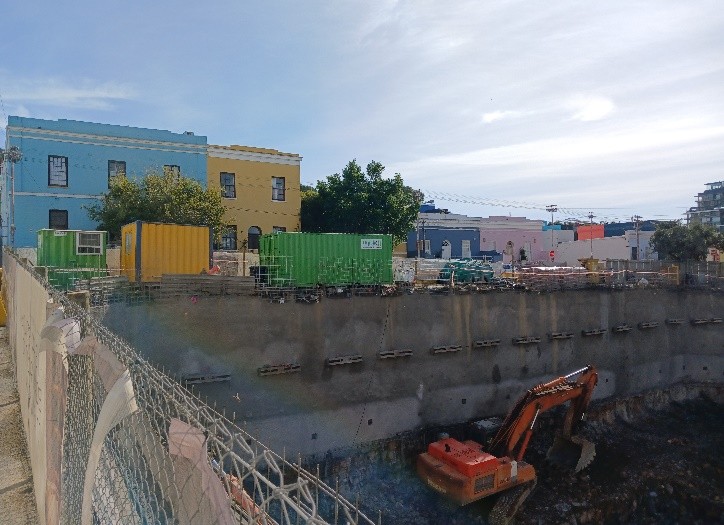
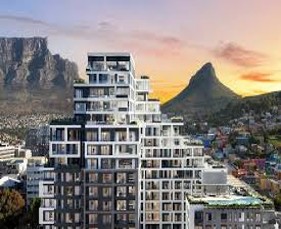
Source: Author photo. Note: The scale of the property development as compared to the adjacent low-level modest houses of Bo Kaap
The application process of the Bo-Kaap resident association for an HPOZ began in 2013 and was ready for filing in 2015 (Kretzmann, 2019). The proposal was intended to provide a mechanism for the protection of heritage places and the areas of Bo-Kaap which were considered as conservation-worthy in terms of the city’s heritage strategy. However, it took a further eight years for the HPOZ to be adopted. In the interim, several large-scale development applications were approved by the city, despite local resident opposition and a protracted legal battle. A landmark event was the construction of the so-called (by public petition and local media) ‘Monster-building’ development, The Paradigm, on the edge of Bo-Kaap (Figure 1). This building (now projected for completion in 2027) approval and construction heightened tensions between Bo-Kaap community groups and the city authorities “who were viewed by the public as being unfairly biased toward the developers’ short-term economic gain at the cost of sustaining long-term social cohesion” (Shem-Tov, 2020: 15). The latter was a stated policy objective of the city authorities and part of their mandate for responsible and sustainable heritage management. The Paradigm mega-property development was followed by another, namely ‘40 on Lion’ (also known as the Blok development after the name of the developer) situated on the upper-slopes of Bo-Kaap, approved by city authorities in 2018. Its construction galvanised the already simmering frustrations of the Bo-Kaap community for what was considered to be ineffectual protection mechanisms for the area as well as a problematic transfer of publicly-owned land previously earmarked for social housing. Further, there occurred the removal of restrictive title deed conditions without a public participation process.
The Cape Town city authorities seemingly disregarded community objections and protestations that the unique character of the Bo-Kaap and the way of life of its community was threatened by such ‘monstrous’ buildings which were incompatible with the physical or socio-historic setting of Bo-Kaap (Shem-Tov, 2020). The authorities were accused of purposefully stalling the enactment of HPOZ, to ensure the completion of the mega-property developments. The city mayor approved at least four major developments, including a 19-storey apartment block (Kretzmann, 2019). An investigation into allegations of misconduct by the city was tabled in October 2018 with the mayor blaming the stalling of the heritage plan on ‘the White cabal’ and the city’s planning tribunal (Kretzmann, 2019). For Shem-Tov (2020) this is an indicative example of the complex, racialized politics that exist in urban heritage planning.
What ensued was a burst of heritage activism which brought into view a “more intimate narrative of displacement, marginalisation, loss and community wounding” (Shem-Tov, 2020: 15). According to Shem-Tov (2020: 16), a pivotal point was reached that gave rise to the 2018 Bo-Kaap community demonstrations of resistance “in the way of burning tyres in the streets, confrontations with riot police, public venting, physically marking and claiming of space with graffiti and posters on every street and multiple buildings, the holding of evening prayers in Wale Street and the communal public breaking of the fast of Ramadan by the Muslim community”. Residents claim that a new form of forced removal is taking place. Following the city’s approval of the 40 on Lion (a large 65-unit residential development) and The Paradigm, a multi-storey luxury residential building (240 advertised apartments), the community reached breaking point. In 2018 it organised to resist increasing gentrification, in what Shem-Tov (2020) describes as one of the first instances of ‘heritage activism’ in South Africa. For two weeks during May-June 2018, the community burned tyres, blocked tour buses and construction vehicles from entering the area in protest against bullying by developers, tourism, and city officials. Further, as documented by Salie (2022: 57) another “significant standoff occurred on 20 November 2018, when community members blocked a crane from being delivered to the luxury apartment construction of 40 on Lion”. The community alleged that the land had been obtained irregularly from the city authorities. The disputed land was previously part of a maternity hospital grounds that was no longer in operation. It was recorded that the “standoff continued throughout the day with police using force, arresting residents and using stun grenades to disperse the crowd, resulting in injuries to many residents” (Salie, 2022: 57). Muslim residents of Bo-Kaap came onto the streets and “burning tyre-smoke plumed into the city sky signalling community discontent”. 2018 media images of placard-holding Muslim elders of Bo-Kaap and of local youth defying combat-clad riot police in street confrontations shocked Capetonians (Shem-Tov, 2020).
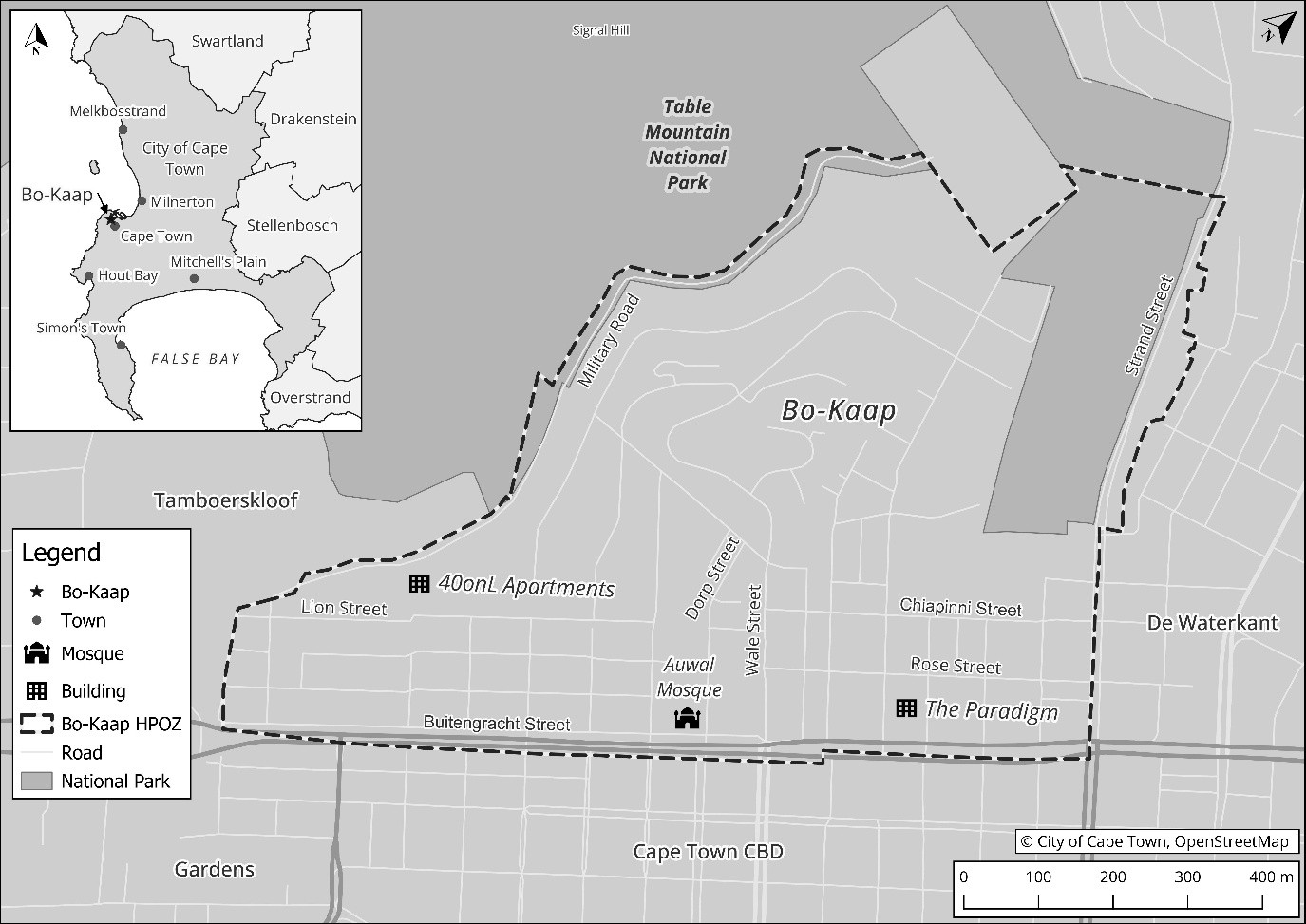
Figure 2. Location of Bo-Kaap and the Heritage Protection Overlay Zone
Source: Authors
Emotive action was spotlighted. Swift action ensued as the City of Cape Town authorities rapidly set in motion the much-delayed HPOZ and the national heritage authority rapidly nominated 19 sites in Bo-Kaap as declared National Heritage sites. On 12 April 2019 the Bo-Kaap HPOZ was incorporated in Municipal Planning Law. Figure 2 shows the delimited space of the HPOZ, which includes the tourist hub of Wale and Chiapinni Streets, the Auwal Mosque (meaning ‘first mosque’ which was built in 1811), and the controversial mega-property developments approved by city authorities. In May 2019, the HPOZ was extended to include the Bo-Kaap area (City of Cape Town, 2021a). The HPOZ prescribes land uses and provides development guidelines to conserve and protect shared community assets, the unique historic landscape, ensure conscious and considerate management, promote heritage tourism and the “way of life” of the residents. The vision of the HPOZ was stated as follows: “recognition and conservation of the Bo-Kaap as a unique historical urban landscape with a vibrant, living culture and way of life … adding localised development rules to deal with specific concerns, over and above the provisions of a base zoning” (City of Cape Town, 2019: 1). This includes provision for the protection of areas in an environment which could be substantially adversely affected by property development (City of Cape Town, 2019).
The document identifies several key areas requiring attention in terms of conserving the unique historical urban landscape with a vibrant living culture and way of life, the promotion of heritage tourism, and the careful and considered management of development (City of Cape Town, 2019). Tangible and intangible heritage values can, and do, coexist simultaneously, and should be conserved as a cornerstone of any development strategy. Campbell and Donaldson (2025) assert that in Cape Town the city’s HPOZ affords limited protections for streetscapes and urban form whilst cautioning that aspects of intangible heritage are more difficult to conserve. Likewise, Stewart (2022) contends that the HPOZ is geared towards administering the built environment albeit falls short in managing intangible aspects of heritage.
4.2 Heritage protection measures: From tangible to intangible
On eventual approval the HPOZ was celebrated by the community, now seemingly successful in its protracted campaign (Mitchell & Le Roux, 2023). Further, city officials also perceived the HPOZ as having significant benefits to afford heritage protection to the Bo-Kaap. The interviews revealed that this enthusiasm should be tempered with a degree of scepticism as several limitations were identified.
The adoption of the HPOZ was excessively protracted. As noted previously, the HPOZ in Bo-Kaap was purposefully stalled to allow for several mega-property developments to proceed. These fuelled allegations of corruption and compounded historical legacies of mistrust. Typically, a community activist engaged in the process from the start contended: “We were not given heritage! We fought for heritage status for more than 10 years… Yet despite our fight and heritage status we saw the onslaught of development continue and seemingly being ramped up”. A retrospective application of the HPOZ was sought, in light of the approval in July 2024 by the City’s Municipal Planning Tribunal of a six-storey hotel development, adjacent to the area’s foremost cultural and religious asset, the Auwal mosque, thus placing heritage in direct conflict with development. Engaging in what could only be described as a publicity stunt, the Deputy Mayor for the City of Cape Town, appearing on television news, suggested the community take comfort in the HPOZ: “There’s a heritage overlay zone which means that the heritage aspect legislatively is protected you cannot go and now develop at will. There are levers within the local school of government that we’ve legislated and that’s one aspect how we are able to offer a sense of comfort to Bo-Kaap, saying these are the levers that are available”. Resident activists weary of the limited efficacy of the protections afforded by the HPOZ stated as follows: “Not really, that’s not what it means. A lot of building plans are still going to go through including the hotel behind the Auwal Mosque. There’s no stopping them, they will find a way. This plan was approved before the HPOZ”. Likewise, a city official asked about the retrospective application was sceptical: “The development plans (proposed hotel development near the Auwal mosque) have been submitted prior to the HPOZ being passed. So, the city has to work again within the framework of the law”.
The lack of transparency and engagement around the developments in Bo-Kaap is disconcerting. Relevant planning negotiations were conducted under a veil of secrecy. The experience of Bo-Kaap confirms Horn’s (2020) criticism of neoliberalist-dominated urban planning with the stark contradiction between capitalism and democratic processes is evident. Indeed, this research echoes Horn’s (2020) findings that participation in democratic processes is often undermined in favour of economic interests, further reinforcing existing power hierarchies. This said, the findings disclosed that the HPOZ does afford certain additional protections for tangible heritage in the Bo-Kaap. The urban planning landscape is cumbersome and regulatory complex. The Bo-Kaap engages all three spheres of heritage governance and most heritage resources within the Bo-Kaap are Grade III (City of Cape Town, 2021a) The Auwal Mosque is a Grade II heritage site under provincial administration. As Donaldson et al. (2013) contend, jurisdiction over the Bo-Kaap complicates management and accountability, internal disputes between spheres of governance – national, provincial and local – are common.
Heritage practitioners engaged with the applications highlighted the technical complexity inherent in heritage designations and management and noted the lack of defined rules. Uncertainties and inconsistencies are evident, leaving applications open to interpretation and vulnerable to corruption/collusion. The local organisation tasked with evaluating and negotiating planning applications (BOCRA: Bo-Kaap Civic and Rate Payers Association), is limited by significant skills and capacity shortages. The interviews revealed that: “All the Civic is doing is fighting one building (application) after another. It’s relentless stuff going to lawyers, architects, heritage etc” (Community activist and resident tour operator). A BOCRA representative reinforced this point: “The problem is, it also requires now our Civics have become much more technical, for instance a Development Application Committee is needed because you know how many applications come through and I am overloaded with applications. When it comes to the technical engagement with the Government and with the national heritage agency (SAHRA) it requires a certain level of technical sophistication which the Civic does not always have”.
For the conservation of heritage in Bo-Kaap, the relentless number of planning applications is concerning. Suggestions that boundaries/zoning are continuously being manipulated were found to have legitimacy. Horn (2019) demonstrates how in South Africa urban edges remain under threat of encroachment from ad hoc, incremental developments and leaving them open to manipulation. Indications are that these overlay boundaries will continue to be tested by large-scale urban developers and nefarious interests. A city official acknowledged the power of capital over legislation and collective sentiment: “All I can say is that politics and religion is always secondary to making money. You also have Saudi investors in the Bo-Kaap. It’s about property speculating and this is the biggest threat to the Bo-Kaap. Whether it’s open land or inherited property there always guys who are going to be after this to manipulate the legal system, rezone land and get big developments in. Private property rights often trump collective sentiment. There is fierce competition for these sites which have potential for growth. This is a big problem. These guys operate at the level of the mafia in many respects, coercion, pressure manipulation is all part of the game these days”.
The built environment focus raised questions about the adequacy of the HPOZ in preserving intangible cultural heritage (City of Cape Town, 2019). While the importance of protecting intangible cultural heritage is identified by the HPOZ, no practical measures were recommended, nor were any programmes implemented. As both Stewart (2022) and Sitas and Stewart (2023) maintain, the HPOZ affords little to no protection for intangible cultural heritage. To prioritize the interests and perspectives of residents, sustained community engagement and activism therefore is a strategic imperative. The responsibility for preserving intangible cultural heritage must ultimately rest squarely with the community itself. The implementation of the Historic Urban Landscape, (UNESCO, 2016), and a Living Heritage Inventory is supported by heritage practitioners as effective conservation tools for intangible cultural heritage. Increasing private investment, deregulation, and in the case of the HPOZ, stalled regulation and reregulation, diminishes state authority as they became conduits for investors in large-scale, incongruent developments. Acknowledging the lack of and complexity of implementing protections for intangible cultural heritage, practitioners explain as follows: “We can’t conserve and preserve living heritage as practices, but we can create the platforms for those to evolve, and healthily within communities. And that’s where I see our intersection with the built environment”. Further, it was acknowledged: “The HPOZ doesn’t give any explicit protection for the intangibles. Tangible, yes, but it’s mere facadism”.
Based on the resident interviews, it is not the built heritage environment per se that is valued by the Bo-Kaap Muslim resident community. Rather, it was less about the actual buildings and more about the community that is valued, in other words the cultural expressions and traditions of the Muslim community. Indeed, whilst the community called for the HPOZ to be put in place to protect the built heritage and the area is known for its unique architectural character, “the heritage claims are not currently on the buildings” (Shem-Tov, 2020: 105). Although the built urban environment is valued as a symbol of a shared past and of shared memories and a space in which members feel a sense of attachment and identity, the architectural quality is of less importance than what it “means to their internal world” (Shem-Tov, 2020: 106). Put simply, it is more than the buildings that make Bo-Kaap worthy of heritage protection. As argued elsewhere, what is critical in the intangible heritage expressed as “the cultural richness is in the everyday experiences of children playing in the streets or walking to Madrassah school, the generational respect shown to Muslim elders, the ubiquitous corner cafes that are disappearing in Cape Town neighbourhoods, the diversity of people living peacefully beside one another, ‘the spirit of the place’” (Shem-Tov, 2020: 106).
Overall, therefore, intangible heritage practices, traditions, and living heritage manifest in the area are most valued by the community. The spirit of Bo-Kaap and its sense of place derive from “both the physical context and the intangible” (Shem-Tov, 2020: 108). This, however, is not protected by heritage conservation measures which favour the built heritage and ignore, for example, safeguards for the call of prayer for the Muslim faithful against the demands for the city to ban it on the grounds that it contravenes noise regulations. According to Jethro and Lehloenya (2023) the Bo-Kaap and the sounds of the adhan (call to prayer) broadcast from the neighbourhood’s mosques embody the intangible heritage of the history of Islam as a suppressed minority faith in South Africa’s colonial past and of the Muslim struggle for belonging in the city of Cape Town.
4.3 Contested tourism planning
Tourism planning in the Bo-Kaap, albeit weak, is not new, and, for some decades, has engaged with the challenges of development and touristification of the area (Jessa, 2025). For example, during the apartheid period, a report undertaken for the city authorities in 1966 drew attention to both problems of congestion in the area because of its proximity to the CBD, to the need for improvement of local tourism assets and retention of the area’s so-termed ‘street scene’. Currently, tourism planning remains unresolved and planning proposals have been met with both disappointment and suspicion by Bo-Kaap residents.
The anti-gentrification and anti-tourism protests which occurred in 2018 were a watershed in tourism planning. Following the protest actions, Bo-Kaap civics encouraged city and tourism authorities to formulate a community-centred tourism development plan. The plan was to establish tourism performance and resident perception data, and utilize sound data to formulate, in collaboration with community members a vision and strategy for Bo-Kaap’s tourism and heritage future. Subsequently, local consultants were commissioned on behalf of the city to undertake the formulation of a Tourism Development Framework (TDF). According to the draft framework published in June 2021, plans were developed based on a collaborative process, utilising a multi-disciplinary team and tourism stakeholders. The framework espouses a ‘respectful, participatory and sustainable’ approach. Two workshops of four hours each were held in 2021, to introduce the proposed tourism plan to a small group of community representatives. Historical legacies of mistrust could not be ignored, as a tense relationship between community members and authorities existed.
Against this unpromising backdrop, the interviews revealed that, perhaps unsurprisingly, the tourism plan was met with much suspicion and consternation. The TDF presents the plan as one which is iterative and based on sustainable tourism principles (City of Cape Town, 2021b). The proposed framework aims to enhance tourism, economic opportunities, and safety by creating new tourism routes, improve traffic and pedestrian management, and revitalise key heritage sites with signage, wayfinding, and digital tools. The plan emphasises that design ideas do not offer a detailed resolution and rather offers a “structuring framework, and a set of ideas around key sites, rather than a masterplan, and can respond to changes over time” (City of Cape Town, 2021b: 77). Community members felt excluded from the planning process and ultimately rejected the plan which was further criticized for being divorced from broader community concerns. Although the TDF claims that a tourism performance assessment was conducted, the data has not been made public. Several community attendees of a tourism workshop found the process of engagement was disingenuous, poorly communicated and felt the plan was imposed, rather than collaborative. Respondents indicated their expectation was that the plan would be co-designed rather a superficial ’tick-box’ exercise conducted to ensure approval. Representatives criticized the participation processes for being rushed, not providing adequate notice for reflection or any allowance for the crafting of a considered plan. Horn (2020) characterises the participation processes as tokenism.
Community representatives who attended the workshop explained their discontent:
The community doesn’t get consulted properly! They [City] have got a checkbox exercise, right, all they want to do is tick it off. There is no genuine consultation.
So firstly, some of us and from the BOCRA received emails directly inviting us to 2-day workshop hosted by the City of Cape Town. The subject was the city’s tourism development framework for the community… So, we went there, but I had a sneaky suspicion it was designed to be exclusive.
We rejected the plan for several reasons. The plan did not engage us as a community in a proper way. It was very top-down with little community input from the start… We felt it did not address overtourism issues and was more of a traffic plan than anything else.
In response, city officials contend they conducted an appropriate process of community consultation with integrity while acknowledging the inherent difficulties of achieving consensus. Authorities assert individual projects would be subject to further rounds of participation: “With every decision the City makes there is always a level of public participation that takes place that allows us to understand what the communities’ needs are and then use that information to develop the budget or the plan”. Operational aspects of the tourism framework were found to be oriented towards affluent tourists, disregarding the critical concerns of gentrification, overtourism, and intangible heritage conservation. Further, the plan included no initiatives to include marginalized groups in the community, a key concern for inclusive growth. Instead, the plan is essentially growth-focused. One tourism practitioner opined: “Is it purely a means of commodification and its strategy is short-sightedly driven by such an approach? That’s what this says to me, it’s about making money. They have set targets, longer stays, more spend, increase international tourism”. The developmental context was highlighted by a city tourism planning official reiterating government’s focus on stimulating economic growth pathways: “I have heard people say that all the city wants to do is promote tourism, more tourism, more tourism. But we have to recognize certainly in the Bo-Kaap that it is a key opportunity for job creation”. The alternative suggested is for developing tourism in Bo-Kaap which is centred on the needs and interests of residents and domestic tourists.
Given that only a small number of community representatives were invited to workshops, exclusive participation processes are viewed with suspicion. Patterns of failed engagement compound the strained relationship between community members and government officials. Accusations of manipulation of meeting minutes points to more sinister behaviour, further reinforcing the need for transparency. Sunkar et al. (2016) find in their examination of social capital in heritage tourism development that trust was the most crucial element of social capital, forming the foundation for successful, cultural heritage tourism development. Bo-Kaap community representatives have gone some way to ensure increased accountability and created avenues for scrutiny of formal processes by drafting a memorandum of understanding for future engagement. This includes the demand of making meeting minutes easily available to the public. Ansell and Gash (2008) further support this consideration in collaborative governance as a component of institutional design, namely that the basic protocols and ground rules for collaboration in an open and inclusive process need to be established. In the Bo-Kaap, current low levels of trust produce low levels of commitment, strategies of manipulation and dishonest communication by planners and officials. Internal conflict disrupts progress and feeds trust deficits. Officials (and some residents) believe the fragmentation within community hinders productive engagements.
The divergent views revealed in the research interviews concerning implementing limits and/or regulation to fetter uninhibited tourism growth exemplify the broader debate on balancing economic growth with community needs. Rising rents and property costs correlate with demand for business premises as more homes gear up for commercial activities. While some respondents felt unregulated growth would produce negative impacts, others believed current levels of tourism are beneficial and manageable, thus dismissing regulation or limits. Concern that regulation that may stifle economic growth is a legitimate worry. The legal and practical implementation of limits, such as restricting access or limiting hours according to tourist behaviour, was deemed impractical, unfair and antiquated. The divergent views between civic representatives and tourism officials are apparent. For a resident tour guide: “You have to limit it. You’ve got to. It’s convenient to say you can’t limit it. Well, it’s in your interest to say that. But you don’t limit it in a negative manner in a bureaucratic manner. And it’s called sustainability… actually means you’re going to place limits on growth. So while tourism is not at a breaking point just yet I promise you it’s less than five years away at the current growth rate. We don’t want the footfall that the city wants”. The city tourism planning official took a contrasting position: “It’s nowhere near the levels of over-tourism as mentioned. It has a long way to go before the type of regulation you mention is justified. Closing down roads on certain days has its own operation and legal challenges. We cannot close down certain roads, what about the guest houses or the cooking schools in those roads that need to be open on those days. How can we justify curbing their income?”
Available alternatives for income generation in the Bo-Kaap are limited while the economic benefits of tourism are starkly apparent. Many residents rely on informal sources of income generated via their home-based businesses, thus compounding the difficulty of enforcement, a fact noted by authorities who are reluctant to clamp down on resident businesses. Rather, home-based businesses are encouraged by the city. The challenge for imposing limits or tourism de-growth is thus to reduce consumption of tourism while ensuring productivity, economic stability and maintaining livelihoods (Koens & Milano, 2024). This research supports assertions by Khan et al. (2022) that the regulatory landscape of urbanisation supports neoliberalist processes of urban development. In the Bo-Kaap, property developments have perpetuated pre-existing uneven socio-spatial development, as densification and marginalisation occur side-by-side. Certainly, the research did not find any evidence of inclusive developments in the Bo-Kaap area. Ignored in the TDF are any measures to improve living conditions for half of the area’s population resident in ever-expanding informal settlements and overcrowded conditions of shelter.
The potential to harness the current and latent socio-economic benefits of tourism in a meaningful way remains promising. By prioritising initiatives that resonate with the lived experiences and aspirations of residents, policymakers might nurture positive emotions towards tourism. Cultivating a sense of ownership promotes historical redress and fosters improved engagement. Ownership of tourism development should ultimately reside with the community. Sustained community activism will remain a critical factor in the survival of the Bo-Kaap and its ability to resist increasingly impending densification and gentrification. Nevertheless, given the complex regulatory landscape, community members often find it difficult to articulate their needs in a meaningful way. The research supports assertions by Horn (2020) that perspectives of the community are deliberative and based in their experience of everyday life while planners are technical and methodical.
5. Conclusion
The inner-city neighbourhood of Bo-Kaap is the ‘cultural jewel’ of Cape Town, a major tourism attraction and popular locale for film shoots. In this area close to the Cape Town CBD land is being contested as its use is progressively oriented towards commercial interests at the expense of its social value and disregard of the community (Salie, 2022). Arguably, “the cultural custodians of Bo-Kaap are the Cape Muslim community group, a culturally distinct group bounded by their shared Islamic faith, familial connections, multi-generational ties to Bo-Kaap, shared historical roots and cultural traditions” (Shem-Tov, 2020: 41). Urban heritage planning and the tourism regulatory landscape impacting this space have been the novel focus of analysis in this paper. Special attention centred on planning surrounding the Heritage Protection Overlay Zone and tourism development.
The complex web of legislation highlights the maze within which planners must navigate. Each area of governance appears to operate in a siloed, non-collaborative manner which serves sector or individual interests. The approval of several, large-scale developments together with unregulated tourism growth underscores the contestation of rights inherent within this post-colonial African context. Heritage policy and conservation planning tools (such as the HPOZ) present overwhelming complexity, undefined rules and are open to manipulation. The local tourism development framework has been rejected by community representatives for its superficial participation processes and neglect of addressing community concerns for inclusive growth, gentrification and overtourism. Intangible heritage needs to be brought into the mainstream of policy-thinking about heritage. The prevailing sense of pride and cultural authority attributed to the community in Bo-Kaap does not reside simply in the built environment rather it is the cultural context of the buildings and the historical environment. The spirit of Bo-Kaap and its ‘sense of place’ derive from “both the physical context and the intangible” (Shem-Tov, 2020: 108).
Government reticence to engage meaningfully with community demands exacerbates mistrust, as does approving unwanted new property developments. Legacies of mistrust will be perpetuated if incongruent developments are allowed to disrupt and threaten the community’s way of life and intangible heritage. No coherent plan can be developed in an environment of perpetual uncertainty, characterized by ad-hoc, incremental violations which serve capital, not people. Residents appear to be reaching a psychological breaking point and poised for further public protest. Arbitrary management plans and inadequate inclusion of existing conditions, without objectives or monitoring data along with an economic centric view ignores important social or environmental needs in an expanding city and fails to illuminate the complex relationship tourism development has with mobilities, housing, planning, and heritage (Koens & Milano, 2024). City administrators and destination managers must acknowledge that there are definite limits to growth, as limits are a necessary pathway to sustainability. Ultimately, shifting the narrative from one of competition to collaboration becomes crucial to ensure a more inclusive and sustainable model of tourism development in the Bo-Kaap.
Acknowledgements
Thanks to journal reviewers for insightful comments and to Robbie Norfolk, L. Gladys Champagne, and Betty White for valued inputs to the paper. Arno Booyzen prepared the map.
References
Adendorff, R. (2025). Socially inclusive heritage conservation land-use management in small towns: A case study in the Greater Oudtshoorn Municipality. Master’s thesis (Urban and Regional Planning), Stellenbosch University, Stellenbosch.
Ahmad, Y. (2006). The scope and definitions of heritage: From tangible to intangible. International Journal of Heritage Studies, 12 (3): 292–300. DOI: 10.1080/13527250600604639
Ansell, C. & Gash, A. (2008). Collaborative governance in theory and practice. Journal of Public Administration Research and Theory, 18 (4): 543–571. DOI: 10.1093/jopart/mum032
Baderoon, G. (2014). Regarding Muslims: From slavery to post-apartheid. New York: New York University Press.
Campbell, E. & Donaldson, R. (2025). All in the mix: Neighbourhood aesthetics, artwashing and gentrification in Salt River, Cape Town. Journal of Housing and the Built Environment, 40: 1061–1087. DOI: 10.1007/s10901-025-10194-1
City of Cape Town (2019). Bo-Kaap Heritage Overlay Protection Zone (HPOZ): Guiding document. Department of Environmental Resource Management, City of Cape Town. https://www.bridgesnotbarriers.co.za/bokaap-hpoz/ (07. 03. 2022).
City of Cape Town (2021a). Bo-Kaap Local Area Spatial Development Framework. Draft baseline and analysis report. Department of Environment and Spatial Planning, City of Cape Town. https://resource.capetown.gov.za/ (14. 03. 2021).
City of Cape Town (2021b). Bo-Kaap Tourism Development Framework. Jakupa Architects. Cape Town.
https://www.capetown.gov.za/_documents/resource.capetown.gov.za/documentcentre/Documents/City%20strategies,%20plans%20and%20frameworks/Bo-Kaap_Tourism_Development_Framework.pdf/ (14. 03. 2021).
Cocola-Gant, A. (2018). Tourism gentrification. In: L. Lees & M. Phillips (Eds.), Handbook of Gentrification Studies. Cheltenham: Edward Elgar, pp. 281–293.
Davids, A. (1980). The mosques of Bo-Kaap: A social history of Islam at the Cape. Cape Town: South African Institute of Arabic and Islamic Research.
Donaldson, R. (2024). No room for modesty in heritage significance: The case of Dennesig in Stellenbosch, South Africa. Modern Geográfia, 19 (2): 25–46. DOI: 10.15170/MG.2024.19.02.03
Donaldson, R., Kotze, N., Visser, G., Park, J., Wally, N., Zen, J., & Vieyra, O. (2013). An uneasy match: Neoliberalism, gentrification and heritage conservation in Bo-Kaap, Cape Town. Urban Forum, 24 (2): 173–188. DOI: 10.1007/s12132-012-9182-9
Drummond, J. H. (2024). Contested heritage in South Africa: Perspectives from Mahikeng. Modern Geográfia, 19 (2): 117–140. 10.15170/MG.2024.19.02.06
Drummond, J. H., Drummond, F., & Rogerson, C. M. (2021). Latent opportunities for heritage tourism in South Africa: Evidence from Mahikeng and surrounds. African Journal of Hospitality, Tourism and Leisure, 10 (5): 1591–1609. DOI: 10.46222/ajhtl.19770720-181
Garside, J. (1993). Inner city gentrification in South Africa: The case of Woodstock, Cape Town. GeoJournal, 30 (1): 29–35. DOI: 10.1007/BF00807824
Gorska, K. M. (2015). Different shades of change: Historic districts in Los Angeles and their impact on gentrification and neighborhood trends. PhD dissertation, University of California, Los Angeles.
Gotham, K. F. (2005). Tourism gentrification: The case of New Orleans’ Vieux Carre (French Quarter). Urban Studies, 42 (7): 1099–1121. DOI: 10.1080/00420980500120881
Horn, A. (2019). The history of urban growth management in South Africa: Tracking the origin and current status of urban edge policies in three metropolitan municipalities. Planning Perspectives, 34 (6): 959–977. DOI: 10.1080/02665433.2018.1503089
Horn, A. (2020). The darker side of muddling through: An analysis of spatial planning policy decision-making and policy termination in Cape Town, South Africa. Urban Forum, 31 (4): 573–598. DOI: 10.1007/s12132-020-09390-9
Jessa, S. (2025). Rights and responsibility: Neighbourhood change and tourism development in the Bo-Kaap. PhD dissertation (Tourism and Hospitality Management), University of Johannesburg.
Jessa, S. & Rogerson, J. M. (2025a). Contested inner-city gentrification: Evidence from Cape Town. Revistă Româna de Geografie Politică, 27 (2): 111–129. DOI: 10.30892/rrgp.272104-393
Jessa, S. & Rogerson, J. M. (2025b). Tourism gentrification in Cape Town’s Bo-Kaap: Socio-economic transformations and displacement. Bulletin of Geography: Socio-Economic Series, 69: 129–143. DOI: 10.12775/bgss-2025-0032
Jessa, S. & Rogerson, J. M. (2025c). Overtourism in Cape Town: Local stakeholder perspectives. Modern Geográfia, 20 (4): 117–140. DOI: 10.15170/MG.2025.20.04.07
Jethro, D. & Lehloenya, M. A. (2023). Call to prayer: The sound of the adhan, heritage and shifting urban identity in Cape Town. Anthropology Today, 46 (3): 213–228. DOI: 10.1080/23323256.2023.2279074
Khan, F., Higgins, B. F., & Adonis, W. (2022). Saving or seizing the city: Discursive formations in Cape Town, South Africa. Sustainability, 14 (3): 1376. DOI: 10.3390/su14031376
Koens, K. & Milano, C. (2024). Urban tourism studies: A transversal research agenda. Tourism Culture & Communication, 24 (1): 275–286. DOI: 10.3727/109830423X16999785101653
Kotze, N. (2013). A community in trouble? The impact of gentrification on the Bo-Kaap, Cape Town. Urbani Izziv, 24 (2): 124–132. DOI: 10.5379/urbani-izziv-en-2013-24-02-004
Kretzmann, S. (2019). Did De Lille stall while Bo-Kaap developers scored? https://groundup.org.za/article/did-de-lille-stall-while-bo-kaap-developers-scored/ (26. 03. 2019).
Liu, Y., Dupre, K., & Jin, X. (2021). A systematic review of literature on contested heritage. Current Issues in Tourism, 24 (4): 442–465. DOI: 10.1080/13683500.2020.1774516
Marschall, S. (2005). Making money with memories: The fusion of heritage tourism and identity formation in South Africa. Historia, 50 (1): 103–122. https://hdl.handle.net/10520/EJC38177
Massey, R. (2020). Urban renewal in South African cities. In: R. Massey & A. Gunter (Eds.), Urban Geography in South Africa: Perspectives and Theory. Cham: Springer Nature, pp. 265–282.
Mawhorter, S. L. & Kinahan, K. L. (2025). Where preservation meets land use regulation: Historic districts in Los Angeles. Journal of the American Planning Association, 91 (3): 394–413. DOI: 10.1080/01944363.2024.2417053
McDonald, D. (2012). World city syndrome: Neoliberalism and inequality in Cape Town. London: Routledge.
Mitchell, K. & Le Roux, J. (2023). Investigating the effects of gentrification in the creation of socially sustainable urban precincts: A case study of Bo-Kaap, Cape Town, South Africa. In: T. C Haupt, M. Akinloki, F. Simpeh, C. Amoah & Z. Armoed (Eds.), Construction in 5D – Deconstruction, digitalization, disruption, disaster and development Cham: Springer Nature, pp. 285–296.
Nhlabathi, S. S. & Maharaj, B. (2021). Gentrification, social activism and contestations in Cape Town (South Africa). In: I. Dominguez-Mujica, J. McGarrigle, & J. M. Parreño-Castellano (Eds.), International residential mobilities: From lifestyle migrations to tourism gentrification. Cham: Springer, pp. 291–308.
Nyikana, S. & Ntlansana, N. (2026). Leveraging rural horse racing events for local development: Examining repeat visitation and social value. Turisztikai és Vidékfejlesztési Tanulmányok, 11 (2): 148–169. DOI: 10.15170/TVT.2026.11.02.08
Qiu, Q., Zuo, Y., & Zhang, M. (2022). Intangible cultural heritage in tourism: Research review and investigation of future agenda. Land, 11 (139): 1–21. DOI: 10.3390/land11010139
Richards, G. (2026). Re-valuing rural heritage: The role of placemaking and place shaping. Turisztikai és Vidékfejlesztési Tanulmányok, 11 (2): 46–64. DOI: 10.15170/TVT.2026.11.02.03
Rogerson, C. M. (2024). Planning urban regeneration through heritage tourism: The case of Kliptown, South Africa. Modern Geográfia 19 (2): 71-89. https://doi.org/10.15170/MG.2024.19.02.05
Rogerson, C. M. & Rogerson, J. M. (2021a). Looking to the past: The geography of tourism in South Africa during the pre-COVID-era. In: C. M. Rogerson & J. M. Rogerson (Eds.), Urban tourism in the Global South: South African perspectives. Cham: Springer, pp. 39–75.
Rogerson, C. M. & Rogerson, J. M. (2021b). The other half of urban tourism: Research directions in the Global South. In: C. M. Rogerson & J. M. Rogerson (Eds.), Urban tourism in the Global South: South African perspectives. Cham: Springer, pp. 1–37.
Rogerson, C. M. & Rogerson, J.M. (2025). Racial discrimination in tourism: The record of apartheid Cape Town. Modern Geográfia, 20 (3): 47–67. DOI: 10.15170/MG.2025.20.03.03
Rogerson, C. M. & van der Merwe, C. (2016). Heritage tourism in the Global South: Development impacts of the Cradle of Humankind World Heritage Site. Local Economy, 31 (1–2): 234–248. DOI: 10.1177/0269094215614270
Saarinen, J. & Rogerson, J. M. (Eds.) (2021). Tourism, change and the Global South. Abingdon: Routledge.
Salie, S. (2022). Gentrification and the disruption of space: Residents’ lived experiences in Bo-Kaap, Cape Town. MA (Development Studies) dissertation, University of the Western Cape.
Seabra, C. & Korstanje, M. E. (Eds) (2025). A research agenda for tourism and risk. Cheltenham: Edward Elgar.
Shem-Tov, S. (2020). Changing values in heritage: Shifts from the tangible to intangible in urban historic environments, Bo-Kaap as case study. Master’s Thesis (Architecture Planning and Geomatics), University of Cape Town.
Sitas, R. & Stewart, M. (2023). From heritage conservation to heritage justice in Cape Town. City, Culture and Society, 35 (100551): 2–9. DOI: 10.1016/j.ccs.2023.100551
Steenkamp, R. (2021). Municipal instruments in law for cultural heritage protection: A case study of the City of Cape Town Metropolitan Authority. Potchefstroom Electronic Law Journal, 24(1): 1–34. DOI: 10.17159/1727-3781/2021/v24i0a6435
Stewart, M. (2022). Counter‐mapping heritage: Memory and significance in places of racialised land dispossession: The case of Lower Claremont, Cape Town. Curator: The Museum Journal, 65 (3): 679–689. DOI: 10.1111/cura.12509
Sunkar, A., Meilani, R., Rahayuningsih, T., & Muntasib, E. K. S. H. (2016). Social capital: A basis for community participation in fostering environmental education and the heritage tourism development of Cibalay megalithic site. E-Journal of Tourism, 3 (2): 120–129. https://scispace.com/pdf/social-capital-a-basis-for-community-participation-in-m22m60p0cp.pdf/
Tavares, D. S., Alves, F. B., & Vásquez, I. B. (2021). The relationship between intangible cultural heritage and urban resilience: A systematic literature review. Sustainability, 13 (22): 12921. DOI: 10.3390/su132212921
Timothy, D. J. (2018). Making sense of heritage tourism: Research trends in a maturing field of study. Tourism Management Perspectives, 25: 177–180. DOI: 10.1016/j.tmp.2017.11.018
Timothy, D. J. (Ed.) (2023). Cultural heritage and tourism in Africa. Abingdon: Routledge.
Timothy, D. J. & Shinde, K. (Eds.) (2026). Religious heritage and tourism in South Asia. Abingdon: Routledge.
Todeschini, F. (2017). Open conversation: Controversial architecture of the city, the case of a large building development approved by the City of Cape Town in the Bo-Kaap – the decision appealed. Architecture, SA 83: 14–22.
Tunbridge, J. E. & Ashworth, G. J. (1996). Dissonant heritage: The management of the past as a resource in conflict. Chichester: John Wiley.
UNESCO (2016). The HUL guidebook: Managing heritage in dynamic and constantly changing urban environments: A practical guide to UNESCO’s Recommendation on the Historic Urban Landscape. Paris: UNESCO. https://www.hulballarat.org.au/resources/HUL%20Guidebook_2016_FINALWEB.pdf/
Van der Merwe, C. (2013). The limits of urban heritage tourism in South Africa: The case of Constitution Hill, Johannesburg. Urban Forum, 24: 573–588. DOI: 10.1007/s12132-013-9197-x
Van der Merwe, C. & Rogerson, C. M. (2018). The local development challenges of industrial heritage in the developing world: Evidence from Cullinan, South Africa. GeoJournal of Tourism and Geosites, 21: 186–199. https://gtg.webhost.uoradea.ro/PDF/GTG-1-2018/280_Merwe.pdf/