

THE ROLE OF STREET FOOD VENDING IN URBAN TOURISM DEVELOPMENTS IN THE GLOBAL SOUTH
1Andile Moyo, 2Ngoni C. Shereni*, 3Logistic Makoni, 4Kevin Mearns
1Master’s student, Lupane State University; Department of Hospitality and Tourism, Zimbabwe; amoyo3339@gmail.com
2Postdoctoral research fellow, University of South Africa, Department of Environmental Sciences, College of Agriculture and Environmental Sciences, South Africa; sherenc@unisa.ac.za, ORCID: 0000-0003-0074-9559
3Postdoctoral research fellow, University of South Africa, Department of Environmental Sciences, College of Agriculture and Environmental Sciences, South Africa; logism@unisa.ac.za, ORCID: 0000-0003-4279-821X
4Professor, University of South Africa, Department of Environmental Sciences, College of Agriculture and Environmental Sciences (CAES), South Africa; mearnkf@unisa.ac.za ORCID: 0000-0001-5874-3542
Abstract
Street food vending has become a central aspect of urban informality, which is a significant economic activity in many countries, particularly in the Global South. Nevertheless, this sector receives limited attention from policymakers, tourism practitioners, and destination managers, and its economic significance remains largely unaccounted for. This study, therefore, aimed to explore the role of street food vending in urban tourism, focusing specifically on a Global South city. In this qualitative study, which focused on Bulawayo, Zimbabwe’s second-largest city, semi-structured interviews were conducted with informal food vendors to gain insights into the topic. Thematic analysis was employed to identify patterns and recurring issues in the interview data. The findings reveal that street food vending plays a significant role in urban tourism development. This economy contributes to urban growth by creating employment, empowering residents, and supporting other businesses, an economic contribution that remains largely undocumented due to the marginalisation of the informal sector.
Keywords: culinary tourism, informal food economy, street food vending, urban tourism, Zimbabwe
Received: 1 June 2026
Accepted: 21 September 2026
Published: 12 October 2026
This open access article may be used under the international license terms of CC BY-NC-ND 4.0.
https://creativecommons.org/licenses/by-nc-nd/4.0/
AZ UTCAI ÉTELÁRUSÍTÁS SZEREPE A VÁROSI TURIZMUS FEJLŐDÉSÉBEN A GLOBÁLIS DÉLEN
1Andile Moyo, 2Ngoni C. Shereni*, 3Logistic Makoni, 4Kevin Mearns
1MSc-hallgató, Lupane Állami Egyetem; Vendéglátás és Turizmus Tanszék, Zimbabwe; amoyo3339@gmail.com
2Tudományos munkatárs, Dél-afrikai Egyetem, Mezőgazdasági és Környezettudományi Kar, Környezettudományi Tanszék, Dél-afrikai Köztársaság; sherenc@unisa.ac.za, ORCID: 0000-0003-0074-9559
3Tudományos munkatárs, Dél-afrikai Egyetem, Mezőgazdasági és Környezettudományi Kar, Környezettudományi Tanszék, Dél-afrikai Köztársaság; logism@unisa.ac.za, ORCID 0000-0003-4279-821X
4Egyetemi tanár, Dél-afrikai Egyetem, Mezőgazdasági és Környezettudományi Kar, Környezettudományi Tanszék, Dél-afrikai Köztársaság; mearnkf@unisa.ac.za, ORCID: 0000-0001-5874-3542
Absztrakt
Az utcai ételárusítás a városi informális gazdaság központi elemévé vált, amely számos országban – különösen a Globális Dél országaiban – jelentős gazdasági tevékenységnek számít. Mindazonáltal ez az ágazat gyakran csak korlátozott figyelmet kap a döntéshozóktól, az idegenforgalmi szakemberektől és a desztinációmenedzsmenttől, gazdasági jelentőségét pedig nagyrészt figyelmen kívül hagyják. Ezért e tanulmány célja az volt, hogy feltárja az utcai ételárusítás szerepét a városi idegenforgalomban, különös tekintettel egy, a Globális Délen található városra. Jelen kvalitatív tanulmányban, amely Zimbabwe második legnagyobb városára, Bulawayóra összpontosított, félig strukturált interjúkat készítettünk informális élelmiszerárusokkal, hogy betekintést nyerjünk erre a területre. Tematikus elemzéssel azonosítottuk az interjúkban fellelhető mintázatokat és visszatérő tartalmakat. Az eredmények azt mutatják, hogy az utcai élelmiszerárusítás jelentős szerepet játszik a városi turizmus fejlődésében. Ez a gazdasági tevékenység munkahelyteremtéssel, a lakosság önállóságának erősítésével és más vállalkozások támogatásával járul hozzá a városi növekedéshez; ez a gazdasági hozzájárulás azonban az informális szektor marginalizáltsága miatt ez idáig nagyrészt dokumentálatlan maradt.
Kulcsszavak: gasztroturizmus, informális élelmiszergazdaság, utcai ételárusítás, városi turizmus, Zimbabwe
Benyújtva: 2026. június 1.
Befogadva: 2026. szeptember 21.
Publikálva: 2026. október 12.
Ez a mű a Creative Commons CC BY-NC-ND 4.0 nemzetközi licence-feltételeinek megfelelően használható fel.
https://creativecommons.org/licenses/by-nc-nd/4.0/
1. Introduction
Street food vending (SFV) is the practice of selling food and beverages in public places, open spaces, or by the wayside (Adaku et al., 2024). It is mostly done by informal food vendors operating within the informal economy (Anand & Jagadeesh, 2022; McKay et al., 2016; Nkosi & Tabit, 2021). Food vendors are responsible for meeting the immediate dietary requirements of people by selling mostly ready-to-eat foods from carts, food stalls, food trucks, and kiosks (Nkosi & Tabit, 2021; Pulliat et al., 2024; Swai, 2019). Various socio-economic factors, such as limited time for food preparation, changing family structures, and modern lifestyles, have led to increased demand for street-vended foods. Food vending is a typical phenomenon in most urban areas, and it has grown to be a significant business practice globally, especially in the Global South where it sustains the livelihoods of low-income households (Abrahale et al., 2019; Marutha & Chelule, 2020). Africa, Asia, and America have some of the leading cities in the SFV business (Czarniecka-Skubina et al., 2018).
Many countries now recognise SFV as an important aspect of the tourism industry, as it helps to showcase local and regional cuisines, promote urban renewal, and stimulate the local economy (Huynh-Van et al., 2022). More importantly, it significantly impacts urban spaces positively because it provides a unique foodscape, as well as affordable, fresh, and healthy meal options to tourists and residents (Joassart-Marcelli et al., 2024; Pulliat et al., 2024). In addition, it showcases cultural diversity, helps preserve indigenous foods, and provides employment opportunities to the local community, thereby improving the overall standard of living and quality of life in the city (Petersen et al., 2018). The informal food economy not only sustains urban tourism but also promotes other informal sectors, especially those that supply raw materials to food vendors (Petersen et al., 2018).
In Zimbabwe, SFV is regarded as the foundation of the city’s market economy and urban tourism, providing residents and tourists with cheap, convenient meals (Maphosa, 2026). SFV has become a distinctive part of the informal sector, as it provides entrepreneurship opportunities for the city’s residents (Adaku et al., 2024; Peimani & Kamalipour, 2022). Surprisingly, in most countries in Sub-Saharan Africa SFV is not widely recognised or well developed, mainly due to strict regulatory frameworks that make it difficult for street food vendors to operate (Swai, 2019). Despite the opportunities offered by SFV, policymakers and the academic community in the Global South pay less attention to this sector (Petersen & Charman, 2018). This study, therefore, seeks to examine the threats and opportunities of SFV in the context of urban tourism in Zimbabwe with a particular focus on Bulawayo.
For the purposes of this study, urban tourism refers to a range of leisure, cultural, and economic activities that take place within a city and draw on its built environment and everyday life to create unique visitor experiences (Rogerson & Rogerson, 2021). Much of the existing literature on urban tourism is based on capital cities and primary tourism hubs, where tourism offerings such as attractions, accommodation, and transport nodes are well developed (Ashworth & Page, 2011). Secondary cities such as Bulawayo, by contrast, attract visitors mainly through urban life and informal activities, with informal food vending as a typical example. This study, therefore, extends the literature on urban tourism to a secondary-city context, where informal activities such as SFV play a prominent role in shaping tourists’ experiences. The specific objectives for this study are as follows: to examine the role of SFV in urban tourism developments, assess its socio-economic impacts, and identify the challenges faced in developing SFV.
2. Literature review
2.1 Role of SFV in urban tourism developments
SFV plays a vital role in attracting tourists and enhancing their experience, as it provides an authentic and local experience (Swai, 2019). It also offers tourists an opportunity to experience the local culture of a city, as it represents the culinary and cultural traditions of a place (Hill et al., 2019). Anand and Jagadeesh (2022) argue that the informal food economy provides a direct connection to the local community, allowing tourists to taste authentic dishes and interact with local vendors, enhancing their cultural experience. In addition, street food is often considered an authentic part of a destination, offering a taste of local cuisines and a glimpse into the daily life of the local community (Adaku et al., 2024). Food vendors are often locally-owned businesses, offering tourists a more authentic culinary experience than do large chain restaurants (Bourlessas et al., 2022; Swai, 2019). Moreover, most food vendors sell traditional and ethnic foods, which helps preserve cultural heritage and traditions (Adaku et al., 2024; Hill et al., 2019). Bourlessas et al. (2022) further assert that street food serves as a gateway for tourists to authentically engage with a destination’s local cuisine and identity, offering a genuine, immersive experience that contributes to the overall tourism experience. In the same vein, it is an integral part of gastronomic tourism, offering tourists an encounter with local food and allowing them to immerse themselves in local cuisines and lifestyles (Trafialek et al., 2018).
SFV contributes to the local economy of urban areas by creating employment opportunities for the local community and helping them generate income (Adaku et al., 2024; Nkosi & Tabit, 2021). It also supports other sectors in the economy, such as agriculture, food production, and transportation (Swai, 2019). It has also been observed that the informal food economy attracts tourists to specific areas, thereby increasing the number of tourists in the city and boosting tourism revenues. Opportunities for social interaction between tourists and the local community are also created as people gather around food carts to eat and socialise, fostering a communal atmosphere (Caramaschi, 2024; Pulliat et al., 2024).
Food vending in urban areas can contribute to the uniqueness and distinctiveness of a destination. Cities with vibrant street food scenes can differentiate themselves from other tourist destinations and attract food enthusiasts and culinary travellers, boosting the city’s tourism. Street food markets, festivals, and tours can become part of a city’s identity and contribute to its overall tourism uniqueness (Jimenez-Arpiza et al., 2026). For tourists visiting urban spaces, trying different types of cuisines can be a memorable and enjoyable experience. There is no doubt that street food scenes contribute to the vibrancy and competitiveness of an urban destination. A vibrant street food culture can attract authentic-seeking food tourists and is considered a significant factor in destination choice.
2.2 The socio-economic impacts of SFV
SFV in urban areas has several socio-economic impacts that can positively influence local communities and enhance social dynamics. By promoting and selling traditional dishes, food vendors help preserve the community’s cultural identity and foster local culinary heritage. Informal food vending can provide economic opportunities and empowerment for marginalised groups, such as immigrants, refugees, and low-income individuals (Uwamahoro & Khoo, 2025). It offers a relatively low-cost entry point for starting a small business, allowing these individuals to generate income and support themselves and their families. SFV can contribute to the social inclusion and empowerment of these groups, providing avenues for economic mobility and self-sufficiency. More importantly, food vending in urban areas often relies on locally sourced ingredients, thereby supporting local farmers and food producers. This ultimately strengthens local food systems by creating demand for locally grown and produced ingredients and by promoting sustainable, environmentally friendly practices.
Food vendors, especially in areas with high foot traffic and tourist activity, can earn a sustainable income that improves their living conditions and overall quality of life. In the same vein, it partially eases disparities in access to healthy food, contributing to poverty alleviation by providing affordable food options in areas with limited access to nutritious meals (Navarrete-Hernández et al., 2023). SFV fosters entrepreneurship in local communities and encourages individuals to develop their culinary skills, business acumen, and customer service skills (Caramaschi, 2024). Food vendors are given opportunities to develop culinary skills, food-preparation techniques, customer-service expertise, and business-management knowledge. Many food vendors start small and gradually expand their operations, creating opportunities for business growth and development. This entrepreneurial mindset can have broader impacts on the local economy.
2.3 The challenges faced in developing SFV
SFV in urban tourism destinations faces numerous challenges that vary with local regulations, market conditions, and the destination’s specific context. For example, food vendors often face hurdles related to obtaining the necessary licenses and permits to operate legally (Koch, 2015). Regulatory requirements, such as health and safety regulations, zoning restrictions, and compliance with food-handling standards, can be complex and burdensome. Meeting all these requirements can be costly and time-consuming for street food vendors, particularly those with limited resources and knowledge of the regulations. Also, the lack of a clear, supportive regulatory framework can hinder the expansion and development of SFV within urban tourism, leading to uncertainty and difficulty in navigating legal requirements (Caramaschi, 2024).
Urban tourism destinations often attract numerous street food vendors, leading to increased competition, making it challenging for individual vendors to stand out and attract customers. Market saturation results in price wars and reduced profit margins, complicating vendors’ efforts to sustain their businesses. Furthermore, in Global South tourist destinations where unemployment is prevalent, many people use SFV as a means of self-employment, leading to market saturation (Peimani & Kamalipour, 2022).
Inadequate infrastructure, lack of proper sanitation facilities and storage space, unavailability of proper waste management systems, and lack of access to clean water facilities increase food safety hazards in SFV (Hossen et al., 2021). Inadequate infrastructure also hampers the overall street food experience for both vendors and customers. In addition, the lack of proper sanitation facilities makes it hard for the street food vendors to comply with health and safety standards; this can impact the perception of hygiene and food safety standards of street food, potentially affecting the overall tourism experience (Marutha & Chelule, 2020).
As neighbourhoods undergo redevelopment and transformation, street food vendors may face higher rents, eviction, and displacement. The changing character of a neighbourhood due to urbanisation and urban development can also alter the street food scene and affect the viability of existing vendors. Urban development projects, the expansion of commercial establishments, and the increasing demand for public spaces can result in the displacement of street food vendors and the reduction of available vending areas (Uwamahoro & Khoo, 2025). Also, SFV faces negative perceptions and stereotypes, particularly regarding hygiene and food safety (Hiamey & Hiamey, 2018). Some tourists and locals perceive street food as unclean and unsafe, which can impact the reputation and customer base of the food vendors. Negative perceptions about SFV, such as concerns about hygiene and cleanliness, can deter potential customers, including tourists, from engaging with street food offerings (Hiamey & Hiamey, 2018). This can impede their economic viability and contribution to the urban tourism experience. In this regard, stereotypes about SFV, such as assumptions about the quality and safety of their products, can lead to cultural stigmatisation and affect the visibility and acceptance of SFV in the urban landscape.
3. Study context
The Bulawayo Central Business District (CBD) covers approximately 5.4 square kilometres and is laid out in a grid pattern, with 17 avenues and 11 streets. The city is known for its vibrant street food, which adds cultural authenticity and enhances the overall travel experience. SFV plays a significant role in urban tourism in Bulawayo, reflecting the city’s rich cultural heritage and socio-economic dynamics. The vibrant SFV in Bulawayo offers a variety of local dishes, which enhances the city’s appeal as a tourist destination. It has been noted that the informal nature of SFV contributes to the livelihood of the residents, fostering community engagement and economic resilience. In addition, Bulawayo hosts world-class cultural heritage attractions that can be used to leverage a vibrant SFV sector (Shereni & Ndhlovu, 2024).
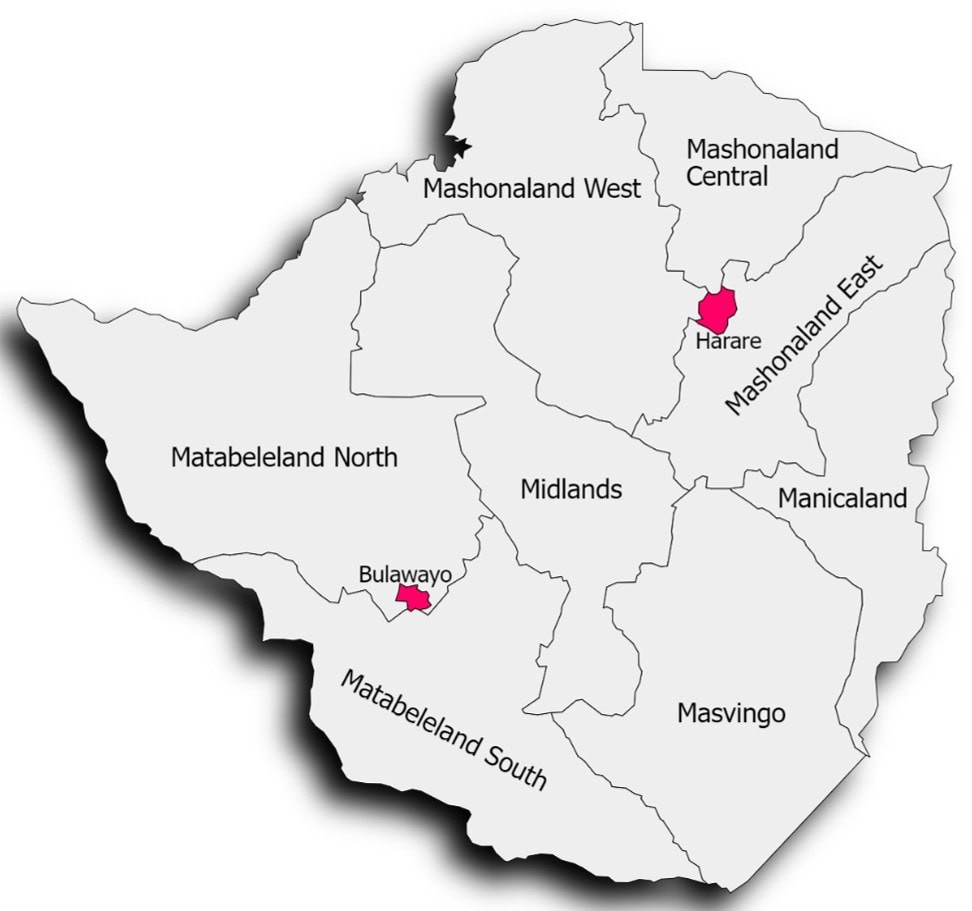
As Zimbabwe’s second-largest city, Bulawayo is strategically positioned as the commercial and cultural hub of the Matabeleland region (Figure 1). The city’s spatial layout provides an ideal environment for analysing the spatial distribution of informal economic activities, such as SFV.
Figure 1. Map of Zimbabwe showing the location of Matabeleland region and Bulawayo
Source: Authors
The spatial scope of this study focuses on the CBD, which serves as a gateway and a hub for tourism, cultural exchange, and commerce. A transit and cultural gateway to both Matabeleland North and South, Bulawayo is a critical centre for regional tourism flows. Regarding culture, the city holds deep historical and symbolic significance as the epicentre of Ndebele heritage. The street food economy in Bulawayo CBD prominently showcases Ndebele cuisine, which sustains local livelihoods and is a form of cultural preservation and transmission. The cuisine reflects local, indigenous knowledge and culinary traditions, providing visitors with authentic experiences. Overall, Bulawayo represents a typical Global South city where tradition and modernity coexist, with its street food reflecting this dual identity by offering both modern fast-food and traditional Ndebele cuisine. Such a blend augments the tourists’ experiences through catering to diverse tastes and highlighting the living culture of the Matabeleland people. Therefore, street food in Bulawayo is both a cultural bridge between locals and visitors and a significant economic activity.
From a regulatory perspective, the Bulawayo city council requires all informal traders, including street food vendors, to obtain a vending license before they start operating. Licensing fees vary by location: those operating within the CBD are required to pay an annual fee of USD 23 and an additional monthly site rental fee of USD 11.50, while vendors operating outside the CBD pay half of these amounts (Bulawayo City Council, 2024). Food vendors are additionally required to undergo a health examination and food-handling training with the City of Bulawayo Health Services Department. Vending space is allocated by the city council rather than freely chosen by vendors, ensuring that vendors meet all hygiene standards. Vendors operating outside designated places are classified as illegal vendors and are subject to enforcement under the city’s laws (Bulawayo City Council, 2024).
SFV in the Bulawayo CBD differs prominently from vending in the city’s residential areas. Within the CBD, street food vendors are located in high-transit areas, targeting commuters, visitors and shoppers looking for quick, affordable, and culturally distinct culinary experiences. Its development is shaped by everyday commercial life in the city, with tourism benefits emerging as a byproduct of that everyday vibrancy. However, food vending outside the CBD primarily serves the needs of the working population and individual households.
4. Methodology
This study adopted an exploratory qualitative research design to get the real-life experiences of the research participants (Creswell, 2013) and to gain insight into the relationship between SFV and urban tourism development in Bulawayo. Semi-structured interviews were done with twenty-five street vendors in the Bulawayo CBD. Interviews were conducted between March and April 2024, using an interview guide with questions organised around the study’s three objectives, the role of SFV in urban tourism development, the socio-economic impacts of SFV, and the challenges faced in developing SFV. Follow-up questions were used flexibly to allow the participants to elaborate on issues raised. All interviews were audio-recorded with the participants’ permission and transcribed verbatim.
Given the limited research on this subject in the local context, an informal, flexible design was used to facilitate the collection of authentic, grassroots data. The researchers employed a convenience sampling technique to select study participants based on their accessibility and availability during field visits. Such an approach helped the researchers engage directly with the vendors in their natural work environment, collating spontaneous, voluntary insights without the influence of institutional or formal gatekeeping structures. The empirical findings presented in this study are thus based on the lived experiences of 25 street food vendors interviewed.
Various ethical considerations were followed in the design and conduct of this study to ensure adherence to the ethical requirements of academic research. Verbal informed consent was obtained from all 25 participants prior to the interviews, during which the purpose of the study, the voluntary nature, and their right to withdraw at any time were explained. In addition, to maintain participant privacy and anonymity, no identifying information was collected from the vendors. In the manuscript, participants are identified using unique codes rather than their names. Data collected was stored securely and only used for the purposes of this study.
Data analysis followed a manual inductive thematic approach. The process began with an iterative reading of the interview transcripts to familiarise with the data. This was followed by the generation of initial codes to capture ideas, expressions, and lived experiences of the vendors. The codes were then combined to form broader themes consolidated around the objectives of the study. This allowed the themes to emerge from the vendors’ lived experiences rather than being imposed on the data from existing frameworks.
5. Results
5.1 Profile of street food vendors
SFV in the Global South is associated with the informal sector, where a cohort of vendors ventures into city spaces that are highly unregulated and unaccounted for (Rogerson & Rogerson, 2025). These vendors do so as a means of livelihood sustenance (Timothy & Teye, 2005). An earlier study on South Africa identified this activity as an attractive income venture, especially for socio-economically vulnerable populations (Motala, 2002). A similar pattern is observed in post-COVID-19 South Africa, where Nyathi et al.’s (2024) case study of informal food vendors in Johannesburg reveals that the sector is largely dominated by economically vulnerable populations seeking livelihood opportunities within unregulated urban spaces.
More specifically, as revealed by Tawodzera (2019a), the demographic characteristics of street food vendors in the Global South show strong participation by women, youth, and middle-aged individuals who depend on vending as either a primary or supplementary source of income. Many of these vendors have been reported to have some form of education, with secondary school completion being the most common (Nyathi et al., 2024; Sepadi & Nkosi, 2023; Tawodzera, 2019b). Literature on this activity also reveals that other demographic characteristics such as gender, age, and years of experience play a significant role in determining the vending practises, food handling behaviours, income generation, and entrepreneurial sustainability (Food & Agriculture Organisation, 2020; Magidi, 2019; Magidi, 2025; Sepadi & Nkosi, 2023).
In the case of Bulawayo, street food vendors closely reflect the broader Global South pattern in that vending is largely dominated by vulnerable socio-economic populations seeking livelihood sustainability. The empirical findings show that the sector is dominated by women and youth who have been relying on this activity for at least three years as a livelihood and income-generating activity (Table 1). Attention now shifts to these vendors’ lived experiences and reflections on the impact of SFV on tourism and socio-economic dynamics in the city, as well as challenges that are experienced.
Table 1. Demographic profile of research participants
| Participant identifiers* | Age | Gender | Level of education | Number of years as a street food vendor |
| SFV1 | 34 | Male | High school | 3 |
| SFV2 | 25 | Female | Tourism student | 2 |
| SFV3 | – | Male | Diploma in professional cookery | 5 |
| SFV4 | 24 | Female | High school | 3 |
| SFV5 | 25 | Female | High school | 3 |
| SFV6 | 37 | Female | National certificate in baking | 6 |
| SFV7 | 45 | Female | High school | 10 |
| SFV8 | 29 | Male | High school | 3 |
| SFV9 | 24 | Female | High school | 2 |
| SFV10 | 39 | Female | Diploma in finance and accounting | 8 |
| SFV11 | 49 | Female | Honours degree in marketing | 8 |
| SFV12 | 23 | Female | High school | 2 |
| SFV13 | 50 | Female | High school | 14 |
| SFV14 | 56 | Male | – | 17 |
| SFV15 | 45 | Male | Honours degree in accounting | 11 |
| SFV16 | 31 | Female | National certificate in beauty therapy | 12 |
| SFV17 | 47 | Male | High school | 10 |
| SFV18 | 29 | Female | High school | 6 |
| SFV19 | 39 | Male | Honours degree in tourism and hospitality management | 6 |
| SFV20 | 35 | Male | High school | 5 |
| SFV21 | 27 | Female | Diploma in food and professional cookery | 4 |
| SFV22 | 37 | Female | – | 10 |
| SFV23 | 45 | Female | – | 19 |
| SFV24 | 28 | Female | Undergraduate degree | 8 |
| SFV25 | 49 | Female | High school | 10 |
*Identifiers were used to maintain anonymity and satisfy the ethical requirements of research.
SFV = Street food vendor; 1 represents the number of the vendor. Source: Authors
5.2 The role of SFV in urban tourism developments
SFV has largely been viewed in tourism scholarship as a vital element of urban tourism systems, especially in the Global South, where the informal economy plays a significant developmental role. A bibliometric analysis-based study on this phenomenon by Makoni and Mearns (2025) reveals that this sector dominates the informal tourism economy in major cities of the Global South. Nyathi et al. (2024) note that SFV aids destination image-building, cultural preservation, the development of urban tourism offerings, and the enhancement of tourists’ experiences. Sepadi and Nkosi (2023) state that street food spaces in major cities are centres of an informal cultural landscape where tourists engage not only in food purchase and consumption but also in everyday urban life, local identities, and traditions through food consumption. In addition, the integration of informal SFV into urban tourism economies is linked to broader socio-economic dynamics, such as employment creation, entrepreneurship, and social capital (Rogerson & Mushawemhuka, 2015; Tawodzera, 2019a, 2019b; ILO, 2020). These impacts are also evident in Bulawayo, as participants identified various ways in which food vending aids urban tourism development in the city. Some of the key responses in this regard included:
“…I think it allows tourists to enhance the cultural experience, so here in Bulawayo we sell traditional foods[…]I think it helps create social communities between locals and the tourists hence the tourists can get an insight into the daily livelihoods of the local community as well as the locals can learn about the tourists. I also think it plays a role in cultural exchange because people can exchange their cultures and learn new recipes, allowing community members to showcase and experience multicultural food and crafts” (SFV5).
“Street food vending brings out the culture of a town, tourists get to experience the food aspect of a city […] Street food vending also enhances experience not just through food but through the interaction with the locals as tourists buy the food, there is an exchange of culture and appreciation of other cultures” (SFV11).
The findings position SFV as a significant aspect of cultural exchange within the city’s urban tourism landscape. Participants consistently associated SFV with tourists’ activities. Engagement in local culinary activities, indigenous cultural practices, and participation in daily social life were among the key tourism activities mentioned by tourists, which they pursue through food purchases and consumption within city spaces in Bulawayo. The findings also suggest that the street food economy serves as an informal space for interaction in which cultural knowledge and identities are exchanged between tourists and locals. This supports the view that gastronomy tourism extends beyond eating to involve social interaction, cultural exchange, and experiential authenticity (Motala, 2002; Nyoni et al., 2025). Besides the cultural exchange, SFV was also seen as a mechanism for destination image enhancement and competitiveness:
“Destinations become unique, it makes a destination sellable’’ (SFV9).
“It makes a city different from other destinations, making it unique and recognised by different stakeholders, hence helping lure more tourists into the city’’ (SFV7).
“Street food vending contributes to infrastructural development; it makes the city look nice and helps draw in more visitors into the city’’ (SFV5).
The findings also reveal that SFV is perceived as a significant livelihood strategy responsible for job-creation opportunities. In addition, the sector was viewed as a key source of indirect employment creation across informal urban economies. Participants linked food vending to household survival strategies and poverty alleviation, reinforcing the developmental significance of informal economies amid high unemployment and economic instability. Similarly, studies by Tawodzera (2019a), Makoni (2023), and Nyathi et al. (2024) reveal that SFV serves dual roles, functioning as a livelihood strategy and enhancing the urban tourism experience. The Bulawayo evidence from the 25 research participants regarding these included statements, such as:
“It helps promote other local businesses such as agricultural-based businesses involved in the farming of the ingredients used by street food vendors and the transport sector that transports these products’’ (SFV12).
“From my understanding, I think street food vending helps boost businesses in a sense that those people that travel for gastronomy purposes will need accommodation at the end of the day, hence they come to us for those services, therefore increasing clientele in our lodges” (SFV1).
Overall, these findings demonstrate that SFV involves more than a tourism-related activity within the city’s urban landscape. This activity contributes significantly to destination competitiveness, cultural preservation, and the enhancement of interconnected local industries such as transport, accommodation, agriculture, and retail businesses, thereby reinforcing its broader developmental value within Bulawayo’s tourism economy. These dynamics underscore the extent to which SFV affects daily livelihoods and local socio-economic structures beyond tourism consumption alone in a typical Global South city.
5.3 Socio-economic impacts of SFV
Despite the limited scholarship on the informal sector in the Global South, existing research reveals that the sector is a significant socio-economic activity that is at the forefront of employment creation, social inclusion, livelihood diversification and entrepreneurship development (FAO, 2020; ILO, 2020; Makoni & Mearns, 2025; Rogerson & Rogerson, 2025). Further, the informal food economy is associated with the enhancement of local economic networks through micro-enterprise activities, poverty alleviation, and informal skills transfer (Tawodzera, 2019b; Magidi, 2025). In the context of tourism, SFV plays a vital role in social interaction and community vibrancy by creating spaces where residents and visitors engage in shared culinary experiences (Nyathi et al., 2024).
Similarly, the Bulawayo case demonstrates employment creation, entrepreneurship development, skills development and social interactions as key socio-economic impacts of SFV in the city. The findings position informal food vending as a significant livelihood activity in Bulawayo’s informal economy. Participants consistently linked the sector with direct and indirect job creation, especially for economically marginalised population groups who have limited access to formal employment opportunities. In addition, emphasis was placed on household sustenance and income generation, suggesting that the sector serves as a critical socio-economic coping mechanism amid economic uncertainty and urban unemployment. Evidence of this is demonstrated in responses from the street food vendors in Bulawayo:
“One person can employ 3 people, so when we have 10 people doing street food vending, it means we have employed 30 people. What about if we have 100 people who can employ 3 people each, that means 300 people will be employed now’’ (SFV1).
“It creates jobs, hence people can sustain themselves […] of course, it is not formal, maybe they could formalise it to make things better. We can take our children to school and manage our households through food vending” (SFV10).
These findings reinforce the broader discourse and debates on the informal economy literature that SFV plays a critical role in livelihood diversification and poverty alleviation through providing income and employment opportunities across Global South cities. Despite the limited scholarship on informality within Global South contexts, the Bulawayo case study mirrors patterns observed in earlier studies dating back to the late 1980s. In this regard, Rogerson (1989) observed that Harare mirrored many major African cities that had become centres of economically related rural–urban migration, where migrants sought economic refuge through income-generating activities, livelihood sustenance, and employment opportunities in the informal sector.
Subsequently, Global South scholarship has increasingly shown that the socio-economic importance of informal sector activities, such as SFV, is neither a recent concept nor a phenomenon still in its infancy. Instead, despite decades of evidence highlighting the sector’s role in livelihoods, employment, and urban survival strategies, the realities of the informal sector have largely been overshadowed by dominant development trajectories that constantly prioritise the ‘formal’ sector’s development and modern urban economic systems. In addition, this evolving conversation on informality has positioned the sector as a significant incubator of entrepreneurship, especially in Global South cities where a wide spectrum of informal economic activities, such as food vending, provide accessible entry points into small business ventures, self-employment and micro-enterprise development. The Bulawayo food vendors showed excitement regarding the sector’s entrepreneurial prospects associated with informal food vending:
“…Food vending inspires us to open our own businesses’’ (SFV3).
“It promotes entrepreneurship and encourages locals to start businesses” (SFV5).
The results further demonstrated that SFV is a paramount contributor to social vibrancy in urban centres by creating spaces for interaction between tourists and locals. Vending spaces were viewed as platforms for social engagements through shared food experiences:
“It promotes skill development, e.g., cooking and management skills, because you will be doing some of the things alone. You got a shop, you are the manager, you are the director, you are the chef, so basically you do everything so that you can learn management skills from there’’ (SFV6).
“It gives us an opportunity to directly interact with the guests. We can speak directly with the clients, and then we give them our traditional food; in that way, there is cultural exchange. We also get to learn about their culture as much as they learn about our culture’’ (SFV9).
“I think it helps create social communities between locals and the tourists hence the tourist can get an insight into the daily livelihood of the local community as well and the locals can learn about the tourists. I think it plays a role in cultural exchange because people can exchange their cultures and learn new recipes’’ (SFV7).
5.4 Challenges faced in developing SFV
Current scholarship on informality in the Global South indicates that SFV in urban environments is frequently shaped by structural and operational challenges related to informality, limited regulatory and policy support, inefficient urban planning, and scant institutional support. Makoni (2023) identifies harassment by local authorities, increased competition, and policy exclusion as key challenges faced by informal vendors in city spaces. Safety concerns, particularly financial and goods security, were identified in the case of Johannesburg street food vendors (Nyathi et al., 2024).
In the FAO (2020) report, health concerns, particularly food preparation and consumption in unregulated spaces, are listed as critical challenges faced by street food vendors, affecting their businesses and, more broadly, food security in African cities. Many of these challenges have been observed to emerge from tensions between informal activities and formal governance systems, which are known to exclude the informal economy in rapidly urbanising cities (Makoni, 2023). Similar challenges were expressed by the Bulawayo street food vendors:
“There is the harassment part, we are receiving unfair treatment from the city council, these guys, when they come, they take our things just like that. In some cases, people get injured as they run away from the city council, afraid that their things will be taken away. So it becomes more of a disadvantage considering that we have low profits and we are expected to pay a fine using that small money’’ (SFV11).
“Some people are operating in places where they are selling cooked food with no running water, nearby toilets or mobile toilets and proper sewage, this raises serious health concerns” (SFV10).
“I think the most challenge is that it requires licensing, street food vending requires a license to operate and these licenses are very expensive which becomes hard for the street food vendors to have licenses. The regulation issues such as food handler’s certificate, which is also costly’’ (SFV13).
“…and there is a lot of competition as many people are now partaking in street food vending’’ (SFV19).
“We are not trained to interact with the tourists. There is a communication breakdown; we can sell the wrong product to the tourist. We have never been trained to understand the nature of tourists and how to carry ourselves around them’’ (SFV16).
“We are not trained on the etiquette, we do not know how to carry ourselves around the tourists’’ (SFV21).
Overall, if SFV is to generate meaningful benefits for urban informality, there is a need for collaboration amongst regulators, destination planners, and informal vendors.
6. Conclusion
For more than three decades, the realities observed in the Bulawayo case study have continued to unfold persistently within the shadows of rapidly urbanising Global South urban centres (Rogerson, 1989; Timothy & Teye, 2005; Reddy et al., 2020; Makoni, 2023; Makoni & Mearns, 2025; Rogerson & Rogerson, 2025). This study, therefore, concludes that the informal economy in the Global South serves as a refuge for millions of livelihoods, yet remains largely overlooked in mainstream urban planning and development, as well as in tourism planning and policy conversations. The Bulawayo case study demonstrates that SFV plays a far more important role in the urban landscape than is often acknowledged. The sector was noted to operate as both an informal survivalist strategy for the economically marginalised populace and a multifaceted urban tourism economic activity that undoubtedly has a significant impact on cultural preservation, entrepreneurship, social capital, job creation, and destination competitiveness.
It was also observed that the sector functions as a vital link between tourism and daily urban life, in which street food practises are integrated into the broader socio-economic fabric of the Global South, characterised by livelihood survival through participation in informal activities. These findings reflect the broader patterns across major cities in the Global South, where food economies continue to shape urban tourism experiences while remaining structurally marginalised within formal policy systems (Makoni, 2023; Nyathi et al., 2024). From a broader perspective, this study’s findings have significant implications for the continued invisibility of the informal tourism sector in a rapidly urbanising Global South, which is associated with the prioritisation of the formal sector. While informal SFV continues to aid local economic development, cultural vibrancy, and tourism experiences, the sector operates under various restrictions, including regulatory exclusion, infrastructural deficiencies, limited institutional support, and several health and safety challenges. The persistence of these conditions demands a rethinking of the conceptualisation of the informal economy in the Global South, particularly within the tourism and urban development frameworks.
As is, the sector remains positioned in a contradictory reality where it is treated as a peripheral urban activity, yet its practical outputs equate it as the other half of the business tourism economy in the Global South urbanscape (Rogerson & Rogerson, 2021). There is, therefore, a need to acknowledge and appreciate the sector as an unwavering aspect of urban tourism systems and a vital livelihood activity for many people. The tenacity of SFV across major cities in the Global South reflects failed conventional tourism and urban development models to comprehensively integrate the socio-economic realities of the precipitously growing urban populations. Yet, besides functioning at the margins of policy visibility and formal economic recognition, the informal sector has continued to shape urban experiences, reproduce daily forms of economic resilience- particularly within the food economy, and sustain livelihoods in contemporary Global South major cities. Ultimately, this study positions itself as a thought-provoking contribution to the growing scholarship on informality in the Global South, advocating for a broader context-sensitive, inclusive and people-centred approach to urban tourism development.
Looking ahead, the Bulawayo case study suggests that formalisation of the SFV sector through robust regulations, seasonal food festivals, and designated operating locations could translate its current socio-economic contributions into a viable urban tourism product. SFV is placed to integrate seamlessly into other activities within urban tourism. Associated attractions such as Ndebele culture, colonial heritage, cultural festivals, heritage trails, and accommodation offerings can be marketed alongside informal food vending as a single, more compelling destination experience.
The study is not without limitations. First, the use of convenience sampling limits the generalisability of the findings, even though it suits the exploratory and qualitative aims. Second, the study was confined to informal food vendors operating in Bulawayo’s CBD, and the experiences reported may not reflect those of vendors elsewhere. Third, data were collected over a short period of time (March–April 2024); as such, the findings represent a cross-sectional snapshot that may not capture seasonal variations, changes in demand, or regulatory enforcement. Fourth, the findings rely on self-reported accounts from the informal food vendors without triangulation from council officials, tourists, or direct observation. Future research can incorporate multiple stakeholders and use longitudinal and mixed-methods approaches, building on the findings of this study.
References
Abrahale, K., Sousa, S., Albuquerque, G., Padrão, P., & Lunet, N. (2019). Street food research worldwide: A scoping review. Journal of Human Nutrition and Dietetics, 32 (2): 152–174. DOI: 10.1111/jhn.12604
Adaku, A. A., Egyir, I. S., Gadegbeku, C., Kunadu, A. P. H., Amanor-Boadu, V., & Laar, A. (2024). Barriers to ensuring and sustaining street food safety in a developing economy. Heliyon, 10 (11): e32190. DOI: 10.1016/j.heliyon.2024.e32190
Anand, S. & Jagadeesh, K. (2022). Neighborhoods and their impacts on the informal food economy of Bengaluru. Cities, 126 (November 2021): 103672. DOI: 10.1016/j.cities.2022.103672
Ashworth, G. & Page, S.J. (2011). Urban tourism research: Recent progress and current paradoxes. Tourism Management, 32 (1): 1–15. DOI: 10.1016/j.tourman.2010.02.002
Bourlessas, P., Cenere, S., & Vanolo, A. (2022). The work of foodification: An analysis of food gentrification in Turin, Italy. Urban Geography, 43 (9): 1328–1349. DOI: 10.1080/02723638.2021.1927547
Bulawayo City Council (2024). Deadline for movement of informal traders to designated vending sites [Public notice]. citybyo.co.zw. https://www.citybyo.co.zw/Notices/InformalTrading/
Caramaschi, S. (2024). Ingredients for displacement: An exploration of the role of street food advocates in San Francisco’s changing environment. Urban Geography, 45 (3): 390–410. DOI: 10.1080/02723638.2023.2189393
Creswell, J. W. (2013). Qualitative inquiry and research design (3rd ed.). London: SAGE.
Czarniecka-Skubina, E., Trafiałek, J., Wiatrowski, M., & Głuchowski, A. (2018). An evaluation of the hygiene practices of European street food vendors and a preliminary estimation of food safety for consumers, conducted in Paris. Journal of Food Protection, 81 (10): 1614–1621. DOI: 10.4315/0362-028X.JFP-18-165
FAO (2020). Advancing “Healthy Street Food Incentives” to boost the safety and nutritional balance of street food in Sub-Saharan Africa – TCP/RAF/3611. Food & Agriculture Organisation, FAO Regional Office for Africa. https://openknowledge.fao.org/handle/20.500.14283/cb1267en/
Hiamey, S. E. & Hiamey, G. A. (2018). Street food consumption in a Ghanaian metropolis: The concerns determining consumption and non-consumption. Food Control, 92: 121–127. DOI: 10.1016/j.foodcont.2018.04.034
Hill, J., McHiza, Z., Puoane, T., & Steyn, N. P. (2019). The development of an evidence-based street food vending model within a socioecological framework: A guide for African countries. PLoS ONE, 14 (10): 1–23. DOI: 10.1371/journal.pone.0223535
Hossen, M. T., Ferdaus, M. J., Hasan, M. M., Lina, N. N., Das, A. K., Barman, S. K., Paul, D. K., & Roy, R. K. (2021). Food safety knowledge, attitudes and practices of street food vendors in Jashore region, Bangladesh. Food Science and Technology (Brazil), 41 (June): 226–239. DOI: 10.1590/fst.13320
Huynh-Van, B., Vuong-Thao, V., Huynh-Thi-Thanh, T., Dang-Xuan, S., Huynh-Van, T., Tran-To, L., Nguyen-Thi-Thao, N., Huynh-Bach, C., & Nguyen-Viet, H. (2022). Factors associated with food safety compliance among street food vendors in Can Tho city, Vietnam: Implications for intervention activity design and implementation. BMC Public Health, 22 (1): 1–11. DOI: 10.1186/s12889-022-12497-2
ILO (2020). The Right to the City and informal economy workers in public spaces. International Labour Organisation. https://streetnet.org.za/2021/10/05/the-right-to-the-city-and-informal-economy-workers-in-public-spaces/
Jimenez-Arpiza, P., Dávila-Navarrete, T.A., Salazar, R., Jiménez-Hernández, J., Saldaña-Almazán, J., & Maldonado-Astudillo, Y. I. (2026). Gastronomic identity, perceived authenticity, and satisfaction in food tourism destinations: A systematic literature review. Tourism and Hospitality, 7 (8): 236. DOI: 10.3390/tourhosp7080236
Joassart-Marcelli, P., Bosco, F. J., Vadun-Lemp, N., & Brazda, T. (2024). Whose sidewalk is it? Street vendors and the battle for San Diego’s foodscape. Urban Geography, 46 (4): 1–20. DOI: 10.1080/02723638.2024.2388947
Koch, R. (2015). Licensing, popular practices and public spaces: An inquiry via the Geographies of Street Food Vending. International Journal of Urban and Regional Research, 39 (6): 1231–1250. DOI: 10.1111/1468-2427.12316
Magidi, M. (2025). The transformation of Zimbabwe’s informal economy: From petty trade to vibrant sector. Journal of Asian and African Studies, 60 (8): 5090–5106. DOI: 10.1177/00219096241275388
Magidi, M. (2019). Sustaining livelihoods in Norton Town after deindustrialization in Zimbabwe. PhD dissertation, Durban: University of KwaZulu-Natal
Makoni, L. (2023). The nature of business tourism economy in Harare, Zimbabwe. PhD dissertation (Tourism and Hospitality Management), University of Johannesburg, South Africa.
Makoni, L. & Mearns, K. (2025). Informal tourism and sustainable development in Africa: Insights from a systematic literature review and content analysis. Revista Română de Geografie Politică, 27 (2): 66–83. DOI: 10.30892/rrgp.272101-390
Maphosa, M. (2026). Informal entrepreneurship and urban space: A case study of food vendors in Bulawayo, Zimbabwe. Journal of Asian and African Studies, 61 (3): 1878–1894. DOI: 10.1177/00219096251325545
Marutha, K. J. & Chelule, P. K. (2020). Safe food handling knowledge and practices of street food vendors in Polokwane Central Business District. Foods, 9 (11): 1560. DOI: 10.3390/foods9111560
McKay, F. H., Singh, A., Singh, S., Good, S., & Osborne, R. H. (2016). Street vendors in Patna, India: Understanding the socio-economic profile, livelihood and hygiene practices. Food Control, 70: 281–285. DOI: 10.1016/j.foodcont.2016.05.061
Motala, S. (2002). Organizing in the informal economy: A case study of street trading in South Africa (No. 993581543402676). International Labour Organization.
Navarrete-Hernández, P., Alford, M., & Toro, F. (2023). Inclusive informal-to-informal trade: The poverty alleviation potential of street vendors’ trade networks in Santiago de Chile. Third World Quarterly, 44 (8): 1844–1864. DOI: 10.1080/01436597.2023.2208060
Nkosi, N. V. & Tabit, F. T. (2021). The food safety knowledge of street food vendors and the sanitary conditions of their street food vending environment in the Zululand District, South Africa. Heliyon, 7 (7): e07640. DOI: 10.1016/j.heliyon.2021.e07640
Nyathi, T. R., Makoni, L., & Mearns, K. (2024). Unraveling the fabric of Johannesburg’s informal food vending sector. Studia Periegetica, 46 (2): 115–134. DOI: 10.58683/sp.2028
Nyoni, W. A., Shereni, N. C., & Rogerson, J. M. (2025). Gastronomy and urban destination development in Zimbabwe: The case of Bulawayo. African Journal of Hospitality, Tourism and Leisure, 14 (4): 830–838. DOI: 10.46222/ajhtl.19770720.667
Peimani, N. & Kamalipour, H. (2022). Informal street vending: A systematic review. Land, 11 (6): 1–21. DOI: 10.3390/land11060829
Petersen, L. M. & Charman, A. J. E. (2018). The scope and scale of the informal food economy of South African urban residential townships: Results of a small-area micro-enterprise census. Development Southern Africa, 35 (1): 1–23. DOI: 10.1080/0376835X.2017.1363643
Petersen, L. M., Charman, A. J. E., & Kroll, F. J. (2018). Trade dynamics in Cape Town township informal foodservice – A qualitative and supply chain study. Development Southern Africa, 35 (1): 70–89. DOI: 10.1080/0376835X.2017.1412297
Pulliat, G., Block, D., Bruckert, M., Nussbaum-Barberena, L., Dreysse, C., Dupé, P., & Perrin, C. (2024). Governing the nurturing city: The uneven enforcement of street food vending regulations. Urban Geography, 45 (7): 1148–1172. DOI: 10.1080/02723638.2023.2279872
Reddy, A. A., Ricart, S., & Cadman, T. (2020). Driving factors of food safety standards in India: learning from street-food vendors’ behaviour and attitude. Food Security, 12 (6): 1201–1217. DOI: 10.1007/s12571-020-01048-5
Rogerson, C. M. (1989). Managing the decolonizing city in southern Africa. South African Geographical Journal, 71 (3): 201–208. DOI: 10.1080/03736245.1989.9713536
Rogerson, C. M. & Rogerson, J. M. (2021). The other half of urban tourism: Research directions in the Global South. In: C. M. Rogerson & J. M. Rogerson (Eds.), Urban tourism in the Global South: South African perspectives Cham: Springer, pp. 1–37. DOI: 10.1007/978-3-030-71547-2_1
Rogerson, C. M. & Rogerson, J. M. (2025). Women informal business tourists in urban Southern Africa: Circuits, drivers and challenges. Tourism – An International Interdisciplinary Journal, 73 (1): 113–125. DOI: 10.37741/t.73.1.8
Rogerson, J. M. & Mushawemhuka, W. (2015). Transnational entrepreneurship in the Global South: Evidence from Southern Africa. Bulletin of Geography: Socio-Economic Series, 30: 135–146. DOI: 10.1515/bog-2015-0040
Sepadi, M. M. & Nkosi, V. (2023). Health risk assessment of informal food vendors: A comparative study in Johannesburg, South Africa. International Journal of Environmental Research and Public Health, 20 (3): 2736. DOI: 10.3390/ijerph20032736
Shereni, N. C. & Ndhlovu, E. (2024). Prospects of peer-to-peer accommodation platforms in urban tourism in Zimbabwe. In: Tourism and hospitality for sustainable development: Volume 1: Technological innovations and development realities. Cham: Springer Nature, pp. 75–86). DOI: 10.1007/978-3-031-63069-9_5
Swai, O. A. (2019). Architectural dynamics of street food-vending activities in Dar es Salaam city centre, Tanzania. Urban Design International, 24 (2): 129–141. DOI: 10.1057/s41289-019-00083-9
Tawodzera, G. (2019a). Food vending and the urban informal sector in Cape Town, South Africa. Waterloo: Hungry Cities Partnership Discussion Paper, 23.
Tawodzera, G. (2019b). The nature and operations of informal food vendors in Cape Town. Urban Forum, 30 (4): 443–459. DOI: 10.1007/s12132-019-09370-8
Timothy, D. J. & Teye, V. B. (2005). Informal sector business travelers in the developing world: A borderlands perspective. The Journal of Tourism Studies, 16: 82–92.
Trafialek, J., Drosinos, E. H., Laskowski, W., Jakubowska-Gawlik, K., Tzamalis, P., Leksawasdi, N., Surawang, S., & Kolanowski, W. (2018). Street food vendors’ hygienic practices in some Asian and EU countries – A survey. Food Control, 85: 212–222. DOI: 10.1016/j.foodcont.2017.09.030
Uwamahoro, M. C. & Khoo, E. (2025). Forced to move: A scoping review of research on the vulnerability of street vendors in the context of urban development in Sub-Saharan Africa. Social Sciences, 14 (11): 645. DOI: 10.3390/socsci14110645