

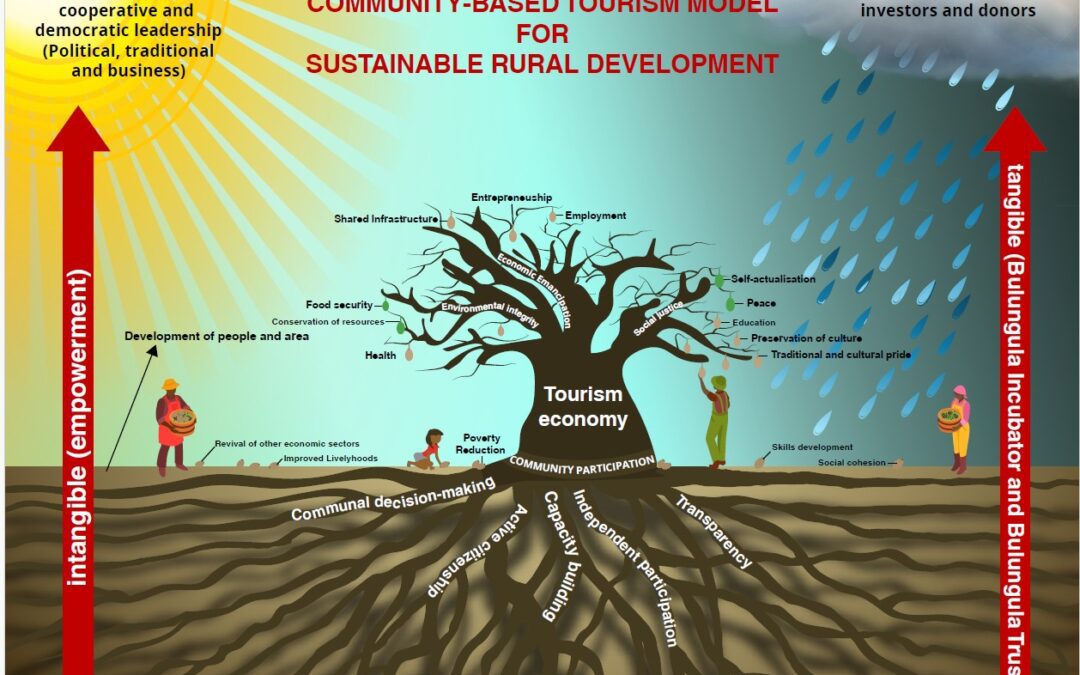
A Model of Community-Based Tourism for Sustainable Rural Development
1Tshepiso Jonathan Setokoe*, 2Takalani Ramukumba
1Senior lecturer, Central University of Technology, Faculty of Management Sciences, Hospitality Management, Bloemfontein, South Africa; tsetokoe@cut.ac.za, ORCID: 0000-0002-5212-4449
2Professor, Walter Sisulu University, Faculty of Management and Public Administration, Department of Tourism & Hospitality, Eastern Cape, South Africa; tramukumba@wsu.ac.za, ORCID: 0000-0003-1176-1641
Abstract
Community-based tourism (CBT) presents both opportunities and challenges for holistic community development, especially in rural areas, where initiatives are urgently needed to create opportunities for all. CBT has been promoted as one of the poverty-reduction strategies that could improve the sustainability of marginalised regions and communities. The contribution of this paper is to propose a comprehensive CBT model for sustainable rural development, based on qualitative data collected through semi-structured interviews with a purposive sample of 24 participants drawn from Nqileni village in South Africa’s Eastern Cape province. The respondents were asked about the development of tourism in the area. The results showed that community members considered their involvement in tourism development initiatives to be of utmost importance. Moreover, community members indicated that sustainable tourism was creating socioeconomic benefits by preserving the village’s environmental and cultural integrity.
Keywords: community-based tourism, community-based tourism model, community participation, sustainable rural development, sustainable tourism development
Received: 28 January 2026
Accepted: 19 May 2026
Published: 6 July 2026
This open access article may be used under the international license terms of CC BY-NC-ND 4.0.
https://creativecommons.org/licenses/by-nc-nd/4.0/
KÖZÖSSÉGI ALAPÚ TURIZMUSMODELL A FENNTARTHATÓ VIDÉKFEJLŐDÉSÉRT
1Tshepiso Jonathan Setokoe*, 2Takalani Ramukumba
1Egyetemi adjunktus, Központi Technológiai Egyetem, Vezetéstudományi Kar, Vendéglátás Menedzsment, Bloemfontein, Dél-afrikai Köztársaság; tsetokoe@cut.ac.za, ORCID: 0000-0002-5212-4449
2Egyetemi tanár, Walter Sisulu Egyetem, Vezetéstudományi és Közigazgatási Kar, Turizmus és Vendéglátás Tanszék, Eastern Cape, Dél-afrikai Köztársaság; tramukumba@wsu.ac.za, ORCID: 0000-0003-1176-1641
Absztrakt
A közösségi alapú turizmus (CBT) egyaránt jelent lehetőségeket és kihívásokat a holisztikus közösségfejlesztés számára, különösen a vidéki térségekben, ahol sürgősen szükség van olyan kezdeményezésekre, amelyek mindenki számára lehetőségeket teremtenek. A CBT a szegénységcsökkentési stratégiák egyikeként lett népszerű, mint olyan, ami javíthatja a marginalizált régiók és közösségek fenntarthatóságát. Jelen tanulmány jelentősége abban áll, hogy átfogó, közösségi alapú turisztikai modellt javasol a fenntartható vidékfejlesztés érdekében. Dél-Afrika Kelet-Fokföld tartományában található Nqileni faluból származó, célzottan kiválasztott 24 résztvevővel készített, félig strukturált interjúk során gyűjtött kvalitatív adatokon alapul a kutatás. A válaszadókat a térség turizmusának fejlődéséről kérdezték. Az eredmények azt mutatták, hogy a közösség tagjai rendkívül fontosnak tartották a részvételüket a turizmusfejlesztési kezdeményezésekben. Ezen felül a közösség tagjai jelezték, hogy a fenntartható turizmus társadalmi-gazdasági előnyöket teremt a falu környezeti és kulturális integritásának megőrzése révén.
Kulcsszavak: közösségi alapú turizmus, közösségi alapú turizmusmodell, közösségi részvétel, fenntartható vidékfejlesztés, fenntartható turizmusfejlesztés
Benyújtva: 2026. január 28.
Befogadva: 2026. május 19.
Publikálva: 2026. július 6.
Ez a mű a Creative Commons CC BY-NC-ND 4.0 nemzetközi licence-feltételeinek megfelelően használható fel.
https://creativecommons.org/licenses/by-nc-nd/4.0/
1. Introduction
Recent scholarship emphasises community-based tourism (CBT) as a sustainable tourism model that operationalises sustainability principles in tourism development (Lo, 2022). The evolution of CBT has been regarded as a critical milestone in the tourism sector, supporting the broader agenda of sustainable development to strengthen the overall value of tourism (Wall, 2018). Complementary developments have highlighted the importance of community involvement and the protection of natural resources. The interdependence between CBT and the tourism industry underscores the pursuit of sustainable tourism, which seeks to maintain equilibrium across economic, sociocultural, and environmental domains.
Furthermore, the notion of appropriateness in tourism implies that experiences in natural environments should remain tranquil, immersive, and foster meaningful interaction with minimal adverse effects (Lo, 2022). However, many local authorities encounter barriers in implementing sustainability measures, primarily due to insufficient expertise and limited capacity (Harrison & Schipani, 2007). Within this framework, sustainable tourism aims to optimise the use of constructed and natural assets, which are vital to the growth of the tourism industry, while simultaneously conserving biodiversity and sustaining essential ecological systems (Lo, 2022).
CBT has also been conceptualised as a form of community-driven tourism planning (Lo, 2022). In contrast to mass tourism, it fosters greater awareness among visitors and offers insights into the everyday lives of host communities (Oosterhof, 2018; Lo, 2022). With the rise of CBT enterprises, particularly in rural settings, there is a growing need to refine the understanding of sustainability within the tourism sector.
Alongside the design of CBT initiatives, a variety of tourism products are now marketed to visitors (Murphy, 2012). Sustainable tourism, in this regard, encompasses safeguarding ecosystems, protecting cultural heritage, and ensuring long-term residential liveability (Harrison & Schipani, 2007). The successful implementation of CBT relies on social capital, which functions as a core resource, involving a wide range of actors such as governments, destination management organisations (DMOs), non-governmental entities, local and regional tourism organisations, communities, and other tourism-related agencies (Simpson, 2008). Collectively, these stakeholders assume central roles in coordinating, managing, and advancing CBT ventures.
One example of such stakeholders are DMOs, which can be entities at any level responsible for promoting a recognisable tourism destination. Beyond DMOs, local distinctiveness, social networks, and the accumulated knowledge of both policymakers and indigenous or local communities significantly contribute to the establishment of CBT enterprises. These factors also stimulate entrepreneurial awareness, encouraging investment in tourism-related small and medium-sized enterprises (SMEs) in rural contexts. The effectiveness of such ventures often depends on the degree of collaboration across various levels of government, including district and national authorities, in ensuring coherent governance and collective action.
In rural destinations, tourism activities commonly integrate the natural landscape as part of the overall attraction (Ngonya, 2015). Within this context, CBT is used to describe a wide range of tourism approaches, but it most frequently refers to models emphasising community participation (Setokoe, 2019). The central objective is to deliver benefits to local populations, particularly in developing regions, by providing opportunities for cultural exchange and environmental learning (Wall, 2018). In many rural areas, activities associated with rural tourism are effectively framed as CBT initiatives (Ngonya, 2015). Organisational structures within rural tourism development are increasingly considered critical, with rural tourism being recognised as a strategy for revitalising rural economies (Gannon et al., 2017). Furthermore, rural tourism is closely tied to ecotourism and plays a vital role in positioning these regions as tourist destinations (Gannon et al., 2017). Empirical research has shown that even a single rural destination has the potential to sustain or even increase tourist arrivals. A distinguishing feature of rural tourism is its reliance on locally initiated projects, locally driven management, and cultural heritage rooted in the surrounding environment (Gannon et al., 2017). For tourism practices to be classified as rural tourism, they must reflect core rural characteristics, including small settlements, low population density, agricultural economies, and traditional social structures (Gannon et al., 2017).
The main objective of the following study was to develop a comprehensive model of community-based tourism that would foster sustainable rural development in Nqileni village. With this end in mind, the authors formulated the following research question:
- To what extent can the development of community-based tourism serve as a catalyst for sustainable rural development in Nqileni Village?
The research question was then used to put forward the research objective:
- To examine how sustainable rural development can be achieved through the development and implementation of community-based tourism initiatives in Nqileni Village.
2. Literature review
2.1. The perspective of CBT
To contextualise the CBT concept, it is necessary to outline prior research in the field before examining sustainable development, CBT, and capacity-building for sustainable rural tourism. Earlier studies underscore the crucial role of village communities in facilitating rural CBT activities (Rindrasih, 2018). Evidence from this body of work indicates that the long-term viability of rural CBT relies heavily on community support for local tourism initiatives. According to recent studies, indigenous populations represent the cornerstone of sustainable tourism enterprises and their involvement in rural tourism development is indispensable (Husen et al., 2025). Furthermore, numerous authors emphasise the importance of adequate financial allocations for local community participation in implementing tourism development projects (Lucchetti & Font, 2013; Tolkach & King, 2015). These findings reiterate that prioritising local engagement is particularly critical when addressing tourism project funding and resource distribution (Lucchetti & Font, 2013). Recent studies emphasise that the participation of whole communities in CBT including residents, management committees, community leaders, business actors, and government stakeholders is integral to successful implementation (Rindrasih, 2018). Likewise, research highlights discrepancies between theoretical CBT frameworks and their practical application, stressing the importance of substantial community contributions in translating CBT development plans into practice (Mayaka et al., 2018; Husen et al., 2025).
2.2. Sustainable development and CBT
The concept of sustainability has been closely associated with various development activities (Jones et al., 2016). Although the name itself has been present in the literature for the last four decades, the underlying notion, as noted by Du Pisani (2006: 83), existed many centuries before its promulgation in the late twentieth century:
“The roots of the concept of sustainability can be traced to ancient times, but population growth, increase in consumption after the Industrial Revolution, and the danger that the crucial resources such as wood, coal and oil could be depleted boosted awareness of the need to use resources in a sustainable way. Fears that present and future generations might not be able to maintain their living standards stimulated the mode of thinking that would eventually inform discourses which prepared the way for the emergence and global adoption of sustainable development.”
Discussions related to sustainable development have been associated with a growing interest following the publication in the early 1980s of the ‘World Conversation Strategy’ (International Union of Nature and Natural Resources of 1980) and the Brundtland Commission’s landmark publication ‘Our Common Future’ (World Commission on Environment and Development [WCED] of 1987) (Jones et al., 2016; Barkemeyer et al., 2014). This interest has reflected a growing concern about a range of social, environmental, and economic challenges at various spatial and temporal scales including the pressure placed on natural resources by the continued growth in population and urbanisation, climate change, loss of natural habitats, and water stress and scarcity of water resources in some areas of the world (Jones et al., 2016).
The importance of sustainable development is a reflection of the search for solutions aimed at redressing the effects of ecological crises resulting from massive exploitation of resources and the continuous degradation of the environment due to problems mentioned above (Jones et al., 2016). This objective is captured by the definition formulated by the Brundtland Commission: “development that meets the needs of the present generation without compromising the ability of future generations to meet their needs” (World Commission on Environment and Development, 1987: 43).
The advocacy of sustainability in accordance with the Brundtland Commission report serves as the foundation for contemporary global frameworks, such as the 2030 Agenda for Sustainable Development and the Sustainable Development Goals (UNWTO, 2024). Despite its global recognition, operationalising sustainable development presents significant challenges. Scholarship suggests that sustainable tourism, in particular, is sometimes conceptualised too narrowly, limiting its ability to encapsulate the comprehensive principles of sustainability (Husen et al., 2025). Rural communities typically depend on diverse livelihood strategies shaped by natural resources, geographic characteristics, and cultural traditions, such as agriculture, livestock production, small-scale industries, hospitality enterprises, and financial services. Given that many of these activities compete for limited land and resources, integrated planning and coordinated management are essential for sustaining rural livelihoods (Priatmoko et al., 2025).
Tourism has progressively been transformed from traditional initiatives into innovative approaches that emphasise ecotourism, pro-poor tourism, and CBT (Husen et al., 2025). CBT is distinguished by its community-driven governance of tourism operations and fair distribution of benefits (Husen et al., 2025). Beyond its economic function, CBT acts as a social organising mechanism and mitigates the adverse consequences of mass tourism in developing regions (Rindrasih, 2018). Designed to generate collective advantages, CBT initiatives aim to stimulate local economies, alleviate poverty, safeguard cultural and ecological assets, and provide high-quality experiences for visitors (Rindrasih, 2018; UNWTO, 2023).
Tourism further generates strong intersectoral linkages and multiplier effects, offering significant opportunities for underdeveloped rural areas (Priatmoko et al., 2025; Husen et al., 2025). While development planners prioritise sustainability-oriented strategies, destination marketers highlight attributes that strengthen destination appeal, including tranquil settings, recreational opportunities, cultural events, hospitality, scenic beauty, and biodiversity. Active community participation is indispensable for ensuring the longevity of tourism destinations (Tosun, 2000). Local residents’ involvement not only enhances governance but also supports empowerment and increases economic benefits from tourism and natural resource management (UNWTO, 2024). By granting communities ownership or access rights to tourism resources, CBT ensures more equitable distribution of benefits among local stakeholders (Husen et al., 2025; Rindrasih, 2018).
2.3. Capacity building for sustainable rural tourism development
Independent, community-led CBT projects are relatively uncommon, especially during their formative phases, and typically depend on external assistance (Rindrasih, 2018). External collaborators may provide resources, expertise, or promotional support without assuming ownership of ventures (Husen et al., 2025). CBT initiatives can originate from either local or external actors, with the government frequently playing a pivotal enabling role (UNWTO, 2023). Table 1 presents theoretical elements of community-based tourism models from past studies.
Table 1. Theoretical elements underlying the CBT model
| Authors | Theoretical concepts of CBT models |
| Ahmad & Abu Talib (2015) | Community participation, empowerment, and local ownership |
| Simpson (2008) | Transparent governance structures, skill enhancement, and stakeholder collaboration between local communities, government, and private entities |
| Tosun (2000); Simpson (2008) | Ladders of engagement ranging from tokenistic consultation to full empowerment |
| Waligo et al. (2015) | Governance perspectives and benefit-sharing mechanisms |
| Tosun (2000) | Power asymmetries and institutional constraints |
| Scheyvens & Biddulph (2018) | Active citizenship |
Source: own editing
Capacity building is increasingly acknowledged as a critical mechanism for addressing development challenges in rural contexts (Rindrasih, 2018; Priatmoko et al., 2025). It refers to efforts aimed at enhancing communities’ ability to achieve shared objectives through the development of human capital, mobilisation of resources, and strengthening of social capital, thereby enabling collective problem-solving to sustain or improve community well-being (UNWTO, 2024). In order to ensure that capacity-building initiatives yield lasting results, donor priorities must be aligned with community aspirations, ensure program sustainability, and foster conducive learning environments (Husen et al., 2025).
Internal community dynamics, including competing interests, existing networks, and political structures, must also be carefully considered to prevent conflict and encourage broad participation (Setokoe, 2019). A central objective of CBT should be to educate local communities about sustainable tourism principles, ensuring that these initiatives leave a lasting legacy of development and empowerment (UNWTO, 2023).
3. Research design and methods
3.1. Research locale
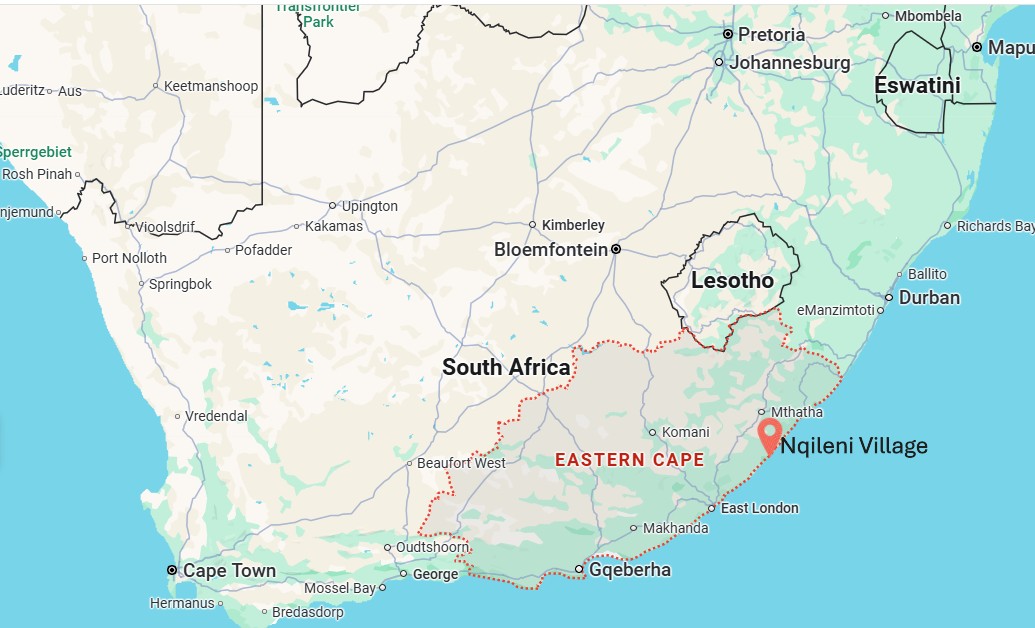
Nqileni village is situated in the Mbhashe Local Municipality of South Africa’s Eastern Cape province (Figure 1). It is one of four villages that make up the Xhora Mouth Administrative Area on the Wild Coast (Bulungula Incubator, 2025). It is located in the northeastern part of the Amathole District Municipality, its main administrative office situated in Dutywa (IDP, 2023). Statistics South Africa characterises the village as a rural settlement inhabited by a small population, with low levels of economic activity, high levels of illiteracy, where the overwhelming majority are members of the previously disadvantaged population of South Africa.
Figure 1. The location of Nqileni Village in South Africa
Source: Google Maps (2025)
Nqileni village is characterised by the highest unemployment rate (42%) in Eastern Cape, and an even higher illiteracy rate of 60% (IDP, 2023). The area’s economy relies on agriculture, tourism, community service, construction, and trade (Setokoe & Ramukumba, 2019). Severely degraded gravel roads exacerbate the village’s isolation, which hinders access to schools, clinics, and markets. These structural deficits mean that tourism, while being an important source of income, is neither sufficient nor uniformly feasible as a poverty-reduction strategy. As a result, livelihood strategies remain diversified across subsistence agriculture, small-scale trading, remittances, and NGO-led programs (Bulungula Incubator, 2025). Governance and development in Nqileni are therefore negotiated through a mix of traditional leadership, local government (ward structures), and active civil society actors (e.g., Bulungula Incubator), whose interventions focus on health, education, skills training, and small-enterprise development to mitigate the deeper service-delivery and economic deficits (Bulungula Incubator, 2025).
Tourism in Nqileni is notable for its community-owned, small-scale, low-impact model rather than mass commercial development. The Bulungula Lodge and local homestay programmes are the village’s principal attractions: undeveloped Wild Coast beaches and estuaries, guided coastal hikes, cultural immersion (traditional rondavel stays, Xhosa music and craft workshops), and volunteer/educational placements products that emphasise authenticity and community benefit (Bulungula Incubator, 2025). Tourists are drawn primarily by the natural scenery and remoteness of the Wild Coast, and the opportunity for cultural immersion and ethically minded, community-benefiting experiences; these demand-side motives make Nqileni attractive to backpackers, domestic travellers, and specialist volunteers/researchers rather than to mass-market beach tourists (Bulungula Incubator, 2025).
The geographical and socio-economic background of Nqileni village provides the rationale for the study. The socio-economic shortcomings indicated above highlight the village’s need for development initiatives that can enable sustainable utilisation of the area’s natural and socio-cultural endowments. To overcome the developmental challenges characterising the area, the Bulungula Lodge was established in 2004. This is a 100% community-owned and managed tourism entity that enabled real development in the village. Following the establishment of the lodge and the subsequent development of tourism, entrepreneurial initiatives undertaken by members of the Nqileni village community began to mushroom with the aim of serving tourists visiting the area. This gave rise to an entrepreneurial culture that improved the livelihoods of community members through income generated by visitors coming to the lodge. In addition to the entrepreneurship borne from activities relating to tourism, a communal approach to the running and management of tourism activities was undertaken to allow stakeholders (community members) to give input and receive reports on their shared interest – the Bulungula Lodge.
The establishment of the Bulungula Lodge led to the birth of the Bulungula Incubator; a non-governmental organisation (NGO) founded with the goal of changing the developmental complexion of the area. Its core mandate was born out the village’s shortcomings that included efforts to improve access to healthcare and drinking water, roads, schools, electricity, and sanitation (Bulungula Incubator, 2025).
The Bulungula Incubator has launched a number of initiatives in the areas of education, health and nutrition, sustainable livelihoods, and youth development. As a result of these initiatives, the village now boasts early child development centres and a high school (Bulungula College, a first in the area); has improved access to quality healthcare and nutrition (Bulungula Health Point and school nutrition programme); has gained local employment opportunities (development of a farmer development programme and 400 local jobs through a partnership with the Independent Development Trust); and has strengthened its social cohesion through a programme designed to encourage residents to engage in creativity, self-expression, healthy living and respect for the environment (Bulungula Incubator, 2025). It is notable that whilst tourism has brought much relief to the village, its full potential has been seriously limited by the poor road infrastructure.
3.2. Research design
The study is based on qualitative data collected from a non-probability, purposive sample of 24 respondents (residents, business and community leadership) drawn from Nqileni village using semi-structured interviews designed to elicit information about the role of community-based tourism in developing rural areas. Data were collected through the engagement of community leadership and the general population of the village. The interviews continued until no new information was provided by the respondents, which suggested a point of saturation had been reached.
Interviews were conducted in the language of the local community (Xhosa). Participants in the study signed a consent form and were informed of their right to withdraw at any given point. Recorded interviews, lasting from 13 to 20 minutes, were transcribed and then translated into English. Prior to the analysis of the data, the transcripts and voice recordings (for those who could not read) were made available to the respondents in order to give them an opportunity to check their answers and provide further clarifications if necessary.
The collected data were subjected to thematic-interpretive analysis according to the principles outlined by Braun & Clarke (2006). At the onset of the study, all interview questions were checked by a qualitative statistician to ensure they were relevant and valid with respect to the research question. Such an undertaking afforded the data relevance and validity while minimising potential contamination to the study. This enabled the commencement of coding and analysis using a qualitative software program, NVIVO version 14. This was followed by the creation of codes formulated from participants’ responses. A code-recode method was further employed to confirm that all interview content was relevantly named, thereby ensuring that only key codes were retained. The concerted formulation of codes enabled the creation of themes that were aligned to the interview questions and research questions. These are the themes that will be discussed in the following section.
4. Results and discussion
4.1. Demographic information about the respondents
The sample of respondents included five community leaders and nineteen residents of Nqileni village Tables 2 and 3). Four community leaders had spent all their lives in Nqileni village, and one had lived there since 2007. All of them held positions of authority and responsibility. The majority of the remaining respondents were also lifelong residents of Nqileni village, with a few having moved to the village in recent years through marriage and other social constructs. Thirteen respondents in this group were engaged in different forms of engagement in both the formal and informal economy, such as employment at the Bulungula Lodge, service positions, entrepreneurial activities and local tourism, while six were unemployed (although they derived some income from shareholding in Bulungula Lodge).
Table 2. Representatives of the community leadership of Nqileni village
| Respondent | Age | Place of residence | Length of residence | Role |
| 1 | 50–59 | Nqileni | Whole life | Headman |
| 3 | 30–39 | Nqileni | Whole life | Ward committee member |
| 6 | 40–49 | Nqileni | Whole life | Ward councillor |
| 7 | 30–39 | Nqileni | Whole life | Manager of the Bulungula Lodge |
| 24 | 30–39 | Dutywa | Since 2007 | Local economic development officer for Mbashe Local Municipality |
Source: own editing
Table 3. Representatives of the general population of Nqileni village
| Respondent | Age | Place of residence | Length of residence | Role |
| 2 | 40–49 | Nqileni | Unknown | Unemployed |
| 4 | 20–29 | Bulungula | Whole life | Canoeing |
| 5 | 50–59 | Nqileni | Whole life | Unemployed |
| 8 | 40–49 | Bululunga | Whole life | Help in the kitchen |
| 9 | 40–49 | Nqileni | Whole life | Unemployed |
| 10 | 30–39 | Nqileni | Whole life | Unemployed |
| 11 | 30–39 | Nqileni | Whole life | Employee of Bulungula lodge (horseback riding guide) |
| 12 | 20–29 | Nqileni | Whole life | Manager |
| 13 | 30–39 | Nqileni | 25 years | Cleaner |
| 14 | 40–49 | Nqileni | 6 years | Chef |
| 15 | 40–49 | Nqileni | Whole life | Help in the kitchen |
| 16 | 30–39 | Nqileni | Whole life | Security guard during the day |
| 17 | 60+ | Nqileni | Since 2008 | Unemployed |
| 18 | 50–59 | Xhora | Since 1979 | Unemployed |
| 19 | 20–29 | Nqileni – seaside | 1 year | Legal sdvisor |
| 20 | 20–29 | Nqileni | Since 1991 | Receptionist |
| 21 | 20–29 | Nqileni | 25 years | Entrepreneur; owner and manager of Ilanga Fire Restaurant |
| 22 | 20–29 | Nqileni | Since 2010 | Tour guide |
| 23 | 50–59 | Nqileni | Whole life | Security guard |
4.2 Themes generated
4.2.1. Community participation
The respondents emphasised that community involvement in tourism development initiatives was very important. In their opinion, such participation should be placed at the core of decision-making processes and should occur without undue influence from external stakeholders. They also stressed the significance of active citizenship and transparency throughout the participation process, noting that these were essential to ensure that project objectives were aligned with community priorities and produced sustainable development outcomes. The following comments illustrate the general views summarised above:
“I think the community members should be involved, as this place belongs to the community. The ward councilor cannot do anything or make decisions without involving the community members. So yes, they should be involved when decisions are taken because they are community members, and decisions taken will affect them the most” (Respondent #6).
“It is important for members to involve themselves because there is income coming through tourism initiatives in our village, and the community members benefit from these tourism development initiatives. Community members’ establishment of businesses has been a key factor in community participation in the development of Nqileni village. Indeed, members are given a role to participate in the tourism industry” (Respondent #3).
“Community members need to be involved in the development of the community because such developments bring about change in the form of facilities such as clinics and schools, which we did not have in the past” (Respondent #24).
“Community participation provides an opportunity for the community to become self-reliant using their skills to create opportunity for themselves instead of relying on government for jobs and grants” (Respondent #9).
According to the interviewees, decision-making in tourism development should not be left to political leaders alone but rather must include community members because the outcomes directly affect them. This view is consistent with Nuttavuthisit et al. (2015), who argue that local participation in development initiatives enhances efficiency, accountability, and transparency in resource use, while also strengthening ownership and commitment among residents. Similarly, Murphy (2012) argues that without genuine involvement of those most affected, development lacks both legitimacy and sustainability.
The belief that tourism initiatives generate income for local households and provide opportunities for community-owned businesses aligns with Muganda et al.’s (2013) understanding of participation. They describe participation as encompassing the planning, decision-making, implementation, and management of initiatives to ensure that benefits accrue to all community members. This is consistent with Uysal et al. (2012), who argue that community participation in tourism helps fulfil the sector’s goal of fostering a tourism economy that enhances residents’ quality of life through employment creation and other social, economic, and environmental benefits (Jeon et al., 2016).
The respondents also linked involvement in tourism to broader community development outcomes, such as improved access to schools and clinics, which they had lacked in the past. Previous studies have shown that community participation contributes to sustainable tourism development by ensuring that locals derive positive and balanced benefits, thereby increasing their tolerance and support for tourism (Tosun, 2000; Telfer & Sharpley, 2016). In this sense, community engagement is not only about economic gain but also about fostering long-term social improvements and resilience.
Finally, opinions expressed during the interviews confirm recent research showing that adequate financial support is vital for ensuring local engagement in tourism projects (Lucchetti & Font, 2013; Tolkach & King, 2015). Prioritising financial allocations that empower local communities in project funding and resource distribution is central to successful implementation (Lucchetti & Font, 2013). This aligns with recent evidence that whole community involvement including residents, leaders, committees, businesses, and government stakeholders, is essential for the effective realisation of community-based tourism (Rindrasih, 2018).
4.2.2. Active citizenship
Development initiatives are instrumental in driving transformation within communities. For meaningful improvements to be realised, sustained development is required. Accordingly, community members need to adopt proactive roles in shaping their socio-economic conditions. Such engagement is critical, as it cultivates a collective vision that motivates citizens to actively contribute to local advancement. The importance of such engagement is exemplified by the establishment of the Bulungula lodge, which consolidated the community’s resolve to pursue collective action through its contribution to community development initiatives and income-generating activities within the area. Consequently, residents’ participation in development processes enhances self-reliance and fosters sustainability, thereby mitigating dependence on state-provided welfare mechanisms (such as social grants). The following comments illustrate the general views summarised above:
“Community members can take initiative of tourism development projects and could also work together at the lodge. We have a responsibility of working together, but we also wish that the government can assist” (Respondent #11).
“It is important for the members of Nqileni to be involved because such programmes will help them, as well as future generations” (Respondent #8).
“It is important for members to involve themselves because there is income coming through and their family members benefit” (Respondent #2).
“That is the crown of everything. Without that, nothing can happen. If there’s no participation then we’re back the beggar situation where we just put hands out, and the handouts, and that to me is a no-no. It’s a total participation of everybody, is so important” (Respondent #17).
The interviewees were convinced that community members could take ownership of tourism development projects, including collaborative work at local lodges, while also recognising the need for government support. This aligns with research indicating that active citizenship is critical in shaping development outcomes, such as Abiona & Bello (2013), who point to the importance of mobilising and integrating local communities into initiatives that transform their surroundings into more developed and sustainable environments.
The involvement of Nqileni residents in tourism projects was further regarded as essential not only for current benefits but also for inter-generational equity, ensuring that future generations may also experience improved well-being. This view is consistent with Budeanu et al. (2016) who argue that development must pursue a “balanced use” of resources, enabling tourism to serve all stakeholders equitably through active engagement in local development initiatives.
The interviewees believed that community involvement secures tangible economic benefits, particularly through income generation. This perspective is supported by the findings of Tosun (2000), who argues that local participation is indispensable for ensuring the resilience and longevity of tourism destinations. Active engagement enhances local governance structures while simultaneously supporting empowerment and providing broader socio-economic benefits through sustainable tourism and resource management (UNWTO, 2024).
Finally, there was agreement among the respondents that without meaningful participation, communities risk dependency on handouts, which undermines self-sufficiency. This reinforces the importance of total community engagement in tourism development as a pathway to independence and long-term sustainability, echoing scholarly consensus on the necessity of local ownership for inclusive development outcomes.
4.2.3. Importance of capacity building
The interviews reveal the significance of capacity building to advance and sustain development initiatives, particularly skills development, training and knowledge generation, which were identified as key drivers of sustainable tourism development and related community-based initiatives. Another aspect mentioned by the respondents was the need for an effective dissemination of information concerning development projects, which empowers community members by enabling them to better understand ongoing initiatives. Such processes not only enhance transparency but also contribute to improving the overall quality of life within the community. The following comments illustrate the general views summarised above:
“People need to be equipped with the right skills to have a better life. This is important because most community members do not have enough development knowledge” (Respondent #12).
“One thing I think is important is that someone with expertise in tourism and development projects should come and teach us more about them so we can follow the trend” (Respondent #22).
“We also provide training to local people in order for them to participate in the management of the Bulungula Trust” (Respondent #7).
“Our only shot at winning the war against poverty is ensuring that community members are trained in areas that will give them skills that enable them to do for themselves” (Respondent #5).
The respondents emphasised the need to equip community members with the necessary skills and knowledge to enhance their quality of life, highlighting the limited development expertise currently available within the community. This perspective aligns with research findings highlighting the role of capacity building in sustaining development. According to Budeanu et al. (2016), a community’s survival and long-term sustainability depend on its capacity to adapt, which requires not only a reassessment of core values but also their application through social institutions, processes, and individual agency.
Similarly, Aref et al. (2009) point out that communities must obtain knowledge and competencies that empower them to act in ways that maximise the benefits of development. This has led to a strong focus on developing tourism-related skills in rural contexts as a means of revitalising socio-economic conditions and fostering prosperity within local communities (Sharpley, 2002; Sango, 2014).
Such priorities are consistent with broader national strategies, as demonstrated by the South African government’s Human Resource Development Strategy, which underscores the significance of strengthening the skills base within the tourism sector to drive growth (NTSS, 2011). Recent studies further confirm that capacity building remains a crucial approach for addressing rural development challenges and promoting sustainable outcomes in tourism (Rindrasih, 2018; Priatmoko et al., 2025).
4.2.4. Independent participation in development
The community provides a unique perspective on the importance of local participation in rural development, particularly within the framework of community-based tourism. This viewpoint is reflected in accounts of the community’s engagement with opportunities generated by tourism-led initiatives in Nqileni village. The interviewees described their involvement in various developmental activities, including the construction of infrastructure such as roads and water systems, the establishment of enterprises serving both tourists and local residents, and the provision of additional social amenities.
The respondents also drew attention to participatory mechanisms that facilitate consultation and community input. When development projects are introduced, every individual’s opinion is considered, reflecting a deliberate commitment to inclusivity in decision-making. This approach is operationalised through forums that allow members to participate actively, such as community meetings and discussions on tourism-related projects. Following these engagements, responsibilities and tasks are allocated among community members, often with financial compensation for individuals or households, depending on budgetary resources. This structured form of participation ensures that involvement is substantive and rewarding, thereby fostering both ownership and accountability. The following comments illustrate the general views summarised above:
“The establishment of businesses by members of the community has been a key factor to community participation in the development of Nqileni village” (Respondent #19).
“And having genuine meetings where there is an ability to shift your understanding of things. It’s not just an information session. It’s (Indistinct) giving the community an opportunity to have a say so in what it is” (Respondent #4).
“Indeed, members are given a role. Tourism is mostly beneficial to us as it is a driving force behind Nqileni village development. We have been knocking at the door of the government, but in vain” (Respondent #13).
“The establishment of businesses by members of the community has been a key factor to community participation in the development of Nqileni village” (Respondent #21).
This last view aligns with the vision of South Africa’s National Development Plan (NDP, 2011), which seeks to provide rural areas with expanded opportunities to participate in economic, social, and political life. The above opinions are also consistent with the idea that tourism development fosters a symbiotic relationship with sustainable development, as it has the transformative power to reshape how communities organise their livelihoods and engage in collective growth.
The fact of “having genuine meetings where there is an ability to shift your understanding of things […] giving the community an opportunity to have a say” (Respondent #18) highlights the importance of inclusive decision-making processes, which is consistent with the findings of Abiona and Bello (2013), who argue that meaningful community involvement in tourism extends beyond labour provision, encouraging entrepreneurship and fostering ownership of development initiatives. This view is also present in South Africa’s policy (DEAT, 1996), which emphasises efforts to empower communities so that they can participate in tourism not only as workers but also as entrepreneurs and decision-makers.
The role of tourism as a catalyst for local development is particularly crucial in situations where state support is limited. As noted by Uysal et al. (2012) and Jeon et al. (2016), the core objective of tourism development is to create a tourism economy that enhances community well-being through job creation, entrepreneurial opportunities, and the provision of social and environmental benefits.
4.2.5. Transparency in the nomination process of local community involvement in tourism development
Given that opportunities in rural settings are limited, it is essential that development initiatives are guided by transparent and ethical practices. The interviewees agreed that community leaders play a key role in safeguarding transparency in the process of selecting individuals to participate in tourism development to ensure that it serves the collective interests of the community and secures shared benefits from tourism initiatives.
This process is regulated by a constitution drafted by community members, which guarantees fairness, equality, and democratic participation. As highlighted during the interviews, the nomination procedures are intentionally structured to be transparent and free from discrimination. The following comments illustrate the general views summarised above:
“For example, about what I had said earlier. If there is a job vacancy, the community come together for a selection process and choose fairly who will work on that project” (Respondent #10).
“They do try to create awareness, especially our ward councillor. I’m assuming you saw him yesterday when we had a meeting with him about the prospect of having electricity in our village. Though he is fairly new in that position, but he is promising” (Respondent #14).
“No decision is ever taken without the community deliberating on it” (Respondent #20).
The selection process was generally considered to be fair and inclusive, as exemplified by the following comment: “We promote equality, hence if 20 people are desirable in a project, the community will select 10 females and 10 males to show that everyone here is equal. So, we do not promote discrimination; we are all people, and we are the same” (Respondent #16).
Such an approach aligns with research findings suggesting that participatory development strategies lead to more equitable opportunities for local populations, ultimately enhancing community tolerance and support for tourism activities (Tosun, 2000; Telfer & Sharpley, 2016).
The role of leadership structures in ensuring fairness and inclusivity was also emphasised, as shown in the following comments:
“The community places responsibility of choosing on the shoulders of our leadership committee, as it constitutes the diversity of the community and not just the connected” (Respondent #15).
“Often, we as the leadership put matters to a vote in terms of the community’s involvement in development initiatives within the village” (Respondent #1).
The above views demonstrate how community leadership operationalises participatory governance, ensuring inclusivity and representation in decision-making processes. This aligns with the observations of Nuttavuthisit et al. (2015), who suggested that participatory approaches enhance efficiency, accountability, and transparency in resource allocation, while strengthening ownership and commitment among local people in tourism development.
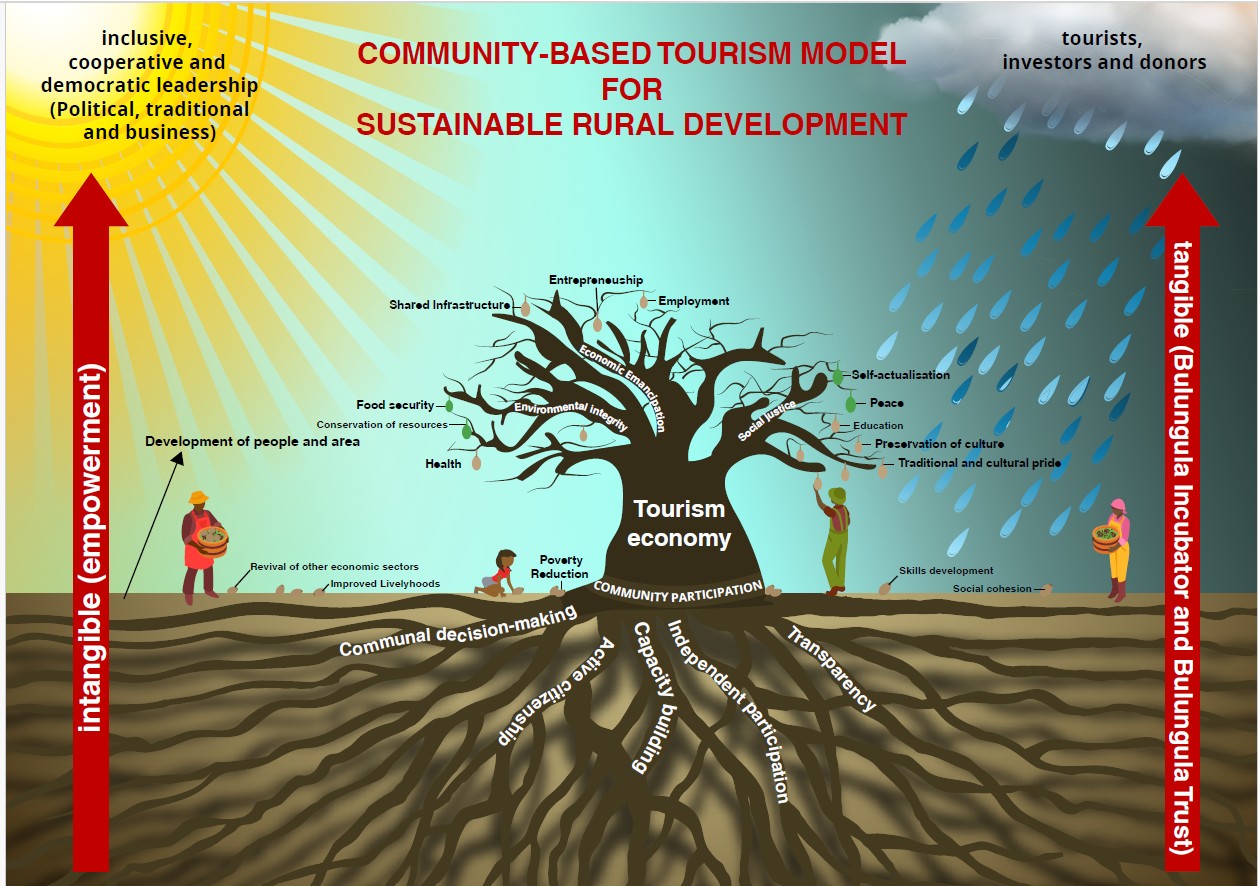
The views expressed by the interviewees along with insights from the literature were used to propose a model of community-based tourism that could serve as a framework for promoting sustainable rural development (Figure 2).
Figure 2. Community-based tourism model for sustainable rural development
Source: own construct
Sustainable rural development through tourism should be grounded in principles that guarantee meaningful community participation in local development processes. These principles encompass involvement in collective decision-making, active citizenship, capacity building, autonomous engagement, and transparency, which together constitute the foundational roots of the proposed model. This perspective aligns with Nuttavuthisit et al. (2015), who argue that community participation in development-related decision-making enhances efficiency, accountability, and transparency in resource use while fostering local ownership and commitment. When combined with capacity building, active participation and transparency enable comprehensive community engagement in tourism-related economic activities. The resulting tourism economy is expected to yield benefits such as poverty reduction, improved living conditions, and environmental stewardship, thereby supporting economic emancipation, social justice, and ecological sustainability. These claims are corroborated by Angelkova et al. (2012), who found that revenues from tourism and related employment contribute to raising community living standards, particularly through reliance on local goods and services, alongside increased interest in preserving natural and cultural resources, including traditions, heritage sites, and local customs. Collectively, economic emancipation, social justice, and environmental integrity create conditions that further generate community benefits such as entrepreneurship, food security, employment, peace, cultural preservation, resource conservation, and the sharing of local infrastructure.
The tourism sector’s ability to generate foreign exchange, attract international investment, enhance tax revenues, and create employment opportunities has positioned it as a central driver of macroeconomic growth in many developing countries (Torres & Momsen, 2004). If community-based tourism in Nqileni village is to reach its developmental potential, it requires access to tourist markets, investors, and donor support. However, these goals can only be achieved if the authenticity of the destination as a unique selling point is preserved. With strong and inclusive leadership, coupled with a steady inflow of tourists, investors, and donors, the necessary conditions can be created for community-driven development. Such an enabling environment facilitates active community participation in sustainable tourism initiatives, contributing to the establishment of a resilient tourism economy. This economy, in turn, can secure economic emancipation, promote social justice, and safeguard environmental resources, ultimately advancing the long-term goal of sustainable rural development in Nqileni village.
5. Comparison of existing CBT models and the proposed model
Existing CBT models have consistently emphasised the centrality of community participation, empowerment, and local ownership as prerequisites for equitable and sustainable tourism development (Ahmad & Abu Talib, 2015). In this respect, the CBT model proposed on the basis of the Nqileni experience CBT model aligns with earlier frameworks by identifying community involvement and capacity building as foundational elements of successful CBT initiatives. Like traditional CBT models, it acknowledges that effective tourism development depends on transparent governance structures, skill enhancement, and stakeholder collaboration between local communities, government, and private entities (Simpson, 2008). However, the Nqileni model distinguishes itself by operationalising these elements through a metaphorical tree structure that links foundational inputs (roots) to outcomes (branches), presenting a more pragmatic, process-oriented roadmap for community empowerment.
Earlier CBT models, particularly those by Tosun (2000) and Simpson (2008), tended to categorise participation alongside typologies or “ladders” of engagement, ranging from tokenistic consultation to full empowerment. These frameworks provided valuable analytical tools for diagnosing community involvement but often remained conceptual. Subsequent research has expanded these typologies to include governance perspectives and benefit-sharing mechanisms (Waligo et al., 2015). The Nqileni model complements this work by translating participatory ideals into actionable mechanisms such as transparent nomination processes, democratic leadership selection, and codified community constitutions to prevent elite capture and ensure equitable representation. Whereas earlier models highlighted power asymmetries and institutional constraints (Tosun, 2000), the Nqileni model offers practical governance solutions that address these long-standing limitations at the community level.
Furthermore, the Nqileni model introduces a stronger behavioural dimension by conceptualising active citizenship as a necessary condition for sustainable CBT outcomes. Unlike previous models that focused primarily on structural enablers of participation, this model integrates agency and entrepreneurship as key drivers of community resilience. It assumes that communities must be participants in tourism and proactive agents in generating and managing tourism-related enterprises (Scheyvens & Biddulph, 2018). The model’s emphasis on linking local capacity with market access through attracting tourists, donors, and investors positions it as both a governance and an economic model. This dual focus differentiates it from earlier frameworks, which often stopped short of detailing market mechanisms or long-term financial sustainability strategies (Ahmad & Abu Talib, 2015).
Nevertheless, while the Nqileni CBT model advances practical applicability, it remains limited by its single-case empirical grounding. Earlier models, such as Simpson’s (2008) community benefit tourism initiative framework, derived insights from multiple contexts and thus offered greater generalisability. The strength of the Nqileni model lies in its contextual depth and actionable clarity, but its external validity across diverse socio-political and cultural environments requires further testing. Future research should therefore apply and adapt the model across multiple community settings to assess its transferability and robustness. By bridging theoretical constructs from prior CBT frameworks with grounded, implementable strategies, the Nqileni model represents a meaningful evolution in community tourism scholarship, shifting the discourse from abstract participation to operational empowerment.
6. Possible applications of the proposed model
Drawing on the findings of the study in Nqileni village, the proposed model could be applied to other rural contexts globally to promote sustainable rural development through tourism taking into account the following recommendations:
Sustainable rural development is inherently complex and requires leadership that is inclusive, collaborative, and democratic. It is therefore necessary that individuals appointed to leadership roles in tourism-related projects and initiatives should be chosen through democratic and inclusive processes. Moreover, leadership should reflect a fair representation of political, traditional, and business sectors to ensure that the voices of all community stakeholders are heard. Such a balanced representation will foster appropriate strategies for community participation in tourism, thereby enhancing sustainable rural development.
The establishment of inclusive leadership should create the foundation for all the interrelated components of the model (symbolised as the roots of the tree) to function cohesively in supporting community-based tourism and sustainable rural development. Central to this process is the active involvement of the local community, which requires deliberate efforts to build capacity and empower community members. Equipped with relevant skills, local community members can meaningfully contribute to development initiatives, including decision-making processes spanning planning, implementation, and management. This approach fosters transparency, independence, and opportunities for entrepreneurship and other empowerment-related activities.
When communities actively engage in tourism development and a consistent flow of tourists, investors, and donors is secured, a viable tourism economy (represented as the stem of the tree in the model) can be established in rural areas. Such an economy can allow rural communities to benefit directly from tourism while leveraging its multiplier effects, such as investment in infrastructure, property, and enterprises extending beyond tourism. This sustainable economy then promotes economic integrity, emancipation, and social justice (depicted as the branches of the tree). Ultimately, these structures produce tangible benefits including entrepreneurship, food security, resource conservation, shared infrastructure, employment creation, education, peace, cultural preservation, health improvements, and pride in traditions. All these outcomes rest on the foundation of fair and inclusive community participation.
Although the value of the proposed CBT model for sustainable rural development is clear, it is equally important to recognise the challenges that may impede its successful implementation. Key challenges include:
- Divergent visions among community leadership groups (traditional, political, and business), which may hinder progress.
- The necessity of consistent tourist inflows and adequate infrastructure, which may be difficult to achieve in remote areas, thereby limiting the viability of a tourism-based economy.
- Limited access to financial resources within rural communities, making external funding through investors or donors essential yet difficult to secure.
- Issues of elitism, exclusivity, and unequal benefit distribution, which can lead to dissent and obstruct the implementation of the model.
For rural communities to effectively implement the proposed model and achieve sustainable outcomes, development must yield both tangible and intangible benefits for local people. In Nqileni village, this is evident in community empowerment initiatives such as the establishment of the Bulungula Trust and the Bulungula Incubator, which support community-driven projects and sustainable growth. These examples illustrate the types of benefits that rural communities can realise if the model is applied effectively, though each locality may adapt the approach to suit its unique developmental needs.
7. Conclusion
This study proposes a new model of community-based tourism for sustainable rural development. The model, in addition to relying on insights from the existing CBT literature, includes new dimensions that are supposed to ensure community participation and beneficiation in the tourism industry in rural areas. The proposed model adds to the existing knowledge about community participation in community-based tourism, specifically in rural areas, to ensure sustainable rural development. It could be used by planners for assessing the status of communities’ involvement in tourism development and to determine initiatives that will enhance sustainable rural development through tourism initiatives. The model’s ability to contribute to sustainable rural development through tourism depends on a delicate balance between various stakeholders. The key requirement is full community participation in tourism activities, supported by leadership that values community involvement in development initiatives. Any implementation of the model is likely to encounter challenges, and stakeholders must work together to overcome these challenges as they arise. This will ensure that the tangible and intangible benefits identified in the model accrue to community members.
This article is based on the premise that although community-based tourism has been frequently advocated for the benefit of local communities, there have been few directives on how this might be achieved in practice. The model proposed on the basis of the Nqileni experience assumes a shift from the community’s consultative role towards inclusive participation in tourism. Stakeholders can use the model to improve their involvement in tourism development in the community of concern.
The study demonstrates that sustainable rural development is not merely the outcome of tourism growth but rather an inclusive process in which residents are active decision-makers, beneficiaries, and custodians of development. Through their involvement in planning, management, and entrepreneurial activities linked to tourism, Nqileni residents have fostered economic and social transformation evident in creating local enterprises, improving access to basic services, and enhancing social cohesion. In other words, the success of sustainable rural development through CBT depends on the involvement of empowered local communities equipped with the necessary skills, resources, and institutional support to manage tourism initiatives independently and equitably. In doing so, CBT becomes a vehicle for poverty alleviation and economic diversification and a means of reinforcing cultural integrity, environmental stewardship, and self-reliant governance, thereby validating the proposed model as a viable framework for rural transformation in Nqileni and comparable contexts.
8. Study limitations and issues of generalisation beyond the South African context
While the study provides valuable insights into community-based tourism as a mechanism for promoting sustainable rural development in South Africa, its broader applicability beyond the local context is limited for several reasons.
First of all, the study was conducted in Nqileni village in the Eastern Cape, a rural community shaped by communal land ownership, traditional leadership, and a historically disadvantaged socio-economic background. These contextual features are unique to South Africa’s governance and rural development framework, influencing community participation and tourism management. The model’s applicability may be reduced in regions where property rights, governance systems, or community structures differ, such as in parts of Asia, Latin America, or Europe. The community’s reliance on traditional leadership and collaborative social structures makes the model context-dependent, requiring significant adaptation before implementation in other socio-political or cultural settings.
Another limitation stems from the influence of South Africa’s specific institutional and policy environment, which is powerfully shaped by post-apartheid transformation agendas and community empowerment frameworks. Policies such as the Broad-Based Black Economic Empowerment (B-BBEE) and decentralisation initiatives have created enabling conditions for CBT that may not exist in other national contexts. In countries with centralised tourism governance, less developed civil society networks, or limited community autonomy, replicating the South African CBT model could prove challenging. Moreover, partnerships with NGOs and external donors, which contributed to the success of the Bulungula Lodge and Nqileni’s CBT initiatives, may not be replicable in resource-constrained regions. Thus, while the study’s conceptual model offers valuable guidance, it should be interpreted as a framework that is adaptable rather than universally transferable.
Lastly, the study’ relevance is also limited by its temporal context as it only provides a snapshot of CBT dynamics and does not capture evolving challenges or sustainability trends that have appeared after 2023. Global tourism volatility, economic shifts, or crises can significantly alter tourism-dependent community livelihoods, potentially undermining the stability of the proposed model. Similarly, no consideration is given to cross-cultural market dynamics, such as varying tourist motivations, expectations, and perceptions of authenticity, which certainly restricts the applicability of the findings in international tourism markets.
References
Abiona, I. A. & Bello, W. O. (2013). Grassroots participation in the decision-making process and development programmes as a correlate of the sustainability of community development programmes in Nigeria. Journal of Sustainable Development, 6 (3): 47–57. DOI: 10.5539/jsd.v6n3p47
Ahmad, M. S. & Abu Talib, N. B. (2015). Empowering local communities: Decentralization, empowerment and community driven development. Quality & Quantity, 49 (2): 827–838. DOI: 10.1007/s11135-014-0025-8
Angelkova Petkova, T., Koteski, C., Jakovlev, Z., & Mitreva, E. (2012). Sustainability and competitiveness of tourism. Procedia – Social and Behavioral Sciences, 44: 221–227. DOI: 10.1016/j.sbspro.2012.05.023
Aref, F., Redzuan, M., & Gill, S. S. (2009). Dimensions of community capacity building: A review of its implications in tourism development. Journal of American Science, 5 (8): 74–82.
Barkemeyer, R., Holt, D., Preuss, L., & Tsang, S. (2014). What happened to the ‘development’ in sustainable development? Business guidelines two decades after Brundtland. Sustainable Development, 22: 15–32. DOI: 10.1002/sd.521
Braun, V. & Clarke, V. (2006). Using thematic analysis in psychology. Qualitative Research in Psychology, 3 (2): 77–101. DOI: 10.1191/1478088706qp063oa
Budeanu, A., Miller, G., Moscardo, G., & Ooi, C. S. (2016). Sustainable tourism, progress, challenges and opportunities: An introduction. Journal of Cleaner Production, 111: 285–294. DOI: 10.1016/j.jclepro.2015.10.027
Du Pisani, J. A. (2006). Sustainable development–historical roots of the concept. Environmental Sciences, 3 (2): 83–96. DOI: 10.1080/15693430600688831
Gannon, A., Rasoolimanesh, S. M., & Taheri, B. (2017). Assessing the mediating role of residents’ perceptions toward tourism development. Journal of Travel Research, 60 (1): 149–171. DOI: 10.1177/0047287519890926
Harrison, D. & Schipani, S. (2007). Lao tourism and poverty alleviation: Community-based tourism and the private sector. Current Issues in Tourism, 10 (2): 194–230. DOI: 10.2167/cit310.0
Husen, E. F., Sari, T. K., & Hutagalung, H. (2025). Sustainable tourism development through local wisdom in Pentingsari, Yogyakarta. Indonesian Tourism Journal, 2 (2): 145–161. DOI: 10.69812/itj.v2i2.142
Jeon, M., Kang, M., & Desmarais, E. (2016). Residents’ perceived quality of life in a cultural-heritage tourism destination. Applied Research in Quality of Life, 11: 105–123. DOI: 10.1007/s11482-014-9357-8
Jones, P., Hillier, D., & Comfort, D. (2016). Sustainability in the hospitality industry: Some personal reflections on corporate challenges and research agendas. International Journal of Contemporary Hospitality Management, 28 (1): 36–67. DOI: 10.1108/IJCHM-11-2014-0572
Lo, F. B. O. (2022). Sustainability performance model through local community participation towards the development of sustainable community-based tourism on nature-based sites in Bicol region, Philippines. XV World Forestry Congress, 2–6 May 2022, Coex, Seoul. https://openknowledge.fao.org/handle/20.500.14283/cc1088en/
Lucchetti, V. G. & Font, X. (2013). Community-based tourism: Critical success factors. ICRT occasional paper, 27: 1–20. https://www.cabidigitallibrary.org/doi/pdf/10.5555/20133252735/
Mayaka, M., Croy, W.G., & Cox, J. (2018). Participation as a motif in community-based tourism: A practice perspective. Journal of Sustainable Tourism, 26 (3): 416–432. DOI: 10.1080/09669582.2017.1359278
Muganda, M., Sirima, A., & Ezra, P. M. (2013). The role of local communities in tourism development: Grassroots perspectives from Tanzania. Journal of Human Ecology, 41(1), 53–66. DOI: 10.31901/24566608.2013/41.1.07
Murphy, P. (2012). Tourism: A community approach. 2nd ed. Abingdon, Oxon: Routledge.
Ngonya, J. E. (2015). Challenges facing community-based tourism in Tanzania: A case study of Arumeru District in Arusha Region. Doctoral dissertation, The Open University of Tanzania. http://repository.out.ac.tz/id/eprint/1267/
Nuttavuthisit, K., Jindahra, P., & Prasarnphanich, P. (2015). Participatory community development: Evidence from Thailand. Community Development Journal, 50 (1): 55–70. DOI: 10.1093/cdj/bsu002
Priatmoko, S., Purwoko, Y., Winarno, S. B., Widayati, E., Panghastuti, T., Wigati, E., & Isnugroho, E. (2025). Potensi dan tantangan pengembangan pariwisata di dusun Wotawati di desa wisata “Dewi Purbo” Kabupaten Gunungkidul, Yogyakarta [Potential and challenges of tourism development in Wotawati Hamlet in the “Dewi Purbo” Tourism Village, Gunungkidul Regency, Yogyakarta]. Journal of Tourism & Community Service, 2 (1): 49–55. https://jurnal.stieparapi.ac.id/index.php/jtcs/article/view/174/
Rindrasih, E. (2018). Under the volcano: Responses of a community-based tourism village to the 2010 eruption of Mount Merapi, Indonesia. Sustainability, 10 (5): 1620. DOI: 10.3390/su10051620
Sango, I. (2014). An investigation of communal farmers’ livelihoods and climate change challenges and opportunities in Makonde rural district in Zimbabwe. Doctoral dissertation. University of South Africa, Pretoria. https://ir.unisa.ac.za/handle/10500/13507/
Scheyvens, R., & Biddulph, R. (2018). Inclusive tourism development. Tourism Geographies, 20(4), 589–609. DOI: 10.1080/14616688.2017.1381985
Setokoe, T. J. (2019). Sustainable rural development through community participation: Modeling community-based tourism in Nqileni village, Eastern Cape, South Africa. Manuscript. Nelson Mandela University.
Setokoe, T. J. & Ramukumba, T. (2019). The importance community participation in tourism development to ensure sustainable rural development. African Journal of Hospitality, Tourism and Leisure, 8 (Special Edition CUT): 1–12. https://www.ajhtl.com/uploads/7/1/6/3/7163688/article_18_special_edition_cut_2019_wsu-nmu.pdf/
Sharpley, R. (2002). The challenges of economic diversification through tourism: The case of Abu Dhabi. International Journal of Tourism Research, 4 (3): 221–235. DOI: 10.1002/jtr.378
Simpson, M. C. (2008). Community benefit tourism initiatives: A conceptual oxymoron? Tourism Management, 29 (1): 1–18. DOI: 10.1016/j.tourman.2007.06.005
Telfer, D. J. & Sharpley, R. (2016). Tourism and development in the developing world. 2nd ed. Abingdon, Oxon: Routledge.
Tolkach, D. & King, B. (2015). Strengthening community-based tourism in a new resource-based island nation: Why and how? Tourism Management, 48: 386–398. DOI: 10.1016/j.tourman.2014.12.013
Torres, R. & Momsen, J. H. (2004). Challenges and potential for linking tourism and agriculture to achieve pro-poor tourism objectives. Progress in Development Studies, 4 (4): 294–318. DOI: 10.1191/1464993404ps092oa
Tosun, C. (2000). Limits to community participation in the tourism development process in developing countries. Tourism Management, 21 (6): 613–633. DOI: 10.1016/S0261-5177(00)00009-1
UNWTO (2023). Tourism and the sustainable development goals – 2023 update. World Tourism Organization.
UNWTO. (2024). Tourism for inclusive growth: Annual report 2024. World Tourism Organization.
Uysal, M., Perdue, R., & Sirgy, M. J. (2012). Handbook of tourism and quality-of-life research: Enhancing the lives of tourists and residents of host communities. Springer.
Waligo, V., Clarke, J., & Hawkins, R. (2015). Embedding stakeholders in sustainable tourism strategies. Annals of Tourism Research, 55: 90–93. DOI: 10.1016/j.annals.2015.09.002
Wall, G. (2018). Beyond sustainable development. Tourism Recreation Research, 43 (3): 390–399. DOI: 10.1080/02508281.2018.1475880
World Commission on Environment and Development (1987). Our common future. Oxford University Press.
Online sources
Bulungula Incubator (2025). Our story. https://bulungulaincubator.org/our-story/ (30. 09. 2025.)
DEAT (1996). White paper on the development and promotion of tourism in South Africa. Department of Environmental Affairs and Tourism. https://www.tourism.gov.za/AboutNDT/Publications/Tourism%20White%20Paper.pdf/ (30. 09. 2025.)
IDP (2023). Integrated development plan. Mbashe Local Municipality. https://www.mbhashemun.gov.za/all-documents/idp/ (30. 09. 2025.)
NDP (2011). National development plan. Department of Planning and Monitoring, South Africa. https://www.nstf.org.za/wp-content/uploads/2019/07/All-The-NDP-1.pdf/ (30. 09. 2025.)
NTSS (2011). National tourism sector strategy. National Department of Tourism, South Africa. https://www.tourism.gov.za/AboutNDT/Branches1/Knowledge/Documents/National%20Tourism%20Sector%20Strategy.pdf/ (30. 09. 2025.)
Oosterhof, P. D. (2018). Localizing the sustainable development goals to accelerate implementation of the 2030 agenda for sustainable development: The current state of sustainable development goal localization in Asia and the Pacific. https://www.adb.org/sites/default/files/publication/472021/governance-brief-033-sdgs-implementation-2030-agenda.pdf/ (19.06.2026.)