


Leveraging Rural Horse Racing Events for Local Development: Examining Repeat Visitation and Social Value
1Siyabulela Nyikana*, 2Nozuko Ntlantsana
1Associate professor, University of Johannesburg, School of Tourism and Hospitality, College of Business and Economics, South Africa; siyabulelan@uj.ac.za, ORCID: 0000-0002-4785-5167
2Doctoral candidate, Tshwane University of Technology, Pretoria, South Africa;
nozntlantsana@gmail.com, ORCID: 0000-0003-2257-3005
Abstract
Rural events generate numerous socio-economic benefits for communities and contribute to local economic growth and development. However, to fully realise these benefits, systematic and strategic leveraging should be prioritised in event planning and management. This study aimed to assess the potential of rural sporting events to serve as vehicles for local development. A positivist research paradigm was employed, and quantitative research methods were applied to collect questionnaire surveys (n=248) from event attendees at a rural horse racing festival. The IBM SPSS software was used to analyse the data. Key findings revealed that the annual event attracts many repeat visitors, whose main motivations for attendance are the horse race, the fashion show, and socialising. The event was viewed as a crucial tool for job creation, attracting investors and boosting the economy, thus revitalising the small rural town in which it is hosted. The local government is challenged to harness these benefits by developing a strategy to optimise them.
Keywords: event leveraging, local economic development, rural events, South Africa, sport tourism
Received: 10 April 2026
Accepted: 24 June 2026
Published: 6 July 2026
This open access article may be used under the international license terms of CC BY-NC-ND 4.0.
https://creativecommons.org/licenses/by-nc-nd/4.0/
VIDÉKI LOVASVERSENYEK A HELYI FEJLESZTÉS SZOLGÁLATÁBAN: AZ ISMÉTELT LÁTOGATÁSOK ÉS A TÁRSADALMI ÉRTÉK VIZSGÁLATA
1Siyabulela Nyikana*, 2Nozuko Ntlantsana
1Egyetemi docens, Johannesburgi Egyetem, Közgazdaságtudományi Kar, Turizmus és Vendéglátás Intézet,
Dél-afrikai Köztársaság; siyabulelan@uj.ac.za, ORCID: 0000-0002-4785-5167
2Doktorjelölt, Tshwane Technológiai Egyetem, Pretoria, Dél-afrikai öztársaság;
nozntlantsana@gmail.com, ORCID: 0000-0003-2257-3005
Absztrakt
A vidéki rendezvények számos társadalmi-gazdasági hasznot hoznak a közösségek számára, és hozzájárulnak a helyi gazdasági növekedéshez és fejlődéshez. Ahhoz azonban, hogy ezeket az előnyöket teljes mértékben ki lehessen aknázni, a rendezvénytervezés és -szervezés során kiemelt figyelmet kell fordítani a szisztematikus és stratégiai hasznosításra. E tanulmány célja az volt, hogy felmérje a vidéki sporteseményeknek a helyi fejlesztés előmozdításában rejlő potenciálját. A vizsgálat során pozitivista kutatási paradigmát alkalmaztunk, és kvantitatív kutatási módszerekkel kérdőíves felmérést (n=248) végeztünk egy vidéki lovasverseny-fesztivál résztvevői körében. Az adatok elemzéséhez az IBM SPSS szoftvert használtuk. A legfontosabb eredményekből kiderült, hogy az éves rendezvény sok visszatérő látogatót vonz, akik számára a részvétel fő motivációi a lovasverseny, a divatbemutató és a társasági élet. A rendezvényt a munkahelyteremtés, a befektetők vonzása és a gazdaság fellendítése szempontjából kulcsfontosságú eszköznek tekintették, amely így új életre kelti azt a kis vidéki várost, ahol megrendezésre kerül az esemény. A helyi önkormányzat előtt az a feladat áll, hogy stratégiát dolgozzon ki ezeknek az előnyöknek az optimalizálására.
Kulcsszavak: rendezvények hasznosítása, helyi gazdaságfejlesztés, vidéki rendezvények, Dél-afrikai Köztársaság, sportturizmus
Benyújtva: 2026. április 10.
Befogadva: 2026. június 24.
Publikálva: 2026. július 6.
Ez a mű a Creative Commons CC BY-NC-ND 4.0 nemzetközi licence feltételeinek megfelelően használható fel.
https://creativecommons.org/licenses/by-nc-nd/4.0/
1. Introduction
There has been increasing focus on tourism events as a form of economic development strategy in both Global North and South contexts (Knott et al., 2015; Kruger & Saayman, 2016; Nyikana, 2017). This is because the primary objective of events is typically economic, with the expectation that they will stimulate or develop the local economy by attracting foreign investment, new ventures, or increased tourist spending (Thomson et al., 2019; Nyikana & Tichaawa, 2020). Similarly, socio-cultural advantages can also arise from tourism events, such as improved infrastructure and amenities, increased tourist numbers, as well as marketing and branding opportunities, amongst others (Damster, 2005; Thomson et al., 2013). According to Potwarka & Snelgrove (2017), numerous benefits are proposed by those advocating for the regular hosting of tourism events, including increased local business spending, job creation, heightened tourism, enhanced destination image and notoriety, legacy facilities and programmes, and strengthened community pride and socialisation.
Antchak et al. (2021) suggest that one of the key motivations for regular events hosting is their ability to foster lasting connections between individuals and groups within community settings. These events stimulate the local economy in various ways, particularly through the visitors they attract to host towns (Ferreira et al., 2022; Nyikana & Tichaawa, 2024). According to Connell et al. (2015), another important aspect of events is their ability to boost tourism demand during the traditional off-peak periods of tourism consumption. In this way, events can offset the losses typically experienced during quieter times, as they draw more visitors to the destination (Nyikana et al., 2014).
Recently, festivals and sporting events have gained popularity, especially in rural settings, due to these benefits (Bazzanella et al., 2023; Slabbert et al., 2009). The authors argue that such festivals serve as bridge-builders, preserve traditions, and promote rural economic renewal, while also fostering a sense of coherence for both local residents and visitors. These rural areas are often characterised by poor communities, limited infrastructure, and minimal economic activity, making such festivals even more significant.
In this study, we posit that these festivals can serve as critical levers for rural local economic development. In this regard, the research seeks to assess the potential of rural sporting events to contribute to socio-economic development and growth in rural areas. This paper argues that there is an information gap regarding rural events, and thus, the potential of these events to contribute to local economic development is often understated. As underscored by Tzoumaka et al. (2022), the analysis of sporting events has largely been neglected in the context of small rural destinations whose unique socio-economic dynamics are in need of visitors to these events. They argue that the lack of empirical evidence on the impacts of sporting events in rural contexts delays development in these areas. This is in spite of the fact that rural sporting events may have a higher propensity to contribute to direct economic impacts on the local economy and serve as better-suited products for sustainable tourism development in these areas. Thus, the main research question for the study was
What is the socio-economic impact of rural sporting events on local economic development in rural areas, and to what extent is this impact empirically understood and documented?
The first part of the article presents a literature review on sport tourism, rural festival leveraging, and experience co-creation. This is followed by a description and justification of the methodology employed in this study. The findings are then presented, followed by a discussion, with the conclusion drawn from the study’s results.
2. Literature review
2.1. Overview of sports tourism
According to Ziakas (2023), the sports tourism sector has gained significant momentum over the last two decades, emerging as a popular driver for economic development and diversification worldwide. Sports tourism can be defined as trips taken for leisure (non-commercial) purposes to participate in or observe sports activities that occur outside one’s place of habitual residence and may or may not involve competition (Jiménez-García et al., 2020). This form of tourism has experienced exponential growth in the last two decades and offers an all-encompassing experience, drawing millions of tourists to destinations globally (Bazzanella et al., 2023; Chersulich Tomino et al., 2020; Cho et al., 2019; Langarita & Cazcarro, 2022; Nyikana & Tichaawa, 2024).
Ziakas (2023) suggests that many urban destinations aim to grow their economies through the regular hosting of sporting events, thereby contributing to the sustainable socio-economic development of these destinations. Acha-Anyi (2023) also observes how these destinations view sporting events, as part of sports tourism, as a vital tool for enhancing visitor experiences and communicating brand messages about the destination. Nyikana and Tichaawa (2024) argue that in developing countries, sports tourism events serve as a strategic vehicle for socio-economic development. They highlight that such events contribute to improved infrastructure, job creation, marketing, and branding, as well as increasing the number of visitors and tourists to local areas. Importantly, these events often encourage visitation to local areas by tourists who might not have otherwise visited (Mchunu et al., 2021; Nyikana et al., 2014; Tzoumaka et al., 2022). At the local level, Jeong & Kim (2020) emphasise the significance of sporting events in the lives of communities, providing recreational and entertainment opportunities while offering a unique experience for visitors to feel as though they are participating in an authentically indigenous activity. The uniqueness of sporting events fosters a blend of local community members and visitors, enabling them to co-create their experiences.
2.2. Sports tourism and experience co-creation
Sporting events have become a core strategy in city development plans and are no longer merely a complementary activity (Langarita & Cazcarro, 2022; Mchunu et al., 2021; Tzoumaka et al., 2022). As a result, they are increasingly recognised for providing truly memorable experiences for attendees (Nyikana & Tichaawa, 2023). Many destinations are actively seeking to host events that deliver memorable experiences, achieved by incorporating more participative and interactive activities during the event (Campos et al., 2015). This suggests that the event attendee plays a crucial role in shaping long-lasting memories, as they are directly involved in creating their experiences at each moment of the event (Campos et al., 2015; Nyikana & Tichaawa, 2023). Therefore, event and festival attendees act as co-creators of their own experiences, influencing their perceptions and memories of the festival, and, to some extent, the destination as a whole. In the context of this study, we argue that co-creation theory is vital for identifying festival activities that engage the interests, attention, and imagination of attendees. Understanding these activities enables event organisers to better comprehend co-creation in the context of the Berlin November Festival, which should inform management and marketing strategies and practices for the sustainable development and management of the event.
2.3. Rural events and leveraging in context
Akama (2011) emphasises that rural events bring the local community together, and as such, they can be leveraged to ensure community involvement in making the event a success. This involvement can take various forms, such as local employment policies, business promotion, decentralised decision-making, local governance on specific development-related issues, and other activities that support the interests of citizens. According to Saayman & Rossouw (2011), events and festivals have played a critical role in South Africa’s cultural and socio-economic development trajectory. They highlight that these events provide crucial support to thousands of livelihoods and make key contributions to the local economic development of many areas, especially rural ones. From a rural perspective, festivals are an essential vehicle for achieving socio-economic development (Mema, 2010; Radicchi, 2013; Tzoumaka et al., 2022). This is because rural areas are typically characterised by low-income neighbourhoods, chronic poverty, and a lack of basic services (Phori et al., 2024). Events, and the strategic leveraging of them, are therefore viewed as important tools to strengthen the economies of these areas while improving the social standard of living for citizens (Hjalager & Kwiatkowski, 2018; Langarita & Cazcarro, 2022; Nkunzi, 2024). Nkunzi (2024) argues that sporting events and rural festivals generate new revenue streams, increase visitor numbers to rural areas, and promote sustainable practices. Importantly, these festivals can stimulate economic growth, create entrepreneurial opportunities for youth and women, improve the overall viability of rural communities, provide educational platforms for green consumerism, and ultimately enhance livelihoods (Nyikana & Tichaawa, 2024).
Apleni & Henama (2020) emphasise that rural events can be leveraged to attract the municipality’s interest in the host area. Municipal engagement in event planning not only enhances the region’s reputation but also supports event management (Potwarka et al., 2020). The involvement of the municipality promotes infrastructure development in rural areas and the implementation of new policies that ensure the sustainability of the rural tourism industry through sporting events (Potwarka et al., 2020). As a result, rural events will expand rapidly, as they are recognised for motivating communities to collaborate with the tourism industry and other stakeholders to ensure their success (Mahon & Hyyryläinen, 2019).
Leveraging rural events can also help promote local attractions. This can be achieved by advertising events in conjunction with tourist attractions, so visitors are aware of what the area offers beyond the event itself (Hayduk, 2019). The multiplier effect of tourism should be considered, as events that attract large numbers of attendees from various locations can promote tourism growth (Ziakas, 2023). This, in turn, will expose previously unknown local attractions, boost tourism in the area, and encourage entrepreneurship. Since entrepreneurship is often linked to long-term economic growth, wealth creation, and social advancement (Hayduk, 2019), leveraging rural events for these outcomes is highly beneficial. Moreover, as entrepreneurial traits and dispositions tend to be enduring over time, it may be valuable to cultivate them in the local population of the rural event host area (Cope, 2005).
Based on the above literature, the authors put forward the theoretical expectation that festival attendees are driven by specific motivations to attend an event. These motivations can be pull or push factors but are largely linked to the experiences (expected experiences for first-time attendees) with the event in previous attendances. The experiences are co-created between all the attendees and therefore will influence how they perceive the socio-economic and environmental implications of the event on the destination. Thus, the motivations and experiences with the event may influence how attendees view the impacts of the festival on the destination.
3. Methods
3.1. Research context
This study was conducted in the small town of Berlin, located in the Eastern Cape province of South Africa. Established in 1857 by Carl Pape and German settlers, the town is situated approximately 20 km east of Qonce (formerly King Williams Town) and was named after the German city of Berlin (Raper, 1987). The Berlin November Horse Racing event takes place annually in this town and has become a significant cultural and sporting festival, attracting thousands of participants each year. It has grown into one of the premier events in the country, offering a unique opportunity to share and experience the pride and strength of this rural showcase (Berlin November, 2024). Over a three-day weekend, the event celebrates indigenous horse racing, featuring the province’s top jockeys and heritage. It also includes various activities such as music festivals, fashion shows, food festivals, traditional arts, and cultural displays, creating a truly memorable experience for attendees (Eastern Cape Parks and Tourism Agency, 2019).
3.2. Design and approach
This study was conducted using a positivist research philosophy and a quantitative research design. Given the dearth of research on rural festivals generally, the researchers gleaned through the literature for the most commonly addressed themes for event studies (Samhere, 2017; Nkunzi, 2024) in order to design the research instrument. The instrument was modelled and adapted against these, in line with the objectives of the study. A 5-point Likert scale was used to measure the motivations to attend the festival, the festival experiences as well as general socio-economic and environmental perceptions of the festival.
The sample population consisted of attendees at the Berlin November Horse Racing Festival. The festival attracts approximately 30,000 attendees annually. Using this estimated attendance and a sample size calculator, a sample size of n=270 was determined, with a 90% confidence level and a 10% margin of error. A spatially based, systematic sampling method was employed to target potential respondents. This sampling technique is commonly used in situations involving highly temporary populations (e.g., sporting events and crime scenes or accidents) (De Vos et al., 2005). The systematic sampling method involves selecting every nth member of the population, with the first respondent chosen randomly and every nth subject selected thereafter. The researcher must predetermine the nth interval before data collection. In this study, fieldworkers were stationed in different areas of the horse racing track (Figure 1), and the first respondent was randomly selected. Every 5th respondent passing by was then approached for participation, and this process was repeated until all survey questionnaires were completed. A total of 248 surveys were collected during the data collection period.
3.3. Analysis of results
These were captured and analysed using IBM Statistical Package for Social Sciences (SPSS). Simple descriptive statistics and frequencies were used to present the findings. Respondents were presented with a series of statements on a 5-point Likert scale, ranging from ‘Strongly Disagree’, ‘Disagree’, ‘Neutral’, ‘Agree’, to ‘Strongly Agree’. To analyse the findings, some categories on the scale (‘strongly disagree’ and ‘disagree’, as well as ‘strongly agree’ and ‘agree’) were combined to represent a single percentage of either agreement or disagreement. This approach allows for a clearer interpretation of the overall sentiment of the respondents.
Figure 1. Map of Berlin, Eastern Cape Province
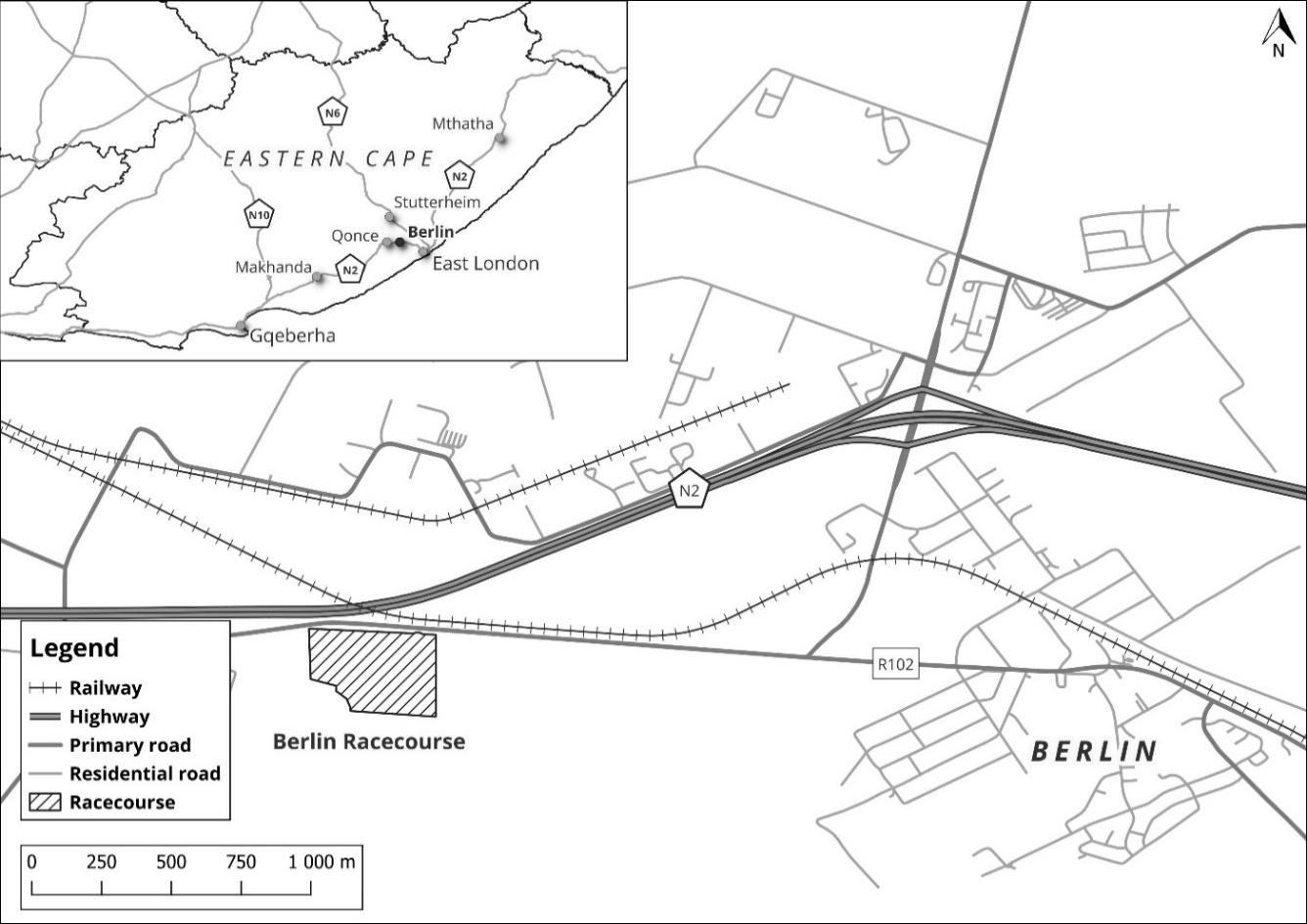
Source: Authors’ editing
3.4. Socio-demographic profiles of attendees
A summary of the demographic profiles of the event attendees surveyed in this study is provided in Table 1. The plurality of attendees were young, falling between the ages of 31-40 years (39.1%), followed by those between 25-30 years (21.4%). These findings suggest that the majority of attendees at rural sporting events are relatively young to middle-aged adults, which may reflect the physically active nature of sporting events that tend to attract younger demographics. Besides these, the older age groupings (i.e. 41-50 years and 51 years and above) collectively accounted for 27.8% of respondents, while the youngest cohort (18-24 years) represented 11.7%, indicating a moderate spread across age groups with a clear concentration in the economically active middle-age bracket. In terms of educational background, the findings reveal that there were diverse educational backgrounds, with the largest group holding a post-high school professional certificate (26.6%), closely followed by those with a high school-leaving certificate (25%). This suggests that the majority of attendees had attained at least a secondary level of education, pointing to a moderately educated visitor profile. Notably, those with undergraduate and postgraduate degrees collectively accounted for 38.4% of the sample, indicating a significant presence of highly educated attendees, while those with no formal education or only primary schooling represented a small minority at 10%, reflecting the broad appeal of the event across different educational backgrounds.
In terms of employment status, the plurality of respondents were employed full-time, comprising 44% of the sample, followed by the self-employed at 21%, which together suggest that most attendees had a stable source of income and thus the financial means to participate in and spend at the event. The presence of unemployed respondents at 16% is noteworthy in the context of a rural sporting event, as it may reflect the local community’s participation and the event’s accessibility to economically vulnerable groups. Students and part-time employees collectively accounted for 16.6% of the sample, while retired individuals represented the smallest proportion at 2.4%, further reinforcing the earlier finding that the event predominantly attracted younger to middle-aged, economically active individuals. Collectively, these demographic findings show an interconnected picture of the typical attendee at rural sporting events in South Africa. There is a logical link between the prevalence of the young to middle-aged attendees with the employment profile, as these tend to be individuals who are established or growing in their careers. This economic activity likely affords attendees the disposable income necessary to travel to and spend at a rural sporting event, which has positive implications for the event’s potential contribution to local economic development.
This visitor profile suggests that the event attracts a relatively affluent and educated visitor base, which may translate into higher spending patterns at the event and in the surrounding rural community. However, the 16% unemployment rate among respondents adds an important nuance, suggesting that the event also draws participation from economically marginalised individuals, possibly from the local rural community itself. This highlights the event’s inclusive character and underscores its potential as a tool for broad-based local economic development, reaching beyond just economically active visitors to engage vulnerable community members as well.
Table 1. Demographic profiles of respondents
| Demographic item | Percentage of total |
| Gender Female Male Prefer not to say Non-binary | 50.0 46.8 2.0 1.2 |
| Age 18-24 years 25-30 years 31-40 years 41-50 years 51 years and above | 11.7 21.4 39.1 14.1 13.7 |
| Highest level of education obtained Post-high school professional certificate High school-leaving certificate Undergraduate degree Postgraduate degree No formal education Primary schooling completed | 26.6 25.0 20.2 18.2 6.0 4.0 |
| Employment status Employed full time Self-employed Unemployed Employed part-time Student Retired | 44.0 21.0 16.0 8.5 8.1 2.4 |
| Province of residence Eastern Cape Gauteng Western Cape KwaZulu-Natal North-West Limpopo Free State Northern Cape Mpumalanga | 82.4 5.6 4.8 2.4 2.4 0.8 0.8 0.4 0.4 |
Source: Authors’ data
4. Results
4.1. Average spending and previous attendance at the event
In exploring the potential of the event to contribute to local economic development goals within its rural setting, it was essential to assess first-time versus repeat attendance. Existing studies suggest that the question of previous attendance achieves two primary objectives (Nyikana et al., 2014). Firstly, it allows researchers to appreciate that attendees who are returning for a second or subsequent time have a clear idea of what to expect. These repeat visitors can make comparisons and provide valuable feedback on both the event and the destination, which can inform improvements and future planning. Secondly, the ability of the event and destination to leave a lasting impression on newcomers is crucial in converting first-time attendees into repeat visitors, both to the event and possibly to the destination as a whole.
As shown in Table 2, a significant majority of attendees were repeat visitors to the event (69.4%), with 12.9% having attended once before and 56.5% attending multiple times. This demonstrates the event’s strong retention rate, indicative of its appeal and the satisfaction of returning attendees. A notable proportion of attendees (30.6%) were first-time visitors, highlighting the opportunity to convert them into repeat attendees in the future. Their potential return depends largely on their overall satisfaction with both the event and, to some extent, the destination.
Table 2. Previous attendance
| Previous attendance | Percentage of total |
| This is the first time | 30.6 |
| Once before | 12.9 |
| 2-5 times before | 43.6 |
| 6-9 times before | 12.9 |
Source: Authors’ data
As a follow-up to this question, attendees were asked to indicate the amount of money they were spending at the event in South African Rands. The results showed a range of spending amounts, but the average spend was calculated at ZAR 3,362.36 (equivalent to USD 181.96 and EUR 166.59). The difference between the highest and lowest amount spent at the festival prompted the researchers to conduct a test of normality. To this end, the Kolmogorov-Smirnov and Shapiro-Wilk tests of normality were conducted. These tests are commonly used in event studies to assess whether the average spending follows a normal distribution or if it is skewed, as illustrated in Figure 2 below. The sentiment was that, generally speaking, events of this nature can be a mixture of high spenders and budget spenders, and as such, an average amount should be calculated. This would allow for an estimation of the economic potential of the festival through spending calculations. However, the average amount may not be a reflection of the actual reality, as the high spenders (who can be a minority of the attendees) may skew the average amount from the reality of the majority of spenders. A test of normality enables the researchers to check for any discrepancies with the average amount calculated in this regard (Table 3).
Table 3. Test of Normality
| Kolmogorov-Smirnov* | Shapiro-Wilk | |||||
| Statistic | df | Sig. | Statistic | df | Sig. | |
| Q5 | .367 | 228 | <.001 | .286 | 228 | <.001 |
*Lilliefors Significance Correction. Source: Authors’ data
The test of normality suggests that if the Sig. value of the Shapiro-Wilk Test and the Kolmogorov-Smirnov Test is greater than 0.05, the data is normally distributed, and if it is below 0.05, then the data significantly deviates from a normal distribution. In this study, these tests indicated that the average amount spent at the event does not follow a normal distribution and is, in fact, skewed, D(228) = 0.28, p = 0.001. This skewness could be attributed to the event’s diverse audience, which, while largely rural and attracting low-income spenders, includes designated VIP sections that are priced significantly higher.
For instance, access to the Prime Lounge VIP section costs an average of ZAR 2,200 (USD 122.90 and EUR 111.09). The inclusion of multiple activities such as a fashion show, food festival, music festival, and other memorable experiences further explains the variance in spending. Attendees who partake in all the activities will likely spend more than those who attend solely for the horse race as spectators. This wide range of spending behaviour likely contributes to the skewness observed in the data.
4.2. Reasons for attending the event
The next section of the survey aimed to identify the key reasons that influenced attendance at the event. This was tied to the various aspects of the event mentioned earlier, as some attendees may have been more interested in certain aspects than others. Respondents were presented with a series of statements on a 5-point Likert scale, ranging from ‘Strongly Disagree’, ‘Disagree’, ‘Neutral’, ‘Agree’, to ‘Strongly Agree’.
For the purpose of analysing the findings, some categories on the scale (‘strongly disagree’ and ‘disagree’, as well as ‘strongly agree’ and ‘agree’) were combined to represent a single percentage of either agreement or disagreement. This approach allows for a clearer interpretation of the overall sentiment of the respondents.
The first statement related to the purpose of enjoying live sports (horse racing) as a driver for attending the festival. The findings suggest that this was a significant purpose, as an overwhelming majority of respondents (71.8%) indicated that they were motivated by the horse racing on offer to attend [with a mean of 2.04 and a standard deviation of 1.643]. Regarding the purpose to enjoy the fashion show during the festival, most attendees (65.7%) also considered this an important reason, with a mean of 2.28 and a standard deviation of 1.674. Additionally, there were other notable reasons linked to the enjoyment of the music and food available at the festival (51.2%), although these were less influential compared to other reasons, with a mean of 2.01, as shown in Table 4.
Table 4. Reasons for attendance at the Berlin November Festival
| Reasons for attending the Berlin Festival | SD | D | N | A | SA | M | STD D |
| I attended for the enjoyment of live sports (horse racing) | 4.4 | 8.5 | 15.4 | 10.9 | 60.9 | 2.04 | 1.64 |
| I attended for the enjoyment of the fashion show | 9.7 | 9.7 | 15 | 10.5 | 55.2 | 2.28 | 1.67 |
| I attended for the enjoyment of music and food aspects | 24.6 | 8.5 | 15.8 | 10.1 | 41.1 | 2.01 | 1.55 |
Note: SD = Strongly Disagree; D = Disagree; N = Neutral; A = Agree; SA = Strongly Agree; M = Mean; STD D = Standard deviation. Source: Authors’ data
4.3. Festival attendees’ experiences with the event
Beyond the above reasons, the attendees were asked to rate their experiences with the event as seen in Table 5. Memorable festival experiences are a good predictor and influencer of repeat visitation to a destination and an event. The findings in this regard revealed that generally, positive sentiments were expressed regarding the opportunity to engage with the athletes (56.9%). However, notable negative experiences were observed regarding the event providing a truly unforgettable experience (56.9%), and the possibility of a surprise live performance from famous artists (22.6%). The relatively high dissatisfaction regarding the event providing a truly unforgettable experience may be attributed to the gap between attendee expectations and the actual event delivery. Rural sporting events, particularly those seeking to grow their profile, may struggle with limited resources and infrastructure to create the kind of immersive, high-quality experience that attendees have come to expect from larger, well-established urban events. This expectation gap could be further compounded by the increasing influence of social media, where attendees are constantly exposed to highlights of premium sporting events globally, inadvertently raising their experiential benchmarks beyond what a rural event can realistically deliver at its current stage of development. For the attendees, the most important experience was that of the festival providing an atmosphere for relaxation (81.5%). Overall, the festival is noted to provide positive experiences for the attendees, endearing itself as a truly memorable festival based on the experiences enjoyed by the attendees.
Table 5. Attendee experiences at the festival
| Experiences of attending the Berlin Festival | SD | D | N | A | SA | M | STD D |
| There were opportunities to engage with the athletes | 15.7 | 8.9 | 18.6 | 8.1 | 48.8 | 2.31 | 1.66 |
| The event provided an unforgettable experience | 48.8 | 8.1 | 18.6 | 8.9 | 15.7 | 2.11 | 1.60 |
| Surprise live performances (e.g., music performances) | 56.0 | 8.1 | 13.3 | 8.9 | 13.7 | 2.07 | 1.59 |
| There are more opportunities for socio-cultural exchange, socialising and networking | 63.7 | 5.6 | 10.4 | 8.1 | 12.1 | 2.05 | 1.67 |
| Berlin November creates an atmosphere of relaxation | 6.9 | 1.6 | 10.1 | 31.9 | 49.6 | 4.16 | 1.12 |
Note: SD = Strongly Disagree; D = Disagree; N = Neutral; A = Agree; SA = Strongly Agree;
M = Mean; STD D = Standard deviation. Source: Authors’ data
4.4. Perceived impacts of the Berlin November Festival
The next part of this section focused on determining the perceived socio-economic and environmental (ecological) impacts of the festival on the local economy. Table 5 presents the perceived socio-economic and environmental impacts of the Berlin November Festival. A majority of attendees (69.3%) felt that the festival created opportunities for socio-cultural exchange, socialising, and networking. This was in line with the general observations on the importance of events as platforms for socialising and fostering socio-cultural exchanges (Nyikana et al., 2014). On another positive note, the vast majority of attendees (88.3%) opined that the festival created employment opportunities for local community members, with a positive mean of 4.27 and a standard deviation of 1.128. Similarly, there were positive views expressed regarding the festival’s ability to create investment opportunities for local businesses (86.3%). It was unsurprising, therefore, to find that the majority of attendees (84.3%) also felt that the festival provided a significant boost to the local economy of Berlin. These findings are consistent with those of Ngumbela (2023), who argues that the festival contributes significantly to economic development and women empowerment through entrepreneurship opportunities and economic growth. The sheer volume of spectators, estimated to be approximately 30,000 every year points towards increased spending in the local economy and enhancing the opportunities for local businesses (Ngumbela, 2023).
Strong positive sentiments were also reported on the festival’s role in infrastructural development in the Berlin area, with a large majority of attendees (73.5%) expressing this view. Similarly, an overwhelming majority (84.3%) believed that the festival was crucial in creating trading and business opportunities for local businesses, supported by a mean of 4.17 and a standard deviation of 1.115. In the existing literature on festivals and community development, Acha-Anyi (2023) and the Eastern Cape Parks and Tourism Agency (2019) have suggested that festivals play a major role in redeveloping and repositioning regions. In this study, highly positive sentiments were noted regarding the role of Berlin November in helping redevelop the region, with a mean of 4.14 and a standard deviation of 1.162. However, concerns were raised by attendees regarding the festival’s impact on the standard of living and the cost of goods and services for locals. Most attendees (72.9%) felt that the festival increased these aspects, potentially burdening the local community (Table 6).
Table 6. Perceived impacts of the Berlin November Festival
| Impacts of the Berlin Festival | SD | D | N | A | SA | M | STD D |
| Socio-economic impacts of the festival | |||||||
| Berlin November creates employment opportunities for locals | 8.1 | 0.8 | 2.8 | 33.1 | 55.2 | 4.27 | 1.12 |
| Berlin November creates investment opportunities for local businesses | 8.1 | 0.4 | 5.2 | 37.5 | 48.8 | 4.19 | 1.11 |
| Berlin November boosts the local economy | 6.0 | 2.0 | 7.7 | 33.5 | 50.8 | 4.21 | 1.08 |
| Berlin November contributes to infrastructural development | 11.3 | 5.6 | 9.7 | 33.5 | 39.9 | 3.85 | 1.31 |
| Berlin November creates trading opportunities for local businesses | 6.9 | 2.4 | 6.5 | 35.5 | 48.8 | 4.17 | 1.11 |
| Berlin November can help redevelop the region | 7.3 | 3.2 | 8.1 | 31.5 | 50.0 | 4.14 | 1.16 |
| Berlin November increases the standard of living of locals | 8.9 | 5.2 | 12.9 | 29.8 | 43.1 | 3.93 | 1.25 |
| Berlin November creates opportunities for socio-cultural exchanges and networking | 6.9 | 2.4 | 7.3 | 30.2 | 53.2 | 4.21 | 1.13 |
| Inspires unemployed youth in Berlin to explore opportunities presented by tourism | 9.3 | 0.8 | 5.2 | 33.5 | 51.2 | 4.17 | 1.18 |
| Berlin November markets Eastern Cape and Berlin to tourists | 6.5 | 2.0 | 5.2 | 31.0 | 55.2 | 4.27 | 1.09 |
| Berlin November promotes local tourist attractions (including cultural and heritage sites) | 6.9 | 0.8 | 7.7 | 30.6 | 54.0 | 4.24 | 1.10 |
| Environmental impacts of the festival | |||||||
| Berlin November is an environmentally friendly event | 6.5 | 1.6 | 10.1 | 34.7 | 47.2 | 4.15 | 1.09 |
| Berlin November raises environmental awareness | 6.5 | 4.0 | 14.5 | 32.7 | 42.3 | 4.00 | 1.14 |
| Berlin November promotes the conservation and preservation of the natural environment | 7.3 | 4.0 | 16.1 | 30.2 | 42.3 | 3.96 | 1.18 |
Note: SD = Strongly Disagree; D = Disagree; N = Neutral; A = Agree; SA = Strongly Agree;
M = Mean; STD D = Standard deviation. Source: Authors’ data
One of the most highly ranked impacts of Berlin November in this study was the opportunities it continues to create for socio-cultural exchange and networking for businesses. This was identified as one of the festival’s greatest benefits to the local business community, with a high mean score of 4.21 and a standard deviation of 1.132. This is especially significant considering Hayduk’s (2019) emphasis on the importance of leveraging festivals to foster business development opportunities. This was also linked to the festival’s impact in inspiring unemployed youth to capitalise on tourism opportunities. Many attendees believed that the festival plays a crucial role in motivating youth to explore entrepreneurial opportunities, with a positive mean score of 4.17 and a standard deviation of 1.187.
Knott et al. (2015) have argued that festivals and events can play a vital role in the marketing and branding of destinations. In this study, the festival’s role in effectively marketing and branding Berlin, and the Eastern Cape province at large, received positive ratings, with a mean score of 4.27. Similarly, the festival’s promotion of local tourist attractions and sites was positively rated, with a mean score of 4.24. This is particularly important in the context of this study, as many of these local attractions are cultural and heritage sites that play a significant role in the history of rural areas in the province.
5. Discussion
Sporting events have grown to become important components of destination development and economic growth over the past few decades. From an urban destination perspective, such events have been integrated as central elements of destination management and development plans, particularly in the areas of urban regeneration, infrastructural development, employment creation, and destination branding. In recent years, rural areas have also shown a growing interest in regularly staging sporting events, with an increasing tendency to use them as platforms for local economic development, aimed at revitalising struggling economies that traditionally relied heavily on agriculture and similar industries (Phori et al., 2024; Radicchi, 2013; Saayman & Rossouw, 2011). However, in developing countries like South Africa, the hosting of these events and festivals remains sporadic, with little strategic planning for the optimal maximisation of these platforms to achieve sustainable local development goals (Nyikana & Tichaawa, 2024). As a result, the obvious benefits of these events for rural areas appear to be coincidental, opportunistic, and uncoordinated, with the events often leveraging themselves. This study sought to assess the potential of rural sporting events to serve as vehicles for local development, using a popular horse racing and fashion show festival as a case study.
The study found that, from a socio-demographic perspective, a significant portion of festival attendees were female, although there was a close split with male attendees. Many of these attendees were relatively young, aged between 18 and 40 years, and were well educated. As expected, most were employed full-time, part-time, or self-employed, with the majority being from the Eastern Cape province. Given that most attendees were local and lived relatively close to the festival (mostly within the host province), one would expect a lower propensity for additional spending on items such as food and accommodation. However, the findings suggested that there was indeed notable spending due to attendance at the event. In terms of previous attendance, many attendees were repeat visitors to the festival and the small town of Berlin, though there were also a significant number of first-time visitors as well. One of the most striking findings was the average amount spent at the festival, with ZAR 3,362.36 being the average, which, in the context of rural festivals, is considered high. The Kolmogorov-Smirnov and Shapiro-Wilk tests for normality confirmed that this spending amount was skewed and did not follow a normal distribution. While various factors could explain this skewness, the most logical explanation appeared to be the presence of VIP sections, which are typically highly priced, along with the products and services offered in those sections. For instance, tickets for the Prime Lounge VIP in the latest edition of the festival were priced at EUR 111.09 or USD 122.90 (ZAR 2,200). When considering such amounts, along with additional spending on food, drinks, and other products, the average spending could easily increase, as observed in the findings.
In terms of the main motivations driving attendance at the festival, key factors included the horse racing, fashion show, music, and the quality of food on offer. Other attendees felt that the opportunity to engage with athletes (specifically jockeys from rural areas) and the festival’s ability to provide a truly unforgettable experience were significant motivators for their attendance. One unique aspect of this festival is its emphasis on rural development. The horse racing is traditional and rooted in indigenous heritage, with many of the horses and jockeys coming from rural areas around the town and province, rather than from well-known breeders and stables. The attraction for festival attendees in engaging with these ‘athletes’ could be linked to a passion for rural youth empowerment. Additionally, attendees highlighted several positive socio-economic aspects linked to the festival’s impacts. Many felt that the festival creates employment opportunities for local people and brings about investment opportunities for local businesses. Consequently, there is a general sentiment that the festival makes a significant contribution to the local economy and provides a platform for local businesses. Attendees also felt that the festival was important for the redevelopment of the region, aligning with the organisers’ view that Berlin November has become a signature event capable of boosting and developing the rural areas of the province.
The study also found that the festival plays a crucial role in creating a platform for socio-cultural exchanges and networking opportunities for businesses. These networking opportunities, in turn, enable unemployed youth to explore tourism-related opportunities. Additionally, the festival is vital for marketing and branding the area to tourists. According to Berlin November (2024), marketing and branding are key to the festival’s development, aligning with the goal of positioning Berlin and the Eastern Cape province as desirable destinations for domestic and regional tourists. The festival has brought many tourists to the small rural town, who may not have visited otherwise. Similarly, the province has benefitted, as people from across the country and neighbouring Southern African countries attend the festival. Many attendees noted that the festival promotes local attractions, particularly cultural and heritage sites, which are significant in the history of rural areas in the province. Finally, attendees expressed positive views regarding the festival’s minimal negative environmental impact. They felt that it was organised in an environmentally friendly manner, raising environmental awareness and promoting the conservation and preservation of the natural environment.
It is evident that the Berlin November festival has great potential to foster lasting connections between visitors and the local community of Berlin. Similarly, the festival has demonstrated its potential to stimulate the local economy and boost tourism demand in the small rural town and its surroundings. In this way, the struggling rural economy can be revived through the festival and other events, ensuring sustainable local economic development. However, for this to be achieved, an effective leveraging strategy for the festival’s benefits must be developed and implemented. Reflecting on the theoretical framework of sport tourism and experience co-creation, the study argues that the festival offers unique features that leave lasting memories among attendees. As a result, many attendees return annually and continue to contribute to the local economy based on their previous satisfaction with the festival and the destination’s offerings. Event organisers should therefore focus on promoting the specific aspects that attract attendees and incorporate these into the festival’s marketing strategy. Additionally, unique aspects of the festival and the destination, especially the cultural and heritage attractions, should be integrated into the festival’s marketing plans. This approach would leverage the festival beyond the event itself, extending its benefits to the local economy. We argue that to maximise the benefits for the local economy, systematic and strategic leveraging plans should be prioritised in the festival’s planning and management. Such a strategic approach would facilitate the development of event-driven initiatives aimed at the purposeful rejuvenation of rural areas.
This study makes a modest contribution to events literature, by bringing focus to the often-neglected aspect of sporting events in rural regions. Considering the positive impacts highlighted, and the clear potential for these events to contribute to the rejuvenation of ailing rural economies, more empirical research is needed on the effective leveraging strategies for events in this regard. This study serves as a departure point for more such studies, particularly those that can assess these festivals from a multi-stakeholder perspective. From a managerial point of view, the study findings can serve as a guide for managers and regional planners in working out the most effective economic strategies for the growth and development of their respective rural economies. Similarly, others can look at how the potential of these events can contribute to diversifying and complementing their local economic development activities. While this study may be useful for other rural areas, we challenge them to explore not only the short-term, but also the longer-term implications of events such as these. The argument in this regard is that they should strive to minimise the negative impacts, whilst optimising the positive benefits from such events, with a longer-term view of transforming their towns into tourist attractions with an events-driven approach to development.
6. Conclusion
This study assessed the potential of rural sporting events as a catalyst for local development, using a major festival hosted in a rural setting as a case study. The research was prompted by the noticeable neglect of rural festivals in existing literature and the broader lack of assessment regarding the role of such events in fostering local development. The central argument was that, without understanding the impact of rural sporting events on local development, event organisers, policy-makers, and other relevant authorities may lack the appropriate investment models for rural areas. More importantly, the absence of knowledge about the associated benefits and impacts of these festivals on local communities could result in a lack of clarity in devising effective leveraging strategies.
The findings revealed that rural sporting events generally have positive impacts on the contexts in which they are hosted. From a rural economic development perspective, these events play a significant role in creating employment, attracting investment, and contributing to marketing and branding efforts, among other tangible benefits. Essentially, the study highlighted that festivals like the Berlin November offer rural areas potential revitalisation strategies in terms of economic, socio-cultural, environmental, and destination branding components. The responsibility now lies with relevant stakeholders to ensure they invest in rural sporting events as a key pillar of their development policies and strategies for these areas.
That said, the study was limited to analysing the role of rural sporting events from the perspective of festival attendees, which may have constrained the results. Future research should adopt a qualitative approach, engaging a wider range of stakeholders for a more comprehensive assessment of the festival’s impacts. Additionally, there have been growing concerns about the risks to animal welfare linked to events such as horse racing. This could impact the image of the event in future and may result in changes in the overall organisation of the event, to perhaps exclude the aspect of horse racing. This would have an implication for the conclusions and recommendations made above. Finally, the study only presents a simple descriptive analysis of the findings. No further testing was conducted, which may limit the understanding of the relationships between the different variables. However, the aim of the study was to gain a general idea of the motivations, experiences, and perceived impacts of the festival with a view to gauging the possibilities of the festival as a catalyst for local development in the rural setting it is hosted in.
Acknowledgements
We are grateful to Arno Booyzen for assisting with the maps. The authors acknowledge the founder of the Berlin November Horse Race, Mr. Luthando Bara, for granting permission to collect data at the event.
References
Acha-Anyi, P. N. (2023). Sports events and community development: Analysis of the AFCON 2022 host cities in Cameroon. Cogent Social Sciences, 9 (1): 2195079. DOI: 10.1080/23311886.2023.2195079
Akama, J. (2017). Efficacy of tourism as a tool for local community development: A case study of Mombasa, Kenya. In: Wishitemi, B., Spenceley, A., & Wels, H. (eds.) Culture and community: Tourism studies in Eastern and Southern Africa. Amsterdam: Rozenberg Publishers, pp. 63–80.
Antchak, V., Luck, M., & Pernecky, T. (2021). Understanding the core elements of event portfolio strategy: Lessons from Auckland and Dunedin. International Journal of Contemporary Hospitality Management, 33 (7): 2447–2464. DOI: 10.1108/IJCHM-09-2020-1022
Apleni, L. & Henama, U. (2020). The impact of events in boosting local economic development: A case study of Port St Johns, South Africa. African Journal of Hospitality, Tourism & Leisure, 9 (1): 1–14.
Bazzanella, F., Shnitzer, M., Peters, M., & Bichler, B. (2023). The role of sports events in developing tourism destinations: A systematized review and future research agenda. Journal of Sport & Tourism, 27 (2): 77–109. DOI: 10.1080/14775085.2023.2186925
Berlin November (2024). South Africa’s biggest traditional horse racing experience. https://berlinnovember.co.za/
Campos, A. C., Mendes, J., Do Valle, P. O., & Scott, N. (2015). Co-creation of tourist experiences: A literature review. Current Issues in Tourism, 21 (4): 369–400. DOI: 10.1080/13683500.2015.1081158
Chersulich Tomino, A., Perić, M., & Wise, N. (2020). Assessing and considering the wider impacts of sport-tourism events: A research agenda review of sustainability and strategic planning elements. Sustainability, 12 (11): 4473. DOI: 10.3390/su12114473
Cho, H., Joo, D., & Chi, C. G. (2019). Examining nostalgia in sport tourism: The case of US college football fans. Tourism Management Perspectives, 29: 97–104. DOI: 10.1016/j.tmp.2018.11.002
Connell, J., Page, S. J., & Meyer, D. (2015). Visitor attractions and events: Responding to seasonality. Tourism Management, 46: 283-298. DOI: 10.1016/j.tourman.2014.06.013
Cope, J. (2005). Toward a dynamic learning perspective of entrepreneurship. Entrepreneurship Theory and Practice, 29 (4): 373–397. DOI: 10.1111/j.1540-6520.2005.00090.x
Damster, G. (2005). Event management: A professional and developmental approach. Cape Town: Juta.
De Vos, A., Strydom, H., Fouche, C., & Delport, C. (2005). Research at grass roots for social sciences and human service professionals. Pretoria: Van Schaick Publishers.
Eastern Cape Parks and Tourism Agency (2019). Berlin November. https://visiteasterncape.co.za/?s=berlin+november+horse+race
Ferreira, L. B., Giraldi, J. D. M. E., Maheshwari, V., & Oliveira, J. H. C. D. (2022). Impacts of host city image in the country destination branding in sport mega-event context: Exploring cognitive and affective image dimensions. International Journal of Event & Festival Management, 13 (4): 486–505. DOI: 10.1108/IJEFM-10-2021-0080
Hjalager, A. M. & Kwiatkowski, G. (2018). Entrepreneurial implications, prospects and dilemmas in rural festivals. Journal of Rural Studies, 63: 217–228. DOI: 10.1016/j.jrurstud.2017.02.019
Hayduk, T. (2019). Leveraging sport mega events for international entrepreneurship. International Entrepreneurship & Management Journal, 15: 857–881. DOI: 10.1007/s11365-019-00573-w
Jeong, Y. & Kim, S. (2020). A study of event quality, destination image, perceived value, tourist satisfaction, and destination loyalty among sport tourists. Asia Pacific Journal of Marketing & Logistics, 32 (4): 940–960. DOI: 10.1108/APJML-02-2019-0101
Jiménez-García, M., Ruiz-Chico, J., Peña-Sánchez, A. R., & López-Sánchez, J. A. (2020). A bibliometric analysis of sports tourism and sustainability (2002-2019). Sustainability, 12 (7): 2840. DOI: 10.3390/su12072840
Knott, B., Fyall, A., & Jones, I. (2015). The nation branding opportunities provided by a sport mega-event: South Africa and the 2010 FIFA World Cup. Journal of Destination Marketing & Management, 4 (1): 46–56. DOI: 10.1016/j.jdmm.2014.09.001
Kruger, M. & Saayman, M. (2016). A 3E typology of visitors at an electronic dance music festival. International Journal of Event & Festival Management, 7 (3): 219–236. DOI: 10.1108/IJEFM-04-2016-0027
Langarita, R. & Cazcarro, I. (2022). The socio-economic impact of sports tourism events in rural areas and losses from COVID-19: A case study in Spain. Applied Economics, 54 (47): 5378–5392. DOI: 10.1080/00036846.2022.2044997
Mahon, M. & Hyyryläinen, T. (2019). Rural arts festivals as contributors to rural development and resilience. Sociologia Ruralis, 59 (4): 612–635. DOI: 10.1111/soru.12231
Mchunu, A. J., Nyikana, S. & Tichaawa, T. M. (2021). Assessing the pro-environmental behaviour associated with small-scale sport tourism events. African Journal of Hospitality, Tourism & Leisure, 10 (6): 1811–1827. DOI: 10.46222/ajhtl.19770720.194
Mema, V. (2010). Impact of poorly maintained wastewater sewage treatment plants – lessons from South Africa: Wastewater management. ReSource, 12 (3): 60–65. DOI: 10.10520/EJC90239
Nkunzi, T. P. (2024). Leveraging rural festival events for local benefit. Unpublished Master’s Dissertation. Johannesburg: University of Johannesburg.
Ngumbela, X. (2023). Empowering rural women through tourism entrepreneurship: The case of the Annual Berlin November Horse Racing in the Eastern Cape Province, South Africa. International Journal of Social Science Research and Review, 6 (11): 195–207. DOI: 10.47814/ijssrr.v6i11.1615
Nyikana, S. (2017). Religious tourism in South Africa: Preliminary analysis of a major festival in Limpopo. African Journal of Hospitality, Tourism & Leisure, 6 (1): 1–8.
Nyikana, S. & Tichaawa, T.M. (2020). Revisiting sport and tourism interrelationships: The case of Cameroon. Geojournal of Tourism & Geosites, 29 (2): 756–771. DOI: 10.30892/gtg.29229-504
Nyikana, S. & Tichaawa, T. M. (2023). Memorable sporting event experiences in a resource-scarce context: The case of Cameroon and the Africa Cup of Nations. African Journal of Hospitality, Tourism & Leisure, 12 (1): 370–381. DOI: 10.46222/ajhtl.19770720.373
Nyikana, S. & Tichaawa, T. M. (2024). Towards an integrated framework for sustainable sport tourism development in Central Africa. Development Southern Africa, 41 (4); 780–794. DOI: 10.1080/0376835X.2024.2320119
Nyikana, S., Tichaawa, T. M., & Swart, K. (2014). Sport, tourism and mega-event impacts on host cities: A case study of the 2010 FIFA World Cup in Port Elizabeth. African Journal for Physical Health Education, Recreation and Dance, 20 (21): 548–556.
Phori, M. M., Hermann, U. P., & Grobbelaar, L. (2024). Residents’ perceptions of sustainable heritage tourism development in a rural municipality. Development Southern Africa, 41 (3): 551–569. DOI: 10.1080/0376835X.2024.2350391
Potwarka, L. R. & Snelgrove, R. (2017). Managing sport events for beneficial outcomes: Theoretical and practical insights. Event Management, 21: 135–137. DOI: 10.3727/152599517X14878772869522
Potwarka, L. R., Snelgrove, R., Drewery, D., Bakhsh, J., & Wood, L. (2020). From intention to participation: Exploring the moderating role of a voucher-based event leveraging initiative. Sport Management Review, 23 (2): 302–314. DOI: 10.1016/j.smr.2019.03.002
Radicchi, E. (2013). Tourism and sport: Strategic synergies to enhance the sustainable development of a local context. Physical Culture & Sport Studies & Research, 57 (1): 44–57. DOI: 10.2478/pcssr-2013-0007
Raper, P. E. (1987). Dictionary of Southern African place names. Human Science Research Council. Johannesburg: Lowry Publishers. https://archive.org/details/DictionaryOfSouthernAfricanPlaceNames/mode/2up?q./
Saayman, M. & Rossouw, R. (2011). The significance of festivals to regional economies: Measuring the economic value of the Grahamstown National Arts Festival in South Africa. Tourism Economics, 17 (3): 603–624. DOI: 10.5367/te.2011.0049
Samhere, S. (2017). Stakeholders’ perceptions of the Harare International Festival of Arts. Unpublished Master’s Dissertation. Johannesburg: University of Johannesburg.
Slabbert, E., Kruger, M., Viviers, P., Saayman, M., & Saayman, A. (2009). The socio-economic impact of visitors to the ABSA KKNK in Oudtshoorn 2009. Potchefstroom: Institute for Tourism and Leisure Studies. DOI: 10.4102/jef.v3i1.347
Thomson, A., Cuskelly, G., Toohey, K., Kennelly, M., Burton, P. & Fredline, L. (2019). Sport event legacy: A systematic quantitative review of literature. Sport Management Review, 22 (3): 295–321. DOI: 10.1016/j.smr.2018.06.011
Thomson, A., Schlenker, K., & Schulenkorf, N. (2013). Conceptualizing sport event legacy. Event Management, 17 (2): 111–122. DOI: 10.3727/152599513X13668224082260
Tzoumaka, E., Leivadi, S., & Kaplanidou, K. (2022). Recurring rural destination sport events: A study on participants’ direct spending. International Journal of Financial Studies, 10 (78): 1–16. DOI: 10.3390/ijfs10030078
Ziakas, V. (2023). Leveraging sport events for tourism development: The event portfolio perspective. Journal of Global Sport Management, 8 (1): 43–72. DOI: 10.1080/24704067.2020.1731700
Kiemelt kép forrása: https://www.magnific.com/