


CHALLENGES IN RURAL PUBLIC TRANSPORTATION SERVICES IN ETHIOPIA
1Gutama Namomsa Daraje✉, 2Aye Kyi Phyul
1Lecturer, Ambo University, Ethiopia, College of Business and Economics, Department of Public Administration and Development Management; gutama.namomsa.ambou.edu.et, PhD Student, Ludovika University of Public Service, Doctoral School of Public Administration Sciences; Daraje.GutamaNamomsa@uni-nke.hu, ORCID : 0000-0002-8179-9621
2PhD Student, Eötvös Loránd University, Budapest, Doctoral School of Literary Studies, English and American Studies Program; ayekyiphyu@student.elte.hu, ORCID: 0000-0002-8179-9621
Letöltés / download pdf >
Abstract
The study aimed to identify challenges in rural public transport services in Oromia West Wollega zone, focusing on supply and demand, tariff issues, service quality, and implementation of transport laws. Data was collected through questionnaires, observations, and interviews with commuters, transport authorities, and traffic police to analyze the issues comprehensively. The research used a mixed method approach, including random sampling and purposive selection of key informants, to analyze data from different perspectives. Findings revealed imbalances in supply and demand, overpayment in tariffs, issues with comfort due to overloading, and a lack of adherence to transport laws by owners.
Keywords: Ethiopia, challenges in public transport, rural public transportation services, supply and demand issues
Received: 22 May 2024
Accepted: 5 August 2024
Published: 26 October 2024
A VIDÉKI KÖZÖSSÉGI KÖZLEKEDÉS ELŐTT ÁLLÓ KIHÍVÁSOK ETIÓPIÁBAN
1Gutama Namomsa Daraje✉, 2Aye Kyi Phyul
1Adjunktus, Ambo Egyetem, Etiópia, Közgazdaságtudományi Kar, Közigazgatási és Fejlesztésmenedzsment Tanszék; gutama.namomsa.ambou.edu.et, PhD-hallgató, Nemzeti Közszolgálati Egyetem Ludovika, Közigazgatás-tudományi Doktori Iskola; Daraje.GutamaNamomsa@uni-nke.hu, ORCID : 0000-0002-8179-9621
2PhD-hallgató, Eötvös Loránd Tudományegyetem, Irodalomtudományi Doktori Iskola, Anglisztika és Amerikanisztika Doktori Program; ayekyiphyu@student.elte.hu, ORCID: 0000-0002-8179-9621
Absztrakt
A tanulmány célja, hogy azonosítsa a vidéki tömegközlekedési szolgáltatások előtt álló kihívásokat Oromia állam West Wollega övezetében, a kínálatra és a keresletre, a tarifális kérdésekre, a szolgáltatás minőségére és a közlekedési törvények végrehajtására összpontosítva. Az adatgyűjtés kérdőívek, megfigyelések, valamint az ingázók, közlekedési hatóságok és közlekedési rendőrök által készített interjúk segítségével történt a problémák átfogó elemzése érdekében. A kutatás vegyes módszerű megközelítést alkalmazott, beleértve a véletlenszerű mintavételt és a kulcsfontosságú adatközlők célzott kiválasztását az adatok különböző nézőpontokból történő elemzéséhez. A megállapítások feltárták a kereslet és kínálat egyensúlyhiányát, a tarifák túlárazottságát, a túlterheltség miatti kényelmetlenségeket, valamint a szállítási törvények tulajdonosok részéről történő megszegését
Kulcsszavak: Etiópia, kereslet és kínálat, közösségi közlekedés kihívásai, vidéki közösségi közlekedési szolgáltatások
Benyújtva: 2024 május 22.
Elfogadva: 2024. augusztus 5.
Publikálva: 2024. október 26.
1. Introduction and Background of the Study
James Watt’s invention of steam engines in the 1780s marked the beginning of the revolution in transportation systems, which later resulted in the construction of railroads and locomotives in the 19th century (International Transport Forum or ITF data for the EU-26). Road infrastructure has a long history, having been constructed by ancient societies such as the Incas and the Romans for commercial, political, and military objectives (Camillo, 2013). Road transit was the main means of transportation in Ethiopia before the Italian colonization, particularly in rural areas. Over the past ten years, Ethiopia’s road network has expanded significantly as a result of large investments made to connect rural areas to all-weather roads and enhance accessibility (Shiferaw et al., 2012; Hailie, 2013; Worku, 2010). Some of the issues facing rural public transportation are low transport demand, a strong reliance on private automobiles, a dearth of options for public transportation, and the requirement for innovative solutions (Petersson & Khan, 2020; Psarra et al., 2021; Porru et al., 2020; Maretić & Abramović, 2020; Zieger & Niessen, 2021). Rural areas face difficulties due to ineffective and costly public transit systems, which promote an increase in private vehicle ownership with negative environmental implications. The transition to carbon-free transportation has not happened quickly in rural areas, and there has not been much testing of new technologies like autonomous vehicles there either. By implementing cost-effective smart mobility solutions, like integrated passenger transport and on-demand rail services, these problems can be solved and rural areas’ mobility can be increased. Policy focus needs to be directed to rural areas in order to use ICT and AVs to improve public transit conditions.
The challenges faced by rural residents have a significant impact on how easily accessible and reasonably priced public transit is. Rural areas can have limited accessibility due to their low population density, which renders running high-frequency public transportation ineffective and expensive (Truden et al., 2022), which leads to a greater dependence on private automobiles, worsening socioeconomic disparities and exerting a negative effect on the environment (Xiao et al., 2020). Moreover, socioeconomic inequality and marginalization are made worse in rural areas due to reduced service accessibility (Vitale & Cotella, 2020). Due to financial and cultural limitations, the adoption of demand-responsive transportation systems poses a challenge (Psarra et al., 2021). In addition, the transition to carbon-free transportation has neglected the countryside, as evidenced by the low use of public transit and the lack of experimentation with cutting-edge technology like ICT and driverless cars (Pettersson & Khan, 2020). In order to solve these problems and enhance rural accessibility in a sustainable way, a thorough legislative approach is required.
The significance of tackling transportation difficulties is underscored by the critical role that rural areas play in meeting human needs and supplying raw materials to agro-processing firms (Olorunfemi, 2016; Olorunfemi & Adenigbo, 2017). Delivery of agricultural products to urban markets in Nigeria is hampered by transportation issues in rural areas, which raises prices and lowers productivity (Adesanya et al., 2000). Improving rural areas’ transportation infrastructure is crucial for raising farmers’ incomes, cutting expenses, and connecting them to urban markets (Umoren et al., 2009).
Research gaps exist in understanding the challenges faced by stakeholders in the public transport sector, especially at the micro-level, highlighting the need for more focused studies.
2. Problem Statement
Collaboration between residents in a developing society calls for quality transportation systems for the efficient transport of basic necessities and agricultural products to demanding areas (Afolabi et al., 2016). Rural areas are crucial for agricultural production and markets, requiring rural road transport for economic growth and capital formation (Olayiwola & Adeleye, 2005).
Expansion of the road sector in Ethiopia has a significant positive impact on economic growth, GDP, and poverty levels. Research indicates that improved road infrastructure correlates with structural transformation, leading to a shift from agriculture to the services sector, ultimately contributing to economic growth (Badada et al., 2023). Additionally, investments in road transport infrastructure have been shown to enhance market access, increase agricultural productivity, and boost overall economic performance in the long run (Shikur, 2022). Furthermore, public expenditure on road infrastructure has been compared to investments in other sectors like water facilities, with findings suggesting that road infrastructure investments result in higher domestic production, improved household welfare, and better macroeconomic indicators, including GDP and total domestic production, thus positively affecting poverty levels (Mosa, 2022; Matteo, 2022).
The Federal Democratic Republic of Ethiopia’s transport proclamation No. 468/2005 aims to regulate and promote an efficient, safe, and equitable transport system, emphasizing compliance with laws and regulations in public commercial road transport. Efficient rural transportation is a significant challenge in Ethiopia, impacting global market competitiveness and the flow of people and commerce, necessitating a focus on identifying and addressing challenges in rural public transport services. The present study focuses on identifying challenges in existing rural transport in West Wollega zone of Oromia regional state, aiming to fill the gap in understanding and improving rural public transport services.
- The study aims to evaluate challenges in rural public transport services in Oromia, West Wollega Zone, focusing on supply and demand issues, tariff problems, service quality, and compliance with transport laws and regulations.
- Research questions include assessing the alignment of transport supply with rural dwellers’ demand, identifying tariff-related issues, evaluating service quality, and investigating obstacles to implementing transport laws in West Wollega Zone.
3. Review of Related Literature
3.1 Theoretical Framework
Transport is crucial for the development of modern society, requiring optimal integration of mobility means for comfort and socioeconomic incorporation. The study is divided into theoretical and empirical parts, emphasizing the human aspect of transport services.
Transformation processes worldwide highlight the importance of the transport sector, enabling efficient services and customer flow. Transport theory prioritizes the human aspect, allowing individuals to choose desired services. Transport modes have evolved over time to accommodate world trade and technological advancements (Freeman & Jamet, 1998).
3.2 Transportation as a basic need
Insufficient access in developing countries’ rural areas contributes to scarcity by limiting community access to necessities. Isolation, a key factor, hinders transport, impacting technology flow, production costs, and basic services like education and healthcare (Chambers, 1983).
Because it is essential to meeting societal demands, economic activity, and human needs, transportation is in fact regarded as a basic need (Mattioli, 2016; Makaevna & Sembekovna, 2013). It connects supply chains, makes it easier to move products and services, and promotes economic growth (Nunen, 2011). Additionally, social contacts, leisure, commuting, and separating work from domestic activities all depend on mobility (Bayehe & Dong, 2018). The establishment of common economic spaces and economic integration between nations depend heavily on the development of transportation infrastructure (Mantynen, 2002). Determining a minimal service level for transportation in areas with declining populations is vital to preserve accessibility and regional equity, to guarantee a particular standard of living, and to take external costs and cost burdens into account. As a result, transportation is essential for supplying basic human needs, boosting the economy, and promoting societal well-being.
Designing transport services to meet community needs requires expanding the definition of basic needs to include essential transport elements like health, education, markets, water, and farming tasks. Core-level local drive necessities in rural areas include health, education, markets, water, firewood, and farming tasks, representing crucial ease of access levels. Further steps aim to broaden facilities and improve access to main action centers and individual movement (Howe, 1983).
3.3 Rural Public Transport
The definition of “rural” varies among researchers, with distinctions made in terms of urban, nonurban, and remote areas, impacting social service provision. Lack of adequate transport in rural areas hinders economic growth, limits job opportunities, and affects access to essential services for low-income individuals (World Bank, 2002).
These difficulties are made worse by the closing of rural centers, which makes it more difficult to access appropriate birthing facilities and emergency medical care (Horak & Sanborn, 2022). Inadequate rural road infrastructure in Nigeria reduces agricultural output, which impedes economic progress and causes food insecurity (Kaiser & Barstow, 2022). Furthermore, views of accessibility in outlying rural areas affect transport poverty, as societal norms favor private vehicles over other modes of transportation, which affects access to jobs and general well-being (Olorunfemi, 2020). Improving rural communities’ access to jobs, economic prospects, and basic services through the construction of roads, bridges, and transportation infrastructure is critical for sustainable development (Pot et al., 2020).
Affordable transportation in rural areas is crucial for enabling access to work, education, and healthcare, promoting self-sustainability and independence (Friedman, 2004).
Access to suitable transport facilities is crucial for rural development in Ethiopia, as it reduces transport costs, and travel time, and improves service quality. The Ethiopian Rural Travel and Transport Program (ERTTP) has introduced more efficient options like animal-drawn carts to enhance transportation.
The Growth and Transformation Plan (GTP) emphasizes the significance of rural transportation infrastructure and services to support sustainable development in Ethiopia, particularly in enhancing agricultural productivity and expanding into new high-value crops like fruits, vegetables, and floriculture.
3.4 Public Transportation in the Socio-economic Context
The highlighted text emphasizes the importance of understanding demand factors in public transport, influenced by social and economic contexts, for effective resource allocation decisions (Eshete, 2015).
3.5 Poverty and Transport Focus
Historically, building roads focused on controlling populations, accessing resources, and developing markets, neglecting poverty issues until the 1990s (DeGrassi, 2005).
Initially, the transport sector lacked consideration for poverty, but studies like the Makete Integrated Rural Transport Program in Tanzania highlighted the link between rural poverty and transport, leading to advocacy for pro-poor transport policies (Gannon & Liu, 1997; Lema, 2007; Deaton,1987; Kranton, 1991).
Various studies emphasized the importance of pro-poor transport policies, leading to efforts by organizations like the World Bank, ADB, and DFID to review evidence and provide guidance on transport and poverty (Booth, et al., 2000; Setboonsargn, 2006; Cook, 2005; Duncan; 2007; Norman, 2013).
Hine (1993) highlighted the significance of transport and marketing in agricultural development, suggesting measures like investing in rural roads, improving freight vehicles, and stabilizing agricultural prices to support food security.
Implementing measures to reduce transport costs and market prices of farm produce can enhance food security by sustaining agricultural development in developing nations. Various studies have categorized modern public transport into four main types: buses and trolley buses, light rail transit trains, rapid rail transit (metro, subways, or underground), and sub-urban rail transit (commuter rail system) (Gudissa, 2021).
3.6 Operational Criteria for Public Transport
Public transport providers have broad objectives like meeting community needs, which are to be translated into quantifiable criteria for optimal resource allocation. Operating criteria for public transport include turnover maximization, maximizing benefits to travelers and society, and demand/output maximization within budget constraints. Mere profit maximization is not suitable for public transport due to social objectives; using standards is common despite limitations in addressing differential needs and marketing opportunities. It is important to consider social objectives and not treat support payments as revenue in public transport operations to justify subsidies and meet noncommercial goals (Bly et al., 1980).
Operational criteria for public transportation include a range of elements that are essential for assessing performance. The dependability of the means of transportation, operational effectiveness, technological preparedness, the effect on traffic flow, and environmental efficiency are some of these criteria (Zhang & Wu, 2023; Singh et al., 2023). In order to evaluate the efficiency and efficacy of public transportation, criteria such as total operating time, fleet age, distance traveled, fare income, and passenger count are analyzed (Niewczas et al, 2019). Furthermore, the evaluation of the operation of public transportation systems depends on meeting certain requirements for human behavior, vehicle operation, and environmental effect, highlighting the significance of identifying relevant and quantifiable attributes for assessment (Cazuza et al., 2023). Stakeholders can make well-informed decisions to improve public transportation services and address issues with urban transportation networks by taking these operational parameters into account.
3.7 Merit and Limitation of Rural Public Transportation
Road transport in rural areas is cost-effective, flexible, and connects remote regions with urban areas efficiently, making it suitable for transporting people and perishable goods over short distances. The benefits of public transportation in rural areas include increased mobility and access to necessary services, better quality of life, and a reduction in environmental impact due to a decrease in the use of personal vehicles (Truden et al., 2022; Psarra et al., 2021; Šoštarić et al., 2022).
However, rural road transport faces limitations such as financial and time constraints due to limited carrying capacity for long-distance transportation, leading to high costs and challenges like traffic congestion and air pollution. Further, effective service delivery is hampered by issues like low population density, high prices, and irregular frequency (Pettersson & Khan, 2020; Gunaruwan & Dilrukshi, 2016; Civan & Krogmann, 2016). Innovative approaches that save costs and increase efficiency, including ICT and driverless cars, show promise in overcoming these constraints. By bridging transport connectivity gaps, improved rural transport infrastructure not only supports economic growth by improving access to markets and jobs, but it also plays a critical role in reducing rural poverty. Thus, even if rural public transportation has many advantages, its successful implementation and long-term viability depend on overcoming operational and budgetary challenges.
The Ethiopian Transport Authority’s 2017 report highlighted issues in public transport like demand-supply imbalance, traffic congestion, air pollution, and poor integration of transport modes, mainly attributed to management, governance, and capacity problems.
4. Research Methodology
4.1 Study Area
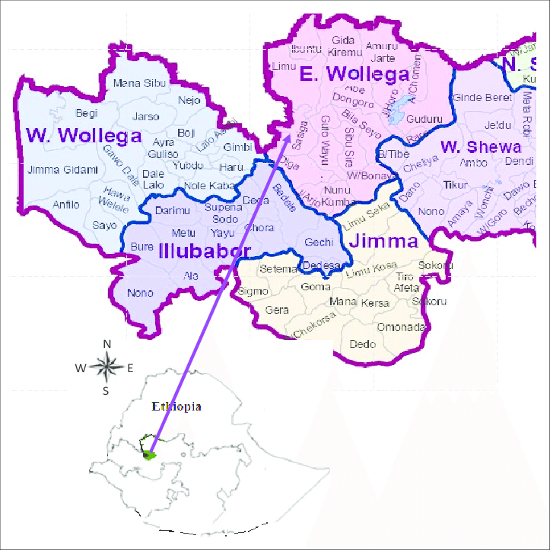
The study was conducted in three rural districts in Oromia regional state, focusing on Ghimbi, Bodji Dirmeji, and Bodji Chekorsa. These districts are connected by different types of roads, with Ghimbi and Bila linked by a federal concrete road (Figure 1).
Figure 1: Geographical Map of the Study Area
Source: Edited by the authors.
4.2 Research Design
The study aimed to evaluate challenges in rural public transport in Oromia’s west Wollega zone using a descriptive design and mixed research approach to enhance credibility and validity of findings.
4.3 Sample size Determination
Data was collected through questionnaires, interviews, and observations over a six-week period. We used SPSS version 26 for data analysis, which included analyzing questionnaire responses and obtaining frequencies and percentages. From a total population of 550 respondents, 400 were selected using systematic random sampling. From these 550 commuters, the researcher has selected 400 respondents using Yemane (1967) sample size determination formula. That is:
n = N____
1+N (e) 2
Where
n = sample size
N = total population
e =level of precision or error term of the study
n = 550/ 1+550(0.05)2 (assuming the error term of the study to be 5%)
n = 550/1+550 (e)2 29
n = 550/1.375 n = 400
Additionally, 22 key informants were also included as the study’s respondents, bringing the total number of respondents to 422.
5. Result and Discussion
5.1 Introduction
The study was conducted in Oromia’s West Wollega zone focusing on rural public transport challenges. As explained above, data was collected from 400 respondents through questionnaires, interviews, and observations, with a focus on demographics and transport usage frequency. The research objectives included assessing supply and demand issues, tariff problems, service quality, and adherence to transport laws in the region. Data analysis was done using SPSS, with a detailed presentation of findings through tables. The researcher ensured a 100% questionnaire return rate by collecting them in person over one and a half months. The study aimed to understand challenges in rural public transport services in Oromia’s West Wollega zone, covering various aspects like supply-demand dynamics, tariff issues, service quality, and compliance with transport regulations.
Table 1: Distribution of Demand and supply on assess to transpiration
| S.No. | How do you think the number of users in your district and the availability (supply and demand) of transportation relate to each other? | Response Rate | |||||||||
| SD | D | N | A | SA | |||||||
| Fr | % | Fr | % | Fr | % | Fr | % | Fr | % | ||
| 1 | The number of vehicles is not as many as the people who utilize transportation. | 95 | 23.8 | 69 | 17.3 | 27 | 6.8 | 112 | 28 | 97 | 24.3 |
| 2 | The number of vehicles exceeds the quantity of people who use transportation. | 192 | 48 | 150 | 37.5 | 21 | 5.3 | 14 | 3.5 | 23 | 5.8 |
| 3 | It is comparable to the quantity of people using transportation. | 150 | 37.5 | 155 | 38.8 | 47 | 11.8 | 31 | 7.8 | 17 | 4.3 |
| 4 | It takes several hours to get transportation. | 50 | 12.5 | 47 | 11.8 | 44 | 11 | 157 | 39.3 | 25.5 | 19 |
| 5 | Transportation service is accessible at any moment. | 159 | 39.8 | 157 | 39.3 | 41 | 10.3 | 24 | 6 | 19 | 4.8 |
Source: Own survey data (2024). SD: strongly disagree, D: disagree, N: neutral, A: agree, SA: strongly agree.
The research result indicates that 52.3% of respondents felt that rural public transport was insufficient, while 41.1% believed it was available without issues. These findings align with previous studies conducted in similar areas. For instance, Sisay (2014) found that rural areas in Ethiopia often face inadequate public transport services due to poor infrastructure, limited investment, and long distances between rural communities and transport hubs. This scarcity significantly affects access to essential services such as healthcare, education, and markets.
The perception that 41.1% of respondents believed public transport was available without issues may reflect regional variations. Legesse (2016) highlighted that some rural areas with better road networks or proximity to urban centers experience more consistent transport services, leading to perceptions of sufficiency among residents.
Additionally, Gebeyehu and Takano (2007) emphasized the critical role of public transport in rural development, noting that insufficient transport services can hinder economic growth, limit access to social services, and exacerbate rural-urban migration. The scarcity reported in the study area aligns with this broader understanding, underscoring the need for targeted interventions to improve rural transport infrastructure and services.
Transport authorities highlighted the lack of sufficient public transport to cater to the population’s daily commuting needs. Observations revealed imbalances in transport availability, with more respondents agreeing on the scarcity of rural public transport based on interviews and observations.
The research indicates that the majority of respondents agreed with the notion of rural public transport scarcity. This perception was further corroborated by transport authorities, who acknowledged that the supply of rural public transport is indeed insufficient.
Previous studies support these findings. Sisay (2024) reported similar challenges, noting that rural areas in Ethiopia frequently experience a lack of adequate public transport services due to factors like poor infrastructure and insufficient investment. Gebeyehu and Takano (2007) emphasized that the limited availability of rural public transport not only restricts mobility but also adversely impacts economic activities and access to essential services in rural communities.
This alignment between the perceptions of the respondents and the assessments of transport authorities highlights the persistent issue of rural transport scarcity and underscores the need for more focused efforts to improve the availability and reliability of public transport in these areas.
The research result indicates that a significant majority (76.3%) of respondents believe there is an imbalance between supply and demand in rural public transport. This imbalance is attributed primarily to road-related issues, which are perceived as a major barrier to private investment in the transport sector.
A study by Banerjee et al. (2012) found that inadequate road infrastructure significantly deters private investment in rural areas. The lack of proper roads increases operational costs for transport companies, making it less attractive to invest in public transport services. This aligns with the finding that road-related issues hinder private investment in rural public transport.
Research by Pojani and Stead (2015) highlighted that in many developing regions, there is a persistent mismatch between the supply of public transport and the demand, particularly in rural areas. Poor infrastructure was identified as a key factor contributing to this imbalance, as it limits the frequency and reliability of transport services.
A study by Bryceson et al. (2003) focused on rural transport in Sub-Saharan Africa, revealing that poor road conditions severely restrict access to essential services and economic opportunities. The research demonstrated that without good roads, rural areas struggle to attract the necessary investment to develop a robust public transport system, reinforcing the survey’s finding that road-related issues lead to an imbalance in supply and demand. The World Bank (2002) reported that improving rural road networks is crucial for enhancing access to markets, services, and opportunities. The report also emphasized that poor road conditions are a major constraint on private sector involvement in rural transport, which in turn exacerbates the imbalance between transport supply and demand.
These studies support the interpretation that road-related challenges are a significant barrier to achieving a balanced supply and demand in rural public transport. The lack of investment from the private sector, driven by concerns about infrastructure, perpetuates this issue, leaving rural communities underserved.
In simpler terms, most people surveyed think that there is not enough public transport in rural areas to meet demand. They believe that poor road conditions, such as inadequate infrastructure or maintenance, discourage private companies from investing in transportation services in these areas. As a result, the availability of public transport remains insufficient, leading to difficulties for rural residents who rely on these services.
The research result showing that 64.8% of respondents agree that waiting hours for transport is necessary suggests a significant shortage of transportation services in the area, indicating that a majority of people in the area experience long wait times, which is typically a sign that the available transport services are insufficient to meet the demand.
In other words, most respondents are forced to wait for extended periods because there are not enough vehicles or services to cater to the number of people needing transport. This shortage could be due to various factors such as limited availability of transport options, poor scheduling, or inefficiencies in the transport system. It highlights a critical gap in the area’s transport infrastructure, where the current supply is unable to keep up with the needs of the population, leading to delays and inconvenience for the users.
Research by Starkey and Hine (2014) on rural transport services in developing countries found that in areas with limited transport options, long waiting times are common. This scarcity of transport services is often due to a lack of investment, inadequate infrastructure, or low demand, which results in infrequent service schedules. This aligns with the finding that many respondents in the current study experience long waiting times, indicating a shortage of available transport.
A study by Porter (2004) highlighted that in rural areas of Africa, insufficient transport services lead to significant delays in daily activities, as residents often have to wait for extended periods for available vehicles. This situation exacerbates the challenges faced by rural communities in accessing essential services and participating in economic activities.
A World Bank report (2007) on rural transport highlighted that transport shortages not only lead to long waiting times but also limit economic opportunities for rural residents. The report emphasized that improving the frequency and availability of transport services is crucial for economic development and social inclusion in rural areas.
The research finding that 79.1% of respondents disagreed with the statement that transport is available at any time underscores significant challenges in the public transport supply within the zone. This high percentage indicates that a vast majority of people experience unreliable or insufficient transport services, limiting their ability to travel whenever needed. This finding highlights a critical gap in the availability and accessibility of public transport, further exacerbating the difficulties faced by residents in the area.
A study by Hine and Rutter (2000) on rural transport in developing countries emphasized that limited availability of transport is a major barrier to accessibility. The research found that in many rural areas, transport services are often irregular, forcing residents to adjust their schedules or forgo travel. This aligns with the finding that 79.1% of respondents do not find transport available at any time, indicating a significant supply issue.
Karema (2019) pointed out that one of the most persistent challenges in rural transport systems is the infrequency and unpredictability of services. In areas where transport services are not available on demand, residents often face long delays and are unable to rely on public transport for timely access to services and opportunities. This research supports the finding that a majority of respondents perceive a lack of consistent transport availability.
The World Bank (2002) reported that inconsistent and unavailable transport services severely impact the economic and social activities of rural populations. When transport is not available at all times, it limits people’s ability to access markets, education, healthcare, and other essential services, leading to social isolation and economic stagnation.
Overall, the study reveals unbalanced supply and demand in rural public transport, indicating a scarcity of transport in West Wollega zone.
Table 2: Transportation Tariff (Cost of transportation to be paid)
| S.No. | Item | Response Rate | |||||||||
| SD | D | N | A | SA | |||||||
| Fr | % | Fr | % | Fr | % | Fr | % | Fr | % | ||
| 1 | Transport services are paid for exactly as specified in the tariff. | 276 | 69 | 93 | 23.3 | 10 | 2.5 | 9 | 2.3 | 12 | 3 |
| 2 | The drivers compel me to pay more than the tariff. | 70 | 17.5 | 47 | 11.8 | 40 | 10 | 106 | 26.5 | 137 | 34.3 |
| 3 | Other than using the service, I am unaware of the pricing. | 98 | 24.5 | 113 | 28.3 | 44 | 11 | 82 | 20.5 | 63 | 15.8 |
| 4 | I am satisfied with transport service in the district. | 244 | 61 | 98 | 24.5 | 31 | 7.8 | 15 | 3.8 | 12 | 3 |
Source: Own survey data (2024).
The research result indicates that most respondents disagreed with the consistent application of decided fares for transport services, suggesting widespread dissatisfaction with how tariffs are implemented. Only a small percentage of respondents agreed that the prices are applied as decided. This discrepancy arises because passengers often end up paying more than the set tariff, primarily due to poor road conditions and the discretion exercised by transport owners.
A study by Starkey (2002) found that in rural areas with poor road conditions, transport operators often charge higher fares than officially set tariffs. This is because the costs of operating vehicles on poorly maintained roads are higher, leading operators to adjust fares based on road conditions rather than sticking to the decided tariffs, aligning with the finding that passengers frequently pay more due to road conditions.
Research by Robertson (2021) highlighted that in many rural areas, the enforcement of transport tariffs is weak, and transport operators have significant discretion in setting fares. This often results in passengers paying varying amounts, depending on the operator’s judgment and external factors such as road quality and vehicle maintenance costs, leading support to the finding that decided tariffs are not consistently implemented.
The World Bank (2010) reported that discretionary pricing by transport operators can lead to fare inconsistencies, which disproportionately affect rural passengers who often have limited transport options. The study emphasized the need for stronger regulatory oversight to ensure that set tariffs are applied uniformly to prevent exploitation of passengers.
The survey result presented in Table 2 shows that a high percentage of respondents felt compelled by transport owners to pay more than the official tariff. The fact that a majority of respondents agreed with this statement indicates a widespread issue where passengers are pressured or forced into paying inflated fares, likely due to the leverage transport owners have in areas with limited transport options.
Research by Porter (2004) highlights the power imbalance between transport operators and passengers in rural areas. The study found that in regions where transport services are scarce, operators often exploit their position by demanding higher fares than those officially set, knowing that passengers have little choice but to comply. This finding supports the survey result that many respondents feel forced to pay over the tariff.
A study by Teravaninthorn and Raballand (2009) on transport and regulation in Sub-Saharan Africa noted that weak enforcement of tariff regulations often leads to fare increases imposed by transport operators. In the absence of strict oversight, passengers are frequently subjected to fare hikes, particularly in rural areas with poor road conditions and limited competition among transport providers.
The World Bank (2010) reported that arbitrary fare increases imposed by transport operators can inflict a significant economic burden on rural passengers. This situation is exacerbated when passengers feel forced to pay more than the official pricing, as it reduces their disposable income and limits their access to essential services. The survey result is in line with this observation, as a majority of respondents reported being compelled to pay over the tariff.
The survey question designed to assess the knowledge of transport users about official tariffs revealed that more than half of the respondents were aware of the transport tariffs in their area. This finding indicates that a majority of the population has a clear understanding of the expected costs of transport services, indicating a level of transparency or dissemination of information regarding tariffs. However, despite this awareness, the issue of being forced to pay more than the set tariffs persists, pointing to a disconnect between knowledge and enforcement.
A study by Chapman (2013) on public transport in rural areas emphasized the importance of tariff awareness among passengers. It found that when passengers are informed about official tariffs, they are better equipped to contest overcharging by transport operators. This aligns with the finding that a significant portion of respondents were knowledgeable about the tariffs in their area.
Research by Starkey (2002) revealed that while awareness of tariffs can empower passengers, the effectiveness of this knowledge depends on the enforcement of those tariffs by authorities. The study found that even when passengers are aware of the correct fares, they are often unable to resist overcharging if enforcement mechanisms are weak or absent.
A report by the ESCAP (2019) discussed the role of information dissemination in improving the transparency of public transport services. It was noted that making tariff information widely available and accessible to the public helps in reducing instances of overcharging and builds trust in the transport system. The survey result that more than half of the respondents knew the tariffs reflects the importance of such transparency initiatives.
The survey finding that the majority of transport users in the district expressed dissatisfaction with the transport services provided indicates a low level of satisfaction overall. This dissatisfaction likely stems from several issues such as poor service availability, inconsistent application of tariffs, long waiting times, and the condition of the transport infrastructure. Such widespread dissatisfaction suggests that the current transport system is failing to meet the needs and expectations of the local population.
A study by Tyrinopoulos and Aifadopoulou (2008) found that user satisfaction with public transport services is closely linked to the quality of service, including factors like punctuality, reliability, and comfort. When these aspects are lacking, as suggested by our survey results, users are more likely to express dissatisfaction. The study emphasized that consistent service quality is key to improving user satisfaction.
Porter (2004) highlighted that rural areas often face significant challenges in providing satisfactory transport services due to poor infrastructure, infrequent services, and high costs. These challenges can lead to widespread dissatisfaction among users, as the transport system does not adequately serve their needs. This aligns with the finding that most respondents in our survey are dissatisfied with the services provided.
A report by the Benmaamar (2003) on rural transport underscored that poor road conditions and inadequate transport infrastructure are major contributors to low user satisfaction in rural areas. When roads are poorly maintained, transport services are often unreliable, leading to user dissatisfaction. This supports the interpretation that infrastructure issues may be a significant factor in the low satisfaction levels reported in your survey.
The study’s finding that transport owners were pushing users to pay more than the government-set tariffs underscores a significant issue of lack of accountability and rule of law in the transport sector. This observation suggests that transport operators are not being held accountable for their actions, allowing them to exploit passengers with little fear of repercussions. The absence of effective regulation and enforcement mechanisms likely contributes to this environment where rules are disregarded, and passengers are left vulnerable to unfair practices.
A study by Sohail et al. (2006) emphasized that weak regulatory frameworks and poor enforcement of transport laws often lead to exploitation of passengers. In regions where the rule of law is not firmly established in the transport sector, operators may disregard official tariffs, knowing they can act with impunity. This aligns with the study’s finding that transport owners are pressuring users to pay more than the set fares.
The survey results suggest that transport users feel they have limited rights or ability to question or refuse to pay the varying tariffs charged by transport owners. This indicates a significant power imbalance between transport providers and passengers, where passengers are often forced to comply with unfair pricing due to a lack of alternative options or fear of retaliation. The inability of passengers to assert their rights further exacerbates the issues of exploitation and inequity within the transport sector.
Research by Burchardt (2014) highlighted the power dynamics in rural transport systems, where operators often hold significant control over pricing and service provision due to the scarcity of transport options. This power imbalance limits the ability of passengers to contest unfair practices, including varying tariffs. The survey results reflect this lack of agency among passengers in challenging the imposed fares.
A study by Behrens and Mfinanga (2013) found that in many rural areas, there is a lack of consumer protection mechanisms for transport users. Without proper channels to report or contest unfair tariffs, passengers are left with little choice but to comply with whatever prices are set by transport operators. This supports the finding that users have limited rights to question or refuse to pay varying tariffs.
Benmaamar (2003) reported that in regions where legal frameworks are weak or under-enforced, passengers have few options for seeking redress against unfair practices by transport operators. The absence of effective legal recourse contributes to a culture where passengers feel powerless to challenge tariff discrepancies, aligning with the survey’s indication of limited rights for transport users.
The overall findings from the survey suggest a troubling trend of widespread dissatisfaction and a significant lack of transparency within the transport service sector. The data indicates that users frequently feel pressured to pay amounts above the official tariffs, reflecting both a failure in regulatory enforcement and a breakdown in trust between transport providers and users. This situation highlights systemic issues that need to be addressed to improve user satisfaction, ensure fair pricing, and restore confidence in the transport system.
Research by Banerjee et al. (2020) identified several systemic problems in rural transportation, including poor regulatory oversight and widespread dissatisfaction among users. These issues often result in users being subjected to unfair practices, such as being charged above the official tariffs, similar to the trends observed in the present study. The lack of transparency and accountability exacerbates these problems.
Table 3: Quality of Transportation Services
| S.No. | How do you feel about the level of comfort and service that you receive while traveling? | Response Rate | |||||||||
| SD | D | N | A | SA | |||||||
| Fr | % | Fr | % | Fr | % | Fr | % | Fr | % | ||
| 1 | The proprietors of the vehicles treat customers with courtesy. | 221 | 55.3 | 99 | 24.8 | 35 | 8.8 | 23 | 5.8 | 22 | 5.5 |
| 2 | They provide quality care to those they serve. | 199 | 49.8 | 109 | 27.3 | 54 | 13.5 | 23 | 5.8 | 15 | 3.8 |
| 3 | My current mode of public transportation is comfortable. | 194 | 48.5 | 108 | 27 | 54 | 13.5 | 18 | 4.5 | 26 | 6.5 |
| 4 | I commute more often on big buses. | 150 | 37.5 | 132 | 33 | 80 | 20 | 19 | 4.8 | 19 | 4.8 |
| 5 | I commute more often by mid-bus. | 86 | 21.5 | 90 | 22.5 | 84 | 21 | 109 | 27.3 | 31 | 7.8 |
| 6 | I commute more often by minibus. | 49 | 12.3 | 64 | 16 | 75 | 18.8 | 130 | 32.5 | 82 | 20.5 |
| 7 | I travel from place to place using open trucks. | 156 | 39 | 135 | 33.8 | 50 | 12.5 | 33 | 8.3 | 26 | 6.5 |
Source: Own survey data (2024).
The findings indicate that transport owners and drivers in rural public transport services often exhibit impolite behavior towards customers, largely due to practices like overcharging and overloading. This behavior has led to frequent conflicts and a noticeable lack of care for passengers. The majority of respondents disagreed with the statement that there is a presence of care in rural public transport services, highlighting that drivers tend to prioritize service frequency and maximizing profit over the well-being and comfort of their passengers.
Research by Behrens et al. (2016) found that overloading and overcharging are common issues in rural transport services, often leading to conflicts between passengers and operators. These practices not only compromise the safety and comfort of passengers but also result in deteriorating relationships and a lack of care from transport providers. The study suggests that these negative practices contribute to a general decline in service quality and customer satisfaction, aligning with our survey’s findings.
The survey results reveal that most respondents perceive public transport in rural areas as uncomfortable, largely due to issues like overcrowding and a lack of cleanliness. These conditions contribute to a negative experience for passengers, making travel unpleasant and, at times, unsafe. Additionally, the limited use of large buses in the study area, driven by federal regulations and capacity constraints, exacerbates the problem by forcing more passengers into smaller, often overburdened vehicles.
A study by Behrens et al. (2016) emphasized that overcrowding is a common issue in rural transport systems, directly leading to discomfort among passengers. Overcrowded vehicles often lack proper ventilation, seating, and cleanliness, contributing to a generally poor travel experience. The discomfort reported by our survey respondents aligns with these findings, highlighting a widespread problem in rural public transport.
Walters (2013) discussed how the type of vehicle used in public transport can significantly affect passenger comfort. In areas where larger buses are not commonly used, passengers are often forced into smaller, less comfortable vehicles that are more prone to overcrowding. The limited use of large buses due to federal regulations and capacity issues, as noted in this study, further exacerbates the discomfort experienced by passengers.
The survey results indicate that mid-sized buses, often referred to as “Kitkit,” are scarce in the study area, which limits their usage for public transportation. Instead, minibuses have become the most frequently used mode of transport, as noted by both respondents and transport authorities. While a majority of respondents avoid using open trucks for transportation, some are compelled to do so on market days due to the scarcity of other transport options. This reliance on less safe and less comfortable alternatives highlights the challenges in meeting transport demand in the area.
Research by Burchardt (2014) highlighted the challenges in providing adequate transport options in rural areas, particularly the scarcity of mid-sized buses. The study noted that these buses are often limited in number due to economic constraints and regulatory challenges, which forces passengers to rely on smaller vehicles like minibuses or, in some cases, less safe alternatives like open trucks.
A study by Sohail et al. (2006) found that in many rural areas, minibuses are the most commonly used form of public transport due to their availability and flexibility in navigating rural roads. However, this reliance on minibuses can lead to overcrowding and discomfort, particularly when mid-sized buses are scarce, as noted in this study.
The findings suggest that in rural public transport services, transport owners and drivers tend to prioritize profit over customer service, which results in frequent conflicts and significant discomfort for passengers. This lack of care is particularly evident as drivers focus on increasing the frequency of trips rather than ensuring the well-being and comfort of passengers. This approach has led to a decline in service quality, with passenger needs often being neglected in favor of maximizing earnings.
A study by Walters (2013) discussed how the emphasis on profit maximization in the transport sector often leads to a reduction in the quality of customer service. This profit-driven focus can result in practices such as overloading, rushing trips, and neglecting passenger comfort, which are all indicative of a broader disregard for passenger well-being. The conflicts and discomfort experienced by passengers in your study align with these findings.
Research by Behrens et al. (2016) highlighted that drivers who prioritize increasing the frequency of trips to boost earnings often do so at the expense of passenger safety and comfort. This behavior can lead to unsafe driving practices, overcrowded vehicles, and a general lack of concern for the passenger experience. Our survey results that show a lack of care in rural public transport services are consistent with these findings.
The survey results highlight that comfort in rural public transport is significantly lacking, primarily due to issues such as overcrowding and deficient cleanliness. The discomfort is further exacerbated by the limited use of large buses in the area, which is attributed to federal regulations and capacity constraints. As a result, passengers are often forced to use smaller, more crowded vehicles, leading to a subpar travel experience.
Research by Behrens et al. (2016) emphasized that overcrowding is a major factor contributing to the lack of comfort in rural transport systems. When vehicles are overloaded, passengers experience reduced personal space, poor ventilation, and increased stress, all of which detract from the overall travel experience. The findings of our study, which indicate discomfort due to overcrowding, align with these observations.
The survey results indicate that mid-sized buses, commonly referred to as “Kitkit,” are limited in number, which significantly affects their usage for transportation in the study area. As a result, minibuses have become the most popular mode of public transport, a fact confirmed by both respondents and transport authorities. While a majority of respondents avoid using open trucks for public transportation, some are compelled to resort to them on market days due to the scarcity of available transport options.
Table 4: Issues with Transportation Laws and Regulations
| S.No. | Items | Response Rate | |||||||||
| SD | D | N | A | SA | |||||||
| Fr | % | Fr | % | Fr | % | Fr | % | Fr | % | ||
| 1 | When drivers force passengers to pay more than the fare, they adhere to it strictly. | 238 | 59.5 | 100 | 25 | 38 | 9.5 | 15 | 3.8 | 2.3 | 19 |
| 2 | They offer solutions in situations where transportation is scarce in a particular direction. | 198 | 49.5 | 126 | 31.5 | 35 | 8.8 | 22 | 5.5 | 19 | 4.8 |
| 3 | The application of transportation laws and regulations is corrupted. | 69 | 17.3 | 39 | 9.8 | 55 | 13.8 | 111 | 27.8 | 126 | 31.5 |
| 4 | To address passenger issues, transportation regulators, traffic police, and passengers work well together. | 214 | 53.5 | 87 | 21.8 | 51 | 12.8 | 27 | 6.8 | 21 | 5.3 |
Source: Own Survey data (2024).
The survey results indicate that regulators and traffic police often only inquire with passengers about tariff issues, which leads to considerable underreporting of overpayments. As a result, many passengers end up paying more than double the official fare, afraid that if they do not comply, they may face neglect or even denial of service from transport owners and drivers in the future. This situation is exacerbated by the lack of strict follow-up and enforcement on over-tariff issues by the authorities, particularly in certain routes where it has been observed that passengers consistently pay more than the official ticket amount. This gap in enforcement and regulation points to a systemic issue in the oversight of public transportation services.
A study by Walters (2013) found that passengers in rural areas often underreport instances of overcharging due to fear of retaliation from transport operators. This underreporting is further complicated by the fact that regulatory bodies and traffic police do not consistently monitor or address these issues, leading to a culture of acceptance among passengers who prefer to pay more rather than risk future service denial. Our findings on passengers paying more than double the fare align with these observations.
Behrens et al. (2016) discussed the challenges of enforcing tariff regulations in rural transport systems. They found that weak regulatory frameworks and inconsistent enforcement by authorities often lead to widespread non-compliance with official prices, particularly on less-monitored routes. This lack of strict follow-up is reflected in your study’s observation that passengers are frequently overcharged without proper regulatory intervention.
The survey findings reveal that a majority of respondents in the study area perceive corruption in the implementation of transport rules, which has resulted in regulators manipulating codes to impose punishments that are less severe than warranted. This manipulation undermines the integrity of the enforcement process and contributes to a broader sense of injustice within the public transport system. Furthermore, the study indicates a significant lack of cooperation between traffic police, transport regulators, and passengers in addressing transport-related issues, as evidenced by a substantial percentage of respondents who disagree with the notion that such cooperation exists.
A study by Sohail et al. (2006) discussed how corruption within the transport regulatory framework can lead to the manipulation of enforcement codes and a failure to properly penalize violations. This kind of corruption often results in a loss of public trust and contributes to the perception that transport rules are selectively enforced. The belief among respondents of our study that there is corruption in the implementation of transport rules aligns with these findings.
Behrens et al. (2016) highlighted the challenges in fostering effective cooperation between transport regulators, traffic police, and passengers. They noted that in many cases, the lack of communication and collaboration between these groups leads to unresolved issues and persistent dissatisfaction among passengers. The significant disagreement among respondents in our study regarding the existence of cooperation between these parties reflects this broader issue.
The survey findings indicate that transport regulators and traffic police demonstrate inadequate follow-up on critical issues such as overcapacity and overpayment. Their response to these issues is characterized by slow action and, in some cases, an abuse of power when dealing with illegal public transport operations. Such lack of effective oversight contributes to ongoing problems within the rural public transport system. Furthermore, the results highlight a broader issue: the absence of meaningful cooperation among key stakeholders (such as transport regulators, traffic police, and transport operators), which is necessary to address and resolve these persistent transport challenges in rural areas.
Research by Burchardt (2014) discusses how the lack of rigorous oversight and a slow regulatory response to transport issues such as overcapacity and overpayment can exacerbate problems in rural public transport systems. When authorities fail to act swiftly and decisively, these issues tend to persist, leading to a deterioration in service quality. The findings in our study align with this broader pattern of ineffective oversight and delayed action by transport authorities.
Walters et al. (2022) highlighted that in some rural areas, transport authorities and traffic police may abuse their power, either through selective enforcement or by exploiting their positions for personal gain. This abuse of power further erodes trust between the public and authorities and contributes to ongoing problems within the transport system. Our survey’s observation of power abuse in dealing with illegal transport movements reflects these concerns.
Behrens et al. (2016) pointed out that effective public transport management in rural areas requires close cooperation between regulators, traffic police, and transport operators. However, they also noted that such cooperation is often lacking, leading to fragmented efforts that fail to address the root causes of transport issues. The lack of fruitful cooperation among stakeholders in the study area is consistent with these findings, highlighting a key barrier to resolving public transport problems.
6. Summary, Conclusion, and Recommendations
6.1 Summary
The research indicates a significant perception of insufficient rural public transport, with 76.3% of respondents noting an imbalance between supply and demand. Long waiting times and dissatisfaction with service availability highlight critical gaps in the transport infrastructure.
The study aimed to assess challenges in rural public transport services in Oromia, West Wollega zone, focusing on supply and demand, tariff, comfort, and implementation of transport laws. Different questions were designed under each core objective to identify challenges faced by transport users in the area. Findings revealed an imbalance between demand and public transport availability, issues with fare payment and seating, overcrowding affecting comfort, and inadequate enforcement of transport laws.
A majority of respondents reported being compelled to pay more than the official price due to poor enforcement and road conditions. Awareness of transport pricing exists among users, but the disconnect between knowledge and enforcement leads to exploitation by transport operators.
The study highlighted challenges such as unbalanced demand, overpayment for transport, overcrowding affecting comfort, and inadequate enforcement of transport laws.
High levels of dissatisfaction among users stem from poor service availability, inconsistent tariffs, and uncomfortable travel conditions. The study reveals systemic issues in rural transport, including inadequate regulatory oversight and a lack of accountability among transport providers.
The research indicates a notable imbalance between the supply of transport services and the actual demand, with 76.3% of respondents acknowledging this discrepancy. This imbalance leads to long waiting times and inadequate service availability, which are critical barriers to effective rural transport.
Many respondents reported being forced to pay higher fares than the officially set tariffs due to poor enforcement of regulations. This exploitation by transport operators highlights the need for better regulatory oversight and enforcement mechanisms to protect passengers.
The study found high levels of dissatisfaction among users regarding service quality, including issues related to comfort and adherence to transport laws. The lack of accountability among transport providers contributes to these challenges, necessitating a comprehensive approach to improve service delivery.
The research underscores the necessity for innovative solutions to enhance rural public transport, including the adoption of demand-responsive transportation systems and improved legislative frameworks. Addressing these challenges is essential for promoting sustainable rural development and improving the quality of life for residents.
The findings underscore the urgent need for targeted interventions to improve rural public transport services in Ethiopia. Addressing the identified challenges will enhance accessibility, promote economic development, and improve the quality of life for rural residents.
6.2 Conclusion
The study in Oromia’s West Wollega zone reveals multiple challenges in rural public transport, leading to conflicts between transport users, owners, and government bodies.
The research highlights several critical challenges that need to be addressed to improve accessibility and service quality. The findings reveal a significant perception among respondents that rural public transport is insufficient, with 52.3% expressing dissatisfaction with the current state of services. This aligns with the broader issues identified in the literature regarding low transport demand and the reliance on private vehicles, which exacerbate socioeconomic disparities and environmental concerns.
Challenges include illegal tariff additions, overloading vehicles, lack of comfort, and conflicts between transport owners and users. Implementation issues with transport laws and regulations contribute to the challenges, with transport regulators sometimes failing to enforce penalties. Unbalanced public transport availability, poor tariff application, and lack of comfort due to overcrowding are key issues identified in the study. Transport owners’ focus on maximizing profits leads to overcrowding, discomfort, and conflicts with passengers, highlighting the need for better regulation and enforcement.
6.3 Recommendations
Based on the findings of the research conducted in the West Wollega zone of Oromia, several recommendations can be made to enhance rural public transport services. These recommendations aim to address the identified challenges and improve user satisfaction and service quality.
- Enhance Regulatory Oversight:
Implement stricter enforcement of transport laws to ensure compliance by operators. This includes monitoring fare structures to prevent overcharging and ensuring that services meet established quality standards.
- Improve Infrastructure:
Invest in the development and maintenance of rural transport infrastructure, such as roads and terminals. Improved infrastructure will facilitate better access to transport services and enhance the overall user experience.
- Adopt Demand-Responsive Transport Solutions:
Introduce flexible transport options that can adapt to the varying needs of rural communities. This could include on-demand services that respond to user requests, thereby improving accessibility and reducing waiting times.
- Increase Community Engagement:
Foster collaboration between transport authorities and local communities to better understand their needs and preferences. Engaging residents in the planning and decision-making processes can lead to more tailored and effective transport solutions.
- Focus on Service Quality:
Prioritize improvements in service quality by addressing issues related to comfort, reliability, and punctuality. Training programs for drivers and operators can enhance service delivery and user satisfaction.
- Promote Public Awareness:
Conduct awareness campaigns to educate users about their rights and the available transport services. This can empower users to demand better services and hold operators accountable for their performance.
- Encourage Sustainable Practices:
Integrate sustainable practices into rural transport systems, such as promoting the use of eco-friendly vehicles and optimizing routes to reduce environmental impact. This aligns with broader goals of sustainable development.
By implementing these recommendations, stakeholders can significantly improve the quality and accessibility of rural public transport services, ultimately enhancing the livelihoods of residents in the West Wollega zone and contributing to regional economic growth.
References
Adesanya, A., Philips, A. O. & Titilayo, S. T. (2000). Transportation development in Nigeria in 2010 Ibadan. Nigerian Institute of Social and Economic Research (NISER).
Afolabi, O. J., Ademiluyi, I. A., & Oyetubo, A. O. (2016). Analysis of rural transportation of agricultural produce in Ijebu North local government area of Ogun State Nigeria. International Journal of Economics and Management Sciences 6 (1): 1–6. DOI: 10.4172/2162-6359.1000394
Badada, B., Delina, G., Baiqing, S. & Krishnaraj, R. (2023). Economic impact of transport infrastructure in Ethiopia: The role of foreign direct investment. SAGE Open 13 (1). DOI: 10.1177/21582440231162055
Banerjee, A., Duflo, E., & Qian, N. (2020). On the road: Access to transportation infrastructure and economic growth in China. Journal of Development Economics 145: 102442. DOI: 10.3386/w17897
Bayehe, H. L. G. & Qian, X. D. (2018). The basic understanding of transportation in supply chain management. TIJ’s Research Journal of Commerce & Behavioural Science – RJCB 8 (2).
Behrens, R., McCormick, D. & Mfinanga, D. (eds.) (2015). Paratransit in African Cities: Operations, Regulation and Reform. Routledge. DOI: 10.4324/9781315849515
Benmaamar, M. (2003). Urban transport services in sub-Saharan Africa: Improving vehicles operations. Sub-Saharan Africa Transport Policy Program. The World Bank and Economic Commission for Africa. SSATP Working Paper No. 75. Available online: https://www.ssatp.org/sites/default/files/publication/SSATPWP75.pdf/
Bly, P. H., Webster, F. V. & Pounds, S. (1980). Effects of subsidies on urban public transport. Transportation 9 (4): 311–331. DOI: /10.1007/BF00177696
Booth, D., Hanmer, L. & Lovell, E. (2000). Poverty and transport. Report for the World Bank, Overseas Development Institute. Available online:
https://media.odi.org/documents/3554.pdf/
Bryceson, D. F., Mbara, T. C. & Maunder, D. (2003). Livelihoods, daily mobility and poverty in sub-Saharan Africa. Transport Reviews 23 (2): 177–196. DOI: 10.1080/01441640309891
Burchardt, J. (2014). Transportation infrastructure development in a low-income country (Ghana). In: 12th International Conference on the History of Transport, Traffic and Mobility (T2M). Philadelphia: USA, pp. 1 – 34. Available online:
https://www.researchgate.net/publication/288986437_Transportation_infrastructure_development_in_a_low-income_country_Ghana/
Camillo, E. (2013). A brief history of the evolution of transportation over time. Centro Studi Subalpino. Torino.
Cazuza de Sousa Júnior, J. N., Dias, T. G. & Nunes de Azevedo Filho, M. A. (2023). Operational performance analysis of the public transport system over time. Infrastructures 8 (5): 82. DOI: 10.3390/infrastructures8050082
Chambers, R. (2014). Rural development: Putting the last first. Routledge.
Chapman, L. (2013). Transport, the environment and security–Making the connection, by Zimmerman, R. 2012. Edward Elgar Publishing, Cheltenham, UK. £ 70 (Hardback). ISBN 978-1-84980-020-4. Book review. Journal of Transport Geography 29: 107. DOI: 10.1016/j.jtrangeo.2013.01.008
Civan, M. & Krogmann, A. (2016). Public transport serviceability as a factor of rural development. MendelNet 2016: 384–389. Available online: https://mendelnet.cz/pdfs/mnt/2016/01/69.pdf/
Cook, C. C., Duncan, T., Jitsuchon, S., Sharma, A. & Guobao, W. (2005). Assessing the impact of transport and energy infrastructure on poverty reduction. Mandaluyong City: Asian Development Bank.
Deaton, A. (1984). The demand for personal travel in developing countries: pricing and policy analysis. Discussion Paper, Research Program in Development Studies, Woodrow Wilson School, Princeton University. Available online: https://documents1.worldbank.org/curated/en/783941468181786566/pdf/INU1000The0dem0tries0VOL0100010of02.pdf/
DeGrassi, A. (2009). Transport, poverty, and agrarian change in Africa: Models, mechanisms and new ways forward. IDS Bulletin 36 (2): 52–57. Available online: https://scholarworks.sjsu.edu/cgi/viewcontent.cgi?article=1002&context=geog_pub/
Duncan, T. (2007). Findings from studies of poverty impacts of road projects. Asian Development Bank. Available online:
https://www.adb.org/sites/default/files/evaluation-document/35848/files/sape-prc-impacts-road-projects_6.pdf/
ESCAP (2019). Enhancing rural transport connectivity to regional and international transport networks in Asia and the Pacific. Economic and Social Commission for Asia and the Pacific. Available online: https://hdl.handle.net/20.500.12870/2884/
Eshete, M. (2015). Public transportation system: The case of Addis Ababa. Addis Ababa: School of Graduate Studies, College of Social Science, Addis Ababa University. Available online: https://etd.aau.edu.et/server/api/core/bitstreams/b21b3ee4-3f29-4de0-9360-aaa70bc0c595/content/
Freeman, P. & Jamet, C. (1998). Proceedings of the International Conference CODATU VIII, Cape Town, South Africa, 21-25 September 1998: Urban transport policy: a sustainable development tool. Cape Town: South Africa.
Friedman, P. (2004). Transportation needs in rural communities. Rural Assistance Center 2 (1): 1–9.
Gannon, C. A. & Liu, Z. (1997). Poverty and transport (No. TWU-30). Washington DC: World Bank. Available online:
https://documents1.worldbank.org/curated/zh/302611538245213278/pdf/Poverty-and-transport.pdf/
Gebeyehu, M., & Takano, S. E. (2007). Diagnostic evaluation of public transportation mode choice in Addis Ababa. Journal of Public Transportation 10 (4): 27–50. DOI: 10.5038/2375-0901.10.4.2
Gudissa, S. (2021). Factors affecting transport service quality in the case of Addis Ababa city. Doctoral dissertation, St. Mary’s University.
Gunaruwan, T. L. & Dilrukshi, M. S. (2016). Comparative economics of planning public transport provision to address transport connectivity issues in a rural setting: The case of Kalyanipura–Weli Oya. Sri Lanka Forum of University Economists (SLFUE), Department of Economics, Faculty of Social Sciences, University of Kelaniya. Available online: https://www.researchgate.net/publication/342945313_Comparative_Economics_of_Planning_for_Public_Transport_Provision_to_Address_Transport_Connectivity_Issues_of_a_Rural_Setting_The_Case_of_Kalyanipura_-WeliOya/
Hailie, A. E. (2013). Challenges to finance urban roads in Ethiopia. International course on Housing and Urban development, Rotterdam, The Netherlands. Available online: https://papers.ssrn.com/sol3/papers.cfm?abstract_id=2337276/
Hine, J. L. (1993). Transport and marketing priorities to improve food security in Ghana and the rest of Africa. Regional Food Security and Rural Infrastructure: An International Symposium. Available online:
https://transport-links.com/wp-content/uploads/2023/10/transport-and-marketing-priorities-to-improve-food-security-in-ghana-and-the-rest-of-africa-international-symposium-regional-food-security-and-rural-infrastructure-giessen-may-1993.pdf/
Hine, J. & Rutter, J. (2000). Roads, personal mobility & poverty: The challenge. Transport Research Laboratory, World Bank, Washington DC. Available online: https://transport-links.com/wp-content/uploads/2023/10/roads-personal-mobility-and-poverty-the-challenge-transport-and-poverty-alleviation-workshop-washington-d-c-13-june-2000.pdf/
Horak, T. S. & Sanborn, A. N. (2022). The need for reliable robust maternal transport program to improve maternal outcomes in rural America. Clinical Obstetrics and Gynecology 65 (4): 839–847. DOI: 10.1097/GRF.0000000000000722
Howe, J. (1983). Conceptual framework for defining and evaluating improvements to local level rural transport in developing countries.
Kaiser, N. & Barstow, C. K. (2022). Rural transportation infrastructure in low-and middle-income countries: a review of impacts, implications, and interventions. Sustainability 14 (4): 2149. DOI: 10.3390/su14042149
Karema, F. M. (2019). An assessment of the role of non-motorized transport in promoting rural mobility: A case study of Laikipia County, Kenya. Doctoral dissertation, University of Nairobi. Available online: http://erepository.uonbi.ac.ke/bitstream/handle/11295/157082/Karema_An%20Assessment%20of%20the%20Role%20of%20Non-motorized%20Transport%20in%20Promoting%20Rural%20Mobility.pdf?sequence=1&isAllowed=y/
Kranton, R. E. (1991). Transport and the mobility need of the urban poor: An exploratory study. Available online:
https://documents1.worldbank.org/curated/en/417081468764376814/pdf/multi-page.pdf/
Legesse, T. (2016). Analysis on the road transportation networks of the Amhara region, Ethiopia. International Journal for Traffic and Transport Engineering 6 (2): 212–221. DOI: 10.7708/ijtte.2016.6(2).08
Lema, C. (2007). Makete Integrated Rural Transport Project: A case study of MIRTP and its impacts on rural transport policies in Tanzania. International Forum for Rural Transport and Development (IFRTD), London.
Makaevna, M. D. & Sembekovna, A. R. (2013). Transport as the basis of extending the integration processes of EurAsEC. Proceedings of the 2013 International Conference on Information, Business and Education Technology (ICIBET 2013), pp. 1206–1209. Atlantis Press.
Mantynen, J., Pollanen, M., Eskelinen, H., Lehtola, I., Perrels, A. & Kallioinen, J. (2002). Basis for defining the basic service level of road and rail network. Publications of the Ministry of Transport and Communications 48.
Maretić, B. & Abramović, B. (2020). Integrated passenger transport system in rural areas: A literature review. Promet – Traffic & Transportation 32 (6): 863–873. DOI: 10.7307/ptt.v32i6.3565
Matteo, F. & Ravel, C. (2022). Roads and jobs in Ethiopia. The World Bank Economic Review 36 (4): 999–1020.DOI: 10.1093/wber/lhac018
Mattioli, G. (2016). Transport needs in a climate-constrained world: A novel framework to reconcile social and environmental sustainability in transport. Energy Research & Social Science 18: 118–128. DOI: 10.1016/j.erss.2016.03.025
Mosa, A. A. (2022). Public expenditure for water facility and road transport infrastructure in Ethiopia: a comparison of impacts using an economy-wide model. Environmental Systems Research 11: 13. DOI: 10.1186/s40068-022-00258-4
Niewczas, A., RymARz, J. & Dębicka, E. (2019). Stages of operating vehicles with respect to operational efficiency using city buses as an example. Eksploatacja i Niezawodność 21 (1): 21–27. DOI: 10.17531/ein.2019.1.3
Norman, K. (2013). Social dimensions of transport: A resource for social impact appraisals. A working document. Available online: https://assets.publishing.service.gov.uk/media/5a7b9c3be5274a7202e18484/Social_Dimensions_of_Transport_for_externals.pdf/
Olayiwola, L. M. & Adeleye, O. A. (2005). Rural infrastructural development in Nigeria: Between 1960 and 1990–problems and challenges. Journal of Social Sciences 11 (2): 91–96. DOI: 10.1080/09718923.2005.11892499
Olorunfemi, S. O. (2016). Rural road infrastructural challenges: An impediment to health care service delivery in Kabba-Bunu local government area of Kogi State, Nigeria. Academic Journal of Interdisciplinary Studies 5 (2): 35–44. DOI: 10.5901/ajis.2016.v5n2p35
Olorunfemi, S. O. (2020). Rural road infrastructural challenges: An impediment to agricultural development in Idanre Local Government Area of Ondo State, Nigeria. Ghana Journal of Geography 12 (2): 108–124. DOI: 10.4314/gjg.v12i2.5
Olorunfemi, S. O. & Adenigbo, J. O. (2017). Road transportation challenges to food security in Ikere Ekiti Local Government Area of Ekiti State, Nigeria. Quantitative Methods for Integrated Food and Nutrition Security Measurements-Lessons to be learned Conference organized by European Commission and International Food Policy Research Institute held at Thon Hotel Brussels, 15th–17th November.
Pettersson, F. & Khan, J. (2020). Smart public transport in rural areas: Prospects, challenges and policy needs. In Paulsson, A. & Sørensen, C. H. (eds.) Shaping smart mobility futures: Governance and policy instruments in times of sustainability transitions. Emerald Publishing Limited, pp. 187–201.
Pojani, D. & Stead, D. (2015). Sustainable urban transport in the developing world: Beyond megacities. Sustainability 7 (6): 7784–7805. DOI: 10.3390/su7067784
Porru, S., Misso, F. E., Pani, F. E. & Repetto, C. (2020). Smart mobility and public transport: Opportunities and challenges in rural and urban areas. Journal of Traffic and Transportation Engineering 7 (1): 88–97. DOI: 10.1016/j.jtte.2019.10.002
Porter, G. (2004). Youth, mobility and rural livelihoods in sub-Saharan Africa. Proceedings: UK African Studies Association Biennial Conference. University of London. DOI: 10.4314/ai.v43i1.7
Pot, F., Koster, S., Tillema, T. & Jorritsma, P. (2020). Linking experienced barriers during daily travel and transport poverty in peripheral rural areas: The case of Zeeland, the Netherlands. European Journal of Transport and Infrastructure Research 20 (3): 29–46. DOI: 10.18757/ejtir.2020.20.3.4076
Psarra, F., Piccoli, A., Karachaliou, E., Trendafili, K., Spyridopoulos, K., Masson, B., […] & Santos, E. C. V. (2021). Sustainable shared mobility interconnected with public transport in European rural areas. In: Zachäus, C. & Meyer, G. (eds.) Intelligent System Solutions for Auto Mobility and Beyond: Advanced Microsystems for Automotive Applications 2020. Springer International Publishing, pp. 130–142.
Robertson, M. (2021). Sustainability principles and practice. London: Routledge. DOI: 10.4324/9780429346668
Setboonsarng, S. (2006). Transport infrastructure and poverty reduction. ADBI Research Policy Brief No. 21. Available online: https://www.adb.org/sites/default/files/publication/157260/adbi-rpb21.pdf/
Shiferaw, A., Soederbom, M., Siba, E. & Alemu, G. (2012). Road networks and enterprise performance in Ethiopia: Evidence from the road sector development program. International Growth Centre, The College of William and Mary, Working Paper 12, 0696. Available online: https://www.theigc.org/blogs/road-networks-and-enterprise-performance-ethiopia-evidence-road-sector-development-programme
Shikur, Z. H. (2022). Transport policy and agricultural productivity and production in Ethiopia. The Journal of Developing Areas 56 (3): 231–246. DOI: 10.1353/jda.2022.0052
Singh, R., Hörcher, D. & Graham, D. J. (2023). An evaluation framework for operational interventions on urban mass public transport during a pandemic. Scientific Reports 13 (1): 5163. DOI: 10.1038/s41598-023-31892-2
Sisay, M. G. (2024). The pitfalls of Ethiopian road developments: Socio-economic impacts. Cogent Social Sciences 10 (1): 2319220. DOI: 10.1080/23311886.2024.2319220
Sohail, M., Maunder, D. A. C. & Cavill, S. (2006). Effective regulation for sustainable public transport in developing countries. Transport policy 13 (3): 177–190. DOI: 10.1016/j.tranpol.2005.11.004
Šoštarić, M., Ševrović, M., Jakovljević, M. & Švajda, M. (2022). Sustainability of public transport in rural areas – Case study city of Jastrebarsko. Transportation Research Procedia 64 (5): 372–377. DOI: 10.1016/j.trpro.2022.09.044
Starkey, P. (ed.) (2002). Improving rural mobility: Options for developing motorized and nonmotorized transport in rural areas. World Bank Publications, 23. DOI: 10.1596/0-8213-5146-7
Starkey, P. & Hine, J. (2014). Poverty and sustainable transport. How transport affects poor people with policy implications for poverty reduction. UN-Habitat. Available online: https://sustainabledevelopment.un.org/content/documents/1767Poverty%20and%20sustainable%20transport.pdf/
Teravaninthorn, S. & Raballand, G. (2009). Transport prices and costs in Africa: A review of the main international corridors. The World Bank, Washington, DC. Available online: https://documents1.worldbank.org/curated/en/278561468201609212/pdf/461810PUB0Box3101OFFICIAL0USE0ONLY1.pdf/
Truden, C., Kollingbaum, M. J., Reiter, C. & Schasché, S. E. (2022). A GIS-based analysis of reachability aspects in rural public transportation. Case Studies on Transport Policy 10 (3): 1827–1840. DOI: 10.1016/j.cstp.2022.07.012
Umoren, V., Ikurekong, E. E., Emmanuel, A. & Udida, A. A. (2009). Development of road infrastructure as a tool of transforming Ibiono Ibom local government area. Global Journal of Social Sciences 8 (2): 63–69. DOI: 10.4314/gjss.v8i2.51582
Nunen, J., Huijbregts, P. & Rietveld, P. (2011). Introduction to transitions towards sustainable mobility. In: Nunen, J., Huijbregts, P. & Rietveld, P. (eds.) Transitions towards sustainable mobility: New solutions and approaches for sustainable transport systems. Berlin, Heidelberg: Springer, pp. 1–15.
Vitale Brovarone, E. & Cotella, G. (2020). Improving rural accessibility: A multilayer approach. Sustainability 12 (7): 2876. DOI: 10.3390/su12072876
Walters, J. (2013). Overview of public transport policy developments in South Africa. Research in Transportation Economics 39 (1): 34–45. DOI: 10.1016/j.retrec.2012.05.021
Walters, J. G., Marsh, S. & Rodrigues, L. (2022). A rural transport implementation index for connected, autonomous and electric vehicles. Future Transportation 2 (3): 753–773. DOI: 10.3390/futuretransp2030042
Worku, I. (2010). Road sector development and economic growth in Ethiopia. Ethiopian Journal of Economics 19 (2): 101–146. Available online: https://ideas.repec.org/a/ags/eeaeje/258730.html/
World Bank (2002). Transport strategy to improve rural infrastructure and services in Sub-Saharan Africa. The World Bank. Available online: https://documents.worldbank.org/curated/en/148681468782398182/Rural-infrastructure-strategy-to-improve-rural-infrastructure-and-services-in-Sub-Saharan-Africa
World Bank (2010). Rural transport in developing countries: An overview of key issues. The World Bank.
Xiao, P., Xiao, R., Liang, Y., Chen, X. & Lu, W. (2020). The effects of a government’s subsidy program: Accessibility beyond affordability. Management Science 66 (7): 3211–3233. DOI: 10.1287/mnsc.2019.3334
Yamane, T. (1973). Statistics: An introductory analysis. New York: Harper & Row.
Yannis, T. & Georgia, A. (2008). A complete methodology for the quality control of passenger services in the public transport business. European Transport 38: 1–16. Available online: https://www.openstarts.units.it/server/api/core/bitstreams/741b5579-9e42-4a8d-b104-6688e1434137/content/
Zhang, X. & Wu, Y. (2023). Analysis of public transit operation efficiency based on multi-source data: A case study in Brisbane, Australia. Research in Transportation Business & Management 46: 100859. DOI: 10.1016/j.rtbm.2022.100859
Zieger, S. & Niessen, N. (2021). Opportunities and challenges for the demand-responsive transport using highly automated and autonomous rail units in rural areas. 2021 IEEE Intelligent Vehicles Symposium, pp. 77–82. DOI: 10.1109/IV48863.2021.9575561
Featured image / kiemelt kép forrása: flickr.com
