

THE INFORMAL ECONOMY OF DOMESTIC BUSINESS TOURISM: EVIDENCE FROM HARARE, ZIMBABWE
1Logistic Makoni, 2Christian M. Rogerson*
1Post-Doctoral Fellow, University of South Africa, College of Agriculture and Environmental Sciences, South Africa; logism@unisa.ac.za, ORCID: 0000-0003-4279-821X
2Research Professor, University of Johannesburg, School of Tourism & Hospitality, South Africa; chrismr@uj.ac.za, ORCID: 0000-0003-1306-8867
ABSTRACT
Research on the informal economy in tourism largely has been undertaken with reference to leisure tourism and the roles of informal transport operators, self-employed beach vendors, or handicraft producers. This paper shifts the focus to investigate the informal economy of business tourism, a neglected theme in global business tourism scholarship. Arguably, through its content and roles, the informal economy of business tourism (both international and domestic) represents a distinct sphere of economic activity essential in the economic and social life of most African countries. The aim in this paper is to provide new insight concerning the informal economy of business tourism in an informalizing African city, namely Harare, Zimbabwe’s political and administrative capital. Using a semi-structured survey with 400 domestic informal business tourists and the collection of personal narratives, an analysis is pursued of two key dimensions of the operations of informal businesses. Questions related to the start-up, establishment, and everyday mode of operation of these businesses are addressed. Then, the investigation turns to the nature and organisation of their business activities in the city, including supply networks, markets, and connections back to home areas. Key findings are that Zimbabwe’s capital city is the pivot for the vital supply and distribution of goods bought and sold within the informal economy of Zimbabwe through the channels and networks of informal business entrepreneurs.
Keywords: domestic tourism, Harare, informal business tourism, informal economy, Zimbabwe
Received: 4 July 2026
Accepted: 13 September 2026
Published: 12 October
This open access article may be used under the international license terms of CC BY-NC-ND 4.0.
https://creativecommons.org/licenses/by-nc-nd/4.0/
A BELFÖLDI ÜZLETI TURIZMUS INFORMÁLIS GAZDASÁGA: ADATOK A ZIMBABWEI HARARÉBÓL
1Logistic Makoni, 2Christian M. Rogerson*
1Posztdoktori ösztöndíjas, Dél-afrikai Egyetem, Mezőgazdasági és Környezettudományi Kar, Dél-afrikai Köztársaság; logism@unisa.ac.za, ORCID: 0000-0003-4279-821X
2Kutatóprofesszor, Johannesburgi Egyetem, Turizmus és Vendéglátás Intézet, Dél-afrikai Köztársaság; chrismr@uj.ac.za, ORCID: 0000-0003-1306-8867
ABSZTRAKT
Az idegenforgalomban jelen lévő informális gazdaságról szóló kutatások eddig nagyrészt a szabadidős turizmusra, valamint az informális közlekedési szolgáltatók, az önálló strandárusok vagy a kézművesek szerepére összpontosítottak. Ez a tanulmány a figyelmet az üzleti turizmusban működő informális gazdaságra irányítja, amely a globális üzleti turizmuskutatásban eddig elhanyagolt kutatási területnek számít. Vitathatatlan, hogy mind a nemzetközi, mind a belföldi üzleti turizmusban megjelenő informális gazdaság tartalmán és szerepein keresztül a gazdasági tevékenység egy önálló szféráját képviseli, amely nélkülözhetetlen a legtöbb afrikai ország gazdasági és társadalmi életében. A tanulmány célja, hogy új betekintést nyújtson az üzleti turizmus informális gazdaságába egy informalizálódó afrikai városban, Hararéban, Zimbabwe politikai és közigazgatási fővárosában. 400 belföldi informális üzleti turista körében végzett félig strukturált felmérés és személyes beszámolók alapján elemzést készítettünk az informális vállalkozások működésének két kulcsfontosságú dimenziójáról. Egyrészt azokról a tényezőkről, amelyek e vállalkozások elindításával, megalapításával és mindennapi működési módjával kapcsolatosak. Másrészt vizsgáltuk az üzleti tevékenységek jellegét és szervezetét a városban, beleértve az ellátási hálózatokat, a piacokat és a származási területekkel való kapcsolatokat. A legfontosabb megállapítások szerint Zimbabwe fővárosa központi szerepet játszik az ország informális gazdasága keretében felvásárolt és eladott áruk létfontosságú ellátásában és forgalmazásában, amely főként a kisvárosokból és vidéki területekről származó informális vállalkozók csatornáin és hálózatai révén valósul meg.
Kulcsszavak: belföldi turizmus, Harare, informális üzleti turizmus, informális gazdaság, Zimbabwe
Benyújtva: 2026. július 4.
Befogadva: 2026. szeptember 13.
Publikálva: 2026. október 12.
Ez a mű a Creative Commons CC BY-NC-ND 4.0 nemzetközi licence-feltételeinek megfelelően használható fel.
https://creativecommons.org/licenses/by-nc-nd/4.0/
1. Introduction
Scholarship on the informal economy can be traced back to its early conceptualisation in the 1970s by the International Labour Organization (ILO, 1972) and the classic work of Keith Hart (1973). The terminology of an informal economy emerged out of Hart’s field research on Accra, Ghana studying the lives of poor African city dwellers. Building upon the extended work of the ILO, Dube (2026: 707) defines the informal economy as comprising “all economic activities that are not considered illicit and are undertaken by economic units and workers that are not covered or inadequately covered by law or practice”. The term ‘informal’ is often interpreted as work or labour conducted outside of formal state regulations and tax systems. However, this does not mean that such work is illegal or beyond the reach of the state “given that much of the urban informal economy operates in plain sight of the state and is by-and-large accepted as an essential provisioner of goods and services to consumers” (Carmody et al., 2024: 92).
The significance of informality and the informal economy is especially pronounced across the urban Global South (Bandauko & Finn, 2026). As Azunre and Cobbinah (2026: 68) observe, “urban informality in the global South has emerged as a buzzword and topical issue in urban studies, human geography and political science”. The breadth of the informal economy extends across all economic sectors and encompasses agriculture, manufacturing, trade, transport, construction and tourism. In a comparative analysis Chen (2023) assesses that the informal economy currently accounts for between 50 to 80 percent of all employment in Global South cities. Arguably, the majority of the population in the urban Global South, and especially those in Africa’s rapidly growing cities, is reliant on informal economic activities for everyday survival. Informality therefore represents the defining feature of the economic, social and spatial identities of Africa’s expanding and informalizing cities. By 2050 “Africa’s urban population is projected to triple, accounting for a quarter of the world’s urban population” (Azunre & Cobbinah, 2026: 68). Bandauko and Finn (2026) suggest that the concept of ‘informal infrastructuring’ is the critical defining feature of 21st century urbanisation.
For Grant (2024) informality is a term widely applied in analytical and policy discourse in sub-Saharan African contexts. Parnell and Oldfield (2014) consider that an emphasis on informality often discloses several hidden urban realities and experiences in cities of the Global South. Arguably, the informal economy contributes to enhancing urban sustainability in the Global South (Magidi, 2022). Indeed, Finn (2025) calls for informality to be situated at the heart of sustainable urban development agendas for the continent. It is evident that informal urbanism works to sustain urban livelihoods (Dovey & Recio, 2024). The informal economy is diverse, incorporating a range of activities targeted to meet the needs of low-income groups at cheap and affordable prices (Grant, 2024). Zhanda et al. (2022: 43) assess that the informal economy “has now become the unofficial backbone” of African economies with a substantial expansion recorded in the economic landscape of informality over the past 30 years. Carmody et al. (2024: 92) confirm also that the “informal economy has come to be a major component of urbanization in Africa”. Informal entrepreneurship has emerged in cities of the Global South because of the alarmingly high levels of unemployment and the absence of official structures for social security most especially in sub-Saharan Africa. Accordingly, the informal economy is viewed now as “the lifeblood of many towns and cities throughout Africa” (Dube & Brown, 2025: 3319). It is estimated that it accounts for as much as 80.8 percent of all urban employment in Africa (Carmody et al., 2024). Unquestionably, therefore, across sub-Saharan Africa the informal economy is a central mode and logic of urbanisation, assuming a formative role in the everyday lives and livelihoods of residents (Finn & Cobbinah, 2023). As pinpointed by Damayanti et al. (2018: 772) in the Global South “informal economy actors commonly provide services to tourists”. Indeed, one important dimension of urban survival across sub-Saharan Africa is through the livelihoods and businesses which are secured in the informal economy of tourism (Rogerson & Rogerson, 2021a, 2021b; Makoni & Mearns, 2025; Makoni & Rogerson, 2026).
It is against this backcloth that the aim in this paper is to provide novel insight into the informal economy of tourism in one informalizing African city. The specific geographical focus is Harare, Zimbabwe’s political and administrative capital, with an estimated metropolitan population of over two million residents. According to Chirisa et al. (2021) ‘the informal city’ is the dominant phenomenon in the Zimbabwean urban system. Harare has recently been styled as being shaped by world-class aspirations but defined by the everyday realities of urban informality (Bandauko & Arku, 2025a). It is ‘a tale of two cities’ which exemplifies tensions between elite-led planning and visions for urban modernity and the everyday realities of marginalised groups battling to survive in an informalizing urban setting (Bandauko & Arku, 2024; Bandauko, 2025a, 2025b; Bandauko & Arku, 2025a, 2025b).
The remainder of the paper unfolds through three sections of material and discussion. The next section turns to the context and literature review of the informal economy of tourism in general and the specific focus of the informal economy of business tourism. Following a brief discussion of research methodology, attention turns to the findings drawn from interviews concerning the workings of businesses in the informal domestic tourism economy of Harare.
2. Literature review
Although the mass of writings on the informal economy concentrates upon the activities of urban street and market traders, the informal economy of tourism has been the focus of some academic interest and research for over four decades. Rogerson (2018) points out that tourism scholars only ‘discovered’ and started applying the concept of the informal sector to tourism research several years after the term had been introduced into the lexicon of development studies. Among early pioneer contributions was the work by Wahnschafft (1982) on Pattaya, Thailand where it was shown the informal tourism economy comprised informal transport operators, self-employed beach vendors, handicraft producers, and the resort’s thriving prostitution economy. Research conducted in Kandy, Sri Lanka concerning informal street guides disclosed most individuals lived off their wits “seizing opportunities as and when they occur” (Crick, 1992: 139). The neglect by planners of the informal tourism economy and of its participants is a recurrent narrative in other early investigations undertaken about beach masseurs, craft souvenir traders, or providers of unlicensed informal accommodation (Timothy & Wall, 1997; Dahles & Bras, 1999a, 1999b; Dahles & Keune, 2002).
During the past two decades a continuing interest in the challenges and dynamics of the tourism informal economy is evidenced by the appearance of a regular flow of published works (Slocum et al., 2011; Çakmak et al., 2018; Damayanti et al., 2018; Truong, 2018; Çakmak et al. 2019; Çakmak & Çenesiz, 2020; Monterrubio, 2021; Torabi, 2024; Fourie et al., 2026; Saxena & Yi, 2026). A systematic review conducted by Makoni and Mearns (2025) pinpoints the significance of the informal economy of tourism for sustainable development futures in sub-Saharan Africa. In another useful recent intervention, Chau (2025) considers that informal tourism plays a crucial, albeit often overlooked, role in shaping sustainable futures. It was stressed that informal actors contribute to resilience as well as support for local livelihoods (Chau, 2025). Reflecting upon the state of the art concerning informal tourism scholarship Çakmak (2020: 17) asserts that in “the field of tourism, researchers have studied the informal economy and the people working in the informal tourism sector by taking an interdisciplinary approach; sometimes seeing it as a world of opportunities and sometimes as a barrier to sustainable development”.
Overall, most existing research on informal entrepreneurship in tourism has been pursued in the context of leisure tourism. Usually, this research is focused upon the everyday world and activities of unofficial tour guides, informal transport providers, tourism markets, homestay providers, craft vendors or beach sellers. Nevertheless, the informal sector of tourism extends beyond the confines of leisure tourism as it encompasses aspects of VFR travel as well as health and business (Rogerson & Rogerson, 2021a). This study is original in its intention to explore the informal economy of business tourism, a theme which is overlooked in mainstream international research and surveys about business tourism. This neglect of informal business tourism has been evidenced starkly by its absence in the recent bibliometric survey by Liu et al. (2025), which concentrates exclusively on Northern conceptions of business tourism with its associations of business events, convention, exhibitions and upmarket hotels. This mainstream literature on business travel and business tourism excludes an enormous group of business individuals in the Global South who travel either domestically or across international borders but rarely are counted as tourists (Timothy & Teye, 2005; Rogerson, 2015; Timothy et al., 2023). Indeed, for Timothy et al. (2023) the study of informal business tourism is a contribution towards scholarly understanding of what is termed ‘unconventional tourism mobilities’.
Several studies demonstrate that business tourism and mobilities of business travellers in sub-Saharan Africa operate within a radically different socio-economic context to that of the environments in the Global North (Rogerson, 2015, 2018; Tichaawa, 2021; Makoni et al., 2023). The mobilities of only a small segment of Africa’s business travellers are structured by corporate and formalised procedures which parallel those in the Global North. In the resource-scarce context of the Global South most business travel relates to the mainly unregulated, flexible and improvised activities of informal actors and thus of informal business tourism (Rogerson & Rogerson 2021b). Timothy (2025) stresses the paucity of our understanding of informal business tourism and that it falls into the category of non-traditional tourism. Timothy (2025) points out whilst petty traders are not always counted as tourists by government agencies and many tourism scholars, these individuals assume a vital role in tourism and shopping ecosystems as shopping tourists and merchandise providers. The work of Timothy and Teye (2005) initially drew attention to the operations of such traders in the borderlands of West Africa. These authors conceptualised the traders as one of the forms of business tourism in the Global South as they crossed borders just in same fashion as formal international business travellers. The traders/shoppers spend money outside their home country, often stay overnight, and engage in social activities as a Global South variant of ‘bleisure’ (Makoni & Rogerson, 2024). Nevertheless, for the most part, they remain neglected and outside of the scope of the mainstream of tourism research.
Through its content and role, the informal economy of business tourism represents a distinct sphere of economic activity, a segment of essential importance in the economic and social life of most African countries (Peberdy et al., 2015; Rogerson, 2015; Fourie et al. 2024; Rogerson & Rogerson, 2025; Makoni & Rogerson, 2026). This element of the informal economy is considered as travel conducted by small, unregistered shoppers or traders either within countries and/or between neighbouring countries (UNCTAD, 2019). Trade is overwhelmingly of legitimately produced goods and services (Makoni & Mearns, 2025). Although the informal economy of business tourism is unreported and can fail to comply with regulations, the products involved are not illegal to trade or use. The trade involves the movement of services and products between countries or between different settlements within a country. The informality refers to the status of the traders (unregistered) and not to the trade per se. Amuda (2024) contends informal business tourism parallels the formal economy in terms of being a channel through which commodities are made available to households, and in most cases, makes provisions for crucial commodities that the formal economy is unable to supply. Informal business travellers comprise both international and domestic informal business tourists. International informal business travellers are cross-border traders as opposed to those travelling within countries, namely the group of domestic informal sector business tourists (Timothy & Teye, 2005).
Across African cities, informal business tourists are a significant dimension of urban tourism economies (Rogerson, 2018; Rogerson & Rogerson, 2021b, 2025). However, the extant literature on business tourism largely fails to incorporate the specificities regarding Global South cities and of the operations of international as well as domestic informal business travellers. Although considerable work has been done on the activities and mobilities of international cross-border traders, domestic informal business tourism research is undeveloped except for one Lesotho study (Rogerson & Letsie, 2013). Arguably, the research presented here is timely in view of the conclusion of a recent review of post COVID-19 domestic tourism resilience research agendas in Africa in which the potential was recognised for stimulating groups of informal domestic business travellers as one element of post-pandemic recovery (Kifworo & Dube, 2023).
3. Case study and methods
The study commenced with a review of existing international literature on business tourism with special attention to Global South issues. As was demonstrated in the literature review, the importance of informality and of informal business tourism in African cities was isolated. The country of Zimbabwe in sub-Saharan Africa is an appropriate location for the case study.
Zimbabwe secured formal independence from Britain in 1980. It inherited a vibrant economy that was not comparable to any other newly independent African country, ranking second only to South Africa (Magidi, 2019). The first decade of independence was a period of relative growth with economic as well as political stability. During this period of the relative prosperity of the formal economy little role existed for the informal economy to play most especially in the nation’s leading urban centres. Before the economic crisis, urban livelihoods “basically relied on the formal economy” (Magidi, 2019: 47). By 1990, however, the national economy exhibited signs of distress with unemployment levels rising from 8% at independence to 26% a decade later (Tawodzera & Chikanda, 2017). The “expansion of the informal economy in Zimbabwe cannot be viewed in isolation from the country’s macroeconomic performance” (Chitaukire, 2026: 7). The formal economy was disrupted in Zimbabwe by a toxic combination of government mismanagement, international economic sanctions, a programme of chaotic land reform, nepotism, political violence, and rampant corruption (Magidi, 2019; Makoni et al., 2024). Zimbabwe’s economic crisis was further exacerbated by the country’s participation and costly engagement between 1998 and 2006 in the civil war which raged in the neighbouring state of the Democratic Republic of Congo.
Chiukura (2022: 59) contends that informal trading “intensified at the turn of the millennium” when the country entered a period of persistent political and economic downturn that pushed the majority of the employable population into the informal economy. Further, there occurred hyper-inflation, a liquidity and banking crisis as well due to a massive shortage of foreign currency. As the socio-economic meltdown continued and shortages occurred of basic commodities, large segments of the “urban poor resorted to informal livelihood pursuits such as informal cross-border trade” (Dzawanda & Matsa, 2023: 205). In a recent analysis Little (2026) attributes the mushrooming growth of the informal economy in Zimbabwe to different reforms that fuelled hyperinflation, monetary chaos, and a declining wage employment sector that compelled many Zimbabweans – especially women – to take up the business of informal trading.
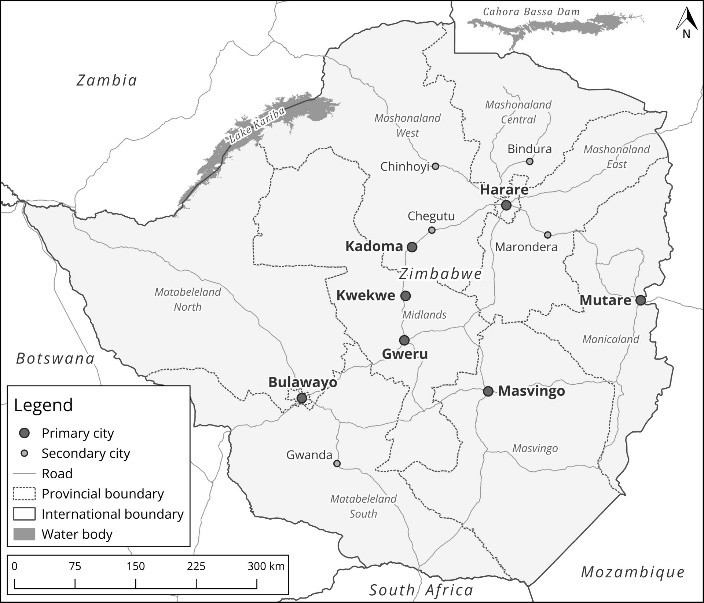
Figure 1. Location of Harare and Zimbabwe’s major urban centres
Source: Authors
The empirical research was conducted in Harare, named Salisbury from 1890 to 1982, the political and administrative capital of Zimbabwe (Figure 1). As capital city and major commercial centre, it is Zimbabwe’s major focus for formal business tourism with the hosting of business events, trade fairs and use of the city’s cluster of business hotels and conference facilities (Makoni & Rogerson, 2023). In addition to being the leading national destination for formal business tourism, Harare is also a key node in the regional networks of cross-border informal trading that stretch across the region of Southern Africa (Rogerson & Rogerson, 2025). As indicated in the literature review, cross-border traders are the international side of the economy of informal business tourism in Harare. Critically, they function to provision the city with a range of commodities that are either unavailable or in short supply in the city’s formal retail outlets (Makoni et al., 2023).
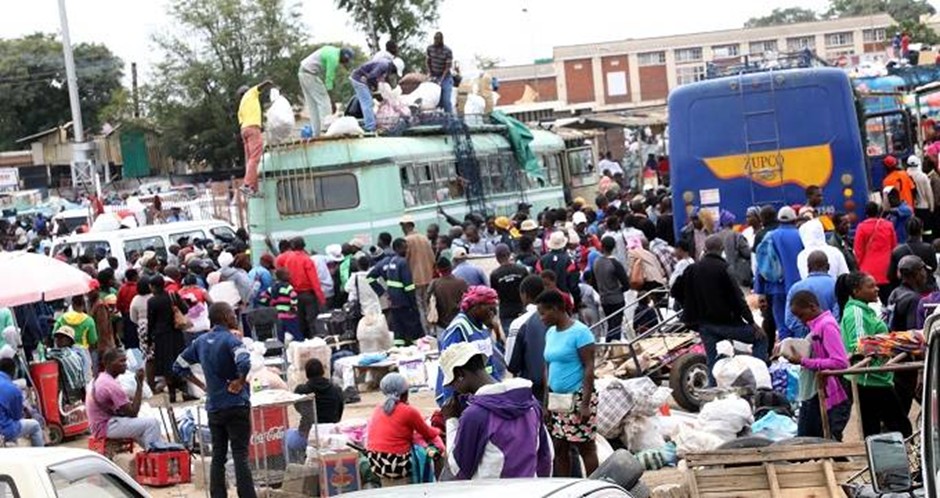
As only limited information is available on informal domestic tourism, exploratory studies are appropriate in moving the research frontier forward on this topic. This exploratory study was designed to understand the characteristics and organisation of the businesses in the domestic side of Harare’s economy of informal business tourism. The research used a semi-structured survey to gather both quantitative and qualitative information between December 2021–November 2022 from a total of 400 informal business tourists in Harare. A multiple sampling technique was applied for the survey population. First, a convenience sampling technique was used for the known, identified, targeted population. Since these individuals travel to Harare from other areas in Zimbabwe for the purpose of engaging in the activities of informal sector business tourism, the population was selected in terms of the convenience of being in the research area during the study period. Second, as it is difficult to draw any representative survey population of informal traders and their businesses in the city, a snowball sampling technique was further employed. The identified traders were requested to recommend others known to be visiting Harare for the same purposes. The researcher subsequently approached these recommended traders. Mbare bus terminal, the arrival and departure point in Harare for large numbers of domestic informal traders, was an important site for the study (Figure 2).
Figure 2. Harare’s Mbare bus terminal
Source: Photo credit Logistic Makoni
For inclusion in the study, it was a requirement that the domestic informal business tourists should not be residents of Harare city but instead travelling from any location in the ten provinces of Zimbabwe or even from the peri-urban areas of Harare. Only participants visiting Harare for more than 24 hours (and thus staying at least one night) were selected to participate. The age requirement for the study sample was 18 years, with the participants’ main purpose of traveling into Harare either to buy or sell goods or services. In all the research interviews the collection of extensive personal narratives of the mobilities and daily experiences of traders was undertaken to shed additional insight into the lived experiences of domestic informal business tourists in an African city. When giving voice to respondents, information is provided of their place of origin/residence in Zimbabwe, age, and occupation. Full details concerning the methodology, ethics, instrument design procedures, and field research process are provided in Makoni (2024).
4. Findings
The core results are distilled from the 400 interviews. These are presented concerning three dimensions of the operations of informal businesses by these domestic tourists visiting Harare: 1) questions around the start-up, establishment, and everyday mode of operation of these businesses; 2) examination of the reasons for the growth of informal business tourism entrepreneurship; 3) the nature and organisation of their business activities in the city, including supply networks, markets and connections back to home areas which are mainly small towns and rural areas spread across the entire country.
4.1 Start-up, establishment, and operational mode of businesses
Table 1. Profile of informal domestic tourism businesses in Harare (n=400)
| Source of capital for business start-up* | 90% loans from friend/family, 80% support from diaspora member, 80% other business activities, 72% part-time jobs |
| Number of years in business | < 1 year 4%, 1-3 years 20%, 4-6 years 33%, 7-10 years 28%, >10 years 15% |
| Occupation | 63% shopper/traders, 12% farmers, 5% crafters, 4% fisherfolk, 4% hunters, 4% traditional herbalists, 8% others |
| Business status | 85% self-employed (full-time business), 9% self-employed part-time business; 6% employees/working with friends |
| Methods of payment* | 95% cash; 43% electronic funds; 21% cards |
Source: Author survey. Note: The annotation denotes multiple responses on this issue
Table 1 provides a profile of the characteristics of entrepreneurs and operating enterprises in the informal business tourism economy of Harare. A wide range of sources are tapped for financing of business start-up operations. In many cases, funds were combined from more than one source to provide the essential capital required. As is typical for most small business establishments in the resource-scarce environment of sub-Saharan Africa, Table 1 shows that only a tiny share of these micro-enterprises are funded with loans from the formal banking system (cf., Mago & Modiba, 2022; Turkson et al., 2022). Because of the reluctance of banks and other formal finance institutions to lend to such enterprises, the majority of businesses are launched with loans from family members, friends, and through remittances from the Zimbabwean diaspora resident outside the country.
The qualitative interviews disclosed funding sources from a remarkable range of activities which extended even to illicit sources such as artisanal gold and diamond mining, begging, and prostitution. Among responses were: “I spend weeks underground in gold mines. When I clean my gold I go and trade it with gold buyers and get money. So from that money I use to buy clothes and shoes in Harare and go to sell them back home” [Translated from Shona Language] (Male vendor [Kwekwe] 32yrs) and “My first source of income in this business was through prostitution. A friend introduced me to clubs in the Avenues [a suburb in Harare] where prostitution is common there. I made a lot of money just in two weeks through prostitution, then I used that money to start my business of buying and selling. So even now when I am down on cash and I need money to purchase products, I go back to Avenues just for a week or so” [Translated from Shona language] (Female sex worker/vendor [Gweru] 26yrs).
The survey responses evidence that informal business tourism is not a new phenomenon in Harare. In total, 15% of respondents engaged in this activity for more than a decade, 33% for at least 7 years and 66% for at least four years with a continuing stream of new entrants to this economy (Table 1). Most participants (85%) were self-employed on a full-time basis and the owners of businesses; the vast majority were single person enterprises as few businesses had employees (Table 1). This result signals that the domestic informal tourism business economy is a full-time occupation given the current realities of the Zimbabwean economy. These findings were reinforced by the responses of business owners: “This business is a hand-to-mouth business. It is difficult to just maintain myself in this business, let alone employ someone” (Male farmer [Ruwa] 40yrs) and “It is very difficult to be working under someone in this kind of business, the income is not guaranteed so it will be difficult to afford salaries on a monthly basis” (Female vendor [Gweru] 31yrs). The group of participants (9%) who indicated they were self-employed on a part-time basis were individuals with formal sector employment and only engage in informal activities as a supplementary income source during their off periods or leave days. For example, a professional teacher involved in vending in this regard highlighted as follows: “I travel to Harare to buy and sell when schools are closed during the holiday” (Female teacher/vendor [Gweru] 37yrs). Likewise, a university student stated: “I study in South Africa. When I come back for holidays, I use my savings to do this business just to support my family” (Female university student/trader [Bindura] 26yrs).
Table 1 shows that the core group of informal business tourists in Harare comprises full-time shoppers and traders, individuals whose livelihood depends on purchase of goods for sale in Harare or for retail in the home area. With nearly two-thirds (63%) of the participants indicating that they are such vendors, it is apparent that domestic informal business tourism in Zimbabwe is a major source of entrepreneurship. Trading has become one of the most attractive livelihood activities in Harare. It is an income-earning opportunity that can be accessed by both men and women to cope with lack of employment opportunities and situations of poverty. The second most represented occupation in the domestic informal business tourism economy is farming. Farmers constituted 12% of the sample, with many indicating that they are vendors in Harare flea markets where they trade fresh produce. When asked where and how they sell their products one farmer indicated: “I get a stand at Mbare Musika [flea market] and I display my vegetables and crops for my customers to come and buy” (Male farmer [Ruwa] 40yrs). Fisherfolk also are a notable component in the food segment of the informal business economy. One angler from Kariba in the north of Zimbabwe stated: “I sell my matemba and all types of fish from my car boot. I drive around Harare to find my customers” (Male fisherman [Kariba] 34yrs). Other individuals travelling from outside the city to trade their wares in Harare markets were producers of craft goods, hunters supplying game meat, and the collectors of traditional herbs used in traditional African medicine. Overall, the findings highlight that the informal business tourism economy in Harare involves people from a wide range of different occupations to trade in the city’s informal markets.
Although the business of trading is predominantly a cash-based economy for most participants, Table 1 discloses that use is made also of both local electronic payment systems and money cards. Such payment methods are distinctive in Zimbabwe because of the lack of currency in the country. One female vendor elaborated upon the challenges facing traders on an everyday basis in making and receiving payments: “Yes, cash is still a way of transaction here, but there are other simple and safe methods. We use Mukuru cards or Eco cash. You can choose to collect your money or you can transfer that money to someone else as long as they have a Zimbabwean cell number and ID. Eco cash I think is good because of shortage of money in our country we cannot have cash every time, but your cell number can have money sent to it and you can buy anything by transferring that money to another person like you are transferring airtime or data bundles. So now I might be having 100 dollars in my Eco cash account and I can transfer 10 dollars to your cell phone number, you can transfer a dollar to another person and you can even go to big supermarkets to buy groceries and use your Eco cash to buy. It’s that simple. The problem is only when you really need cash and there is no-one to help you because everyone will be saying sorry I have Eco cash. Things like transport you cannot pay with ecocash, it has to be cash. With cash when you sell something you must know the exchange rate since we use many currencies in Zimbabwe, and you don’t know the currency a buyer is carrying, so you must have three prices for one pair of shoe like $4 or 60 Rands or 500 bonds” (Female vendor [Mutare] 38yrs).
Arguably, because Zimbabwe makes use of multiple currencies, financial transaction issues are somewhat distinctive in sub-Saharan Africa and makes the informal business of trading challenging because of inconsistencies surrounding exchange rates.
4.2 Reasons for becoming an informal tourism entrepreneur
The survey interviews revealed the essential reasons for individuals to enter the economy of informal business tourism in Zimbabwe. Two broad sets of reasons emerged: a set of ‘push’ factors emanating from the structural environment and a set of ‘pull’ factors linked to potential opportunities and benefits from start-up in the informal economy. Table 2 captures the summary responses of the 400 interviews concerning these drivers for participation in the economy of informal business tourism. Most business entrepreneurs provided multiple reasons for their involvement in the informal economy and often the stated motivations combine both push and pull considerations
Table 2. Informal domestic business tourists in Harare: Reasons for business start-up and operations
| Push factors | % | Pull factors | % |
| Poverty | 88 | Demand for domestic products | 79 |
| Unemployment | 80 | Income opportunities | 72 |
| Household support | 62 | Entrepreneurial opportunities | 68 |
| Supplementing household income | 60 | Employment opportunities | 65 |
| Loss of job (retrenchment) | 60 | Flexibility | 63 |
Source: Author survey. Note: Interviewees provided multiple responses
Table 2 discloses a picture of the leading reasons. These relate clearly to those surrounding the growth of the informal economy in Zimbabwe as a whole. Chronic situations of poverty and the imperative to provide household support, the lack of formal employment opportunities, and the urgency for supplementing household incomes and especially in circumstances of retrenchment emerge as core push factors behind the start-up of business operations. These findings mirror the downward spiral of the national economy and particularly of the march of deindustrialisation (Magidi, 2019). Economic meltdown underpins the post-2000 expansion of informalisation and the burgeoning of a range of informal economic activities spearheaded by street and market trading (Magidi, 2022; Makoni et al., 2024; Bandauko 2025a, 2025b). On the other hand, the start-up of businesses was also encouraged by a set of pull factors, most significantly of the market demand in Harare for products and services in short supply at formal retail outlets, the opportunities for entrepreneurship and income-earning opportunities and, for many individuals, the flexibility afforded by the nature of informal work.
The personal narratives provided by interviewees revealed evidence of strong connections between rural and urban areas concerning the provision of goods and services needed by residents of these areas. One typical response was provided by a farmer travelling to sell his crops in Harare: “I don’t just go to Harare because I want only money, I am a big supplier of food to people in towns because food shortage is an issue there especially mealie meal our staple food, and the town is a big supplier of energy sources because there is no electricity in the villages. Since shortage of things in Zimbabwe started around the year 2000, this business became a systematic process of demand and supply between the rural areas and urban areas. I even left my teaching job, so I got involved in this process” (Male farmer/school teacher [Murewa] 48yrs). Overall, as the national capital and primary city of Zimbabwe, Harare represents the most attractive destination for informal domestic business tourists who travel to the city from all parts of the country (Makoni & Rogerson, 2026).
- Organisation, circulation and supply chains
A critical issue of business operations relates to the organisation of the domestic informal businesses whilst in Harare. Table 3 captures the responses of the 400 surveyed informal business tourists, concerning the purpose of mobilities, the target markets for selling goods, location of business operations, and key supply chain sources.
Table 3. Organising mobilities and business activities (n=400)
| Purpose of mobilities* | 80% to sell or trade goods from other parts of Zimbabwe; 74% to purchase goods in Harare for resale in home area |
| Markets for goods brought into Harare * | Over 70% for Harare residents, individuals purchasing at flea markets, sales on street pavements, cross-border traders, and hawkers |
| Location of business operations occupation* | Between 60-70% for locations at Harare CBD, flea markets, open spaces, high-density suburbs (Mbare) and domestic bus terminals |
| Primary supply sources for goods in Harare | China Malls and Chinese-owned shops; cross-border traders, local wholesalers, other informal business tourists, rural producers |
| Secondary supply sources | Harare retail shops; Informal vendors; ‘town criers’ |
Source: Author survey. Note: The annotation denotes multiple responses on this issue
Table 3 indicates that most informal business tourists are visiting Harare for dual purposes of selling goods brought into the city and of purchasing other goods for sale elsewhere, normally the origin area of the informal business traveller. In total, 80% of respondents were in Harare to sell or trade goods from other parts of Zimbabwe and 74% to buy goods in Harare for sale in other settlements in the country. These findings indicate that the businesses conducted by informal domestic travellers assume a crucial role in the supply and distribution of products for the economy of both Harare and other areas of Zimbabwe. Indeed, this shows a pattern in which the traders are bringing goods that are scarce in Harare into the city’s informal markets, while they purchase goods needed in their place of origin. Some traders travel to the city to connect with other traders from elsewhere who are bringing into the city the types of goods that are needed in small towns, villages and rural areas. This evidences that Harare is the central place for the supply and distribution of goods bought and sold within the informal economy of Zimbabwe.
The residents of the city constitute the major logical customer market for the goods provided by informal business tourists. Selling of goods takes place at a variety of spaces throughout the city. The largest business concentrations occur in and around the surrounds of the Harare Central Business District (CBD), at the city’s network of flea markets, in open spaces, and on street pavements (Table 3). The importance of linkages was also observed between the domestic informal business tourists and the networks of cross-border international traders. Although the spaces of Harare impacted by domestic informal business tourists are widespread, the contestation of space is greatest in the CBD. As stressed by Bandauko (2025a) the CBD is the epicentre of economic activity and attracts many traders because of the high customer base. Critically, the CBD is the focal point for municipal surveillance and control as it symbolises the projected modern image of Harare and the nation at large. It is evident that around the CBD “frictional encounters occur between street traders and urban authorities who are preoccupied with promoting their vision of a ‘modern’ city” (Bandauko & Arku, 2025b: 921). Bandauko (2025b: 4) points out that for ‘modernist planners’ the activities of informal street traders have “always been discursively constructed as a spatial nuisance, an anomaly and a pathological practice that should be ‘normalized’ through disciplinary spatial control”, which usually involves actions involving clearance of traders from the streets.
Beyond the importance of the Harare CBD, the area of Mbare, a high-density suburb in the southern part of the city, was disclosed as a prominent location for the operations of domestic informal business tourists. Its importance can be attributed to it being the domestic bus terminal gateway into Harare, where a majority of the domestic informal business tourists arrive and depart. In addition, Mbare is the location for three major informal markets: Mbare Musika, Mbare Magaba, and Mupedzanhamo flea market. Mbare Musika is well-known for the trading of agricultural products and popular among farmers and fishermen coming into Harare. Mbare Magaba is an informal market for all types of tools used for gardening, farming, fishing and building material. Lastly, Mupedzanhamo is a market mainly for clothing, shoes, jewellery, electronics, and other goods, much of which is brought into Harare by cross-border traders. The three flea markets underscore the importance of Mbare in the geographical organisation of flows of informal business visitors. The responses of participants are insightful: “I sell my crops and fruits at Mbare Musika. For me this is the best place because that is where many people looking for food items come to. Like maize, vegetables and fruits and all the plants you find them here (Female farmer” [Murewa] 34yrs). “I am always a Mupedzanhamo. This place is best because it is a flea market supported by the government and managed by the municipality so it’s safe. Here we sell clothes and shoes and all these electronic things. This place used to be very big when it opened, Mupedzanhamo means ‘end poverty’ I think it was opened for us to have a business and get to fight our poor situations and we are doing just that every day” (Male vendor [Ruwa] 41yrs). “The best place for me is Mbare Magaba. I come to sell timber there to the carpenters. Sometimes I even make contact with my friends coming from South Africa to bring me all kind of hardware tools that I will buy and go to sell at people who work at Magaba. All the furniture and tools are made there and many people especially from the villages come there to buy tools and furniture” (Male carpenter [Plumtree] 37yrs).
Overall, these findings regarding the spatial organisation of trade reveal a structuring of business operations in which different traders position themselves at relevant trade spaces that are aligned to what they are selling, or why they are travelling to Harare with regards to purchase of particular goods.
The different supplier sources and networks tapped by the cohort of informal domestic business operators align with the varying purchases of commodities sought in Harare. The most significant supply outlets relate to shops in the China Mall and from small Chinese-owned retail outlets in the city. Like many other African cities, Harare’s retail landscape has been reshaped by the appearance of Chinese-owned retail outlets (Carmody et al., 2024). These are primary suppliers and responsible for bringing goods into Harare. Given the scarcity of basic commodities across Zimbabwe, most products in demand are not originally from the city. Harare functions therefore as a centre of the transactions of goods brought in by the primary suppliers. The Chinese (as well as, some Indian and Pakistani traders) in Harare bring in household commodities, clothing, and other mainly electronic goods that are scarce across Zimbabwe. An important supply role is assumed by the cross-border international traders who transport goods from South Africa and other surrounding countries. Domestically, a vital role is played by rural producers, most especially farmers, fisherfolk as well as suppliers of traditional medicinal herbs. Since 2000 with the collapse of much of the agricultural sector in Zimbabwe, the role of small-scale producers has become critical for addressing food security issues in Harare.
Further details on these supply issues were raised in the interviews. A female shopper highlighted the important role played by China Malls as suppliers of goods that are channelled into the network of purchasing and sales of domestic informal businesses: “I buy plastic ware from the Chinese shops or Indian shops. These guys have all sorts of cheap stuff they sell. Things like Tupperware, containers and buckets are very good for storage in the villages. If I take them back home they do not take time to finish sales. I also get washing line ropes, pegs and other smaller items that they sell in their shops” (Female shopper [Beatrice] 31yrs). Chinese-owned establishments are critical in the supply chain of basic commodities at affordable prices for the poor. The activities of cross-border traders were also recognised in terms of vital suppliers of goods: “Once in a while I cross the border to buy things from South Africa and Botswana. But because I have a family here, I end up just coming to Harare to buy the stuff coming from Johannesburg and other places outside Zimbabwe. Cross-borders are very important in our business because if they are not there we don’t get the orders our customers want when we come to buy in Harare” (Female shopper [Kariba] 27yrs). Other respondents disclosed the exchange of products occurring between traders coming from different locations: “As a farmer I normally come to buy farming tools like hoes, picks and sickles from woodworkers and metal workers who are coming here to sell those things” (Male farmer [Honde Valley] 32yrs). Another farmer pointed to issues of food security: “Since the grain marketing board closed in Harare, there are few agricultural products coming in the city through formal channels. We bring many crops here and many people come to buy our maize, peanuts and sweet potatoes in bulk. I think they also want to sell them somewhere with a mark-up of prices” (Male farmer [Murewa] 38yrs).
Finally, in terms of the dense supply networks navigated by the informal domestic traders, the role of street hawkers or pavement vendors was widely acknowledged. Most of these are itinerant and use pushcarts or bicycle carts to carry around the goods they sell. Some hawkers carry goods from the bus terminals to flea markets. Figure 3 shows aspects of such activities in Harare.
Figure 3. Typical informal trading operations in Harare
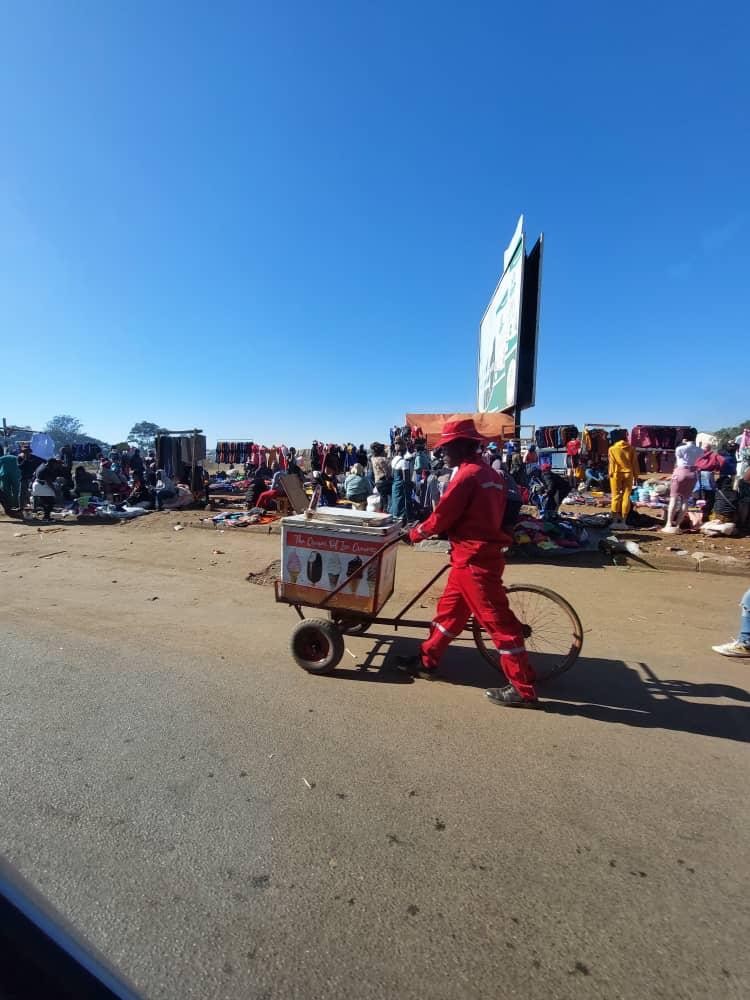 | 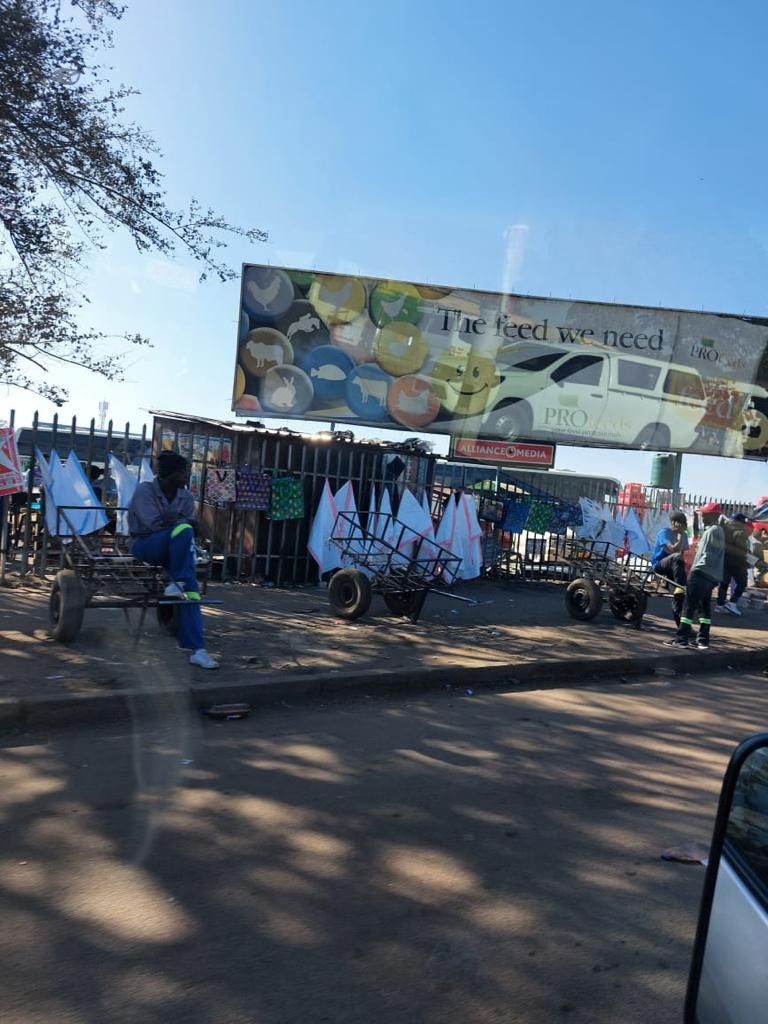 |
| A. Hawker in Harare selling ice-cream from Alpha Omega Dairy Farm, Mazowe Zimbabwe | B. Traders close to Mbare bus terminus waiting for domestic informal business tourists arriving in Harare |
Source: Photo credit Logistic Makoni
The vendors normally buy from traders who go around the city centre selling their products. They play a crucial role in the supply of goods and products mainly because they are readily accessible to domestic informal business tourists across different areas since they are not stationed at one place. As one informal business tourism entrepreneur indicated: “Sometimes I get the stuff I want just at the bus rank. The Harare boys come with carts full of stuff just outside the rank. I can just go to them and do business. It’s a better way of doing business because I don’t have to go around the whole of Harare looking for products. It helps me also because I don’t know Harare very well” (Female vendor [Chinhoyi] 35yrs). Itinerant vendors are valued in supply chains as they help the visiting traders save travel and other costs associated with undertaking their business activities in Harare.
A distinctive sub-group of itinerant vendors are ‘town criers’, traders who sell on the city pavements and advertise their goods to passers-by through shouting out details of the goods they are selling and the prices. They also undertake door-to-door sales in residential areas where again they operate by shouting loudly the products they sell along the residential area pavements. Specifically, one participant highlighted their value: “I buy most of my goods from these guys shouting in the streets. Like you hear someone say bhutsu 5 dhoras ma peya! bhutsu 5 dhoras ma peya! [Shoes here for sale, 5 dollars a pair] or ma banana enyu aripo ayo dhora rako chete for hobho! [Here are your bananas, buy many for just a dollar]. It makes our [shoppers] lives easier because Harare is full of people doing this business, so when they shout around what they sell it makes it easier for us to identify them and their prices for the things they are selling” (Male shopper [Marondera] 39yrs).
5. Conclusion
In recent works, Timothy and colleagues assert that tourism scholars should expand their traditional horizons to incorporate broader issues than the organisation and dynamics of only the activities and business of leisure tourism (Timothy et al. 2023; Timothy, 2025). Specifically, it is flagged that there are many important non-traditional forms of tourism which may be antithetical to leisure such as those which are undertaken by informal business travellers (Timothy & Teye, 2005). Further, it is contended that whilst ‘petty trade’ is not seen as tourism in a traditional sense that these individuals are effectively part of the tourism system and most certainly in the resource-constrained economic environments of the Global South (Makoni & Mearns, 2025; Timothy, 2025). The need exists for broadening theoretical frameworks concerning business tourism to incorporate more fully the distinctive character of these informal business tourism entrepreneurs.
This paper responds to the prominent knowledge gap concerning the characteristics and organisation of businesses run by informal business tourists, who constitute the neglected ‘other side’ of business tourism scholarship dominated by research around ‘Northern’ business tourism. The experiences were distilled from 400 interviews conducted with domestic informal business tourists operating in Zimbabwe’s capital. Harare was demonstrated as the pivot for the vital supply and distribution of goods bought and sold within the informal economy of Zimbabwe through the channels and networks of these businesses. The findings contribute new understanding of the experiences and everyday world of these informal traders and their significance in the supply and distribution of goods within the country. It is evident that informal business tourism is distinctive for its pro-poor impacts both for its participants and for making available goods that otherwise could not be accessed by households.
In deepening our understanding of the workings of informal business tourism, a valuable contribution is made through exploring the personal narratives of the traders. Future work can build upon this study by examining the workings of informal business tourism outside of the national capital context and instead potentially to look at the situation in secondary urban centres. In addition, as this research highlights that the phenomenon of informal business tourism is not of recent origin the collection of oral histories and the pursuit of longitudinal studies are recommendations for moving forward the frontiers of scholarship on informal business tourism in the Global South.
Acknowledgements
Arno Booyzen produced the map. For valued inputs to the paper thanks are due to L. Gladys Champagne, Robbie Norfolk, and Betty White. Thanks also for useful comments received from two journal reviewers.
References
Amuda, M. O. H. (2024). Informality in Africa in relation to Sustainable Development Goals 8 and 9: Framework for innovation and sustainable industrialization. In: A. S. Ibidunni, O. M. Ogundana, & M. A. Olokundun (Eds.), Innovation, entrepreneurship and the informal economy in Sub–Saharan Africa: A sustainable development agenda. Cham: Palgrave Macmillan, pp. 121–139.
Azunre, G. A. & Cobbinah, P. B. (2026). Informality in globalizing African cities: Hybridity towards Southern decoloniality. Journal of Planning Literature, 41 (1): 68–73. DOI: 10.1177/08854122251360796
Bandauko, E. (2025a). “This space is ours”: Street trading and contestation over the rights to the city in Harare’s Central Business District. Annals of the Association of American Geographers. DOI: 10.1080/24694452.2025.2592752
Bandauko, E. (2025b). ‘Shadowing the state’: Subaltern surveillance and the rhythms of everyday resistance. Dialogues in Human Geography. DOI: 10.1177/20438206251398537
Bandauko, E. & Arku, G. (2024). “It is no longer the sunshine city, it is now a dump city”: Discursive construction of urban space and street trading in Harare, Zimbabwe. Cities, 155: 105488. DOI: 10.1016/j.cities.2024.105488
Bandauko, E. & Arku, G. (2025a). A tale of two Harare(s): Contested narratives of world class city ideals and everyday urbanism in an informalizing city. Cities, 167: 106328. DOI: 10.1016/j.cities.2025.106328
Bandauko, E. & Arku, G. (2025b). “They want to get rid of us all by all means”: A critical analysis of policy and governance responses and their implications for street traders’ access to urban space in Harare, Zimbabwe. Environment and Planning C: Politics and Space, 43 (5): 917–936.
https://journals.sagepub.com/doi/pdf/10.1177/23996544241298414/
Bandauko, E. & Finn, B. M. (2026). Informal infrastructuring: The defining feature of the 21st century. Progress in Human Geography. DOI: 10.1177/03091325261438966
Çakmak, E. (2020). The practice of informal tourism entrepreneurs: A Bourdieusian perspective. PhD thesis, Wageningen University, Wageningen, The Netherlands.
Çakmak, E., Lie, R., & McCabe, S. (2018). Reframing informal tourism entrepreneurial practices: Capital and field relations structuring the informal economy of Chiang Mai. Annals of Tourism Research, 72: 37–47. DOI: 10.1016/j.annals.2018.06.003
Çakmak, E., Lie, R., & Selwyn, T. (2019). Informal tourism entrepreneurs’ capital usage and conversion. Current Issues in Tourism, 22 (18): 2250–2265. DOI: 10.1080/13683500.2018.1448763
Çakmak, E. & Çenesiz, M. A. (2020). Measuring the size of the informal tourism economy in Thailand. International Journal of Tourism Research, 22 (5): 637–652. DOI: 10.1002/jtr.2362
Carmody, P. R., Murphy, J. T., Grant, R., & Owusu, F. Y. (2024). The urban question in Africa: Uneven geographies of transition. London: John Wiley and The Royal Geographical Society.
Chau, P. U. (2025). Rethinking informal tourism: Sustainable transitions under climate change in the Mekong delta. Asia Pacific Journal of Tourism Research.
DOI: 10.1080/10941665.2025.2567282
Chen, M. A. (2023). The informal economy in comparative perspective: Theory, policy and reality. Indian Journal of Labour Economics, 66: 395–420. DOI: 10.1007/s41027-023-00444-7
Chirisa, I., Gumbo, T., Mazongonda, S. S., & Marewo, M. (2021). Deviation, transgression or digression? The informal city as the dominant phenomenon in the Zimbabwean urban economy. In: A. R. Matamanda, V. Nel, & I. Chirisa (Eds.), Urban geography in postcolonial Zimbabwe. Cham: Springer, pp. 119–140.
Chitaukire, R. H. (2026). Enduring intersectional precarity: A history of resistance by women informal traders in Harare (Zimbabwe), c. 1965 to 2022. PhD Dissertation, Stellenbosch University, Stellenbosch, South Africa.
Chiukura, L. (2022). COVID-19 impact on women in informal cross-border trade in Zimbabwe. Journal of Advanced Research and Multidisciplinary Studies, 2 (1): 58–69. DOI: 10.52589/JARMS-KPAOP2BD
Crick, M. (1992). Life in the informal sector: Street guides in Kandy, Sri Lanka. In: D. Harrison (Ed.), Tourism and the less developed countries. London: Belhaven, pp. 135–147.
Dahles, H. & Bras, K. (Eds.) (1999a). Tourism and small entrepreneurs: Development, national policy and entrepreneurial culture – Indonesian cases. New York: Cognizant Communication.
Dahles, H. & Bras, K. (1999b). Entrepreneurs in romance: Tourism in Indonesia. Annals of Tourism Research, 26: 267–293. DOI: 10.1016/S0160-7383(98)00098-X
Dahles, H. & Keune, L. (Eds.) (2002). Tourism development and local participation in Latin America. New York: Cognizant Communication.
Damayanti, M., Scott, N., & Ruhanen, L. (2018). Space for the informal tourism economy. The Service Industries Journal, 38 (11–12): 772–788. DOI: 10.1080/02642069.2018.1480014
Dovey, K. & Recio, R. B. (2024). The spatial logic of informal urbanism: Inventraset Assemblages. Singapore: Springer Nature.
Dube, E. E. (2026). Informal economy. In: B. Warf (Ed.), The encyclopedia of human geography. Cham: Springer, pp. 707–712.
Dube, E. E. & Brown, A. (2025). ‘Normalizing informality’ in local-transnational spaces: Contraband, conflict and street trade in eastern Ethiopia. Journal of Asian and African Studies, 60 (5): 3319–3334. DOI: 10.1177/0021909624l230495
Dzawanda, B. & Matsa, M. M. (2023). Strategies for survival in an informal economy: Illegalities of Zimbabwean informal cross border traders at ports of entries in Southern Africa. International Journal of Community Well-Being, 6: 203–221. DOI: 10.1007/s42413-023-00191-z
Finn, B. M. (2025). Informality at the heart of sustainable development. Dialogues in Human Geography, 15 (1): 91–95. DOI: 10.1177/20438206241240216
Finn, B. M. & Cobbinah, P. B. (2023). African urbanisation at the confluence of informality and climate change. Urban Studies, 60 (3): 405–424. DOI: 10.1177/00420980221098946
Fourie, A., Blaauw, D., & de Villiers, V. (2024). Tourism, COVID-19 and South Africa’s informal sector: Commentary through the lens of street traders in the CBD of Cape Town. In: F. Kock, A. Lindgren, & S. Markovic (Eds.), Research handbook on tourism, complexity and uncertainty. Cheltenham: Edward Elgar, pp. 69–80.
Fourie, A., Saayman, A., & Blaauw, D. (2026). Investigating the resilience and challenges of informal street traders in South Africa’s tourism sector: A focus on migrant entrepreneurship. Current Issues in Tourism, 29 (3): 562–577. DOI: 10.1080/13683500.2024.2428766
Grant, R. (2024). Informality. In: P. Carmody & J. T. Murphy (Eds.), Handbook of African economic development. Cheltenham: Edward Elgar, pp. 435–447.
Hart, K. (1973). Informal income opportunities and urban employment in Ghana. Journal of Modern African Studies, 11: 61–89. DOI: 10.1017/S0022278X00008089
ILO (1972). Employment, incomes and equality: A strategy for increasing productive employment in Kenya. Geneva: International Labour Office.
Kifworo, C. & Dube, K. (2023). A review of domestic tourism resilience research agenda in Africa post-COVID-19. GeoJournal of Tourism and Geosites, 51 (4): 1749–1756. DOI: 10.30892/gtg.514spl15-1170
Little, P. D. (2026). Informal cross-border trade in Africa. In: O. J. Walther, W. Eselebor, I. Moyo, & I. Soi (Eds.), The Routledge handbook of African borderlands. Abingdon: Routledge.
Liu, J., Mai, H., Zhao, X., & Zhou, Z. (2025). Business tourism: A bibliometric visualization review (1994-2023). Tourism Review, 80 (5): 989–1016. DOI: 10.1108/TR-11-2023-0813
Magidi, M. (2019). Sustaining livelihoods in Norton town after deindustrialization in Zimbabwe. PhD dissertation (Development Studies), University of KwaZulu-Natal, Durban, South Africa.
Magidi, M. (2022). The role of the informal economy in promoting urban sustainability: Evidence from a small Zimbabwean town. Development Southern Africa, 39 (2): 209–223. DOI: 10.1080/0376835X.2021.1925088
Mago, S. & Modiba, F. S. (2022). Does informal finance matter for micro and small businesses in Africa? Small Business International Review, 6 (1): e415. DOI: 10.26784/sbir.v6i1.415
Makoni, L. (2024). The nature of business tourism economy in Harare, Zimbabwe. PhD dissertation (Tourism and Hospitality Management), University of Johannesburg, South Africa.
Makoni, L. & Mearns, K. (2025). Informal tourism and sustainable development in Africa: Insights from a systematic literature review and content analysis. Revista Română de Geografie Politică, 27 (1): 66–83. DOI: 10.30892/rrgp.272101-390
Makoni, L. & Rogerson, C. M. (2023). Business tourism in an African city: Evidence from Harare, Zimbabwe. Studia Periegetica, 43 (3): 25–48. DOI: 10.58683/sp.596
Makoni, L. & Rogerson, C. M. (2024). Bleisure and informal business tourism in Harare, Zimbabwe. GeoJournal of Tourism and Geosites, 56 (4): 1484–1492. DOI: 10.30892/gtg.56405-1319
Makoni, L. & Rogerson, C. M. (2026). Unconventional tourism mobilities: Insights from an African business city. Bulletin of Geography: Socio-Economic Series, 72: 157–172. DOI: 10.12775/bgss-2026-0021
Makoni, L., Rogerson, C. M., & Tichaawa, T. (2023). Harare as a destination for informal business tourism: Perspectives of the cross-border traders. GeoJournal of Tourism and Geosites, 50 (4): 1555–1562. DOI: 10.30892/gtg.50434-1152
Makoni, L., Shereni, N. C., & Mearns, K. (2024). Mugabe’s policy legacies on urban poverty and informality in Harare, Zimbabwe. Revista Română de Geografie Pollitică, 26: 108–123. DOI: 10.30892/rrgp.262105-381
Monterrubio, C. (2021). The informal tourism economy, COVID-19 and socioeconomic vulnerability in Mexico. Journal of Policy Research in Tourism, Leisure and Events, 14 (10): 20–34. DOI: 10.1080/19407963.2021.2017726
Parnell, S. & Oldfield, S. (Eds.) (2014). The Routledge handbook on cities of the Global South. Abingdon: Routledge.
Peberdy, S., Crush, J., Tevera, D., Campbell, E., Raimundo, I., Tsoka, M., Zindela, N., Tawodzera, G., Nickanaor, N., Mulenga, C., Green, T., & Msibi, N. (2015). Calibrating informal cross-border trade in Southern Africa. Kingston, Ontario, Canada: Southern African Migration Programme Migration Policy Series No. 69.
Rogerson, C. M. (2015). Unpacking business tourism mobilities in sub-Saharan Africa. Current Issues in Tourism, 18 (1): 44–56. DOI: 10.1080/13683500.2014.898619
Rogerson, C. M. (2018). Informal sector city tourism: Cross border shoppers in Johannesburg. GeoJournal of Tourism and Geosites, 22 (2): 372–387. DOI: 10.30892/gtg.22209-296
Rogerson, C. M. & Letsie, T. (2013). Informal sector business tourism in the global South: Evidence from Maseru, Lesotho. Urban Forum, 24: 485–502. DOI: 10.1007/s12132-013-9196-y
Rogerson, C. M. & Rogerson, J. M. (2021a). The other half of urban tourism: Research directions in the Global South. In: C. M. Rogerson & J. M. Rogerson (Eds.), Urban tourism in the Global South: South African perspectives. Cham: Springer, pp. 1–37.
Rogerson, C. M. & Rogerson, J. M. (2021b). City tourism in Southern Africa: Progress and issues. In: M. Novelli, E. A. Adu-Ampong, & M. A. Ribeiro (Eds.), Routledge handbook of tourism in Africa. Abingdon: Routledge, pp. 447–458.
Rogerson, C. M. & Rogerson, J. M. (2025). Women informal business tourists in urban Southern Africa: Circuits, drivers and challenges. Tourism – An International Interdisciplinary Journal, 73 (1): 113–125. DOI: 10.37741/t.73.1.8
Saxena, G. & Yi, S. (2026). A visual autoethnographic study on gendered livelihoods in tourism. Journal of Sustainable Tourism, 34 (6): 1609–1640. DOI: 10.1080/09669582.2025.2568924
Slocum, S. L., Backman, K. F., & Robinson, K. L. (2011). Tourism pathways to prosperity: Perspectives on the informal economy in Tanzania. Tourism Analysis, 16: 43–55. DOI: 10.3727/108354211X12988225900045
Tawodzera, G. & Chikanda, A. (2017). Linking Harare and Johannesburg through informal cross-border entrepreneurship. African Human Mobility Review, 3 (2): 910–942. https://sihma.org.za/journals/6_Linking-Harare-and-Johannesburg-through-Informal-Cross-Border-Entrepreneurship-min.pdf/
Tichaawa, T. (2021). Informal business tourism in Cameroon. GeoJournal of Tourism and Geosites, 38 (4): 1289–1298. DOI: 10.30892/gtg.38437-771
Timothy, D. J. (2025). Shopping tourism and tourist shopping: Looking backward, looking forward. In: D. J. Timothy (Ed.), Contemporary perspectives on shopping, retail and tourism, Bristol: Channel View, pp. 1–16.
Timothy, D. J. & Teye, V. B. (2005). Informal sector business travelers in the developing world: A borderlands perspective. The Journal of Tourism Studies, 16: 82–92.
Timothy, D. J. & Wall, G. (1997). Selling to tourists: Indonesian street vendors. Annals of Tourism Research, 24 (2): 322–340. DOI: 10.1016/S0160-7383(97)80004-7
Timothy, D. J., Michalko, G., & Irimiás, A. (2023). Is unconventional the new normal in tourism? Sustainability, 15: 5366. DOI: 10.3390/su15065366
Torabi, Z-A. (2024). Breaking barriers: How the rural poor engage in tourism activities without external support in selected Iranian villages. Frontiers in Sustainable Tourism, 3: 1404013. DOI: 10.3389/frsut.2024.1404013
Truong, V. D. (2018). Tourism, poverty alleviation, and the informal economy: The street vendors of Hanoi, Vietnam. Tourism Recreation Research, 43 (4): 52–67. DOI: 10.1080/02508281.2017.1370568
Turkson, F. E., Amissah, E., & Gyeke-Dako, A. (2022). The role of formal and informal finance in the informal sector in Ghana. Journal of Small Business & Entrepreneurship, 34 (3): 333–356. DOI: 10.1080/08276331.2020.1724002
UNCTAD (2019). Informal cross-border trade for empowerment of women, economic development and regional integration in Eastern and Southern Africa. United Nations Conference on Trade & Development Geneva, Switzerland.
Wahnschafft, R. (1982). Formal and informal tourism sectors: A case study in Pattaya, Thailand. Annals of Tourism Research, 9: 429–451. DOI: 10.1016/0160-7383(82)90022-6
Zhanda, K., Garutsa, N., Dzvimbo, M. A., & Mawonde, A. (2022). Women and the informal sector amid COVID-19: Implications for household peace and economic stability in urban Zimbabwe. Cities & Health, 6 (1): 37–50. DOI: 10.1080/23748834.2021.2019967