

| Turisztikai és Vidékfejlesztési Tanulmányok Tourism and Rural Development Studies 10. évfolyam, 3. szám, 2025: 149–170. doi: 10.15170/TVT.2025.10.03.08 |
Tanulmány letöltése / download >>
Evaluating the Impact of Tourism in Achieving City Status: A Case Study of Thulamela Local Municipality Vision 2030
1Tshepiso Jonathan Setokoe, 2Mamotse Mokabe✉, 3Takalani Ramukumba
1Senior Lecturer, Central University of Technology, Faculty of Management Sciences, Bloemfontein, South Africa; tsetokoe@cut.ac.za, ORCID: 0000-0003-1176-1641
2Researcher, University of Venda, Faculty of Management, Commerce and Law, Thohoyandou, South Africa; mamotse.mokabe@univen.ac.za, ORCID: 0000-0001-7987-7785
3Associate Professor, Walter Sisulu University, Faculty of Management Sciences, Mthatha, South Africa; tramukumba@wsu.ac.za, ORCID: 0000-0003-1176-1641
Abstract
The study examines the role of tourism in the achievement of city status in Thulamela Local Government (TLG). Thulamela is located in the northern part of Limpopo province in South Africa and has set a target of achieving city status by 2030 in accordance with its Integrated Development Plan. Tourism can be a driving force in achieving this status and in the development of the municipality. The methodological basis of the study is provided by interviews with Thulamela local government officials, and the research aims to examine the links between tourism development strategies and the municipality’s urban development outcomes, focusing on how these strategies can be optimized to support the municipality’s efforts to achieve city status. The results show that Thulamela has tourism potential to support its efforts to achieve city status. However, this potential is currently limited by systemic shortcomings in implementation, infrastructural gaps, and insufficient stakeholder collaboration. Therefore, to transform from a tourism-rich region into a city, Thulamela needs to incorporate tourism development into its urban planning framework.
Keywords: city status, tourism, tourism promotion, tourism development, vision 2030
Received: 17 April 2025
Accepted: 16 July 2025
Published: 30 September 2025
A TURIZMUS HATÁSÁNAK ÉRTÉKELÉSE A VÁROSI CÍM ELNYERÉSÉBEN: ESETTANULMÁNY A “THULAMELAI ÖNKORMÁNYZAT 2030” VÍZIÓRÓL
1Tshepiso Jonathan Setokoe, 2Mamotse Mokabe✉, 3Takalani Ramukumba
1Egyetemi adjunktus, Központi Műszaki Egyetem, Vezetéstudományi Kar, Bloemfontein,
Dél-afrikai Köztársaság; tsetokoe@cut.ac.za, ORCID: 0000-0003-1176-1641
2Kutató, Venda Egyetem, Vezetéstudományi, Kereskedelmi és Jogi Kar, Thohoyandou,
Dél-afrikai Köztársaság; mamotse.mokabe@univen.ac.za, ORCID: 0000-0001-7987-7785
3Egyetemi docens, Walter Sisulu Egyetem, Faculty of Management Sciences, Mthatha; tramukumba@wsu.ac.za, ORCID: 0000-0003-1176-1641
Absztrakt
A tanulmány a turizmus szerepét vizsgálja Thulamela helyi önkormányzat városi címének elnyerésében. Thulamela Dél-Afrikában, Limpopo tartomány északi részén található, és Integrált Fejlesztési Tervének megfelelően 2030-ra a városi státusz elnyerését tűzte ki célul. A turizmus e cím elérésének, illetve a település fejlesztésének egyik hajtóereje lehet. A tanulmány módszertani bázisát a Thulamela önkormányzati tisztviselőivel készített interjúk adják, a kutatás célja pedig a turizmusfejlesztési stratégiák és az önkormányzat településfejlesztési eredményei közötti kapcsolatok vizsgálata, arra összpontosítva, hogy ezek a stratégiák hogyan optimalizálhatók a település városi státusz elérésére irányuló törekvéseinek támogatása érdekében. Az eredmények azt mutatják, hogy Thulamela turizmuspotenciálja alkalmas a városi státusz elérésére irányuló törekvések támogatásához. Ezt a potenciált azonban jelenleg korlátozzák a végrehajtás rendszerszintű hiányosságai, az infrastrukturális elmaradás és az érdekelt felek elégtelen együttműködése. Ezért ahhoz, hogy egy turisztikailag gazdag régióból várossá válhasson, Thulamelának be kell építenie a turizmusfejlesztést a városrendezési keretrendszerébe.
Kulcsszavak: városi cím, turizmus, turizmustámogatás, turizmusfejlesztés, 2030 vízió
Benyújtva: 2025. április 17.
Befogadva: 2025. július 16.
Publikálva: 2025. szeptember 30.
1. Introduction
The contribution of this paper is towards planning the local development of Thulamela local municipality (TLM) as a city and overall development. According to UNWTO (2012), “urban tourism can represent a driving force in the development of many cities and contribute to the progress of the new urban agenda.” This is confirmed by the United Nations (2013) again, which suggests that “54% of the world’s population will live in urban areas by 2030, and this share is expected to reach up to 60%.” It would also be paramount to establish the relationship between the local development of tourism and the emergence of a city, and to establish if there are any challenges to these two aspects. If challenges are explored, there can be ways to deal with them. The TLM’s setting and location are perfect in terms of tourism offerings, and no doubt it has much potential as far as tourism is concerned. The predictions of the benefits from investment in sports, events, and tourism are typically optimistic, and gloss over significant differences of interest between local elites and others who are less likely to benefit. Over the period 2007–2014, worldwide, the number of city trips increased by 82 percent and reached a market share of 22 percent of all holidays, according to the latest official statistics (IPK International, 2013). The geographical setting of TLM has an advantage, and the deep-rooted nature of culture and heritage is a boon in growing tourism.
The alignment of tourism and gaining city status is also a perfect combination for this kind of development. Maximising the full potential of tourism activities and programs will activate and fast-track the town’s 2030 city status vision. It is up to the future city now to derive a tourism strategy and plan that will attract visitors for financial gain and developmental gains. This would not just happen, but there must be a lot of investment made towards tourism growth. According to Lim et al. (2019), urban development and tourism growth have a meaningful relationship. If the tourism infrastructure is developed to the city standard or world-class standard, that tourism infrastructure and superstructures become part of the city structure, and such is counted in the developments. The nature of the tourism potential demand of TLM town seems favourable to use tourism as a strategy to advance the town’s level of competitiveness with other towns. Apart from other issues of development, TLM hosts large events such as the annual Phalaphala FM music festival, which is attended by many people from across the country and neighbouring countries. These kinds of events make the town realise its tourism potential and ability to attract people to visit the town. The events force the town to grow and expand its services so that it can cater for the visitors. As such, the town cannot remain stagnant in its status but seeks to level up. Thulamela Local Municipality will need to develop strategies that can promote it as a centre for tourism and its related activities.
A strategic framework aimed at economic development, improving infrastructure, and enhancing the quality of life for residents is needed. According to the municipal plan, Thulamela Local Municipality IDP (2022–2023), there are still intentions to attain city status by 2030, with urban regeneration being a key strategy to achieve this goal. Notably, the growth of tourism and infrastructure investments has emerged as one of the ten initiatives that will support Thulamela in its pursuit. The plans are there to advance the infrastructure and modernisation to develop this place into a city, but now there is enough talking; there must be action in place. However, it is important to say that from the participants, there is no specific tourism strategy, but tourism development is included in the general developmental plan. This could be something to worry about – the role of tourism is not clear. This clearly shows that there are specific aims related to tourism, specific goals pertaining to tourism development, such as attracting visitors, promoting local culture, and generating economic opportunities.
Despite the increasing emphasis on tourism as a driver of urban development, there is limited empirical evidence on how tourism can effectively contribute to the attainment of city status, particularly in emerging urban areas like Thohoyandou. With the TLM 2030 Vision aiming for transformation and development, it remains unclear how tourism development aligns with urban planning, economic growth, and community enhancement. It is also important to point out that in the integrated development plan (IDP), there seems to be a lack of how well tourism is integrated into the broader development strategies outlined in the TLM 2030 Vision. Moreover, there is less research done concerning the assessment of the socio-economic impacts of tourism on the local community, including employment, income generation, and cultural preservation. It is also unclear what the barriers to tourism growth in Thohoyandou are, and what opportunities exist to enhance its contribution towards achieving city status by 2030. The problem is even more open because, if at all, tourism would be sustainable enough to prevail in a long-term benefit that is aligned with countries’ tourism trends and urban development. It is important that this is carried out to provide a comprehensive analysis of these issues while offering recommendations for policymakers to enhance tourism’s role in realising Thohoyandou’s aspirations for city status in line with its 2030 Vision.
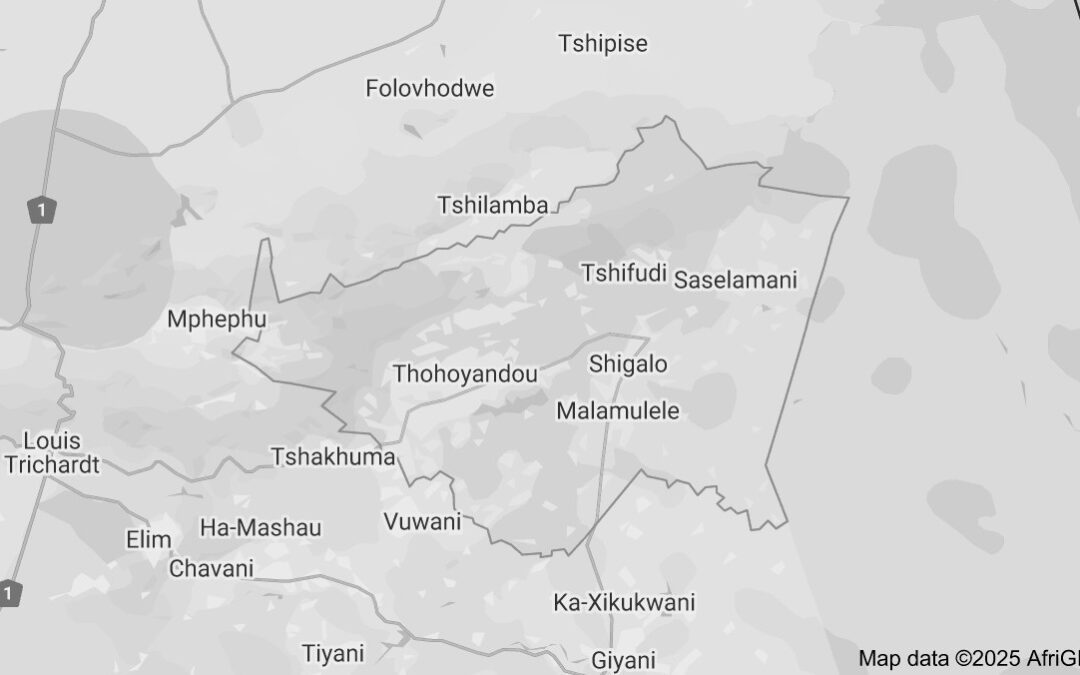
Thulamela Local Municipality (Figure 1) is in the Limpopo province of South Africa, known for its cultural significance and as a centre for the Venda people. Established in the late 1970s, the main town is Thohoyandou, which became the administrative capital of the Venda Bantustan, a nominally independent region during the apartheid era that segregated different ethnic groups (Lahiff, 1997; Mahole, 2018).
The town is named after the chief Thohoyandou, a notable Venda leader, and has grown significantly since its inception, serving as a hub for commerce, education, and services in the region. TLM is home to the University of Venda and two major campuses of Vhembe FET College, contributing to the education sector and attracting students from various backgrounds (Tsoriyo, 2021). The town is characterised by its vibrant cultural heritage, with numerous traditional festivals and ceremonies taking place throughout the year. It also serves as a gateway to several natural attractions in the surrounding area, including the Kruger National Park and the scenic landscapes typical of the Limpopo province (Anyumba & Nkuna, 2017; Munzhelele, 2017) Over the years, Thohoyandou has developed into an important urban centre in the region while preserving its cultural roots (Sinthumule & Netshisaulu, 2022).
Figure 1. Map of Thulamela Municipality

Source: AfriGIS (2025)
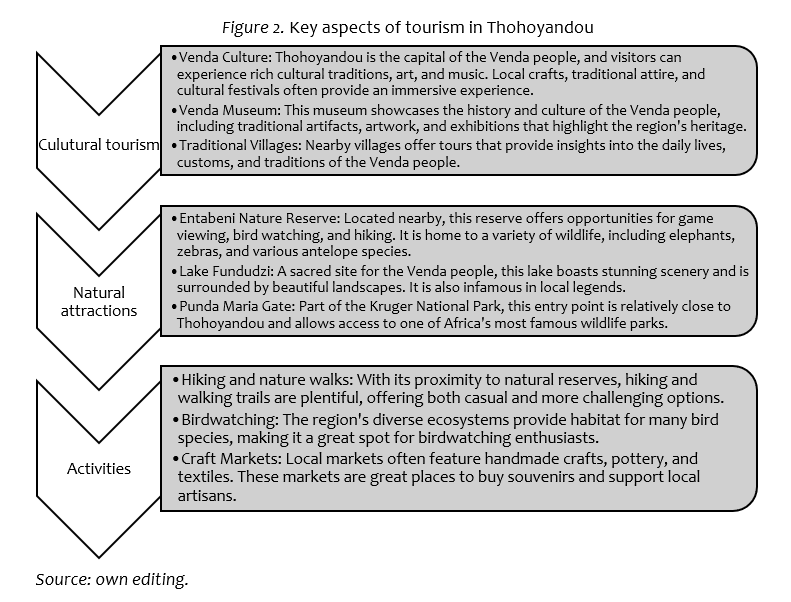
Figure 2 illustrates the main components of tourism that TLM possesses. Apart from the components that are deemed compelling factors, accommodation is another aspect that will meet the lodging demands of tourists. However, TLM has fewer high-end accommodations compared to larger cities; there are guesthouses, lodges, and B&Bs that offer a comfortable stay and a chance to experience local hospitality. Accessibility is another important issue for the town seeking to become a city. TLM is accessible via road only, with connections to other major towns and cities in the Limpopo province. Public transport, including buses and taxi services, also serves the area. However, Thohoyandou does not have a commercial airport. TLM offers a unique blend of cultural and natural attractions that appeal to a variety of tourists, from those interested in local traditions to those seeking outdoor adventures. Visitors can enjoy a distinctive experience that reflects the heart of Venda culture and the beauty of Limpopo’s landscapes.
Figure 2. Key aspects of tourism in Thohoyandou
2. Literature review
2.1. Definition of a city in the South African context
According to Harrison and Rubin (2016), in the South African context, the term ‘city’ conjures up an image of a built-up urban area teeming with people, vehicles and sophisticated economic activity, often centred on a historic Central Business District (CBD). However, cities have become more spread out or sprawled, as both people and businesses move out from the core city centre into outlying suburbs, leading to more complex movement patterns of workers and more intricate transport systems. Unlike the traditional city, today’s city is an interlinked functional area made up of multiple towns, interspersed with industrial areas, residential suburbs, informal settlements, green spaces and even farmlands and traditional authority areas. Other factors that play a role in a place to qualify for city status are demographics, employment, public finances, and economic strength. However, in South Africa, municipalities apply for city status and after the process, they qualify, for example, the cities of Ekukhuleni and Mogale City. As such, Thulamela Local Municipality is working towards such status through Vision 2030. According to Didier et al. (2012), in 2010, Thulamela was the eleventh largest city in the country, with close to 635,000 people living within its borders. It also had one of the highest personal income levels. According to the South African context, the process below will be followed if the municipality wants to become a ‘city’. This simply implies that becoming a city in South Africa involves a formal process governed by the country’s laws regarding municipalities and local governance.
The Republic of South Africa Municipal Structures Act (Act No. 117 of 1998) and the Municipal Systems Act (Act No. 32 of 2000) must be followed. These laws outline the framework for municipalities and the criteria for city status in South Africa. After the laws have been carefully followed, the municipality must meet certain criteria to be considered for city status. This typically includes population size, economic activity, infrastructure development, and governance capabilities. After the criteria have been met, a local municipality may then need to propose a change in status, which involves drafting a formal request for city status. This proposal usually requires substantial support from residents and stakeholders. To ensure the involvement of the residents, there is a need for public consultation, whereby community members can express their support or concerns regarding the potential change in status. The relevant provincial government must approve the application. This typically involves assessments of the municipality’s ability to function effectively as a city, including financial viability and administrative capacity. Once all approvals are acquired, the relevant authorities will issue a formal declaration recognising the municipality as a city. After obtaining city status, the municipality may need to implement structural changes to accommodate its new status, such as enhancing service delivery, creating a city council, and planning for urban development.
2.2. The benefits of city status
The benefits associated with becoming a city include increased budget from the government. This means that the city council will be able to meet the service demands of its residents and people who visit the city. The economic activities will also expand, and if economic activities are growing, there will also be economic boom for the city. A key factor in the urban economy and city development: it creates jobs, stimulates foreign exchange through revenues and taxes, and promotes investment in infrastructure and the provision of public services (UNWTO, 2012; Postma et al., 2017). Tourism can revive and transform towns into cities through an economic boom (Deng et al., 2022), and Jasrotia and Gangotia (2018) support the claim that tourism destinations are the smartest way for the growth of the entire host city.
Researchers stress the increased awareness of heritage and culture and even the contribution to tolerant and respectful societies (Brooks & Young, 2016; Terzibaşoğlu, 2022; Postma et al., 2017). What residents value most is the positive atmosphere, liveliness and international vibe tourism brings to their city, along with the protection and restoration of historical parts of the city and traditional architecture (Koens & Postma, 2017; Postma et al., 2017). The advantage of Thohoyandou if it becomes a city is that it will cater for both city tourism and cultural heritage tourism. This is a unique setup where a city is situated in the countryside. Urban tourism may be worth developing, a crucial question for many cities that are now considering promoting tourism development.
It is for this reason that integrated development planning, of which local economic development is a key component, has become a distinct approach to try and achieve sustainable development within localities in South Africa. Integrated development planning, in principle, allows for a comprehensive understanding of the locality and an opportunity to devise a vision and strategies to achieve this vision in an inclusive manner. In South Africa, the Municipal Systems Act (Republic of South Africa, 2000) has made it a legal requirement for municipalities to produce IDPs. IDPs were a reaction to the outdated and inappropriate planning that was taking place at a local level, but there is also an attempt to achieve a more appropriate and integrated system for planning and delivery at the municipal level. IDPs are supposed to be seen as part of the mainstream planning process of municipalities, where available resources are allocated to development priorities and strategies. Historically, planning at a local level was very technical, focused strongly on land use and infrastructure plans and was unconcerned with the social and economic dimensions of development.
2.3. Challenges of developing cities
While the role of tourism in the development of the city has been uncovered, there are still challenges that prevail in the attempt to develop a city. The issue of resources has come up at the top as a problem that could hamper the process of developing a city. The other issues include having a wider range of activities that may attract many tourists, which will give an image and grow Thohoyandou as a city. If the town uses tourism to transform into a city, it must also keep up with the demands of tourism that might rise with city status. Butler (2018) advises that tourism can be deemed an extreme way in the development of cities and is sensitive.
It must also be realised that the tourism industry does contribute to the creation of infrastructure and superstructures; however, tourism does not necessarily help in the provision of basic services such as water and electricity (James & Essien, 2019). The tourism industry competes for these resources with the residents, which can negatively impact the ability of residents to receive basic services. The other challenge is that if tourism is used as a tool to promote a city and develop it, this could lead to a burden on the city. Barbhuiya (2021) is of the view that over-tourism and over-promotion of tourism can pose a big challenge for cities, especially emerging ones. Often, emerging cities are not prepared for overtourism and its impacts. Excessive tourism can lead to overtourism, where the volume of visitors overwhelms a destination, diminishing the quality of life for residents and the tourist experience itself (Çigdemli, 2021; Honey & Frenkiel, 2021). Popular destinations can become overcrowded and less enjoyable.
Notably, the very infrastructure that can be created because of tourism may be harmed by tourism itself. Infrastructure strain, a high influx of tourists, can put a strain on local infrastructure, including transportation, sanitation, and public services, which may not have the capacity to handle the increased demand (Koh, 2020; Inkson & Minnaert, 2022). Infrastructure strain, mainly on the transportation system, could result in a surge in traffic congestion. An influx of tourists can lead to increased vehicle traffic, resulting in congestion and wear and tear on roads (Khan et al., 2020). Local transport systems may struggle to accommodate the extra load, leading to delays and increased accident risks. Once the infrastructure is negatively affected, consequently, environmental degradation will follow. Increased tourist traffic can lead to environmental damage, including pollution, habitat destruction, and strain on local natural resources. Overcrowding in national parks and ecologically sensitive areas can disrupt local ecosystems (Monz et al., 2016). Public spaces, parks, beaches, and other recreational areas can become overcrowded, diminishing their quality and accessibility for residents.
Higher energy demand could also be a challenge for hotels, restaurants, and attractions, which require significant energy resources. In its effort to battle with power shortages, South Africa has introduced load shedding and load reduction mechanisms. Thulamela Municipality is one of the municipalities that suffered the most in load reduction. A surge in tourist numbers can place additional burdens on local power grids, potentially leading to shortages or outages if supply cannot meet demand. Rapid growth in tourism may prompt the need for new infrastructure investments, such as roads, airports, and public transport systems, placing financial burdens on local governments. Addressing the infrastructure strain caused by tourism requires careful planning and management. Solutions might include investing in sustainable infrastructure, implementing comprehensive tourism management plans, encouraging off-peak travel, and involving local communities in decision-making processes to balance the needs of residents and visitors.
3. Methods and materials
The research used qualitative methods, and a case study was deemed suitable for the study. The study focuses on this rural town, as it seeks to explore how tourism can be used to accelerate its development into a city. According to Hennink et al. (2020), the case study can lead to a clear contextual understanding because it allows researchers to gain a firm grasp of the context. This research is inclusive of social, cultural, economic, and environmental factors that will influence the status of Thohoyandou as a city by 2030. Apart from that, case studies generate rich, detailed qualitative data, providing nuanced insights that surveys and experiments may overlook (Tight, 2017; Moser & Korstjens, 2018). This depth can aid in understanding the “why” and “how” behind certain phenomena (Kroger, 2021). Mack et al. (2005), also supported by Tracy (2024), add that case studies offer some flexibility because the author can add information as the research goes on. Since the transition into a city by Thulamela can have more developments as far as the council, mayors and running of the city can change, the research would incorporate the new changes. The IDP is reviewed periodically.
3.1. Sampling method and sample size
The research adopted a purposive sampling approach, intentionally selecting cases that are rich in information to yield comprehensive and reflective insights into the intricate relationship between tourism and urban status (Nyimbili & Nyimbili, 2024). This method stands in contrast to random sampling techniques by ensuring that types of cases are purposefully included in the study’s final sample. According to Prior et al. (2020), purposive sampling is instrumental in capturing specific experiences and perspectives that are particularly relevant to the research questions posed.
In this study, a total of seven participants were carefully chosen and interviewed to collect a wide array of insights that are pertinent to the research theme (Table 1). The selection of this sample size was deliberate, aimed at allowing for an in-depth exploration of each participant’s unique experiences and viewpoints. This approach enabled the researchers to gather a rich qualitative dataset, which provides a detailed basis for analysis. Each interview was conducted with the intent to delve deeply into the subjective narratives of the participants, thereby facilitating a thorough understanding of how tourism interacts with urban dynamics and influences the status of cities. The resulting data not only enriches the narrative of the research but also underlines the specificities and complexities involved in the relationship between these two realms.
3.2. Data collection
The study involves semi-structured interviews, contextual analysis of a particular individual, group, event, or situation, and transformation. Semi-structured interviews provided the flexibility to probe further based on participants’ responses, allowing for the emergence of rich data. Unlike surveys or rigid questionnaires, this method enabled the researcher to follow up on unexpected but relevant topics, deepening the understanding of issues such as policy gaps, infrastructure challenges, and community participation. Interviewees were selected based on their involvement in tourism development, spatial planning, or policymaking. Their insights are crucial for evaluating how tourism is positioned in Vision 2030 and whether it is effectively contributing to urban transformation. The sample includes representatives from the public sector (municipal and provincial levels), the private sector (business owners), and civil society (community leaders). This multi-stakeholder approach ensures a more holistic understanding of the challenges and opportunities surrounding tourism in the municipality. Interviewees were selected based on their involvement in tourism development, spatial planning, or policy-making. Their insights are crucial for evaluating how tourism is positioned in Vision 2030 and whether it is effectively contributing to urban development.
3.3. Data analysis
Thematic analysis was used to analyse the data; this analysis method is compatible with the research method (qualitative) and data collection tool (interviews). The study sampled stakeholders of the Thulamela and role plays; as such, the analysis was deemed to be most appropriate. It is especially useful for research that seeks to understand people’s experiences, views, and perceptions, making it a suitable method for this study, which explores stakeholder perspectives on the role of tourism in local development (Song et al., 2021). The researchers began by transcribing the interviews verbatim and reading through the transcripts multiple times to become deeply familiar with the content. Initial notes were taken to capture early impressions and potential points of interest. Next, the researchers systematically coded the data by identifying meaningful units of information related to the research questions. Codes were descriptive and helped label chunks of text that conveyed similar ideas. Examples of codes included lack of infrastructure, policy-practice gap, community exclusion, tourism potential, and Vision 2030 alignment. Each theme was clearly defined, including what it captured and why it was relevant. Attempts were made to ensure that each theme told a specific part of the overall story and related directly to the research objectives. The final stage involved weaving together the themes into a coherent narrative that addressed the research questions. Each theme was supported with direct quotes from participants and discussed in relation to the literature. The final themes are discussed in the next section, which deals with findings and discussions.
4. Findings and discussions
This section presents the results and provides the discussions in line with the study’s results. Data collection was carried out by means of in-depth interviews with the leaders of the tourism industry within the Thulamela Local Municipality. The thematic analysis approach was used, whereby four themes emerged from the questions asked: Role of tourism in the development of the city, Thulamela Vision 30 and tourism, Tourism potential in Thulamela Local Municipality, recommending policy for tourism development and point of action by the council and leadership.
Table 1. Overview of the interviewees
| Interviewees | Role | Qualifications | Relevance to the study |
| Participant A | Tourism Officer – Thulamela Municipality | Bachelor’s degree in Tourism Management; 10+ years in local tourism planning | Direct involvement in municipal tourism initiatives and strategy for economic development |
| Participant B | Municipal Urban Planner, Vhembe District Municipality | MSc in Engineering Science; 15 years of experience | Key to understanding how tourism integrates into spatial development and the push for city status |
| Participant C | LED (Local Economic Development) Official | Master of Commerce in Economics; 12 years | Provides insights on tourism’s contribution to local economic growth and Vision 2030 goals |
| Participant D | Local Business Owner Tourism Sector | Owner of a local guesthouse for 12 years | Offers a practical, on-the-ground perspective on tourism’s impact on livelihoods and the local economy |
| Participant E | Thulamela Tourism Forum | Chairperson of a community tourism forum; diploma; 3 years in the role | Reflects community engagement and participation in tourism development and vision alignment |
| Participant F | Limpopo Tourism Agency Representative | Bachelor’s Degree; 15+ years in provincial tourism promotion | Provides a regional perspective on Thulamela’s tourism potential and alignment with broader strategic frameworks |
| Participant G | Councillor – Thulamela Municipality | Ward councillor with governance training and local policy knowledge | Key decision-maker with knowledge of political will and municipal development planning |
Source: own editing
4.1. Theme 1: Tourism as a catalyst in the development of the city
The first theme from the findings was that tourism works as a catalyst for the city’s status and economic growth, as it has happened. Tourism is widely perceived by participants as a viable engine for local economic development. Participant F: “If Thulamela wants city status, tourism must be treated as a serious strategic sector, not just an afterthought.” This aligns with studies by Rogerson and Rogerson (2020) and Mzobe et al. (2022), who emphasise the potential of tourism to drive regional development in South Africa. Interviewees noted the sector’s ability to create jobs, stimulate small businesses, and promote the informal economy. Local entrepreneurs especially emphasised how tourism-related activities brought tangible economic benefits to the community. The issue of whether the city is based on tangible or intangible things emerged. Participant E: “The city status will also include city life and nightlife”. Pile (1999) explains that cities have something more than just being large and have a combination of things. Kong (2007) states that the understanding of the definition differs from time to time, adding that the scale of an aspiring city includes the flow of people, goods, services, ideas and images. According to Rosenthal and Ross (2015), a city must also have a cultural identity. However, for all participants in the understanding of city status, the concept of city status encompasses numerous factors, including population size, infrastructure development, economic activity, and cultural significance.
Results showed that Thohoyandou, as a city, will benefit from having larger funding from the government, which will be used for the upkeep of the city. Participant D: “Tourism brings business to local shops, guesthouses, and even the taxi industry. Without visitors, many of us would struggle.” Nengomasha (2021) supports that in South Africa, the cities’ budgets are based on their status and size. Participant A: “There is Local Development Economic (LDE) funding, but often, it is not enough for things that the area can do; therefore, as a city, there will be more provided specifically for economic development.” Cities are becoming central to economic development; however, they are being challenged to significantly enhance the range of strategic socio-economic interventions which they undertake, to secure investment, encourage growth, and deal with issues of social exclusion and poverty (Nel & Binns, 2018). There is also a view that, in totality, there will be better governance if Thohoyandou were to become a city. Participant C: “We recognise tourism as a fundamental pillar of economic development within our municipality. This perspective aligns closely with our strategic goals outlined in Vision 2030. By promoting a vibrant tourism sector, we aim to enhance local job creation, stimulate business growth, and attract both national and international visitors. We believe that investing in tourism infrastructure, supporting local cultural and natural attractions, and fostering sustainable practices.”
Increased tourism was also identified as a benefit of Thoyondou because it has been noted that the cities are becoming central to economic development. The larger number of people increases the intensity flow of tourists, goods, and information in the city, and this favours economic growth (Hącia, 2019). Participant D: “Genuine and impactful tourism promotion results in modifications to air transport arrangements, tax reforms, and the organisation of events like festivals. These outcomes will influence the patterns of economic activities, particularly within the local area.”
4.2. Theme 2: Cultural heritage and community participation
The other issue was to find out what participants think of tourism in the town. The findings reveal that there are a lot of cultural and historical attractions in the town. As far as participants’ views are concerned, Thoyondou has a lot of history and cultural heritage. Participant B: “Thohoyandou was central to the administration of the Venda government and served as the capital, and later, after the apartheid, became a town as you see it today. It hosts numerous cultural events, markets, and festivals that celebrate Venda’s heritage.” The place is also extraordinarily rich in terms of natural landscapes to attract tourists. It is surrounded by various natural attractions that showcase the region’s rich biodiversity and picturesque landscape. In fact, it is within the Vhembe biosphere. The point is supported by Matshusa et al. (2021) in that the Pafuri gate to Kruger and the Biosphere in the Thulamela municipality play a very critical role in ecotourism and heritage tourism in Thulamela. The area is rich in Venda culture, with natural features like rivers and mountains that are central to local traditions. Participant D: “Thohoyandou could take off its natural and cultural heritage and transform them into an innovative way for the emergence of a city.” Cultural heritage can serve as a tool for destination and city development. Wang (2020) states that if the cultural heritage of the city has achieved a certain status, it becomes part of a city’s brand and level. Tourism development should benefit locals first. Participant D: “We live here – we should be stakeholders, not spectators.” The participants further state that heritage status is an advancement in development. Participant E: “It is a gateway to the Pafuri Picnic Site located in the northern part of Kruger National Park, also not far from mystical Lake Funduzi, the Sacred Forest of the Venda also known as the Dzata ruins which is home to ancient trees and is considered a sacred site and Thathe Vondo Forest, this forest is renowned for its dense vegetation and unique biodiversity.” Ramukumba’s (2024) study, titled Rural Tourism in South Africa where Thulamela Local was one of his three sampled municipalities, found that Thulamela has considerable potential in this regard. The author declares that some communities have tourism as the main economic activity. Participant F: “Cultural tourism is growing, and Thulamela is well-positioned if it packages its history properly.”
Participants agreed that Thulamela’s unique cultural and historical assets are underexploited. Thulamela’s heritage, especially its archaeological and Venda cultural sites, could form the foundation of a niche tourism brand that enhances its identity and appeal as a prospective city. However, realising this potential requires professional marketing, preservation of cultural assets, and investment in visitor education infrastructure. Without these, Thulamela risks losing a valuable comparative advantage.
4.3. Theme 3: Infrastructure and service delivery challenges
There is also a need for massive infrastructure development to stimulate economic progress. Tourism is regarded as a modern-day engine of growth globally. Participant A: “We have beautiful attractions, but the roads are bad, and there’s limited signage. This affects the visitor experience.” Thus, steps must be taken so that potential economic development can be realised (Munzhelele, 2017). Tourism infrastructure forms the foundation for the development of tourism and the effective use of existing resources at a destination. It encompasses a wide range of services that are essential for addressing the needs of tourists and enhancing their satisfaction while they visit the area (Jovanovia & Ivana, 2016). Participant B: “In order to attain city status, it is essential that we enhance our infrastructure significantly. This improvement should not only focus on accommodating tourists and ensuring their experience is enjoyable but also prioritise the needs of our residents. By investing in better transportation systems, public facilities, and essential services, we can create a vibrant environment that benefits both visitors and the local community. Upgrading roads, public transit options, parks, and community spaces will contribute to a higher quality of life for residents while also attracting and retaining tourists who contribute to the economy.” In the early stages of modernisation theory, roads were viewed as a crucial driving force behind economic development (Giampiccoli & Saayman, 2017; Petrova et al., 2018).
This principle necessitates that infrastructure meets the needs of both tourists and locals. Participant E: “It is out there the former leaders, and some leaders were implicated in the scandal and collapse of the Venda Building Society (VBS) scandal where almost R1 billion was lost in corruption, this on its own showed signs of bad governance, the money meant for the services and other things were in invested in that back against public fund management act.” Participants believe that city status will bring the town into the spotlight, and the issues of good governance will be taken into consideration. According to Biswas et al. (2019), good governance in the city brings accountability, transparency, participation, effectiveness, equality, sustainability, vision and planning, legitimacy and bureaucracy, civic capacity, service delivery, efficient economy, relationship, and security. Participant B: “Big investors also do want to invest where there is no proper investment because that owns its own, because there would be no security for the investment.” A policy can help identify underdeveloped areas that could benefit from targeted tourism investments (Scheyvens & Momsen, 2020). Developing a policy can help identify potential risks associated with tourism infrastructure, such as cultural commodification, environmental degradation, or economic dependence on tourism. This initiative-taking approach helps mitigate negative impacts, helping to maximise the return on public investment in tourism infrastructure. A coherent tourism infrastructure policy helps prepare a destination for changing market demands and trends (Saner et al., 2019; Vanhove, 2022; Traskevich & Fontanari, 2023).
4.4. Theme 4: Policy alignment with Vision 2030
There must be clear strategic tourism development plans. Recommendations may include the formulation of dedicated tourism strategies to align with city status goals. Participant A: “Policy is a starting point because it will provide a guideline for strategic planning and coordination among various stakeholders, including government agencies, private investors, and local communities.” This coordination helps avoid overlaps, misallocations, or ineffective use of resources. Participant G: “Policy development cannot be ignored because the policy will help Thulamela establish minimum quality standards for tourism infrastructure, such as accommodations, transportation, and attractions.” The findings also reveal that the policy will maintain the economic stability of the city by guiding investment in tourism infrastructure: it can help create a stable economic environment where businesses can thrive.
The council, as the custodians of the town and policymakers’ partners, is in a position to start the process or course of action. Participant G: “The decision has been taken that Thohoyandou will attempt to be a city in terms of IDP by 2030. Tourism is mentioned in our Vision 2030, but on the ground, the action plans are moving slowly.” What is left is the execution of all the plans to make them a reality. Tourism is seen as a central part of regional development in many localities around regions, and this happens if action is taken (Halkier et al., 2014). Participant F: “If Thulamela wants city status, tourism must be treated as a serious strategic sector, not just an afterthought.” Traditional strategies for developing tourism have relied heavily on the original overall developmental plan. Emerging cities could use tourism as an innovative way to increase abilities and maximise the potential of a fully developed city. Thohoyandou, upon realisation of the experiences of tourism products and services, can use that to expand a range of other services. While there is a need for a comprehensive strategy to develop the city, as far as Thohoyandou is concerned, tourism will play a big role in the city’s development. If the town’s strategy cannot be useful towards the city’s development, it is up to the managers and developers to realign such a strategy. The transformation of the town also depends on the rebuilding of the city. Therefore, tourism is one of the major economic activities of Thohoyandou. The need to invest in tourism infrastructure is a crucial point that the city can make (Lee et al., 2020).
4.5. Implications of the study
The study reveals that tourism can significantly contribute to the transformation of Thulamela as it seeks to attain city status. It highlights many ways in which the tourism sector can be leveraged to enhance local development, infrastructure, and economic growth. Tourism can bring favourable economic benefits to local economies and have a noticeable influence on national GDP growth. Additionally, it can play a crucial role in community development and the alleviation of poverty (Al-Saad et al., 2018). By promoting Thulamela’s cultural heritage, natural attractions, and community-driven initiatives, tourism can attract visitors, stimulate job creation, and foster investment. This supports the studies of Ndlovu and Rogerson (2003) and Drummond (2018), who argue that cultural tourism is an underutilised growth sector in rural and peri-urban South Africa. Furthermore, the research suggests that a strategic focus on sustainable tourism practices could improve the quality of life for residents while preserving the unique characteristics of the area. The findings highlight the importance of collaborative efforts between local authorities, businesses, and the community to create a vibrant tourism ecosystem that supports the city’s aspirations. A recurring concern was the municipality’s inadequate infrastructure, poor roads, limited accommodation, and insufficient visitor facilities. These findings echo the results of Cheer (2020), who argues that tourism cannot flourish without the necessary support services and physical infrastructure. Participants stressed that these limitations negatively affect both visitor experiences and investor confidence. The lack of development in this area not only hinders tourism growth but also poses a barrier to meeting the urban benchmarks required for city status, suggesting a need for the municipality to adopt a more coordinated infrastructure development plan that prioritises tourism-enabling projects. Although Thulamela’s Vision 2030 outlines tourism as a priority sector, participants highlighted inconsistencies between strategic goals and implementation. This disconnect between policy and practice is a common theme in municipal development literature (Lamula, 2018; Maemu, 2023). Without coherent and well-resourced implementation plans, tourism initiatives risk becoming symbolic rather than transformative. Furthermore, the study reveals the need for greater interdepartmental and intergovernmental coordination. Effective alignment between the tourism office, urban planning division, and economic development unit is essential if tourism is to be leveraged as a pillar of urban transformation.
5. Conclusion
Overall, our study aimed at evaluating the role of tourism in achieving city status for Thulamela. It revealed that while tourism can significantly contribute to local economic growth and development, it must be approached strategically to ensure sustainable benefits that preserve the uniqueness of the locale. Tourism does have a significant boost in local economies due to increased visitor spending, job creation in the hospitality sector, and improved local business revenues. Moreover, infrastructure development is highlighted as a necessity by developing roads, transportation facilities, and public services to support tourism growth. However, potential challenges in balancing tourism growth with sustainable development, protecting local culture, and managing environmental impacts could be of great concern. All this could not be achieved on its own; it is important to involve local communities in tourism planning to ensure benefits are widely shared and to mitigate any negative impacts. Regarding the future, it could be beneficial to conduct research post-2030 on the effectiveness of tourism strategies implemented and their long-term impacts on achieving and maintaining city status.
References
Al-Saad, S., Al-Orainat, L., Badarneh, M. & Al-Makhadmeh, A. (2018). Residents’ perceptions towards tourism and its impacts on their quality of life in Aqaba city. Dirasat Human and Social Sciences, 45 (1): 229–243. DOI: 10.2139/ssrn.5158937
Anyumba, G. & Nkuna, M. (2017). Lake Fundudzi: A sacred lake in South Africa that is not open for tourism development. African Journal of Hospitality, Tourism and Leisure, 6 (4): 1–20.
Barbhuiya, M.R. (2021). Overtourism in Indian cities: A case study of Nainital. International Journal of Tourism Cities, 7 (3): 702–724. DOI: 10.1108/IJTC-08-2019-0148
Biswas, R., Jana, A., Arya, K. & Ramamritham, K. (2019). A good-governance framework for urban management. Journal of Urban Management, 8 (2): 225–236. DOI: 10.1016/j.jum.2018.12.009
Brooks, A. & Young, R. (2016). Historical archaeology and heritage in the Middle East: A preliminary overview. Historical Archaeology, 50 (4): 22–35. DOI: 10.1007/BF03379198
Butler, R. (2018). Sustainable tourism in sensitive environments: A wolf in sheep’s clothing? Sustainability, 10 (6): 1789. DOI: 10.3390/su10061789
Cheer, J. M. (2020). Human flourishing, tourism transformation and COVID-19: A conceptual touchstone. Tourism Geographies, 22 (3): 514–524. DOI: 10.1080/14616688.2020.1765016
Çigdemli, A. Ö. Ö. (2021). Overtourism: Issues, risk and responsibility. In: A. Hassan & A. Sharma (Eds.), Overtourism, technology solutions and decimated destinations. Singapore: Springer, pp.135–156.
Deng, W., Chen, X., & Jiang, L. (2025). Assessment and Improvement Strategies for Sustainable Development in China’s Cultural and Tourism Sector. Sustainability, 17 (13), 5964. DOI: 10.3390/su17135964
Didier, S., Peyroux, E. & Morange, M. (2012). The spreading of the city improvement district model in Johannesburg and Cape Town: Urban regeneration and the neoliberal agenda in South Africa. International Journal of Urban and Regional Research, 36 (5): 915–935. DOI: 10.1111/j.1468-2427.2012.01136.x
Drummond, F. J. (2018). Cultural clusters as a local economic development strategy in rural, small town areas: The Sarah Baartman District in the Eastern Cape of South Africa. Master thesis. Grahamstown: Rhodes University.
https://commons.ru.ac.za/vital/access/manager/Repository/vital:29879?site_name=Rhodes+University
Giampiccoli, A. & Saayman, M. (2017). Community-based tourism, responsible tourism, and infrastructure development and poverty. African Journal of Hospitality, Tourism and Leisure, 6 (2): 1–28.
Hącia, E. (2019). The role of tourism in the development of the city. Transportation Research Procedia, 39: 104–111. DOI: 10.1016/j.trpro.2019.06.012
Halkier, H., Kozak, M. & Svensson, B. (2014). Innovation and tourism destination development. European Planning Studies, 22 (8): 1547–1550. DOI: 10.1080/09654313.2013.784571
Harrison, P., & Rubin, M. (2016). South African cities in an urban world. South African Geographical Journal, 98 (3): 483–494. DOI: 10.1080/03736245.2016.1208588
Hennink, M., Hutter, I. & Bailey, A. (2020). Qualitative research methods. Los Angeles: Sage.
Honey, M. & Frenkiel, K. (Eds.). (2021). Overtourism: Lessons for a better future. Washington: Island Press.
Inkson, C. & Minnaert, L. (2022). Tourism management: An introduction. London: Sage.
IPK International (2013). ITB world travel trends report 2012/2013. Berlin: Messe Berlin.
James, E. E., & Essien, A. U. (2019). Infrastructure and sustainable tourism development in Nigeria. Journal of Humanities and Social Sciences, 24 (2): 70–81. DOI: 10.9790/0837-2401067280
Jasrotia, A. & Gangotia, A. (2018). Smart cities to smart tourism destinations: A review paper. Journal of Tourism Intelligence and Smartness, 1 (1): 47–56.
Jovanovia, S. & Ivana, I. L. I. Ä. (2016). Infrastructure is an important determinant of tourism development in the countries of Southeast Europe. Ecoforum Journal, 5 (1): 16–28.
Khan, N., Hassan, A. U., Fahad, S., & Naushad, M. (2020). Factors affecting tourism industry and its impacts on global economy of the world. Available at SSRN 3559353.
Koens, K. & Postma, A. (2017). Understanding and measuring visitor pressure in urban tourism. Breda: Centre for Expertise Leisure, Tourism & Hospitality. https://www.celth.nl/uploads/2024/6/avoiding-visitor-pressure_43521.pdf
Koh, E. (2020). The end of over-tourism? Opportunities in a post-COVID-19 world. International Journal of Tourism Cities, 6 (4): 1015–1023. DOI: 10.1108/IJTC-04-2020-0080
Kong, L. (2007). Cultural icons and urban development in Asia: Economic imperative, national identity, and global city status. Political Geography, 26 (4): 383–404. DOI: 10.1016/j.polgeo.2006.11.007
Kroger, M. (2021). Studying complex interactions and outcomes through qualitative comparative analysis: A practical guide to comparative case studies and ethnographic data analysis. London: Routledge.
Lahiff, E. P. (1997). Agriculture and rural livelihoods in a South African ‘homeland’: A case study from Venda. London: University of London, School of Oriental and African Studies.
Lamula, N. (2018). Possible Solutions to the Challenges Posed by E-Commerce on the Permanent Establishment Concept: A South African Perspective. University of the Witwatersrand, Johannesburg (South Africa).
Lee, P., Hunter, W. C. & Chung, N. (2020). Smart tourism city: Developments and transformations. Sustainability, 12 (10): 1–15. DOI: 10.3390/su12103958
Lim, C., Zhu, L. & Koo, T. T. (2019). Urban redevelopment and tourism growth: Relationship between tourism infrastructure and international visitor flows. International Journal of Tourism Research, 21 (2): 187–196. DOI: 10.1002/jtr.2253
Mack, N., Woodsong, C., MacQueen, K. M., Guest, G. & Namey, E. (2005). Qualitative research methods: A data collector’s field guide. Research Triangle Park: Family Health International. https://www.fhi360.org/wp-content/uploads/2024/01/Qualitative-Research-Methods-A-Data-Collectors-Field-Guide.pdf
Maemu, E. (2023). The impact of COVID-19 on the implementation of the National Development Plan 2030: A case of Vhembe District Municipality (Doctoral dissertation).
Mahole, E. (2018). The role of traditional leaders in the promotion of Local Economic Development. Doctoral dissertation.
Matshusa, K., Thomas, P. & Leonard, L. (2021). A methodology for examining geotourism potential at the Kruger National Park, South Africa. Geo Journal of Tourism and Geosites, 34 (1): 209–217. DOI: 10.30892/gtg.34128-639
Monz, C., D’Antonio, A., Lawson, S., Barber, J. & Newman, P. (2016). The ecological implications of visitor transportation in parks and protected areas: Examples from research in US National Parks. Journal of Transport Geography, 51 27–35. DOI: 10.1016/j.jtrangeo.2015.11.003
Moser, A. & Korstjens, I. (2018). Series: Practical guidance to qualitative research. Part 3: Sampling, data collection and analysis. European Journal of General Practice, 24 (1): 9– 18. DOI: 10.1080/13814788.2017.1375091
Munzhelele, T. W. (2017). An assessment of the potential of Hot Spring tourism in Limpopo Province. Master dissertation. University of Venda. https://univendspace.univen.ac.za/server/api/core/bitstreams/9ef1258b-4c5b-4ffa-92d6-6286d565cfbe/content/
Mzobe, S. C., Makoni, L., & Nyikana, S. (2022). Unlocking the potential of domestic tourism in uncertain times: Lessons from the COVID-19 pandemic in South Africa. Studia Periegetica, 38 (2), 137–155. DOI: 10.5604/01.3001.0016.0570
Ndlovu, N., & Rogerson, C. M. (2003). Rural local economic development through community-based tourism: The Mehloding hiking and horse trail. Eastern Cape, South Africa.
Nel, E. & Binns, T. (2018). Putting “developmental local government” into practice: The experience of South Africa’s towns and cities. In: E. Nel & Ch. M. Rogerson (Eds.), Local economic development in the changing world. London – New York: Routledge, pp. 37–55.
Nengomasha, C. (2021). Post-apartheid cities in South Africa: A mirage of inclusivity. In: H. H. Magidimisha & Ch. L. Chipungu (Eds.), Urban inclusivity in Southern Africa. Cham: Springer, pp.163–191.
Nyimbili, F. & Nyimbili, L. (2024). Types of purposive sampling techniques with their examples and application in qualitative research studies. British Journal of Multidisciplinary and Advanced Studies, 5 (1): 90–99. DOI: 10.37745/bjmas.2022.0419
Petrova, M., Dekhtyar, N., Klok, O. & Loseva, O. (2018). Regional tourism infrastructure development in the state strategies. Problems and Perspectives in Management, 16 (4): 259–274. DOI: 10.21511/ppm.16(4).2018.22
Pile, S. (1999). What is a city? In: D. Massey et al. (Eds.), City worlds. London – New York: Routledge, pp. 3–52.
Postma, A., Buda, D. M. & Gugerell, K. (2017). The future of city tourism. Journal of Tourism Futures, 3(2), 95–101. DOI: 10.1108/JTF-09-2017-067
Prior, S., Campbell, S., Greenwood, M., Shearer, T., Walker, K. & Young, S. (2020). Purposive sampling: Complex or simple? Research case examples. Journal of Research in Nursing, 25 (3): 652–661. DOI: 10.1177/1744987120927206
Ramukumba, T. (2024). Rural tourism in South Africa: A local economic development strategy. Interdisciplinary Journal of Rural and Community Studies, 6: 1–16. DOI: 10.38140/ijrcs-2024.vol6.03
Rogerson, C. M. & Rogerson, J. M. (2020). City tourism in Southern Africa: Progress and issues. In: M. Novelli et al. (Eds.), Routledge handbook of tourism in Africa. Abingdon – New York: Routledge, pp. 447–458.
Rosenthal, S. S. & Ross, S. L. (2015). Change and persistence in the economic status of neighbourhoods and cities. In: G. Duranton et al. (Eds.), Handbook of regional and urban economics 5. Amsterdam – Oxford: Elsevier, pp. 1047–1120.
Saner, R., Yiu, L., & Lazzaroni, J. (2021). Inclusive and sustainable urbanization: using a macropsychology perspective to strengthen the 2030 sustainable development goals. In Macropsychology: A population science for sustainable development goals (pp. 253-272). Cham: Springer International Publishing.
Scheyvens, R., & Momsen, J. H. (2020). Tourism and poverty reduction: Issues for small island states. In Tourism and sustainable development goals. London: Routledge, pp. 111–129.
Sinthumule, N. I. & Netshisaulu, K. H. (2022). Wetland resource use and conservation attitudes of rural vs. urban dwellers: A comparative analysis in Thohoyandou, Limpopo Province, South Africa. Water, 14 (8): 1290. DOI: 10.3390/w14081290
Song, H., Zhu, C. & Fong, L. H. N. (2021). Exploring residents’ perceptions and attitudes towards sustainable tourism development in traditional villages: The lens of stakeholder theory. Sustainability, 13 (23): 13032. DOI: 10.3390/su132313032
Terzibaşoğlu, Y. (2022). Landed estates, rural commons and collective agriculture in Ottoman Niş and Leskofçe in the nineteenth century. Turkish Historical Review, 13 (3): 343–371. DOI: 10.1163/18775462-bja10036
Tight, M. (2017). Understanding case study research: Small-scale research with meaning. London etc: Sage.
Tracy, S. J. (2024). Qualitative research methods: Collecting evidence, crafting analysis, communicating impact. Hoboken, NJ: John Wiley & Sons.
Traskevich, A. & Fontanari, M. (2023). Tourism potentials in post-COVID19: The concept of destination resilience for advanced sustainable management in tourism. Tourism Planning & Development, 20 (1): 12–36. DOI: 10.1080/21568316.2021.1894599
Tsoriyo, W. (2021). Spatial (in) justice and street spaces of selected small rural towns in Vhembe District of Limpopo Province, South Africa. Doctoral dissertation. University of Venda. https://univendspace.univen.ac.za/items/86657887-8411-44d8-8990-e415cf5df0cc
UNWTO (2012). UNWTO tourism highlights. 2012 Edition. Madrid: United Nations World Tourism. https://www.e-unwto.org/doi/pdf/10.18111/9789284414666
Vanhove, N. (2022). The economics of tourism destinations: Theory and practice. Abingdon – New York: Routledge.
Wang, M. F. (2020). Cultural realism and virtualism design model (pp. 62-87). Dordrecht: Springer.
Online sources
Republic of South Africa (2000). Local Government: Municipal Systems Act 32 of 2000. Cape Town: Government Printer. https://www.gov.za/documents/local-government-municipal-systems-act (14. 02. 2025.).
Republic of South Africa (1998). Local Government: Municipal Structures Act. Cape Town: Government Printer. https://www.gov.za/documents/local-government-municipal-structures-act (14. 02. 2025.).
Thulamela Local Municipality IDP (2020). Thulamela Municipality IDP: 2020/21 – 2022/23. https://iudf.co.za/wp-content/uploads/2020/09/DRAFT20IDP.20BUDGET202020.2120–202022.23.pdf (14. 02. 2025.).
United Nations (2013). World population prospects: The 2012 revision. New York: Population Division, Dept. of Economic and Social Affairs, United Nations. https://www.un.org/en/development/desa/publications/world-population-prospects-the-2012-revision.html (14. 02. 2025.).