

AUTHENTIC GASTRONOMIC EXPERIENCE AND LOCAL PRACTICE PRESERVATION: CHEESE AND KAYMAK TASTING AS EXPERIENTIAL TOURISM IN TYROL
1Katarina Bjelić*, 2Aleksandra Vujko, 3Ivana Brdar
1Teaching Assistant, Singidunum University, Belgrade, Serbia; kbjelic@singidunum.ac.rs,
ORCID: 0009-0002-9191-3683
2Associate Professor, Singidunum University, Belgrade, Serbia; avujko@singidunum.ac.rs,
ORCID: 0000-0001-8684-4228
3Associate Professor, Singidunum University, Belgrade, Serbia; ibrdar@singidunum.ac.rs,
ORCID: 0000-0002-7319-3822
Abstract
The research aims to identify the key experiential dimensions influencing tourist satisfaction, loyalty and destination recommendation. Data were collected through a structured questionnaire administered to tourists participating in cheese-making workshops and farm visits. Factor analysis revealed four dimensions: gastro loyalty, cheese workshops, sustainability governance and farm interaction. The findings indicate that hands-on participation in traditional dairy production, interaction with local producers and animals and clearly communicated sustainability practices significantly enhance tourists’ understanding of local gastronomic culture and overall experience. The study emphasizes the role of authentic, farm-based gastronomic experiences in strengthening sustainable rural tourism development.
Keywords: authentic food tourism, cheese and kaymak degustation experiences, farm-based tourism, gastronomic tourism, local food culture
Received: 25 March 2026
Accepted: 4 June 2026
Published: 6 July 2026
This open access article may be used under the international license terms of CC BY-NC-ND 4.0.
https://creativecommons.org/licenses/by-nc-nd/4.0/
HITELES GASZTRONÓMIAI ÉLMÉNY ÉS A HELYI HAGYOMÁNYOK MEGŐRZÉSE: SAJT- ÉS KAYMAK-KÓSTOLÁS, MINT ÉLMÉNYTURIZMUS TIROLBAN
1Katarina Bjelić*, 2Aleksandra Vujko, 3Ivana Brdar
1Tanársegéd, Singidunum Egyetem, Belgrád, Szerbia; kbjelic@singidunum.ac.rs,
ORCID: 0009-0002-9191-3683
2Egyetemi docens, Singidunum Egyetem, Belgrád, Szerbia; avujko@singidunum.ac.rs,
ORCID: 0000-0001-8684-4228
3Egyetemi docens, Singidunum Egyetem, Belgrád, Szerbia; ibrdar@singidunum.ac.rs,
ORCID: 0000-0002-7319-3822
Absztrakt
A kutatás célja azoknak a legfontosabb élménybeli dimenzióknak a feltárása, amelyek befolyásolják a turisták elégedettségét, hűségét és az úti cél ajánlását. Az adatokat strukturált kérdőív segítségével gyűjtöttük össze, amelyet sajtkészítő műhelyeket felkereső és farmlátogatásokon részt vevő turisták töltöttek ki. A faktoranalízis négy dimenziót tárt fel: gasztronómiai hűség, sajtkészítő műhelyek, a fenntarthatóság irányítása és a gazdaságokkal való interakció. Az eredmények arra utalnak, hogy a hagyományos tejtermék-előállításban való aktív részvétel, a helyi termelőkkel és állatokkal való interakció, valamint a fenntarthatósági gyakorlatok egyértelmű kommunikálása jelentősen javítja a turisták helyi gasztronómiai kultúrával kapcsolatos megértését és általános élményét. A tanulmány hangsúlyozza az autentikus, gazdaságokon alapuló gasztronómiai élmények szerepét a fenntartható falusi turizmus fejlesztésének erősítésében.
Kulcsszavak: autentikus gasztronómiai turizmus, sajt- és kajmak-kóstoló programok, farmturizmus, gasztronómiai turizmus, helyi étkezési kultúra
Benyújtva: 2026. március 25.
Befogadva: 2026. júnus 4.
Publikálva: 2026. július 6.
Ez a mű a Creative Commons CC BY-NC-ND 4.0 nemzetközi licence feltételeinek megfelelően használható fel.
https://creativecommons.org/licenses/by-nc-nd/4.0/
1. Introduction
Gastronomy tourism in Alpine regions allows visitors to engage with farm life, traditional practices and local culinary heritage. In Tyrol, small and medium farms use gastronomy tourism to diversify income while preserving landscapes and cultural identity (Verduna et al., 2020; Hurdawaty et al., 2025). Local products, especially cheeses and dairy specialties, combined with workshops and tastings, enhance visitor satisfaction and support social and economic sustainability (Sthapit et al., 2023). Tourist motivations are linked to authenticity, cultural value and experiential uniqueness, positioning local gastronomy as a key driver of destination attractiveness and loyalty (Obradović et al., 2023; Angelakis et al., 2022).
Sustainable practices preserve rural landscapes and link food production with tourism experiences. Cheese embodies a “taste of place” shaped by nature, traditional methods and heritage, adding experiential value through farm visits and tastings (Pamukçu et al., 2021). Tyrol illustrates integration of traditional production into agritourism, enhancing authenticity and rural development. Workshops and tastings strengthen engagement, reduce seasonality and support local economies (Yaşar & Gümrükçü, 2022; Kokkranikal & Carabelli, 2024; Kalenjuk Pivarski et al., 2024). Authentic local products increase destination attractiveness and encourage revisit intentions (Bassi et al., 2021).
Traditional dairy supports cultural and social sustainability through community involvement, while authenticity includes production, setting, storytelling and tourist participation (Rodrigues et al., 2023; Kovalenko et al., 2023). Young consumers perceive mountain products as sustainable, traditional and healthy (Bonadonna et al., 2022; Dimassi et al., 2025). Cheese quality depends on seasonal grazing and influences sensory characteristics (Lonardi & Unterpertinger, 2022). Challenges include skills, service quality and infrastructure, while multifunctional rural tourism integrates agriculture, culture and education to enhance visitor satisfaction and economic sustainability (Wallnöfer et al., 2024).
2. Literature review
Gastronomy tourism enables visitors to engage with local culture through food, workshops, farm visits, markets and events, supporting heritage, rural life and landscape preservation (Yaşar & Gümrükçü, 2022). Farm-based tourism promotes socio-economic benefits, environmental stewardship and rural livelihoods, often reinforced by quality and sustainability certifications (Knežević et al., 2025; Stalmirska, 2024). In Tyrol and other Alpine regions, gastronomy tourism integrates farm activities, cheese production, tastings and participatory experiences, enhancing economic viability, cultural preservation and destination authenticity (He et al., 2021; Grillini et al., 2025). As suggested by Hurdawaty et al. (2025), authenticity in local food experiences contributes to memorable tourism experiences and positively affects tourist’s behavioral intentions, including revisit intention and destination loyalty. H1 assumes that satisfaction with authentic, high-quality and educational farm-based cheese and kaymak degustation experiences strengthens tourist’s understanding of local food culture and fosters loyalty through positive word-of-mouth, recommendation and revisit intention.
Rural tourism relies on farm diversification and local engagement, linking gastronomy to sustainable practices, biodiversity and small-scale farm support (Dixit & Prayag, 2022). It strengthens environmental responsibility, visitor satisfaction and cultural identity, even though over-commercialization may threaten authenticity (Yaşar & Gümrükçü, 2022; Grillini et al., 2023; Byrne & Zabetakis, 2023).
Food culture motivates travel and shapes experiences through authenticity, tradition and local connection, while erosion of authenticity weakens destination identity. Mountain landscapes provide cultural ecosystem services but face pressures from land-use change, climate, population growth and recreation, requiring sustainable management (Đerčan et al., 2023; Rana et al., 2024). H3 assumes that transparent communication of sustainable farming and ecological production practices increases tourists’ trust, positive destination evaluation and perceived suitability of the gastronomic tourism model for application in other destinations. Studies indicate that sustainability communication influences behavioral intentions through perceived credibility and destination commitment (Bhattacharyya et al., 2024). In addition, transparency in communicating sustainability practices helps reduce uncertainty and strengthens tourists’ overall evaluation of a destination, contributing to more positive attitudes toward sustainable tourism models (Tölkes, 2020).
Tourists seek authentic, immersive experiences. Local food strengthens emotional attachment, heritage preservation and destination attractiveness (Beltramo et al., 2024; Duglio et al., 2022). H2 claims that hands-on participation in cheese-making workshops enables experiential learning and strengthens perceived authenticity by allowing direct engagement with traditional dairy production processes. According to Vujko et al. (2025), authenticity in gastronomic tourism is experiential in nature, as it emerges through direct engagement with local production practices, where tourists actively participate rather than passively observe. Alpine destinations like Tyrol build identity on landscapes, rural lifestyles and traditions, making sustainable, experience-oriented products essential. Slow tourism promotes ethical, immersive and educational travel. Food venues support authenticity, local identity and experiential value, linking slow tourism and slow food movements (Baimoratova et al., 2023; Fusté-Forné et al., 2021). In Tyrol, farm-based experiences like cheese workshops, tastings and culinary activities foster engagement with traditional production, culture and sustainability (Huang et al., 2023; Brdar, 2021). H4 presumes that direct interaction with producers, animals and the farm environment enhances authenticity perceptions, emotional connection and positive attitudes toward the local community and destination. Studies highlight that hands-on engagement and social interaction with farmers contribute to deeper understanding of rural lifestyles and strengthen emotional bonds between visitors and the local community (Wu et al., 2023).
3. Research methods
This study follows a post-positivist epistemology, which considers tourists’ perceptions of slow tourism and slow food practices, including engagement with local gastronomy, farm-based activities, sustainability governance and community interaction, as measurable and modelable, while acknowledging that full objectivity is unattainable. Knowledge is probabilistic and theory-informed, aiming to identify stable patterns through empirical investigation. Accordingly, a quantitative, survey-based design was adopted to explore visitor experiences in rural and gastronomic tourism.
Data were collected in December 2025 via an online questionnaire on Google Prolific. The final sample included N = 423 respondents with a balanced gender distribution (51.8% male, 48.2% female) and broad age representation (36-45, 26-35, 46-55). Most respondents had secondary or higher education, including university and postgraduate degrees and comprised both domestic and international visitors. This indicates that the survey captured a diverse sample of visitors to Tyrol.
The survey included 29 items, of which 16 were retained and grouped into four latent dimensions via exploratory factor analysis: (F1) Gastro loyalty, (F2) Cheese workshops, (F3) Sustainability governance, (F4) Farm interaction, each with four items capturing experiential, cultural and sustainability constructs.
Factor 1: Gastro loyalty items measure satisfaction with local food quality, educational programs, gastronomic identity and intention to recommend the destination, reflecting emotional attachment and behavioral loyalty.
Factor 2: Cheese workshops items assess participatory learning, skill acquisition, instructor expertise and traditional souvenir crafting, highlighting hands-on engagement with local food heritage.
Factor 3: Sustainability governance items capture perceptions of sustainability practices, ecological farming, clarity of information and perceived transferability of practices, emphasizing institutional and communicative aspects of slow tourism.
Factor 4: Farm interaction items measure direct engagement with producers, animals, farm environment, host hospitality and authentic connection with the community, reflecting social and relational components of rural tourism.
The dataset’s suitability for factor analysis was confirmed via KMO = 0.901 and Bartlett’s Test: Approx. χ² = 8498.299, df = 435, p < 0.001. Maximum Likelihood extraction with eigenvalues > 1 retained four factors explaining 46.41% of variance, with varimax rotation yielding a balanced factor distribution. Items loaded coherently: Gastro loyalty on satisfaction and recommendation; Cheese workshops on participatory learning; Farm interaction on social and experiential engagement; Sustainability governance on ecological awareness and practices. These results confirm the reliability and conceptual coherence of the factors, providing a robust empirical basis for analyzing gastronomic, social and sustainability dimensions of farm-based tourism in Tyrol.
4. Research results
The demographic profile of tourists participating in gastronomic and farm-based experiences in Tyrol (N = 423) indicates a heterogeneous and balanced sample across gender, age, education and country of origin, providing a reliable foundation for the analysis of visitor experiences and engagement in gastronomic and rural tourism activities (Table 1–4). Gender distribution was nearly equal, with 51.8% male (n = 219) and 48.2% female (n = 204). Respondents represented a wide range of age groups, including 36-45 years (25.3%), 26-35 years (23.6%), 46-55 years (21.7%), 56-65 years (14.9%), 18-25 years (8.3%) and 66 years and above (6.1%). Educational attainment was relatively high, with 43.5% holding a college or university degree, 25.8% holding an MSc or PhD degree, 25.1% having completed high school and 5.7% reporting elementary education as their highest level of education. The sample included both domestic and international visitors. Germany accounted for the largest share of respondents (38.8%), followed by Austria (21.0%), the Netherlands (15.1%), Switzerland (9.9%), Italy (8.7%) and the United Kingdom (6.4%). Overall, the demographic characteristics suggest that the survey captured a diverse group of participants across key socio-demographic categories.
Table 1. Gender composition of the respondents
| Frequency | Percent | Valid percent | Cumulative percent | |
| Male | 219 | 51.8 | 51.8 | 51.8 |
| Female | 204 | 48.2 | 48.2 | 100.0 |
| Total | 423 | 100.0 | 100.0 |
Source: Authors’ data
Table 2. Age composition of the respondents
| Frequency | Percent | Valid percent | Cumulative percent | |
| 18-25 | 35 | 8.3 | 8.3 | 8.3 |
| 26-35 | 100 | 23.6 | 23.6 | 31.9 |
| 36-45 | 107 | 25.3 | 25.3 | 57.2 |
| 46-55 | 92 | 21.7 | 21.7 | 79.0 |
| 56-65 | 63 | 14.9 | 14.9 | 93.9 |
| Over 66 | 26 | 6.1 | 6.1 | 100.0 |
| Total | 423 | 100.0 | 100.0 |
Source: Authors’ data
Table 3. Educational composition of the respondents
| Frequency | Percent | Valid percent | Cumulative percent | |
| Elementary school | 24 | 5.7 | 5.7 | 5.7 |
| High school | 106 | 25.1 | 25.1 | 30.7 |
| College/Faculty | 184 | 43.5 | 43.5 | 74.2 |
| MSc/PhD | 109 | 25.8 | 25.8 | 100.0 |
| Total | 423 | 100.0 | 100.0 |
Source: Authors’ data
Table 4. Origin of the respondents
| Frequency | Percent | Valid percent | Cumulative percent | |
| Germany | 164 | 38.8 | 38.8 | 38.8 |
| Austria | 89 | 21.0 | 21.0 | 59.8 |
| Netherlands | 64 | 15.1 | 15.1 | 74.9 |
| Italy | 37 | 8.7 | 8.7 | 83.7 |
| Switzerland | 42 | 9.9 | 9.9 | 93.6 |
| UK | 27 | 6.4 | 6.4 | 100.0 |
| Total | 423 | 100.0 | 100.0 |
Source: Authors’ data
Table 5 shows the Kaiser-Meyer-Olkin (KMO) measure and Bartlett’s Test of Sphericity. The KMO = 0.901 indicates excellent sampling adequacy, confirming that the variables’ correlation structure is highly suitable for factor analysis. Bartlett’s Test is significant (Approx. χ² = 8498.299, df = 435, p < 0.001), showing the correlation matrix is not an identity matrix and that meaningful relationships exist among items. Together, these results confirm the dataset’s appropriateness for factor analysis and support the identification of distinct dimensions related to tourists’ gastronomic experiences, sustainability perceptions and farm-based interactions.
Table 5. KMO and Bartlett’s Test
| Kaiser-Meyer-Olkin Measure of Sampling Adequacy | .901 | |
| Bartlett’s Test of Sphericity | Approx. Chi-Square | 8498,299 |
| df | 435 | |
| Sig. | .000 | |
Source: Authors’ data
Table 6 presents the results of factor analysis using the Maximum Likelihood extraction method, illustrating the total variance explained by the extracted factors. Based on the criterion of eigenvalues greater than 1, four factors were retained, together explaining 47.75% of the total variance. The first factor accounts for 21.66%, while the second, third, fourth and factors contribute 8.99%, 8.75%, and 8.35%, respectively, indicating that each factor meaningfully explains visitors’ perceptions and experiences. Varimax rotation redistributed variance more evenly across factors (7.96-10.08%), enhancing interpretability and confirming the stability and coherence of the extracted dimensions. Overall, the results suggest a meaningful four-factor structure that captures multiple dimensions of visitors’ perceptions and experiences related to gastronomic and farm-based tourism in Tyrol and provides a basis for subsequent analyses.
Table 6. Total Variance Explained (Maximum Likelihood Extraction)
| Factor | Initial Eigenvalue | % of Variance | Cumulative % | Extracted Variance (%) | Cumulative Extracted % | Rotated Variance (%) | Cumulative Rotated % |
| 1 | 6.499 | 21.664 | 21.664 | 19.90 | 19.906 | 10.075 | 10.075 |
| 2 | 2.698 | 8.994 | 30.659 | 7.252 | 27.158 | 10.004 | 20.079 |
| 3 | 2.625 | 8.750 | 39.408 | 6.861 | 34.019 | 9.935 | 30.014 |
| 4 | 2.503 | 8.345 | 47.753 | 6.074 | 40.093 | 8.429 | 38.443 |
Source: Authors’ data
The rotated factor matrix in Table 7 shows a clear and theoretically consistent grouping of variables into four factors: Gastro loyalty, Cheese workshops, Farm interaction and Sustainability governance. Varimax rotation produced a well-defined structure with high loadings on respective factors and minimal cross-loadings, enhancing interpretability and reliability. Gastro loyalty is defined by food appreciation, gastronomic understanding, overall satisfaction and recommendation intention, reflecting the role of high-quality local food and educational components in shaping emotional attachment and loyalty. Cheese workshops is characterized by workshop engagement, skill acquisition, instructor expertise and souvenir crafting, highlighting hands-on, educational experiences. Farm interaction emphasizes interaction with producers, host hospitality, contact with animals and community connection, capturing social and emotional dimensions of farm-based tourism. Sustainability governance is defined by sustainable production, ecological promotion, transparent sustainability information and perceived transferability to other destinations, underscoring tourists’ awareness and appreciation of environmentally responsible practices. Overall, the matrix confirms the coherence and robustness of the four-factor model, providing a solid foundation for hypothesis testing and further analysis of gastronomic, social and sustainability-oriented dimensions in Tyrol.
Table 7. Rotated Factor Matrix
| Factors | ||||
| Gastro loyalty | Cheese workshops | Farm interaction | Sustainability governance | |
| Workshop engagement | .121 | .702 | .087 | .061 |
| New skills | .117 | .709 | .123 | .090 |
| Instructor expertise | .118 | .724 | .099 | .074 |
| Souvenir crafting | .135 | .642 | .077 | .131 |
| Producer insight | .088 | .130 | .683 | .060 |
| Host hospitality | .124 | .092 | .674 | .110 |
| Animal interaction | .153 | .129 | .715 | .076 |
| Community connection | .052 | .104 | .720 | .059 |
| Sustainable production | .088 | .109 | .060 | .638 |
| Ecological promotion | .057 | -.027 | .055 | .695 |
| Sustainability information | .033 | .034 | .058 | .662 |
| Model transfer | .119 | .118 | .083 | .647 |
| Quality satisfaction | .665 | .050 | .064 | .067 |
| Food appreciation | .726 | .136 | .088 | .124 |
| Gastro understanding | .708 | .180 | .082 | .109 |
| Recommendation intention | .713 | .183 | .123 | .141 |
Source: Authors’ data
Gastro loyalty (Factor 1) indicates high tourist satisfaction with food quality and educational programs. Participation in workshops and tasting authentic local products enhanced appreciation of Tyrolean culinary heritage, authenticity and sustainable practices, particularly due to the rarity of such foods in modern markets. Experiencing homemade cheese and kaymak, a traditional Balkan dairy product, combined with production observation and interaction with locals, strengthened cognitive and emotional engagement with rural life. These sensory, educational and social experiences increased overall satisfaction, emotional attachment and destination recommendation, confirming H1 and demonstrating that farm-based gastronomy strengthens visitor loyalty and long-term destination competitiveness.
Cheese workshops (Factor 2) revealed high satisfaction with informative and engaging cheese-making activities. Hands-on participation strengthened social interaction, connection with local residents and appreciation of traditional skills, particularly among urban visitors. Workshops supported cultural preservation, personal involvement and experiential learning, while instructor expertise and self-made souvenirs enhanced authenticity. These results confirm H2, highlighting participatory cheese-making as a key driver of authentic gastronomic experiences.
Sustainability governance (Factor 3) shows that tourists perceive local cheese and kaymak production as a sustainable tourism model that supports environmental responsibility, local economies and resource preservation. Farms clearly communicate ecological practices, confirming Tyrol as a model of good practice and supporting H3. Direct participation strengthened emotional engagement and the perceived value of sustainability, while findings indicate that successful replication requires education, governance and careful planning.
Farm interaction (Factor 4) indicates high visitor satisfaction with authentic insight into local life through participation in daily routines and traditions. Direct host interaction created lasting memories, valued more than material souvenirs, while hospitality and knowledge sharing proved essential for positive experiences. These interactions enhance authenticity, visitor satisfaction and long-term destination competitiveness.
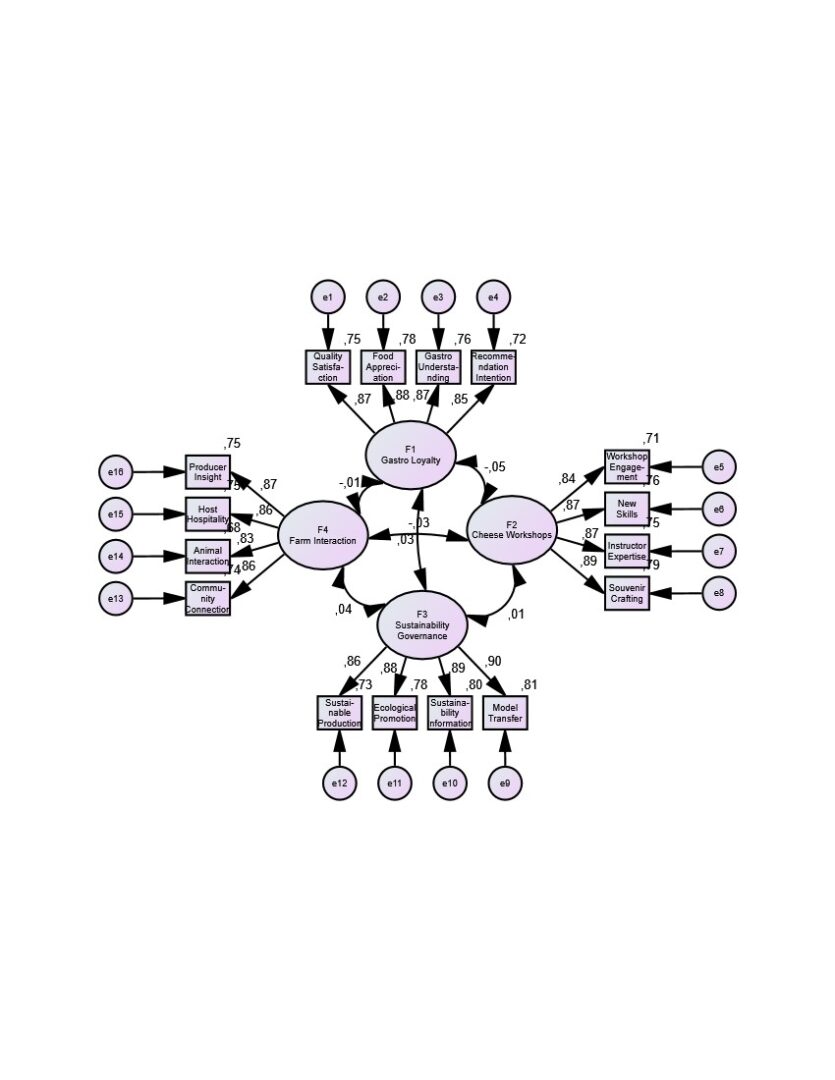
Figure 1. Structural model of experiential tourism dimensions and their interrelationships
Source: Authors’ data
The results in Figure 1 indicate an excellent overall model fit. The chi-square test is non-significant (χ² = 103.348, df = 98, p = .336), with a χ²/df ratio of 1.055, suggesting minimal discrepancy between the model and the observed data. Absolute fit indices confirm this result, with low RMR (.009) and high GFI (.970) and AGFI (.959). Incremental fit indices further demonstrate outstanding performance (CFI = .999, TLI = .999, IFI = .999, NFI = .980), indicating that the proposed model substantially outperforms the independence model. Parsimony-adjusted indices (PNFI = .801, PCFI = .816) show that strong fit is achieved without unnecessary model complexity. The RMSEA value is exceptionally low (.011; 90% CI: .000-.029; PCLOSE = 1.000), reflecting a very close approximation to the population covariance matrix.
All latent constructs exhibit strong internal consistency, with composite reliability values well above conventional thresholds. The average variance extracted for each construct exceeds recommended cut-off values, indicating that the latent variables account for a substantial share of variance in their measures relative to measurement error. These results provide clear support for the convergent validity of the measurement model and confirm its adequacy for subsequent structural analysis (Table 8).
Table 8. Composite Reliability and Convergent Validity
| Construct | Composite Reliability (CR) | Average Variance Extracted (AVE) |
| F1 | 0.924 | 0.752 |
| F2 | 0.925 | 0.753 |
| F3 | 0.934 | 0.780 |
| F4 | 0.916 | 0.731 |
Source: Authors’ data
Interpretation (Fornell-Larcker): Discriminant validity is supported because, for every construct, √AVE (diagonal) is substantially larger than the absolute value of inter-construct correlations in the corresponding row/column. Here, √AVE values are ~0.855-0.883, while correlations are extremely small (|r| ≤ 0.05), indicating very strong separation among constructs under the Fornell–Larcker rule (Table 9).
Table 9. Fornell-Larcker criterion
| F1 | F2 | F3 | F4 | |
| F1 | 0.867 | -0.050 | -0.030 | -0.010 |
| F2 | -0.050 | 0.868 | 0.010 | 0.030 |
| F3 | -0.030 | 0.010 | 0.883 | -0.030 |
| F4 | -0.010 | 0.030 | -0.030 | 0.855 |
Source: Authors’ data
The heterotrait-monotrait (HTMT) ratios indicate a very high level of discriminant validity among the latent constructs. All HTMT values are substantially below the conservative threshold of 0.85, suggesting that the constructs are empirically distinct and do not exhibit problematic overlap. The extremely low HTMT coefficients further confirm that the latent dimensions capture conceptually and statistically independent aspects of the measured phenomenon (Table 10).
Table 10. HTMT Ratios
| F1 | F2 | F3 | F4 | |
| F1 | — | 0.058 | 0.050 | 0.032 |
| F2 | 0.058 | — | 0.031 | 0.037 |
| F3 | 0.050 | 0.031 | — | 0.047 |
| F4 | 0.032 | 0.037 | 0.047 | — |
Source: Authors’ data
5. Discussion
The findings confirm that farm-based gastronomic experiences in Tyrol represent far more than a complementary tourism activity. They constitute a mechanism for preserving local traditions, strengthening cultural identity and creating meaningful interactions between visitors and host communities. The high levels of visitor satisfaction indicate that contemporary tourists increasingly seek participatory and educational experiences rather than passive consumption of local food. By engaging directly in cheese and kaymak (a traditional fermented milk) production, visitors become active participants in local culture, gaining a deeper understanding of traditional knowledge, production processes and rural ways of life. Such experiences contribute to the safeguarding of intangible cultural heritage while enhancing the attractiveness and competitiveness of rural destinations. This is supported by the findings of Beltramo et al. (2024), who demonstrated that the preservation and promotion of local food heritage play a crucial role in maintaining cultural authenticity, reinforcing regional identity and increasing the attractiveness of mountain tourism destinations.
The results support previous studies emphasizing that authentic gastronomic experiences can strengthen tourists’ emotional connection with a destination and increase the perceived value of their visit (Zrnić et al., 2021). In the case of Tyrol, gastronomy functions as a bridge between tourism and local culture, transforming traditional agricultural practices into valuable tourism resources without compromising their authenticity. The interaction between visitors and local producers emerged as a particularly important element of the experience, demonstrating that personal contact and storytelling significantly enrich tourism products and differentiate them from standardized commercial offerings, as highlighted by Hurdawaty et al. (2025).
Tyrol provides an outstanding example of how rural destinations can successfully integrate gastronomy, agriculture, cultural heritage and tourism into a coherent and sustainable development model. The destination demonstrates that local food products can become strategic tourism assets when supported by quality interpretation, visitor participation and community involvement. Consequently, the Tyrolean model offers valuable lessons for numerous rural destinations possessing similar natural, agricultural and cultural resources. Mountainous regions, traditional farming communities and destinations with strong gastronomic identities can adapt and replicate many elements of this approach to diversify their tourism offer, increase local income and strengthen the preservation of traditional practices, confirming the conclusions of Đerčan et al. (2023) regarding the contribution of farm tourism to sustainable rural development.
However, the successful implementation of such experiences is not without challenges. One of the primary risks is the potential commercialization of local traditions. As tourism demand increases, there is a possibility that authentic practices may be modified primarily to satisfy visitor expectations, leading to the gradual loss of their original cultural significance. Excessive tourism development may also place pressure on local communities, agricultural resources and rural landscapes, potentially threatening the very authenticity that attracts visitors. Furthermore, small rural communities often face limitations related to infrastructure, accommodation capacity, transportation accessibility and the lack of professional tourism skills among local residents.
Despite these challenges, the evidence from Tyrol suggests that the benefits substantially outweigh the potential drawbacks when tourism development is carefully planned and managed. The destination illustrates how experiential gastronomy can simultaneously contribute to economic development, cultural preservation, community empowerment and visitor satisfaction. Therefore, Tyrol should be viewed not only as a successful tourism destination but also as a benchmark model for rural areas seeking to transform local gastronomic heritage into a sustainable and competitive tourism product. Rural destinations endowed with comparable natural landscapes, traditional food production practices and strong cultural identities can draw inspiration from the Tyrolean approach and adapt its principles to their own contexts, thereby enhancing destination attractiveness while preserving the authenticity of local heritage for future generations.
6. Conclusion
This study investigated farm-based gastronomic tourism in Tyrol, with a focus on cheese and kaymak workshops, local food tasting and direct interaction with rural hosts. The results strongly confirm that experiential gastronomy represents a central pillar of contemporary rural tourism development, where authenticity, participation and cultural immersion function as key determinants of tourist satisfaction and loyalty. These findings are in line with previous research emphasizing that food-based experiences in rural and mountain destinations significantly enhance destination image, emotional engagement and revisit intentions through co-creation of value and direct engagement with local culture.
The identified dimensions, Gastro Loyalty, Cheese Workshops, Sustainability Governance and Farm Interaction, validate existing theoretical perspectives on experiential and sustainable tourism. In particular, the results reinforce the argument that experiential learning, authentic food production and host-guest interaction are interdependent mechanisms that jointly shape perceived authenticity and destination competitiveness in rural contexts.
The findings indicate that rural destinations aiming to develop similar models must prioritize structured host education, interpretation skills and sustainable service design, alongside investment in rural infrastructure and accommodation capacity. Equally important is the establishment of destination governance mechanisms that ensure coordination between farmers, tourism providers and local authorities, enabling consistent quality and long-term sustainability of gastronomic offerings.
Despite these contributions, the study is limited by its single-destination focus, which restricts generalizability. Additionally, the cross-sectional nature of the analysis does not capture long-term behavioral outcomes such as actual revisit behavior or the durability of loyalty over time. Future research should therefore adopt comparative multi-destination designs and longitudinal approaches to better understand how experiential gastronomic tourism influences long-term tourist behavior and destination resilience.
Overall, Tyrol represents a benchmark model for rural gastronomic tourism development, demonstrating that when authenticity, sustainability and experiential learning are systematically integrated, rural destinations can simultaneously strengthen cultural preservation, increase economic benefits and enhance global competitiveness. This positions farm-based gastronomy not merely as a supplementary tourism product, but as a strategic development tool for rural regions with similar natural and cultural resources.
References
Angelakis, G., Lemonakis, C., Galariotis, E., & Zopounidis, C. (2022). Current trends on food tourism approaches through a conceptual framework of food tourism management. International Journal of Knowledge Management in Tourism and Hospitality, 2 (4): 331–365. DOI: 10.1504/IJKMTH.2022.124089
Baimoratova, S., Chhabra, D., & Timothy, D. J. (2023). Planning and promoting an authentic slow food tourism corridor in a suburban town in the US. Sustainability, 15 (20): 14971. DOI: 10.3390/su152014971
Bassi, I., Carzedda, M., Grassetti, L., Iseppi, L., & Nassivera, F. (2021). Consumer attitudes towards the mountain product label: Implications for mountain development. Journal of Mountain Science, 18 (9): 2255–2272. DOI: 10.1007/s11629-020-6616-z
Beltramo, R., Bonadonna, A., Duglio, S., Peira, G., & Vesce, E. (2024). Local food heritage in a mountain tourism destination: Evidence from the Alagna Walser Green Paradise project. British Food Journal, 126 (1): 309–326. DOI: 10.1108/BFJ-12-2022-1136
Bhattacharyya, J., Balaji, M. S., & Jiang, Y. (2024). Assessing the effectiveness of environmental sustainability performance communication in tourism: Mediation and moderation effects. Journal of Travel Research, 63 (8): 1933–1952.
Bonadonna, A., Duglio, S., Bollani, L., & Peira, G. (2022). Mountain food products: A cluster analysis based on young consumers’ perceptions. Sustainability, 14 (19): 12511.
Brdar, I. (2021). Cook slow, eat fine — Consumer attitudes on food quality in new gastronomic trends. Meat Technology, 62 (1): 77–88. DOI: 10.18485/2021.62.1.8
Byrne, K. & Zabetakis, I. (2023). Farm to fork: Balancing the needs for sustainable food production and food for health promotion. Sustainability, 15 (4): 3396.
Đerčan, B., Gatarić, D., Bubalo Živković, M., Belij Radin, M., Vukoičić, D., Kalenjuk Pivarski, B., […] & Bjelajac, D. (2023). Evaluating farm tourism development for sustainability: A case study of farms in the peri-urban area of Novi Sad (Serbia). Sustainability, 15 (17): 12952. DOI: 10.3390/su151712952
Dimassi, O., Jaber, L., Fleyfel, L., & Hamadeh, S. (2025). Milk supply in Lebanon: Economic challenges and the role of traditional dairy products. Foods, 14 (17): 3115.
Dixit, S. K. & Prayag, G. (2022). Gastronomic tourism experiences and experiential marketing. Tourism Recreation Research, 47 (3): 217–220. DOI: 10.1080/02508281.2022.2065089
Duglio, S., Bonadonna, A., & Letey, M. (2022). The contribution of local food products in fostering tourism for marginal mountain areas: an exploratory study on Northwestern Italian Alps. Mountain Research and Development, 42 (1): R1–R10. DOI: 10.1659/MRD-JOURNAL-D-20-00075.1
Fusté-Forné, F., Ginés-Ariza, P., & Noguer-Juncà, E. (2021). Food in slow tourism: The creation of experiences based on the origin of products sold at Mercat Del Lleó (Girona). Heritage, 4 (3): 1995–2008. DOI: 10.3390/heritage4030113
Grillini, G., Sacchi, G., Streifeneder, T., & Fischer, C. (2023). Differences in sustainability outcomes between agritourism and non-agritourism farms based on robust empirical evidence from the Tyrol/Trentino mountain region. Journal of Rural Studies, 104: 103152. DOI: 10.1016/j.jrurstud.2023.103152
Grillini, G., Streifeneder, T., Stotten, R., Schermer, M., & Fischer, C. (2025). How tourists change farms: The impact of agritourism on organic farming adoption and local community interaction in the Tyrol-Trentino mountain region. Journal of Rural Studies, 114: 103531. DOI: 10.1016/j.jrurstud.2024.103531
He, Y., Wang, J., Gao, X., Wang, Y., & Choi, B. R. (2021). Rural tourism: Does it matter for sustainable farmers’ income? Sustainability, 13 (18): 10440. DOI: 10.3390/su131810440
Huang, T. Y. T., Chen, J. S., & Ramos, W. D. (2023). Slow tourism: The relationship between tourists’ slow food experiences and their quality of life. Tourism Review, 78 (1): 159–176. DOI: 10.1108/TR-02-2022-0053
Hurdawaty, R., Dahana, W. D., & Farradia, Y. (2025). Understanding revisit intention in local culinary tourism: The mediating role of memorable culinary tourism experience and destination image. Tourism and Hospitality, 6 (4): 184. DOI: 10.3390/tourhosp6040184
Kalenjuk Pivarski, B., Tešanović, D., Šmugović, S., Ivanović, V., Paunić, M., Vuković Vojnović, D., […] & Gagić Jaraković, S. (2024). Gastronomy as a predictor of tourism development—Defining food-related factors from the perspective of hospitality and tourism employees in Srem (AP Vojvodina, R. Serbia). Sustainability, 16 (24): 10834. DOI: 10.3390/su162410834
Knežević, M., Vujko, A., & Borovčanin, D. (2025). Community-centered farm-based hospitality in agriculture: Fostering rural tourism, well-being, and sustainability. Agriculture, 15 (15): 1613. DOI: 10.3390/agriculture15151613
Kokkranikal, J. & Carabelli, E. (2024). Gastronomy tourism experiences: the cooking classes of Cinque Terre. Tourism Recreation Research, 49 (1): 161–172.
Kovalenko, A., Dias, Á., Pereira, L., & Simões, A. (2023). Gastronomic experience and consumer behavior: Analyzing the influence on destination image. Foods, 12 (2): 315. DOI: 10.3390/foods12020315
Lonardi, S. & Unterpertinger, Y. (2022). The relevance of intangible cultural heritage and traditional languages for the tourism experience: The case of Ladin in South Tyrol. Sustainability, 14 (5): 2729. DOI: 10.3390/su14052729
Obradović, M., Panić, A., Kostić, M., Brdar, I., & Radović, N. (2023). Traditional food products and region recognition: Importance of geographical indication of origin in case of branding the tourist region of Western Serbia. BizInfo Blace, 14 (1): 33–44. DOI: 10.5937/bizinfo2301033O
Pamukçu, H., Saraç, Ö., Aytuğar, S., & Sandıkçı, M. (2021). The effects of local food and local products with geographical indication on the development of tourism gastronomy. Sustainability, 13 (12): 6692. DOI: 10.3390/su13126692
Rana, J. C., Bisht, I. S., Mathur, P., Fadda, C., Mittra, S., Ahlawat, S. P., […] & Yadav, R. (2024). Involving rural youth in agroecological nature-positive farming and culinary agri-ecotourism for sustainable development: The Indian scenario. Sustainability, 16 (21): 9417. DOI: 10.3390/su16219417
Rodrigues, P., Borges, A., & Vieira, E. (2023). Gastronomic experiences on tourists’ life satisfaction and happiness: The case of Porto. European Journal of Tourism Research, 34: 3412–3412. DOI: 10.54055/ejtr.v34i.3034
Stalmirska, A. M. (2024). Local food in tourism destination development: The supply-side perspectives. Tourism Planning & Development, 21 (2): 160–177.
Sthapit, E., Björk, P., & Piramanayagam, S. (2023). Domestic tourists and local food consumption: motivations, positive emotions and savouring processes. Annals of Leisure Research, 26 (2): 316–337. DOI: 10.1080/11745398.2021.1993287
Tölkes, C. (2020). The role of sustainability communication in the attitude–behaviour gap of sustainable tourism. Tourism and Hospitality Research, 20 (1): 117–128.
Verduna, T., Blanc, S., Merlino, V. M., Cornale, P., & Battaglini, L. M. (2020). Sustainability of four dairy farming scenarios in an Alpine environment: The case study of Toma di Lanzo cheese. Frontiers in Veterinary Science, 7: 569167. DOI: 10.3389/fvets.2020.569167
Vujko, A., Arsić, M., & Bojović, R. (2025). From local product to destination identity: Leveraging cave-aged cheese for sustainable rural tourism development. Agriculture, 15 (11): 1137. DOI: 10.3390/agriculture15111137
Wallnöfer, V., Windegger, F., Walder, M., & Corradini, P. (2024). The Sustainable Tourism Observatory of South Tyrol (STOST) Annual Progress Report – 2024 edition. South Tyrol Tourism.
Wu, M. Y., Tong, Y., Li, Q., Wall, G., & Wu, X. (2023). Interaction rituals and social relationships in a rural tourism destination. Journal of Travel Research, 62 (7): 1480–1496. DOI: 10.1177/00472875221130495
Yaşar, D. & Gümrükçü, S. (2022). A literature review on gastronomy tourism within the perspective of sustainability. International Journal of Social Sciences & Economic Environment, 7 (2): 20–29. DOI: 10.53882/IJSSEE.2022.0702002
Zrnić, M., Brdar, I., & Kilibarda, N. (2021). The importance of traditional food quality — The viewpoint of the tourism. Meat Technology, 62 (1): 69–76.